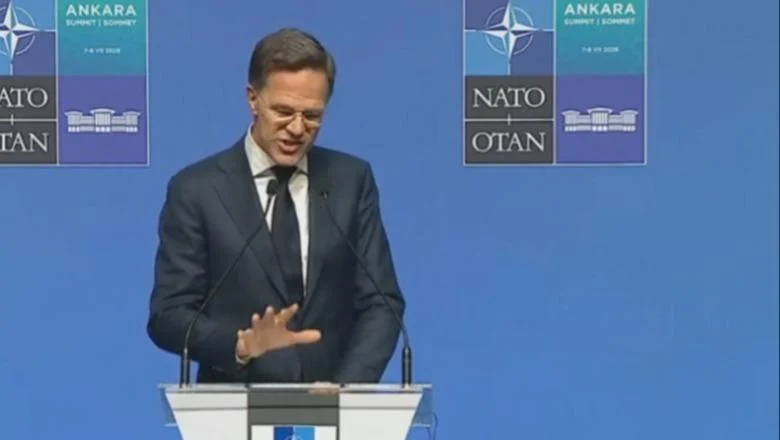
Ankara, Turkey – The North Atlantic Treaty Organization (NATO) concluded its pivotal summit in Ankara yesterday, bringing together leaders from its 32 member states in a gathering marked by critical discussions on ongoing conflicts, strategic aid packages, and contentious rhetoric from a former U.S. President. The summit’s joint declaration underscored a unified front on key security challenges, while the concluding press conference saw the Alliance’s Secretary General navigate delicate diplomatic waters, confirming future plans and addressing provocative statements.
Main Facts from the Summit
The Ankara summit, held amidst a complex global security landscape, centered primarily on two overarching themes: the escalating conflict in Ukraine and the future trajectory of NATO’s collective defense capabilities. A significant outcome was the formalization of a substantial €70 billion aid package from European allies, earmarked to support Kyiv over the next two years. This financial commitment signals a resolute, long-term dedication to Ukraine’s defense and stability, reflecting a consensus among European members regarding the imperative of countering Russian aggression.
Adding an unexpected twist to the summit’s narrative, former U.S. President Donald Trump delivered sharp criticism aimed at Spain, labeling it an "awful ally" and a "hopeless case," and threatening to sever all trade ties due to its perceived "hostile" stance. These remarks, coming from a figure potentially poised for a return to the U.S. presidency, sent ripples through the Alliance.
In a forward-looking announcement, NATO Secretary General Mark Rutte confirmed that the next Alliance summit would be hosted by Albania. While the exact timing remains to be determined, this decision, attributed to "The Hague’s decision" (likely referring to internal NATO strategic planning processes), highlights Albania’s growing role within the Alliance and its strategic importance in the Western Balkans.
Rutte, addressing concerns about NATO’s unity in the face of internal and external pressures, acknowledged the existence of robust debates within the Alliance. However, he maintained that such discussions ultimately strengthen NATO, emphasizing a prevailing sense of unity despite disagreements. He also touched upon the critical issue of Iran’s nuclear ambitions, reiterating NATO’s stance against nuclear proliferation while keeping open the possibility of future intervention should circumstances demand it.
Chronology of Events and Key Discussions
The Ankara summit officially commenced yesterday, drawing heads of state and government to the Turkish capital for two days of intense deliberation. From the outset, the agenda was dominated by the ongoing war in Ukraine, a conflict that has fundamentally reshaped European security dynamics and reinvigorated NATO’s core mission of collective defense.
Early sessions focused on assessments of the battlefield situation in Ukraine, intelligence sharing, and the efficacy of existing aid mechanisms. Discussions quickly progressed to the financial commitments required to sustain Ukraine’s resistance. The €70 billion package, a testament to the collective resolve of European allies, was a central point of agreement. This commitment, spanning two years, aims to provide Kyiv with predictable and sustained military, financial, and humanitarian support, ensuring its capacity to defend against Russian aggression. The formalization of this package in Ankara served as a powerful declaration of solidarity and a strategic investment in regional stability.
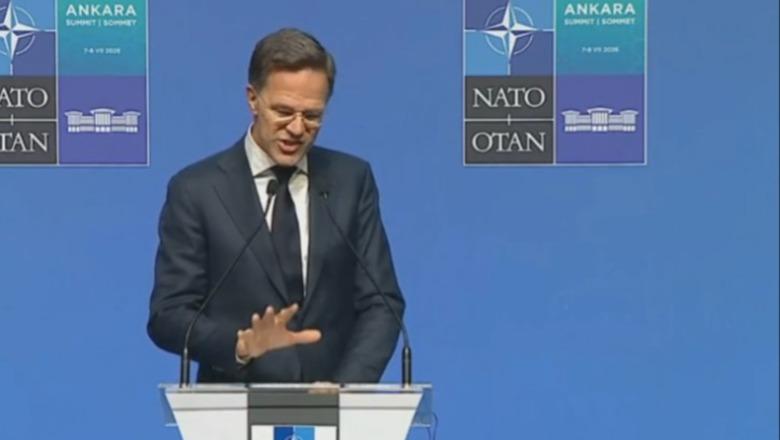
As the summit moved towards its conclusion, the focus shifted to broader strategic challenges and the internal cohesion of the Alliance. The concluding press conference, featuring Secretary General Mark Rutte, became the platform for delivering key announcements and addressing emerging controversies. It was during this session that the decision to hold the next summit in Albania was revealed, signaling NATO’s continued engagement with and support for its newer members in strategically important regions.
Simultaneously, the summit’s atmosphere was influenced by remarks from outside the immediate proceedings. Donald Trump’s comments regarding Spain, delivered through a separate channel but quickly circulating among delegates, introduced an element of geopolitical uncertainty. His critique of Spain as an "awful ally" and a "hopeless case," coupled with a threat to sever trade ties, underscored the persistent anxieties within the Alliance about the potential implications of a future U.S. administration led by Trump. This unsolicited intervention necessitated a careful diplomatic response from NATO leadership, particularly concerning the delicate balance between alliance unity and individual member state sovereignty.
Secretary General Rutte’s subsequent remarks were crucial in framing these developments within the context of NATO’s enduring strength. His assertion that debates, even fierce ones, ultimately fortify the Alliance, served as a diplomatic maneuver to acknowledge internal tensions without allowing them to undermine the perception of unity. His nuanced response to Trump’s comments and the broader issue of defense spending demonstrated a concerted effort to maintain cohesion while addressing legitimate concerns about burden-sharing.
Finally, the discussion pivoted to the escalating concerns surrounding Iran’s nuclear program. As a topic of significant global security interest, the potential for nuclear proliferation in the Middle East poses a direct threat to international stability. Rutte’s cautious but firm stance on Iran, emphasizing NATO’s commitment to non-proliferation while reserving the right to intervene for peace, highlighted the Alliance’s readiness to address multifaceted threats beyond its immediate geographical scope.
Supporting Data and Contextual Information
The Ankara Summit takes place at a critical juncture for NATO, which has seen a significant re-evaluation of its role and capabilities following Russia’s full-scale invasion of Ukraine in February 2022. This conflict has not only solidified the Alliance’s purpose but also spurred many member states to increase their defense spending and modernize their militaries.
The €70 billion aid package for Ukraine from European allies is a substantial commitment, underscoring the shift in European strategic autonomy and burden-sharing. Historically, the United States has been the largest single contributor to Ukraine’s defense efforts. This new package signifies a greater willingness and capacity among European nations to take on a larger share of the financial and logistical burden, reflecting both a moral imperative and a strategic necessity to secure Europe’s eastern flank. For context, the combined GDP of the European Union alone far surpasses that of Russia, making such a commitment financially feasible, albeit challenging politically for some members. The aid is expected to cover a range of needs, from military hardware and ammunition to training, logistical support, and humanitarian assistance, ensuring Ukraine’s resilience against sustained Russian pressure.
Donald Trump’s criticism of Spain echoes his long-standing complaints about NATO allies not meeting their defense spending obligations. The NATO guideline, agreed upon in 2014, calls for member states to spend at least 2% of their Gross Domestic Product (GDP) on defense. While many allies have increased their spending since 2014, a significant number, including Spain, still fall short of this target. In 2023, Spain’s defense spending was estimated to be around 1.26% of its GDP. Trump’s rhetoric, often delivered in stark terms, has historically been aimed at pressuring allies to contribute more, sometimes threatening to withdraw U.S. support or impose economic penalties. His direct targeting of Spain, a democratic ally and a key player in European security, highlights the potential for such rhetoric to strain bilateral relations and undermine alliance solidarity, particularly if he were to return to office. Spain, as a member of both NATO and the European Union, plays a crucial role in Mediterranean security, counter-terrorism efforts, and maritime operations.
The decision to host the next NATO summit in Albania is notable. Albania joined NATO in 2009, marking a significant step in its Euro-Atlantic integration. Hosting a summit would be a major diplomatic and logistical undertaking for the country, elevating its profile on the international stage. It also reinforces NATO’s commitment to the Western Balkans, a region that has seen renewed geopolitical interest and challenges, including Russian and Chinese influence. The "Hague’s decision" likely refers to the NATO Headquarters in Brussels (often referred to interchangeably with "The Hague" in European political discourse, although technically the Hague is in the Netherlands), indicating a consensus among the Alliance’s leadership for this strategic choice.
Regarding Iran’s nuclear program, the international community remains deeply concerned about its potential to develop nuclear weapons. Iran’s enrichment of uranium to near weapons-grade levels, coupled with its limited cooperation with international inspectors, poses a significant proliferation risk. NATO, as a defensive alliance, generally focuses on collective security within its treaty area. However, the proliferation of Weapons of Mass Destruction (WMDs) is considered a global threat that can indirectly impact Alliance security. NATO’s strategic concept includes provisions for addressing WMD proliferation, often through diplomatic means and deterrence, but the possibility of intervention is a complex and highly sensitive issue that would depend on the specific context and the nature of the threat.
Official Responses and Diplomatic Maneuvers
In response to the flurry of statements and geopolitical tensions, NATO Secretary General Mark Rutte played a crucial role in maintaining diplomatic equilibrium during the concluding press conference. When directly questioned about Donald Trump’s severe criticisms of Spain and the potential for NATO to function without the United States, Rutte offered a measured yet firm defense of the Alliance’s resilience.
"People debate at the top of their power, and it doesn’t worry me," Rutte stated, acknowledging the intensity of internal discussions. He elaborated, "because in the end, these debates make the Alliance stronger." This statement served to normalize disagreements within NATO, portraying them not as weaknesses but as vital components of a dynamic and robust alliance. It was a diplomatic maneuver to absorb the shock of Trump’s remarks by placing them within a broader context of healthy, albeit sometimes heated, internal discourse.
Rutte continued by expressing confidence in the fundamental commitment of the U.S. to NATO, even under a potentially returning Trump administration. "I know Trump and the U.S. are committed to NATO," he affirmed. However, he did not shy away from acknowledging the core of Trump’s criticism regarding burden-sharing. "But it is an irritating factor that Europeans are not paying," Rutte conceded. He further noted that "Trump has tried to convince them to pay and to have results." This acknowledgment validates the long-standing American demand for greater defense contributions from European allies, lending credibility to the underlying concern, even while implicitly critiquing the confrontational delivery of Trump’s message.
Rutte linked the current context of the Russian threat to this ongoing debate, stating, "Even though we have the Russian threat, this is a great encouragement." This implies that the external threat from Russia is a powerful motivator for European allies to finally meet their defense spending commitments, thus strengthening NATO from within. He concluded his thoughts on alliance unity with a powerful assertion: "I feel this unity, and this alliance is more united than ever because we allow ourselves to disagree." This encapsulates the democratic and consensus-based nature of NATO, where divergent views can coexist without shattering the foundational solidarity.
On the delicate issue of Iran and the threat of nuclear weapons, Rutte reiterated NATO’s strategic principles. "It is the strategy of NATO and the allies not to hand over nuclear capabilities," he affirmed, emphasizing the Alliance’s commitment to non-proliferation. However, he also carefully left the door open for potential future engagement, stating, "It doesn’t mean that NATO will not be involved. NATO is always ready to play a role for peace." This nuanced response highlights the Alliance’s cautious approach, balancing the imperative of preventing proliferation with the flexibility to respond to evolving threats. "We will see what happens in the coming days and weeks," he concluded, indicating ongoing monitoring and a readiness to adapt.
Implications and Future Outlook
The Ankara Summit and its outcomes carry significant implications for the future of NATO, transatlantic relations, and global security.
Donald Trump’s aggressive statements regarding Spain, and by extension, other allies, pose a direct challenge to the cohesion of NATO. If Trump were to return to the U.S. presidency, his rhetoric could translate into policy that fundamentally alters the nature of the Alliance. Threats of severing trade ties or withdrawing U.S. support could lead to a fracturing of the transatlantic bond, forcing European nations to rapidly accelerate their strategic autonomy and potentially seek alternative security arrangements. Such a scenario would weaken NATO’s deterrence capabilities against adversaries like Russia and China, creating instability in regions vital to global security. It also highlights the enduring vulnerability of the Alliance to political shifts within its most powerful member.
Conversely, Secretary General Rutte’s diplomatic handling of these controversies underscores the inherent resilience of NATO. His emphasis on the strengthening effect of debates and the ability to disagree while remaining united suggests a mature alliance capable of absorbing internal shocks. This diplomatic strategy aims to reassure members that the Alliance’s core principles and mutual defense commitments remain intact, regardless of individual political rhetoric. The increased defense spending by European allies, partly driven by Trump’s pressure and largely by the Ukraine war, also points to a more balanced burden-sharing, which could paradoxically strengthen the Alliance in the long run, making it less reliant on a single dominant power.
The €70 billion aid package for Ukraine from European allies is a crucial development. It signals a sustained commitment to Kyiv’s defense, moving beyond ad-hoc responses to a more predictable, long-term support framework. This has profound implications for the trajectory of the Russia-Ukraine war, potentially enabling Ukraine to continue its resistance and eventually negotiate from a stronger position. It also solidifies Europe’s role as a primary security actor on its own continent, a step towards greater strategic independence.
The decision to hold the next NATO summit in Albania is a symbolic and strategic move. It reinforces NATO’s commitment to the integration of the Western Balkans into Euro-Atlantic structures and acknowledges Albania’s contributions to regional security. For Albania, hosting such a high-profile event would be a significant diplomatic achievement, boosting its international standing and attracting greater attention to the region’s security and development needs. It also serves as a signal to other aspirants in the region, such as Bosnia and Herzegovina and Kosovo, that NATO’s door remains open for those committed to democratic values and collective security.
Finally, NATO’s stance on Iran’s nuclear program reflects the Alliance’s broader approach to global proliferation threats. While prioritizing diplomatic solutions and deterrence, the refusal to rule out intervention maintains a credible threat, aiming to dissuade Iran from pursuing nuclear weapons. The coming weeks and months will be critical in determining whether diplomatic efforts can rein in Iran’s nuclear ambitions or if the international community, including NATO, will face more difficult choices. The implications of an Iranian nuclear weapon would be catastrophic for regional stability and global security, potentially triggering an arms race in the Middle East.
In conclusion, the Ankara Summit served as a crucial barometer of NATO’s current state and future direction. While confronting external threats and internal disagreements, the Alliance demonstrated a remarkable capacity for unity and adaptation. The outcomes from Ankara, particularly the aid to Ukraine, the future summit in Albania, and the diplomatic navigation of complex challenges, will undoubtedly shape the geopolitical landscape for years to come, affirming NATO’s enduring relevance in a volatile world.