
Four years after the Calf Canyon/Hermits Peak Fire—the most destructive blaze in New Mexico’s history—scorched 341,471 acres of the state’s northern landscape, the scars remain painfully visible. Vast stretches of once-verdant mountain terrain have been reduced to brittle, leafless skeletons, painting a bleak picture of an ecosystem struggling to reset itself.
The state is currently grappling with a monumental ecological crisis: over the last two decades, wildland fires have consumed more than 5.45 million acres across New Mexico. As climate change accelerates, transforming the American Southwest into a hotter, drier, and more volatile environment, the natural regeneration of these forests is no longer a certainty. In response, a coalition of state agencies and academic institutions has launched an ambitious, science-driven initiative: a comprehensive “reforestation pipeline” designed not just to plant trees, but to engineer a resilient future for the state’s forests.
The Magnitude of the Crisis: A Chronology of Burn Scars
To understand the urgency of the current project, one must look at the recent history of the region. The 2022 Calf Canyon/Hermits Peak Fire was not an isolated event; it was a tipping point. The fire, which merged from two separate blazes, decimated private, state, and federal lands, causing catastrophic damage to watersheds and communities.
- 2011: The Las Conchas Fire in the Jemez Mountains serves as the foundational case study for modern reforestation research in the state.
- 2018: Significant wildfires, including those at the Philmont Scout Ranch, further emphasized the shifting fire regime in the region.
- 2020: The Luna Fire north of Mora provides additional data points for post-fire seedling survival rates.
- 2022: The Calf Canyon/Hermits Peak Fire occurs, marking the most destructive wildfire in New Mexico’s history and serving as the primary impetus for the current state-led infrastructure overhaul.
- 2026 (April 27): Groundbreaking begins for the New Mexico Reforestation Center in Mora County, a facility intended to scale production to 5 million seedlings annually.
The legacy of these fires extends far beyond the loss of timber. When forest canopies disappear, the soil loses its anchor. The result is a cycle of post-fire flooding and sediment runoff that chokes local reservoirs. For cities like Las Vegas, New Mexico, the reality of these impacts is not abstract; the 2022 fire contaminated the city’s primary water supply, forcing emergency shutdowns that crippled local commerce and daily life.

The Reforestation Pipeline: From Seed to Survival
The state’s strategy, led by the New Mexico Energy, Minerals and Natural Resources Department (EMNRD) in partnership with New Mexico Highlands University, New Mexico State University (NMSU), and the University of New Mexico (UNM), represents a departure from traditional planting methods.
In the past, the state relied on importing seedlings from nurseries in Idaho. These trees were often ill-adapted to the specific environmental pressures of the Southwest. "So yes, we’re planting, but are we actually reforesting?" asks Jenn Auchter, director of the New Mexico Reforestation Center. The answer to that question, the state decided, required an end-to-end overhaul of the reforestation process.
Step 1: The Hunt for Genetic Resilience
The process begins in the spring, as researchers from New Mexico Highlands University scour forests for the "best trees on the worst sites." By identifying trees that have successfully weathered extreme drought and heat, researchers hope to harvest seeds with a genetic predisposition for resilience. In 2024 alone, crews collected 12 million seeds. These are then processed, tested for genetic quality at the U.S. Forest Service National Seed Laboratory, and sent to the John T. Harrington Forestry Research Center for propagation.
Step 2: "Tough Love" Nursery Production
At the Harrington Center, research scientist Andrei Toca is pioneering a "toughening up" methodology. Traditional nurseries often pamper seedlings to produce lush, rapid growth. Toca argues this is counterproductive for the harsh realities of a burn scar.

"Ground temperatures can reach 150 degrees on these sites," Toca explains. Because the blackened, charred soil absorbs more solar radiation than a natural forest floor, the seedlings are essentially planted on a hot plate. To combat this, Toca’s team exposes the young trees to controlled drought and heat stress in the nursery. This forces the seedlings to develop more robust root systems and reduce their needle surface area, minimizing water loss before they are ever placed in the ground.
Data-Driven Decision Making: Predicting Survival
Even with the hardiest seedlings, location is everything. Matt Hurteau, a professor at the University of New Mexico and director of the Center for Fire Resilient Ecosystems and Society, has spent years analyzing why reforestation success rates in the Southwest hover around a dismal 25 percent.
Hurteau’s team has developed a sophisticated predictive model that analyzes topography—slope steepness, orientation, and solar radiation exposure—to identify high-probability survival zones. By mapping these variables, the team provides land managers with a blueprint of where to plant, rather than relying on guesswork. Current models show that while south-facing slopes are "death traps" for young pines due to intense solar exposure, north-facing slopes and gullies offer higher survival potential.
Shifting Strategies: Introducing New Species
Perhaps the most controversial, yet potentially necessary, aspect of this new strategy is the shift in tree species selection. For generations, reforestation efforts focused on replanting the same species that previously occupied the site. However, as the climate warms, those historical standards may no longer be viable.

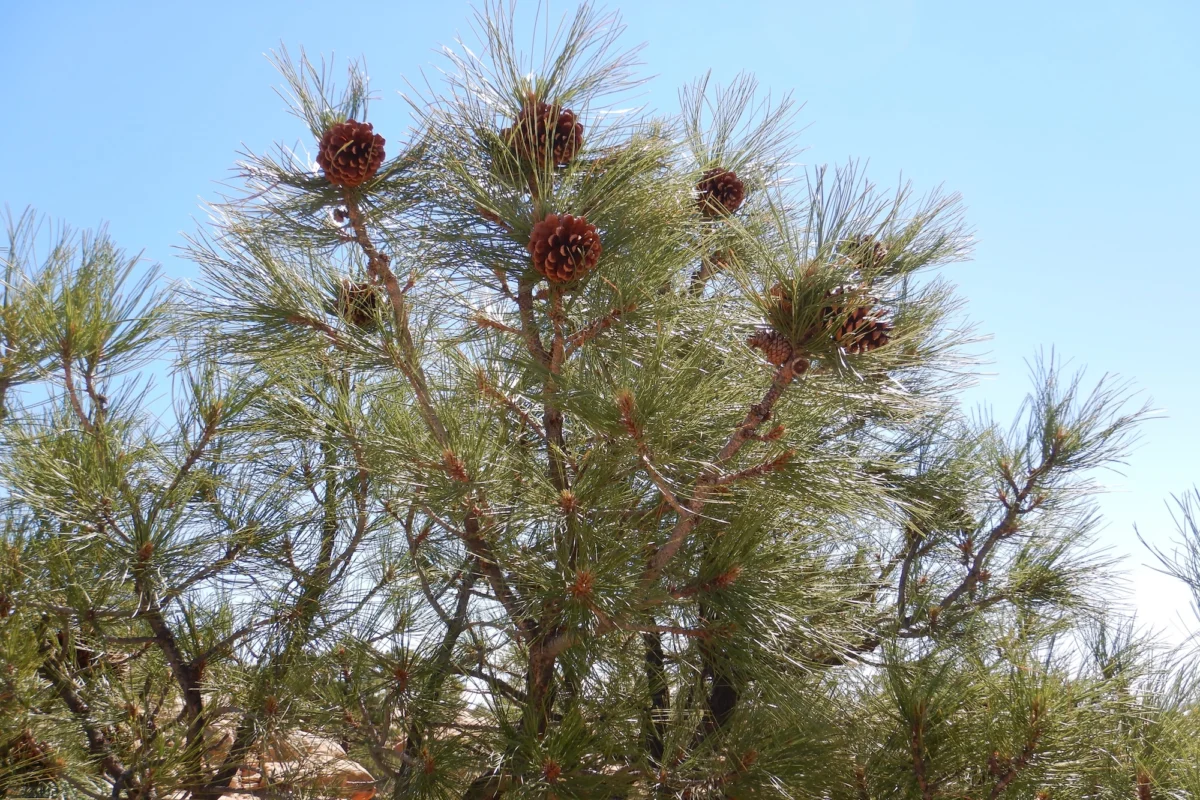
"We tend to limit ourselves to species that occur within the area," Hurteau notes. He suggests that the state must consider "assisted migration"—the intentional movement of species like the Chihuahuan pine from southern New Mexico and Arizona into northern landscapes. These species are already adapted to the higher temperatures and more intense drought cycles that the northern regions are increasingly experiencing. Integrating these species could be the key to ensuring that the forests of 2050 exist at all.
Implications: A Race Against Time
The urgency of this initiative cannot be overstated. Steve Bassett, director of conservation programs for The Nature Conservancy in New Mexico, views the reforestation center as a vital piece of infrastructure in a state under siege.
"The clock is ticking," Bassett says. "Every year that passes, we’re setting our forests back by not being able to seize the moment." The backlog of 7 million acres of burned forest is a massive ecological debt that the state is struggling to repay. As fires continue to occur with increased frequency, the state’s ability to "keep up" with the destruction is the defining challenge of the decade.
The economic and social implications are equally profound. Beyond the aesthetic and recreational value of the forests, these ecosystems are the "water towers" of the state. They regulate the flow of water into reservoirs and prevent the catastrophic flash flooding that has become the hallmark of the post-fire era. Protecting the forest is, quite literally, protecting the water supply of the people of New Mexico.

Conclusion: A Blueprint for the Future
The New Mexico Reforestation Center is not merely a tree nursery; it is a laboratory for climate adaptation. By integrating advanced genetics, "hardened" nursery techniques, predictive landscape modeling, and a willingness to rethink which species belong where, New Mexico is creating a model that other climate-stressed states may soon have to emulate.
While the facility will not reach its full capacity of 5 million seedlings per year until after 2028, the "pipeline" is already operational. It represents a pivot from passive restoration to active, informed, and aggressive land stewardship. In the face of a changing climate, New Mexico has accepted that nature may need a helping hand to recover—and that the best way to help is to train the forest for the heat to come.