In the traditional corporate architecture, workforce planning was a peripheral, administrative chore—a subset of the annual budgeting cycle performed in isolated spreadsheets. Finance departments treated labor as a static cost line, adjusting headcount only when payroll drifted significantly from the original budget. However, as global markets transition into an era of permanent volatility, this antiquated approach is failing.
Today, workforce planning has evolved into a high-stakes strategic capability. It is no longer about merely tracking bodies in seats; it is about the dynamic alignment of human capital with revenue growth, operational agility, and organizational resilience. For modern enterprises, the way they model, deploy, and manage their workforce has become the primary differentiator between industry leaders and those struggling to survive.
The Evolution: From Spreadsheet Custodians to Strategic Architects
Historically, the Finance and Human Resources functions operated in silos. HR managed the talent lifecycle, while FP&A (Financial Planning and Analysis) managed the "headcount budget." This disconnect created a dangerous blind spot: decisions made by Finance regarding cost-cutting often undermined the operational capacity HR was trying to build, while HR’s hiring plans were frequently disconnected from the company’s actual financial runway.
This legacy model is crumbling under the weight of modern economic pressures. Labor accounts for 40% to 70% of operating expenses in most firms. When an organization faces supply chain disruptions, shifts in consumer behavior, or rapid technological displacement, static hiring budgets become obsolete almost immediately.
Modern FP&A teams are now shifting the paradigm. They are moving away from simple headcount tracking toward integrated modeling that encompasses workforce capacity, specific skill sets, the timing of hiring, and individual productivity. By treating the workforce as a revenue driver rather than a cost center, organizations are finally bridging the gap between financial strategy and operational execution.
Headcount vs. Workforce: Defining the Maturity Divide
To understand this transformation, one must distinguish between the two concepts. While often conflated, they represent vastly different levels of organizational maturity.
Headcount Planning: The Finance-Driven Baseline
Headcount planning is fundamentally backward-looking and transactional. It is the practice of counting "heads" and assigning them a cost. It answers questions such as:
- What is the total salary expense for the upcoming quarter?
- Are we within our department-level hiring caps?
- How does our current staffing level compare to last year’s figures?
While necessary for basic fiscal control, headcount planning is limited. It treats employees as interchangeable units of cost, ignoring the nuance of human performance and the complexity of organizational structure.
Workforce Planning: The Strategic Engine
Conversely, strategic workforce planning treats the workforce as a dynamic portfolio of capabilities. It moves beyond the "how many" to address the "what, where, and when." This includes:
- Skills Alignment: Mapping current talent against future product roadmaps.
- Capacity Modeling: Determining how many units of work a team can produce based on skill levels.
- Utilization Analysis: Calculating billable versus non-billable time, especially in professional services.
- Scenario Modeling: Assessing the impact of economic downturns or talent surges on the bottom line.
A professional services firm provides the clearest example of this distinction. A basic headcount plan might look at the cost of hiring ten consultants. A strategic workforce plan, however, evaluates where those consultants should be based, how their specific certifications impact client billable rates, and how proximity to the client reduces non-billable travel time. By optimizing these factors, the firm doesn’t just manage a cost; it optimizes a revenue engine.
Supporting Data: The Volatility Factor
The impetus for this shift is not purely theoretical; it is a response to a chaotic global landscape. According to research from BARC (Business Application Research Center), over 70% of organizations report that external factors—geopolitical instability, fluctuating inflation, and erratic customer demand—are having a disruptive influence on their core operations.
When the business environment changes every quarter, a static annual budget is a liability. Because labor represents the dominant portion of the cost structure—with wages and salaries accounting for over 70% of employer compensation costs per the U.S. Bureau of Labor Statistics—even a minor shift in attrition or hiring pace can derail a company’s entire cash flow strategy.
The Maturity Divide: Leaders vs. Laggards
The divide between high-performing organizations and their laggard counterparts is growing, and it is most visible in how these groups handle simulation and scenario planning.
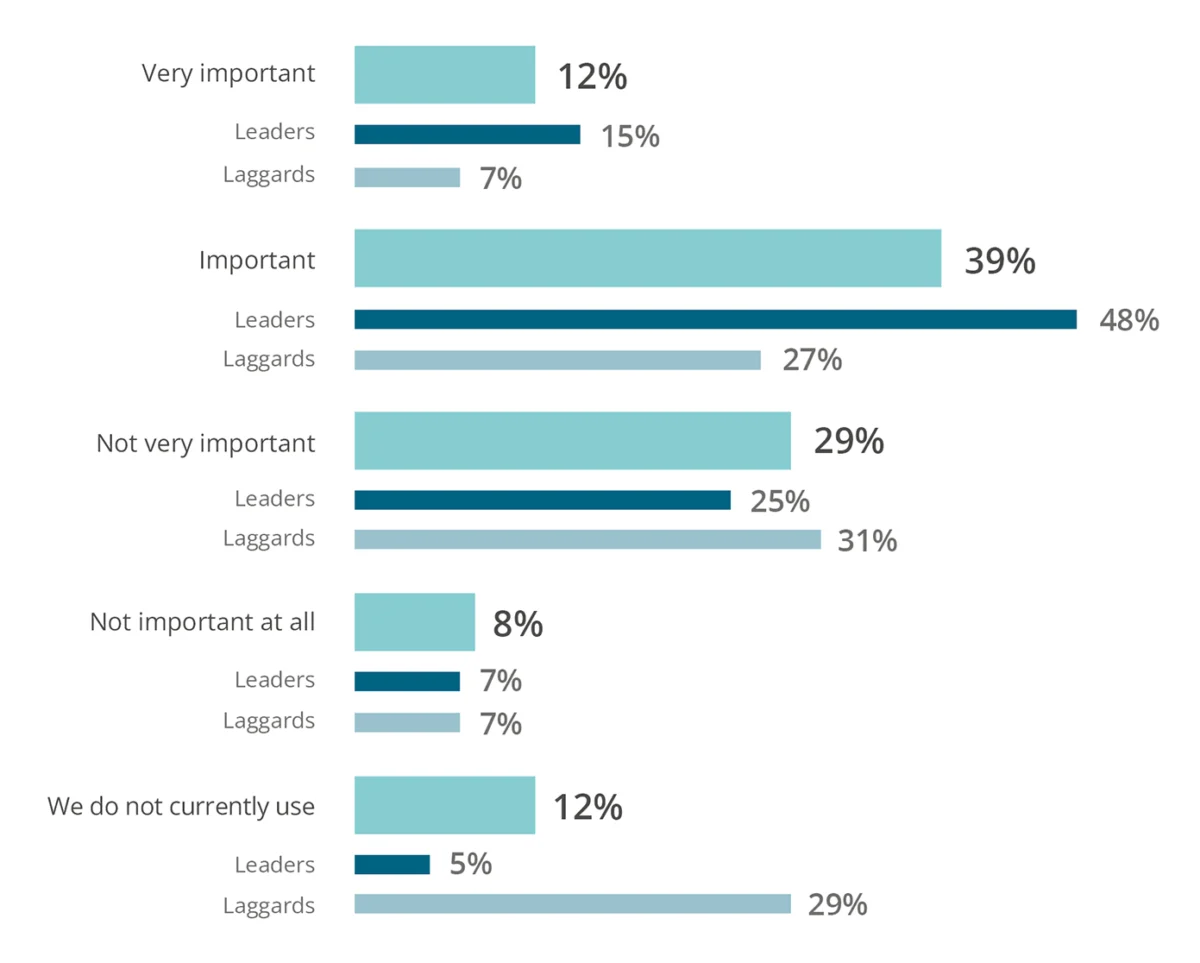
In The Planning Survey 25, BARC researchers identified a clear maturity gap. While over half of all surveyed organizations use some form of simulation, the intensity of that usage varies wildly. Among the top 10% of performers (the "Leaders"), 63% consider scenario planning an essential, non-negotiable part of their management process. In stark contrast, 67% of the "Laggards" do not view scenario planning as a priority, often relying on static, inflexible spreadsheets that cannot account for "what-if" scenarios.
Characteristics of the Leaders:
- Integrated Models: They embed operational drivers directly into financial models.
- Frequent Re-forecasting: They treat planning as a continuous process rather than an annual event.
- Cross-Functional Collaboration: They break down the walls between HR, Finance, and Operations, ensuring that the people planning the budget are the same people executing the hiring.
- Data as an Asset: They leverage high-quality data to make evidence-based decisions rather than relying on historical gut feelings.
Implications for the Future of Enterprise Planning
The implications of this shift are profound. Organizations that fail to evolve their workforce planning capabilities risk being left behind in a "velocity gap."
- The Rise of the Integrated Planning Office: We are witnessing the emergence of the "Office of Strategy Management," where Finance and HR work in lockstep. The technology powering this, such as modern Corporate Performance Management (CPM) platforms, allows for highly customized models that reflect the specific operating structure of a business.
- Productivity as a Financial KPI: As AI and automation continue to reshape work, the definition of "headcount" will change. Leaders are already beginning to include "productivity capacity" in their models—asking not just how many people they need, but how much capacity a specific combination of human and machine capital can generate.
- Resilience over Efficiency: In the past, the goal was cost minimization. In the future, the goal is resilience. Companies that can pivot their workforce structure in response to a market shock will survive; those that cannot will find their rigid cost structures are their undoing.
Conclusion: A Call to Action for Leadership
The data from the CPM Trend Monitor 2026 confirms that integrated, data-driven planning is the top priority for high-performing finance teams globally. The message is clear: if your workforce planning is limited to headcount tracking and budgeting, you are running a business from the rearview mirror.
To compete in the current decade, executives must prioritize the transition from simple payroll management to strategic workforce architecture. This requires a cultural shift that treats labor as a core operational driver and a technical investment in platforms that allow for real-time simulation and cross-departmental transparency. In an era where the only constant is change, the ability to model your human capital dynamically is not just a best practice—it is a requirement for survival.
The divide between the leaders and the laggards is not defined by the size of the company or the depth of its pockets; it is defined by the depth of its insight. Those who master the art of workforce planning today will be the ones defining the markets of tomorrow.