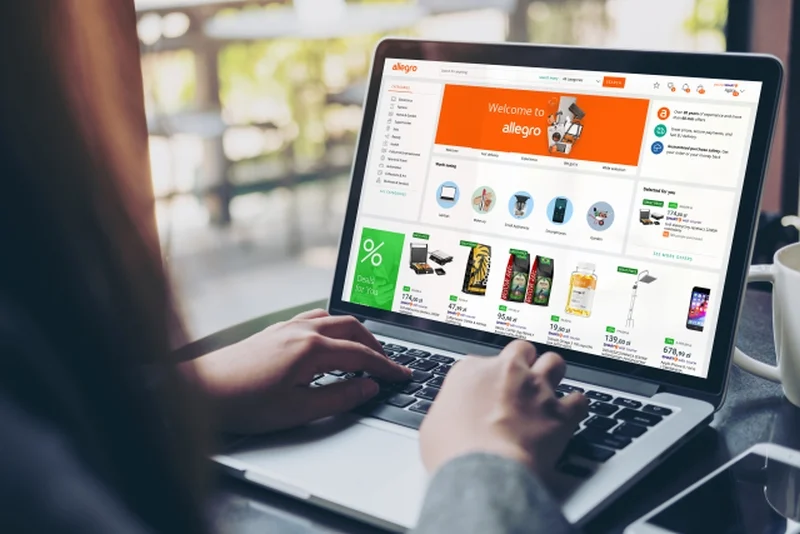
WARSAW – Allegro, the dominant force in the Polish ecommerce landscape, has officially announced a high-stakes strategic partnership with OpenAI, the research organization behind the world’s most advanced artificial intelligence models. This collaboration marks a pivotal shift in the company’s digital strategy, aiming to embed generative AI directly into the core of its marketplace operations. As competition intensifies from global giants like Amazon and regional players like Zalando, Allegro is betting that proprietary AI integration will provide the competitive moat necessary to sustain its growth and redefine the European shopping experience.
Main Facts: A Convergence of Commerce and Intelligence
The partnership grants Allegro direct access to OpenAI’s state-of-the-art technology suite, including the latest large language models (LLMs). This is not merely a software licensing deal; it is a collaborative R&D venture. The two entities will work in tandem to design, prototype, and deploy custom-built applications specifically optimized for the high-frequency, high-volume environment of a major online marketplace.
For Allegro, the primary objectives are fourfold:
- Simplification: Reducing friction in the user journey for millions of buyers.
- Seller Empowerment: Providing business intelligence tools that allow smaller merchants to compete with enterprise-level retailers.
- Marketing Precision: Utilizing predictive analytics and generative content to boost conversion rates and ad effectiveness.
- Operational Velocity: Accelerating the product development lifecycle to ensure that internal innovations reach the consumer interface faster than ever before.
This agreement comes on the heels of Allegro’s recent unveiling of a sophisticated AI assistant for sellers, which was showcased to industry stakeholders in Las Vegas. The tool serves as an intelligent concierge for merchants, capable of interpreting real-time market data, deciphering complex quality score metrics, and suggesting actionable improvements to listings—effectively acting as an automated consultant for thousands of small and medium-sized businesses.
Chronology: The Road to AI Maturity
Allegro’s journey toward an AI-first architecture has been a deliberate, multi-year evolution rather than a reactionary pivot.
- Early Foundations: Long before the current generative AI boom, Allegro began optimizing its search algorithms and recommendation engines using machine learning. These early investments allowed the company to maintain its grip on the Polish market by surfacing highly relevant results to millions of daily visitors.
- The Mobile Integration: Recognizing the shift in consumer behavior toward mobile-first commerce, the company introduced a virtual shopping assistant within its mobile app. This move mirrored global trends set by industry leaders like Amazon and Zalando, who have used AI to create "conversational commerce" experiences.
- The Google Partnership: Parallel to its internal developments, Allegro fostered a working relationship with Google to integrate intelligent shopping assistance directly into the browser experience, ensuring that Allegro remained the first port of call for Polish consumers regardless of where they began their search.
- The Las Vegas Unveiling: Earlier this month, the company moved into a new phase by presenting its seller-facing AI assistant in Las Vegas. By choosing a global stage, Allegro signaled that its aspirations extend beyond its home market.
- The OpenAI Deal: Today, the formal partnership with OpenAI serves as the "accelerator" phase. By integrating the world’s most powerful language models, Allegro is positioning itself to leapfrog traditional iterative updates and move toward a fully autonomous, self-optimizing marketplace environment.
Supporting Data: The Economic Context
To understand the weight of this partnership, one must examine the environment in which Allegro operates. As the self-proclaimed "flywheel of the Polish economy," Allegro is not just a website; it is an economic ecosystem.
- Market Dominance: Allegro remains the clear leader in Poland, despite aggressive expansion efforts by Amazon, which has committed over 5 billion euros to solidify its own Polish operations.
- Streamlining for Focus: The company has been aggressively pruning its international portfolio to focus on high-yield operations. The divestment of its subsidiaries in Slovenia and Croatia earlier this year was a strategic move to clean up the balance sheet and focus capital investment on core technologies like AI.
- The Seller Gap: With millions of products listed, the "long tail" of sellers on Allegro often struggles with logistics, pricing strategies, and SEO-compliant copywriting. The upcoming AI assistant is specifically designed to bridge this gap, automating the tasks that traditionally require a dedicated marketing team, thereby leveling the playing field for independent Polish entrepreneurs.
Official Responses: A Vision for the Next Generation
The leadership at Allegro has framed this partnership as a foundational shift for European commerce. CEO Marcin Kuśmierz emphasized that the company’s intent is to create a new benchmark for excellence.
"AI is fundamentally transforming how ecommerce operates," Kuśmierz stated in a recent press release. "We are confident that our approach will set a new standard for the next generation of commercial services in Europe. By joining forces with OpenAI, we aren’t just adopting tools—we are co-creating the future of how goods move from sellers to buyers in an intelligent, frictionless manner."
The sentiment within the industry is one of cautious optimism. While other European marketplaces are still in the phase of experimenting with simple chatbots, Allegro’s strategy suggests an attempt to build a "deep integration" model—where AI is not a widget on the side, but the engine driving the marketplace’s backend, logistics, and customer support.
Implications: The Future of the Marketplace
What does this mean for the average user and the thousands of merchants on the platform?
For the Buyer: The "Intelligent Concierge"
The integration of OpenAI’s technology suggests that future versions of Allegro will be significantly more conversational. Instead of using filters and search bars, shoppers may soon be able to describe their needs—"I need a gift for a 10-year-old interested in astronomy under 200 PLN"—and receive a curated list of results that takes into account current availability, shipping times, and seller ratings. This reduces the "search fatigue" that often leads to cart abandonment.
For the Seller: The "Automated Entrepreneur"
The most significant impact will be on the seller side. The AI assistant currently finishing its pilot phase is expected to evolve into a full-scale operations manager. Features in the pipeline include:
- Dynamic Pricing: Real-time adjustments based on competitor activity and demand spikes.
- Logistics Optimization: AI-driven suggestions on inventory placement and shipping choices to minimize costs.
- Content Generation: Automated creation of product descriptions and imagery that maximize visibility within the platform’s algorithm.
For the European Market: The "Sovereignty Challenge"
The partnership also has significant implications for European digital sovereignty. By partnering with a U.S.-based entity like OpenAI, Allegro is effectively betting that the best-in-class global technology is superior to developing a local, fragmented solution. However, this raises questions about data privacy and compliance with the EU’s strict AI Act. Allegro will need to navigate these regulatory waters carefully, ensuring that its "next generation" of services remains fully compliant with European consumer protection laws.
The Competitive Landscape
Amazon will undoubtedly be watching this development closely. As the global leader in AI-driven retail, Amazon’s move into Poland is a direct challenge to Allegro’s market share. Allegro’s partnership with OpenAI is a clear signal that they are not willing to concede the "intelligence war." By integrating advanced language models now, Allegro is effectively attempting to build a wall of high-quality data and user experience that makes it difficult for even the best-funded global competitors to disrupt their local dominance.
Conclusion
The collaboration between Allegro and OpenAI is a watershed moment for Central and Eastern European ecommerce. It represents a transition from a traditional "digital storefront" model to a "predictive ecosystem" model. As the partnership moves from the development phase to widespread implementation, the industry will be watching to see if this alliance can truly deliver on the promise of a more efficient, profitable, and user-friendly marketplace. For now, Allegro has set the bar high, signaling to its competitors that the race to define the next generation of European retail will be won in the labs of artificial intelligence.