The United Arab Emirates’ (UAE) formal withdrawal from the Organization of the Petroleum Exporting Countries (OPEC) marks a watershed moment in the history of global energy markets and Middle Eastern security architecture. While economic analysts have long framed the move as a byproduct of the UAE’s successful diversification efforts—positioning itself as a non-oil-dependent logistical and financial hub—the reality is far more complex. This exit is not merely a recalibration of energy policy; it is a calculated geopolitical pivot.
The UAE’s departure from the cartel, long considered the bedrock of Gulf economic stability, signals a profound disillusionment with the regional security framework. By distancing itself from the Saudi-led consensus, Abu Dhabi is asserting a newfound strategic autonomy, one that has been sharpened by the violent aftershocks of the February conflict with Iran.
Main Facts: A Paradigm Shift in Energy and Security
The core of the UAE’s decision lies in a growing misalignment between Abu Dhabi’s national interests and the collective mandates of OPEC. For decades, the cartel operated on the premise that its members shared a common economic destiny. However, the UAE’s rapid transition toward a diversified economy—centered on tourism, technology, and global trade—rendered the traditional OPEC policy of output restriction increasingly burdensome.
While Saudi Arabia, as the de facto leader of OPEC, continues to rely heavily on oil rents to fund its domestic "Vision 2030" project, the UAE has achieved a level of economic maturity that allows it to prioritize market share over price manipulation.
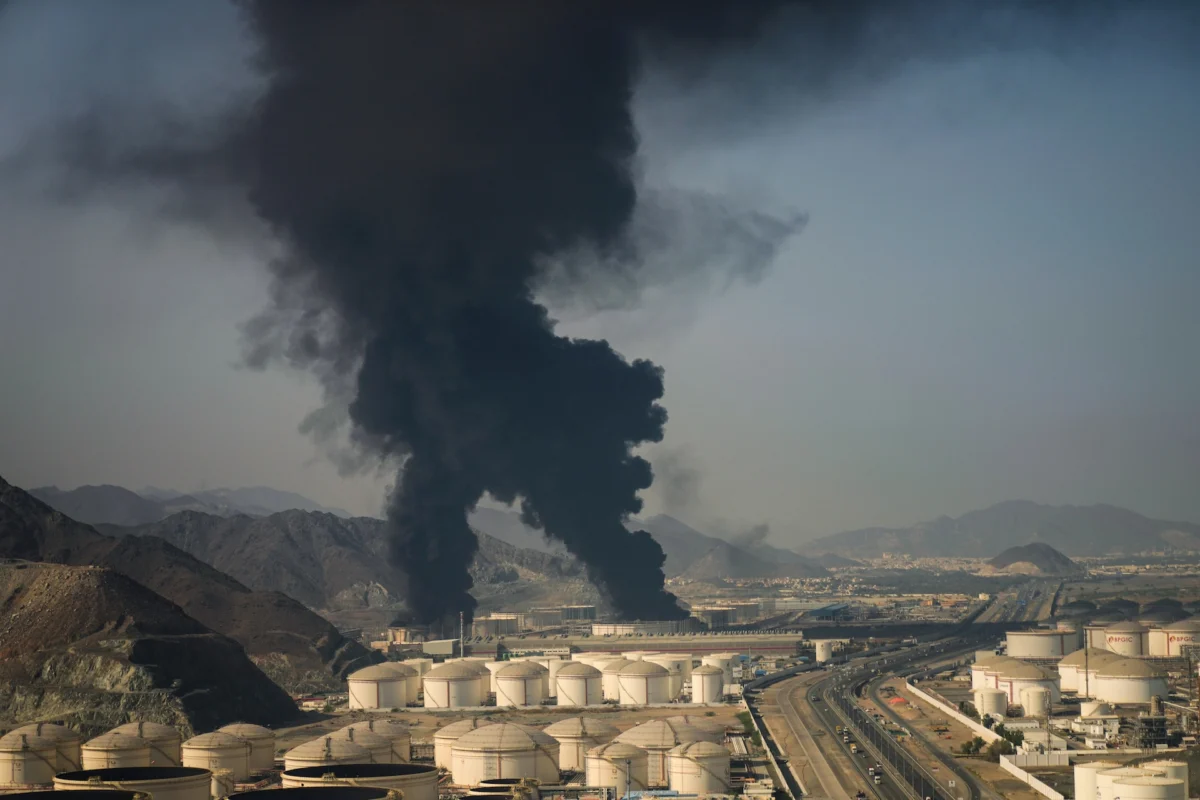
However, the economic narrative is only half the story. The decision was catalyzed by a fundamental breakdown in collective defense. Following the U.S.-Israeli strikes on Iran in late February, the subsequent Iranian retaliation targeted key infrastructure across the Gulf. Abu Dhabi’s leadership perceived the muted response from the Gulf Cooperation Council (GCC) and the Arab League as a failure of solidarity. Consequently, the UAE is no longer content to let its energy output be dictated by an organization whose geopolitical vision no longer aligns with its own national security requirements.
Chronology: The Road to Departure
The path to the UAE’s exit was not sudden; it was a slow-motion unraveling of a decades-long alliance.
- 2020–2022: Economic Decoupling. The UAE begins aggressively expanding its production capacity, signaling to OPEC that it no longer views itself as a junior partner to Saudi production quotas. Internal friction becomes public as Abu Dhabi pushes for higher baselines.
- Late February 2024: The Catalyst. A coordinated U.S.-Israeli campaign of airstrikes against Iranian nuclear and military facilities triggers an immediate, violent response from Tehran.
- March 2024: The Breach. Iran deploys missile and drone swarms against U.S. allies. The UAE suffers significant infrastructure damage. Abu Dhabi seeks a robust, unified condemnation and a collective military posture from the GCC and the Arab League.
- April 2024: The Disenchantment. Abu Dhabi concludes that its regional neighbors are prioritizing appeasement or neutrality over the defense of the UAE. The UAE begins a series of high-level closed-door meetings to reassess its membership in regional blocs.
- May 2024: The Withdrawal. The UAE formally notifies the OPEC secretariat of its intent to withdraw, citing a fundamental divergence in economic strategy and a need for sovereign control over its natural resources.
Supporting Data: The Economic Divergence
The data supporting the UAE’s move is stark. According to the International Monetary Fund (IMF), non-oil sectors now account for over 70% of the UAE’s GDP. This is a dramatic contrast to its regional peers, where oil revenues often constitute the primary engine of state spending.
- Production Capacity: The UAE’s state-owned energy giant, ADNOC, has invested billions into boosting sustainable production to 5 million barrels per day (bpd) by 2027. OPEC mandates, which aimed to curb production to prop up prices, directly conflicted with the UAE’s goal of monetizing its reserves while the global transition to renewables is still in its infancy.
- Market Volatility: During the post-February price surge, the UAE utilized the spike to assert its independence. By maintaining high output, the UAE effectively stabilized global prices, preventing the kind of hyper-inflation that would have devastated its burgeoning logistics and aviation sectors.
- Investment Trends: Foreign Direct Investment (FDI) into the UAE has surged as the country positioned itself as a "neutral" safe harbor. By decoupling from OPEC, the UAE has signaled to global investors that its energy policy is governed by market logic rather than political cartel maneuvering.
Official Responses: A Diplomatic Chill
The reaction from regional capitals has been one of controlled, if tense, diplomacy.
- Riyadh: The Saudi Ministry of Energy issued a terse statement expressing "regret" over the UAE’s decision, emphasizing the importance of "collective stability" in global energy markets. Privately, Saudi officials are reportedly concerned that the UAE’s exit could trigger a domino effect, leading other members to reconsider their own obligations.
- Tehran: Iran has sought to exploit the rift, issuing statements highlighting the "instability" caused by the UAE’s departure, while simultaneously attempting to open back-channel communications with Abu Dhabi to discuss regional security de-escalation.
- The UAE: Emirati officials have maintained a disciplined message: the decision is purely economic and strategic. "We are committed to global market stability, but we must prioritize the sovereignty of our economic decisions," an official source stated. They have conspicuously avoided mentioning the GCC, highlighting the growing silence between the UAE and its traditional security partners.
Implications: The New Middle Eastern Security Architecture
The geopolitical aftershocks of this departure will define the region for the coming decade.
1. The Fragmentation of the GCC
The Gulf Cooperation Council was founded on the principle of collective security. If its second-largest economy no longer shares a unified energy or security policy with the rest of the bloc, the GCC’s relevance is significantly diminished. We are likely to see a shift toward bilateral security pacts rather than multilateral frameworks. The UAE is already moving to deepen its defense ties with Western powers and Israel, effectively creating a "security island" that operates independently of its neighbors.
2. The End of OPEC’s Hegemony
For nearly 60 years, OPEC acted as a cartel that could effectively swing global prices. With the UAE—a major producer—now operating as a "wildcard" or a free agent, the cartel’s ability to enforce production cuts is severely compromised. This shift effectively heralds the end of the "OPEC era" of total market control, ushering in a more competitive, albeit volatile, energy landscape.
3. A New Stance on Iran
The most critical implication is the UAE’s changed perception of the Iranian threat. Abu Dhabi no longer trusts its neighbors to serve as a security buffer. The UAE’s future security posture will likely involve a more assertive, technologically driven defense—emphasizing high-end surveillance, drone defense, and intelligence-sharing with non-regional partners. This places the UAE in direct opposition to the "de-escalation" strategies favored by other Arab states, who fear that a hawkish UAE stance could draw them into a wider conflict.
4. Global Market Volatility
As the UAE increases its output to maximize its revenue and influence, global oil prices may experience a structural shift downward in the medium term. This will empower energy-consuming nations but place immense pressure on the budgets of petrostates that have failed to diversify. The UAE, having insulated itself through its non-oil sectors, is uniquely positioned to weather this volatility, whereas its neighbors may face significant domestic unrest as their social contracts, funded by oil, come under pressure.
Conclusion: The Path Ahead
The United Arab Emirates’ exit from OPEC is not merely a bureaucratic footnote in the history of global energy. It is a profound declaration of independence. By casting off the constraints of the cartel, Abu Dhabi has signaled that it is no longer willing to subordinate its national prosperity or its security architecture to the consensus of the Gulf.
As the dust settles from the February conflict and the region recalibrates to this new reality, the UAE stands as a bellwether for the Middle East. It is a nation transitioning from a traditional regional player into a global, autonomous power—one that views its economic interests and its survival as distinct from the collective, often paralyzed, institutions of its neighbors. The "Strategic Divorce" is complete; the question now is how the rest of the region will adapt to a future where the UAE no longer plays by the old rules.