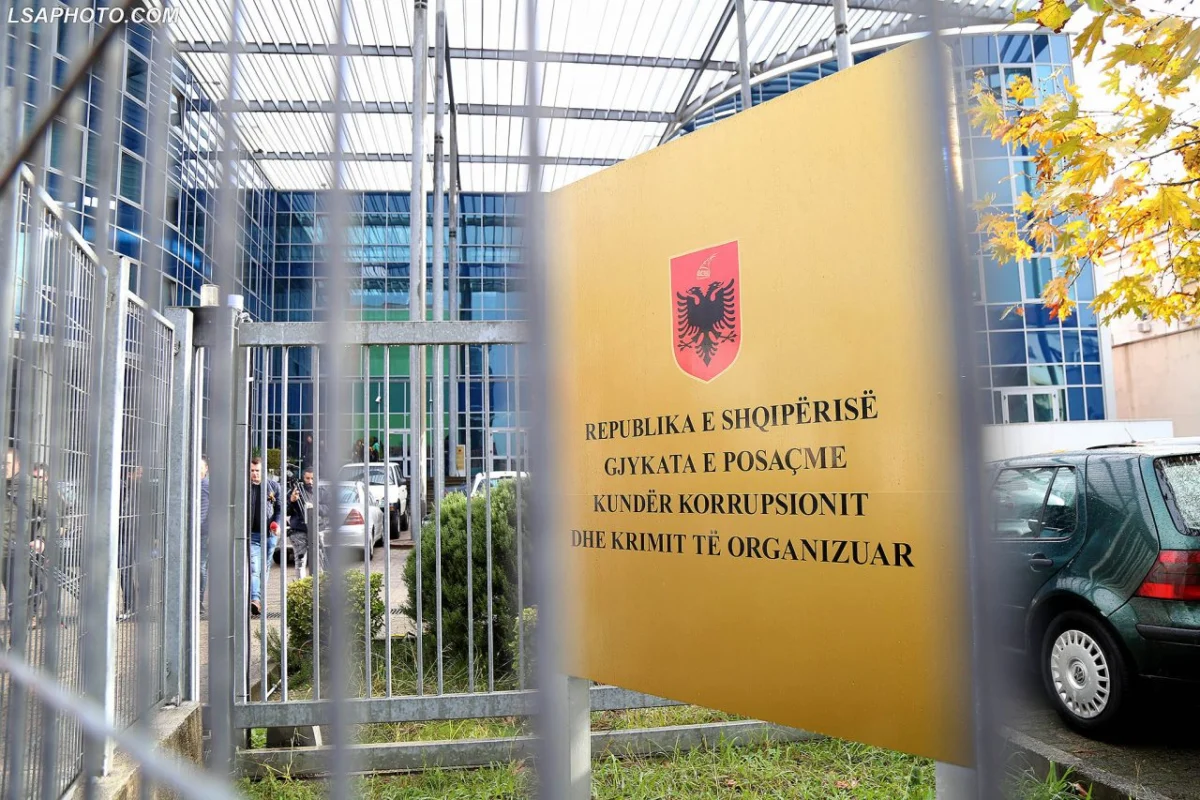
Tirana, Albania – May 12, 2022 – In a significant legal development, the Special Court of First Instance for Corruption and Organized Crime in Tirana has delivered a decisive verdict, convicting two individuals for their involvement in an illicit influence-peddling scheme related to the transfer of a convicted prisoner. The case, which has drawn considerable attention, centers on the alleged manipulation of official procedures for personal gain, highlighting systemic vulnerabilities and the ongoing battle against corruption within Albania’s justice system.
The court, presided over by judges Bib Ndreca, Alma Kodraliu, and Etleva Deda, declared Zef Mali, a former Staff Officer for Force Management within the Republican Guard, guilty of illegally influencing the transfer process of a convicted individual. Mali was sentenced to two years and six months of imprisonment. However, in accordance with the shortened trial procedure, this sentence was reduced to one year and eight months. Furthermore, the court imposed a supplementary penalty, disqualifying Mali from holding public office for a period of five years, a move underscoring the severity of his breach of public trust.
The second defendant, Jemine Çoku, was also found guilty. Çoku was implicated in facilitating the transfer process in Albania of her brother, Kujtim Çeliku, who is currently serving a prison sentence in the Republic of Turkey. For her role, Çoku received a sentence of one year in prison, which, after applying the shortened trial provisions, was reduced to eight months of incarceration. In a notable decision, the court ordered the suspension of Çoku’s sentence due to the significant assistance she provided to the investigation.
The core of the prosecution’s case revolved around allegations that both Mali and Çoku engaged in corrupt practices to expedite and influence the transfer of Çeliku, who was serving a sentence in Turkey. The investigation revealed a complex web of alleged influence and financial transactions aimed at circumventing standard legal procedures.
The Allegations: A Scheme of Influence and Financial Gain
According to the investigation’s findings, Jemine Çoku allegedly received €20,000 from her brother, Kujtim Çeliku, in exchange for her purported influence over officials within the Ministry of Justice. The objective was to facilitate the transfer of Çeliku from Turkey to an Albanian prison. This payment, investigators contend, was intended to secure the services of individuals who could expedite the bureaucratic process and potentially override standard protocols.
The investigation further detailed that the transfer procedure for Çeliku, the convicted individual, was initiated. This suggests that the alleged influence-peddling did indeed have an impact on the official proceedings, at least in setting the process in motion. The court’s verdict signifies that the prosecution successfully demonstrated a causal link between the defendants’ actions and the undue influence exerted on the transfer process.
Zef Mali’s position as a Staff Officer for Force Management within the Republican Guard placed him in a critical role with access to sensitive information and potential influence over security and administrative matters related to prisoner transfers. The prosecution argued that Mali exploited his authority to facilitate the illicit transfer, thereby betraying the trust placed in him by his position. His conviction for illegally influencing a judicial procedure, especially while holding a position of authority within a state institution responsible for security, carries significant implications for accountability within the public service.
Chronology of Events: From Allegation to Verdict
While the provided text focuses on the verdict, the timeline leading to this judgment would typically involve several key stages:
- Initial Investigation: The case likely began with an investigation initiated by law enforcement or prosecutorial authorities, potentially triggered by intelligence, a tip-off, or observations during a related inquiry. This would involve gathering evidence, including financial records, communications, and witness testimonies.
- Arrests and Indictments: Following the preliminary investigation, if sufficient evidence was gathered, arrests would have been made, and formal indictments would have been issued against Zef Mali and Jemine Çoku.
- Pre-Trial Proceedings: This phase would include the formal charging of the defendants, disclosure of evidence, and potential pre-trial motions filed by the defense or prosecution.
- Trial Proceedings: The Special Court of First Instance would have then commenced the trial, where evidence was presented by both the prosecution and the defense. This would have involved examining witnesses, presenting documentary evidence, and making legal arguments.
- Shortened Trial Procedure: The application of a "shortened trial" indicates that the defendants likely admitted to certain facts or pleaded guilty to lesser charges, which is a common mechanism in many legal systems to expedite proceedings and potentially receive a reduced sentence.
- Verdict and Sentencing: As detailed in the article, the court deliberated and delivered its verdict, declaring the defendants guilty and imposing sentences. The application of the shortened trial provisions led to the reduction of their respective prison terms.
- Post-Verdict Options: Following the verdict, the defendants would have the right to appeal the decision to a higher court, which could lead to further legal proceedings.
Supporting Data and Evidence: The €20,000 Transaction
The central piece of financial evidence presented by the prosecution appears to be the €20,000 transaction involving Jemine Çoku. This sum, allegedly paid by her brother, forms the basis of the bribery and influence-peddling charges. While the article does not detail the exact nature of this transaction (e.g., bank transfers, cash payments), it is implied that this was a crucial element in proving Çoku’s involvement and the illicit nature of the dealings.
The prosecution would have likely presented evidence to corroborate this transaction, such as:
- Financial Records: Bank statements, transaction logs, or other financial documentation that trace the movement of funds.
- Witness Testimony: Testimony from individuals involved in the transaction, financial institutions, or individuals who witnessed the exchange.
- Communication Records: Intercepted communications (phone calls, messages) between the defendants or involved parties that allude to or explicitly discuss the payment and its purpose.
The prosecution’s success in securing convictions suggests that the presented evidence was deemed sufficient by the court to establish guilt beyond a reasonable doubt. The court’s decision to find Mali guilty also implies that evidence was presented to connect him directly to the illicit influence on the transfer process, potentially through his actions or communications related to the case.
Official Responses and Reactions
As of the publication of this article, there have been no explicit official responses quoted from the Ministry of Justice or the Republican Guard regarding the verdict. However, the nature of the conviction – particularly involving a member of the Republican Guard – is likely to prompt internal reviews and potentially stricter oversight mechanisms.
The Special Court’s ruling is a clear signal of the judiciary’s commitment to combating corruption, even when it involves individuals within state institutions. Such verdicts are often seen as a crucial step in restoring public confidence in the justice system and demonstrating that no one is above the law.
The Albanian justice system has been undergoing significant reforms, including the establishment of specialized courts like the one that delivered this verdict. These reforms aim to tackle high-level corruption and organized crime more effectively. This ruling, therefore, can be viewed as a tangible outcome of these reform efforts.
Implications of the Verdict
The conviction of Zef Mali and Jemine Çoku carries several significant implications:
- Deterrence Against Corruption: The sentencing of a former high-ranking officer within the Republican Guard serves as a strong deterrent to others in positions of power. It underscores that the misuse of authority for personal gain will be met with legal consequences, including imprisonment and disqualification from public service.
- Accountability within State Institutions: The verdict highlights the importance of accountability within state institutions. The Republican Guard, as a security force, is expected to uphold the highest standards of integrity. This conviction suggests a need for enhanced internal controls and vetting processes to prevent such abuses of power.
- Strengthening the Rule of Law: By successfully prosecuting individuals accused of influence peddling, the Albanian judiciary reinforces the principle of the rule of law. It demonstrates that the legal framework is capable of addressing complex cases of corruption and holding perpetrators accountable, regardless of their position.
- Impact on Prisoner Transfer Procedures: The case may prompt a review and potential strengthening of the procedures governing prisoner transfers, both domestically and internationally. Ensuring that these processes are transparent, fair, and free from undue influence is paramount to maintaining the integrity of the justice system.
- Public Trust and Confidence: While convictions are a positive step, sustained efforts are needed to rebuild public trust in institutions. High-profile corruption cases can erode confidence, and therefore, continued transparency and robust enforcement of the law are essential.
- International Cooperation: The involvement of a prisoner transfer from Turkey underscores the importance of international cooperation in combating transnational crime and corruption. This case may reinforce the need for enhanced collaboration between Albanian and Turkish authorities on judicial and law enforcement matters.
The Special Court’s decision in this case marks a significant moment in Albania’s ongoing efforts to combat corruption and uphold the rule of law. It sends a clear message that influence peddling and the abuse of public office will not be tolerated, and that the justice system is actively working to hold those responsible accountable. The long-term impact of this ruling will depend on the continued commitment to these principles and the effective implementation of reforms aimed at creating a more transparent and just society.