By Retail Dive Staff | May 13, 2026
In a major leadership shake-up that marks the end of an era for the pioneer of the circular fashion economy, Rent the Runway (RTR) announced this week that co-founder and long-time CEO Jennifer Hyman is stepping down from her role. Succeeding her as interim chief executive officer and president is retail veteran Teri Bariquit, a move that signals a pivot toward operational rigor and established retail leadership as the company looks to solidify its long-term financial health.
The transition, scheduled to take effect this Friday, brings a close to Hyman’s 18-year tenure—a journey that redefined how consumers interact with luxury fashion and pushed the boundaries of the retail industry.
The Core Transition: A Changing of the Guard
The announcement, released via official company channels, confirmed that Hyman will not only vacate the CEO and presidential chairs but will also resign from the Rent the Runway Board of Directors. However, in an effort to ensure a seamless handoff, Hyman has committed to staying on as a strategic advisor through January.
For the company, the selection of Teri Bariquit is calculated. A fixture in the fashion retail landscape, Bariquit brings nearly four decades of experience to the table, almost all of which was cultivated during her tenure at Nordstrom. Her appointment is not entirely out of left field; she has served on the Rent the Runway board since October 2025, providing her with intimate knowledge of the company’s current strategic roadmap and operational challenges.
Chronology: From Disruptor to Public Company
To understand the weight of this transition, one must look at the trajectory of Rent the Runway, which has been synonymous with the "access over ownership" movement since its inception.
- 2009: Jennifer Hyman and co-founder Jennifer Fleiss launch Rent the Runway. The company disrupts the traditional retail model by allowing customers to rent designer dresses for high-end events, effectively democratizing access to luxury.
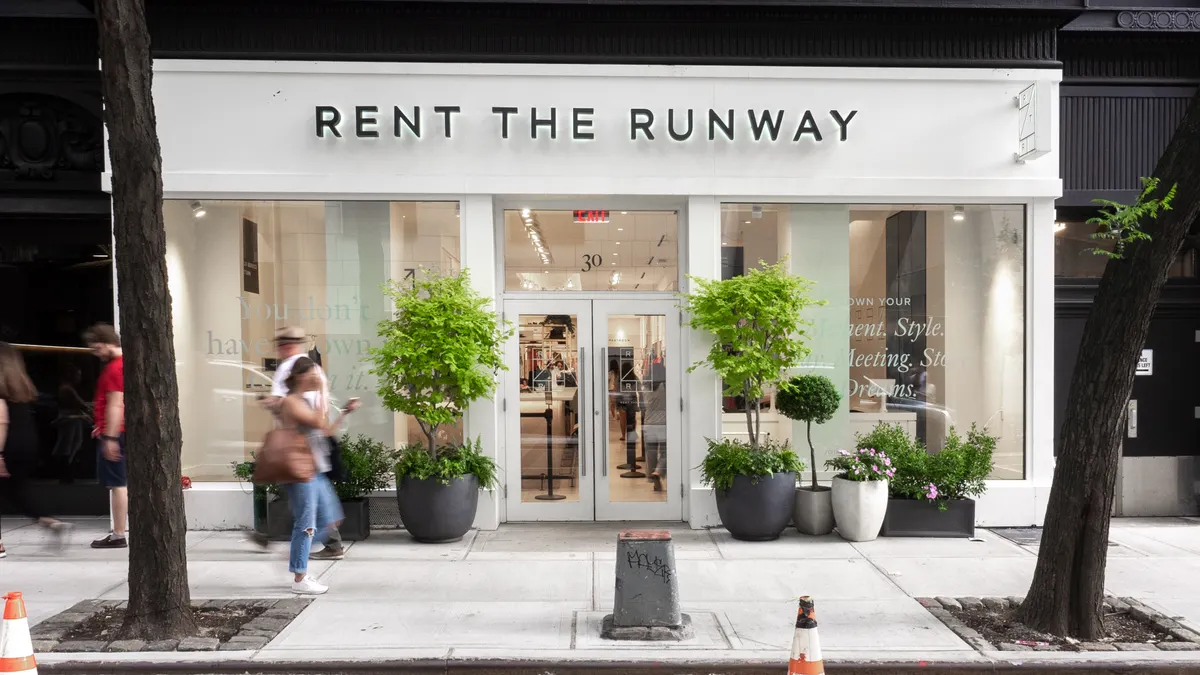
- 2010s: The company expands rapidly, introducing subscription models and physical flagship stores, becoming a darling of the venture capital world and a key player in the "sharing economy."
- 2021: Rent the Runway officially lists on the Nasdaq, signaling its evolution from a niche startup to a publicly traded retail entity.
- 2025: The company faces increasing pressure to demonstrate consistent profitability. In October, Teri Bariquit joins the Board of Directors, bringing her deep merchandising expertise to the oversight team.
- 2026: After a year that saw the company achieve key profitability milestones, Hyman announces her departure, citing the company’s "strongest position in years" as the right time for new leadership to take the reins.
The Financial Landscape: Profitability and Momentum
While Rent the Runway was celebrated for its innovation, it struggled for years to reconcile its high-cost logistics and inventory management with the demands of public market investors. The company historically operated at a loss, prioritizing customer acquisition and market share over the bottom line.
However, the narrative shifted significantly over the last 18 months. Last year, the company achieved a critical milestone by finally operating "in the black." This turnaround was largely attributed to a diversification of revenue streams. Rather than relying solely on individual rentals, the company successfully piloted an online marketplace, expanded its media platform, and grew its B2B services.
These initiatives are expected to remain the pillars of the company’s growth strategy under Bariquit. In her initial statement following the announcement, Bariquit emphasized that the company is currently in its "strongest financial position in years." She noted that her immediate focus will be "supporting our team and executing against our clear roadmap," suggesting that shareholders should not expect a radical pivot in strategy, but rather a focus on operational excellence and the scaling of existing successful ventures.
Official Responses and Reflections
The announcement has triggered a wave of reflection across the retail sector. Hyman, who has been the public face of the company since its garage-startup days, took to LinkedIn on Wednesday to address the transition directly.
"Today, after 18 years, I have decided to step down as Rent the Runway’s CEO and from the Board of Directors," Hyman wrote. "I firmly believe that RTR is in a stronger position than it has ever been, which is why this is as good a time as any to let RTR write its next chapter."
Her departure is viewed by many as an amicable transition. By staying on as an advisor until January, Hyman is effectively signaling to investors that there is no internal strife or immediate emergency requiring a sudden exit.

Bariquit, meanwhile, has moved quickly to reassure both internal teams and external stakeholders. By highlighting the company’s "clear momentum," she is positioning herself as a steady hand capable of refining the company’s complex supply chain—a skill set honed over decades in the high-stakes environment of department store management.
Implications: What Lies Ahead for Rent the Runway?
The transition from a founder-led company to a leader with extensive corporate retail experience often signals a shift in corporate maturity. Here are the key implications for the future of Rent the Runway:
1. Operational Efficiency as a Priority
Teri Bariquit’s background as a "chief merchant" suggests that Rent the Runway will likely tighten its grip on inventory management and merchandising efficiency. In a rental model, the "cost per wear" and the speed at which items can be cleaned, repaired, and sent back out are the lifeblood of the business. Bariquit’s expertise in large-scale retail operations will be critical in optimizing these logistics.
2. Doubling Down on B2B and Media
The company’s recent pivot into an online marketplace and B2B services provides a more predictable revenue stream than the volatile rental market. Analysts suggest that the new leadership will likely lean into these areas, potentially seeking more partnerships with brands looking for a "circularity-as-a-service" solution.
3. The Challenge of Public Market Perception
Rent the Runway has historically been viewed with skepticism by traditional retail analysts who struggle to value the circular model against traditional department stores. With a CEO who spent nearly 40 years at Nordstrom, the company may gain increased credibility among institutional investors who appreciate a more traditional, metrics-driven approach to retail leadership.
4. Cultural Continuity vs. Evolution
The departure of a co-founder always carries the risk of a "brain drain" or a loss of institutional culture. The company’s success has been tied to its ability to build a community-driven brand. The challenge for Bariquit will be to maintain that brand spirit while applying the rigid operational frameworks necessary to ensure long-term profitability.

Conclusion: The Next Chapter
As Friday approaches and Teri Bariquit assumes her role as interim CEO, the retail industry will be watching closely. The transition at Rent the Runway is more than just a personnel change; it is a bellwether for the circular fashion industry at large.
For nearly two decades, Rent the Runway has proven that consumers are willing to change their consumption habits. Now, with a veteran leader at the helm, the company faces the next, perhaps more difficult challenge: proving that this change in habit can produce a consistently profitable and sustainable enterprise in the long term.
The "next chapter" of Rent the Runway will likely be defined by the balance between the disruptive, visionary spirit of its origins and the disciplined, data-driven methodology of its new leadership. For now, the transition represents a stable, planned shift, providing the company with the continuity it needs to capitalize on the momentum it has fought so hard to build.