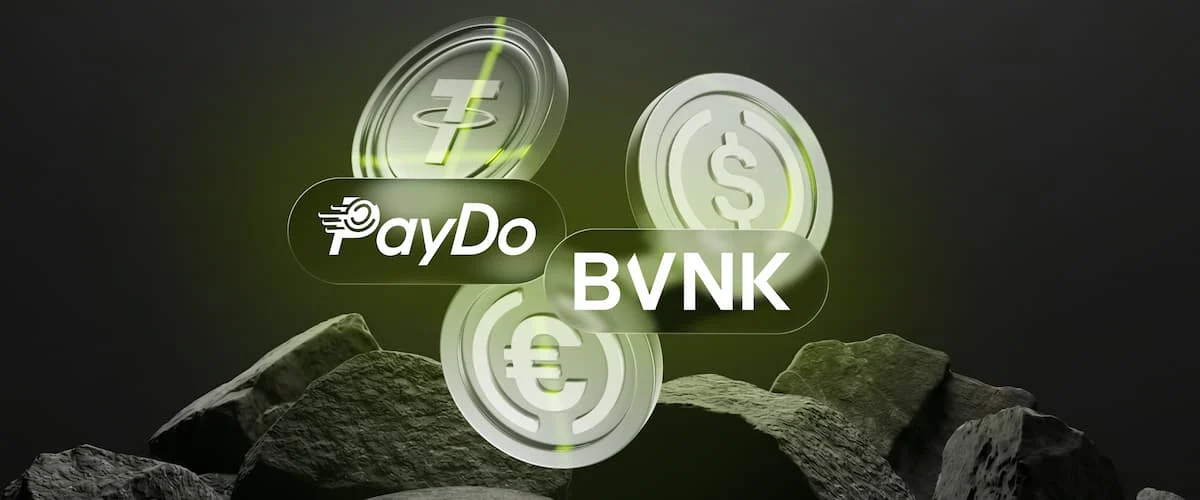
In an increasingly digitized global economy, the friction inherent in traditional cross-border banking has long served as a bottleneck for international commerce. Today, PayDo, the unified payment ecosystem, announced a strategic integration of stablecoin capabilities into its broader payment stack. This move, executed in partnership with digital asset infrastructure provider BVNK, promises to reshape how online businesses manage global liquidity, enabling seamless transitions between stablecoins and fiat currencies.
By embedding these capabilities directly into its platform, PayDo is providing its massive merchant base with a streamlined, scalable, and compliant solution for moving money across borders—effectively bypassing the sluggishness of legacy correspondent banking networks.
Main Facts: The New Financial Architecture
The core of this development lies in the integration of stablecoins as a practical liquidity layer. Under this new model, PayDo users gain access to a trio of transformative features:
- Stablecoin-to-Fiat Top-ups: Users can now fund their PayDo balances using stablecoins, which undergo automatic conversion into fiat currency in a single, atomic transaction.
- Fiat-to-Stablecoin Payouts: Conversely, for outgoing transfers, PayDo’s platform automatically converts existing fiat balances into stablecoins at the precise point of payout, facilitating near-instant settlement.
- Stablecoin Checkout: Merchants can now deploy a dedicated checkout feature on their websites, allowing them to accept crypto payments that are immediately settled as fiat directly into their PayDo accounts.
Crucially, this architecture avoids the regulatory and operational burdens of crypto custody. PayDo does not hold digital assets on its balance sheet; instead, it acts as a high-speed conduit, ensuring that all crypto-to-fiat conversions occur within a strictly regulated framework. This "non-custodial" approach allows merchants to benefit from the speed and global reach of blockchain technology without needing to manage the complex compliance or volatility risks typically associated with holding digital assets.
A Chronology of Integration
The journey toward this integration marks a significant pivot in PayDo’s operational strategy.

- Foundation (2020–2023): PayDo focused on consolidating essential financial services under a single API. This period was characterized by the development of its robust infrastructure, which currently supports multi-currency accounts, SEPA and SWIFT transfers, card issuing, and Open Banking solutions.
- Strategic Alignment (2024): Recognizing the limitations of traditional settlement times for high-volume merchants, PayDo sought a partner capable of bridging the gap between volatile blockchain networks and the stability of fiat banking.
- The Partnership (Early 2025): PayDo and BVNK initiated the technical integration phase. BVNK’s infrastructure provided the necessary plumbing to ensure that stablecoin transactions could be treated with the same reliability as traditional banking wires.
- Deployment (Mid-2025/2026): The current launch represents the culmination of this technical effort, moving the solution from beta testing into a live, production-ready state for PayDo’s global user base.
Supporting Data: Why Speed Matters
PayDo currently processes over €5 billion in annual transaction volume for thousands of businesses worldwide. In the realm of high-volume cross-border payments, this volume is susceptible to significant degradation due to "banking friction"—the delays caused by intermediary banks, time zone differences, and legacy messaging protocols.
Traditional cross-border payments often take three to five business days to clear. For a business processing billions in volume, these delays represent a significant cost in terms of liquidity management and capital efficiency. By leveraging stablecoins, PayDo effectively shifts the settlement timeline from days to minutes.
The integration addresses three critical pain points for merchants:
- Operational Latency: Eliminating the wait times inherent in the SWIFT network.
- Currency Fragmentation: Reducing the need to maintain multiple local currency accounts to facilitate global trade.
- Compliance Burden: By automating the conversion process, PayDo shields merchants from the intricacies of crypto-specific AML (Anti-Money Laundering) and KYC (Know Your Customer) requirements, as the platform handles the conversion within its established, regulated environment.
Official Perspectives: Building a Unified Ecosystem
The leadership teams behind this collaboration view the move as a foundational shift in financial infrastructure.
Serhii Zakharov, CEO and founder of PayDo, framed the announcement as a critical milestone in the company’s vision. "BVNK’s infrastructure was crucial in reaching this balance between stablecoin flexibility and fiat stability," Zakharov noted. "This is not merely an addition of a payment method; it is a fundamental expansion of our ecosystem. PayDo is looking forward to many more productive updates alongside our partners in the upcoming months."

Chris Harmse, chief business officer and co-founder of BVNK, echoed this sentiment, emphasizing the transition of stablecoins from speculative assets to practical, "everyday" utility tools. "This partnership unlocks massive new opportunities for business customers to move, hold, and settle funds more easily," Harmse stated. "It serves as a prime example of how stablecoins are being rapidly adopted across traditional financial services as a highly practical tool for efficient money movement."
Implications: The Future of Global Liquidity
The implications of this integration extend far beyond the immediate utility for PayDo’s merchants. It signals a broader industry trend where the "crypto-versus-fiat" debate is being replaced by a "crypto-as-infrastructure" reality.
1. The Death of the Correspondent Banking Bottleneck
For small-to-medium enterprises (SMEs) and large-scale merchants alike, the cost of accessing global markets has traditionally been defined by their ability to navigate complex banking relationships. By using stablecoins as the underlying settlement layer, companies can effectively bypass these legacy barriers, allowing for true 24/7 financial operations that do not sleep when traditional banks close.
2. Regulatory Maturation
The fact that a major payment processor like PayDo has integrated stablecoins while explicitly avoiding crypto custody is a testament to the maturation of the digital asset market. It highlights a move toward "invisible crypto"—where the end-user or merchant experiences the benefits of blockchain (speed, cost, transparency) without needing to understand the underlying technical architecture or manage the volatility associated with public blockchains.
3. Increased Competitiveness in Fintech
The integration of stablecoins into platforms like PayDo forces a competitive response across the fintech sector. Financial service providers that fail to incorporate instant settlement capabilities will increasingly be viewed as "slow" by a merchant base that is becoming accustomed to the near-instantaneous nature of digital asset rails.

4. A New Standard for Compliance
By managing the conversion process internally, PayDo is setting a new standard for how firms can offer crypto-adjacent services. This model provides a blueprint for other financial institutions looking to satisfy the demand for digital asset utility while maintaining the strict compliance regimes demanded by regulators in the EU and beyond.
Conclusion
As PayDo continues to scale its operations—building on its success of processing over €5 billion annually—the addition of stablecoin capabilities acts as a force multiplier. By successfully blending the agility of decentralized finance with the stability and security of a regulated fiat-based ecosystem, PayDo is not just keeping pace with the digital economy; it is actively defining the next standard of cross-border financial services.
For the thousands of businesses currently relying on the platform, the transition represents more than just a technological upgrade. It is a fundamental improvement in cash flow management, a reduction in operational overhead, and a strategic advantage in an increasingly competitive global marketplace. As the partnership between PayDo and BVNK evolves, the industry will likely look to this model as a definitive case study in how the financial world successfully integrated the next generation of money movement into the bedrock of global commerce.