
In the rapidly evolving $33.46 billion social media management software market, businesses are no longer treating social media as an experimental playground. It has become a core pillar of customer acquisition, brand reputation, and community engagement. As organizations strive for greater efficiency, many are taking a hard look at their current toolstacks—and for a growing number of marketing leaders, that includes re-evaluating their reliance on Sprout Social.
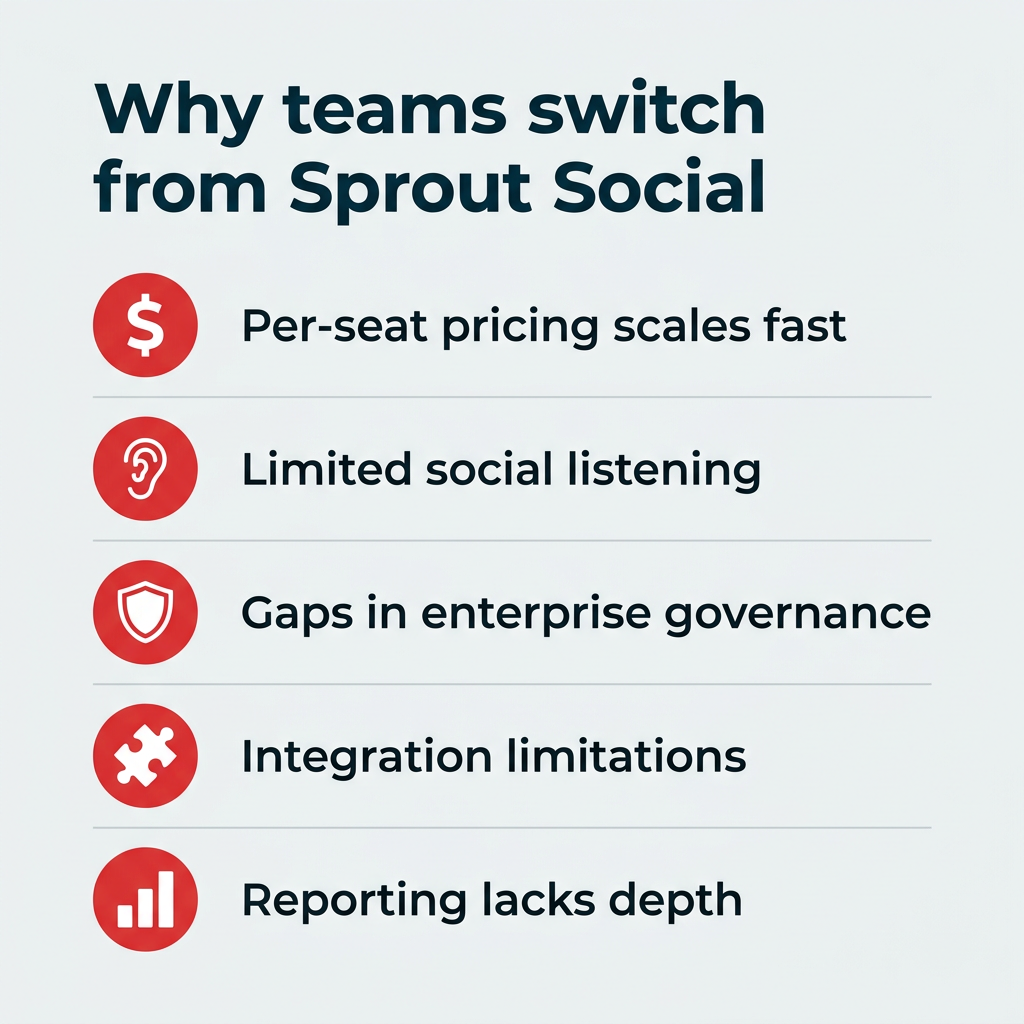
While Sprout Social has long been a staple in the industry, evolving operational needs have brought its limitations into sharp focus. For many teams, the combination of escalating per-seat pricing, restricted access to high-tier social listening tools, and gaps in enterprise-level governance has prompted a market-wide search for alternatives. Whether you are a lean startup looking to optimize your budget or a multinational corporation requiring complex compliance workflows, finding the right tool is no longer just about convenience—it is a strategic necessity.

The Drivers of Change: Why Teams are Switching
The decision to migrate to a new social media management platform is rarely impulsive. It typically follows a period of friction where the current tool ceases to scale alongside the business. Based on current market analysis, three primary pain points consistently trigger a shift:
- Escalating Costs: As teams grow, per-seat pricing models can lead to ballooning overhead. When platforms charge premium rates for every additional user, the ROI on social media management software can quickly diminish.
- Feature Gating: Many enterprise teams find that critical features—such as deep-dive social listening or advanced analytics—are locked behind prohibitively expensive tiers or require costly "add-ons," forcing teams to compromise on data depth.
- Governance Gaps: For organizations in regulated industries (such as finance, healthcare, or government), the ability to enforce strict approval workflows, audit trails, and compliance checks is non-negotiable. If a tool fails to offer robust administrative controls, it becomes a liability rather than an asset.
A Chronological Shift in Tool Requirements
The trajectory of social media software has shifted from simple "scheduling" to "holistic customer experience management." In the early 2010s, the primary goal was to get content out the door. Today, the goal is to orchestrate a cross-functional strategy that bridges the gap between marketing, sales, and customer support.

This evolution has forced vendors to differentiate. We are seeing a bifurcation in the market: on one side, "all-in-one" platforms like Hootsuite and Sprinklr are doubling down on AI-driven insights and enterprise governance. On the other, specialized tools like Later and Buffer are refining the user experience for creators and small businesses who prefer agility over complex administrative hierarchies.
Comparative Analysis: Top Contenders in 2026
To help you navigate this transition, we have categorized the leading alternatives based on their market focus and key differentiators.
1. Hootsuite: The Enterprise Standard
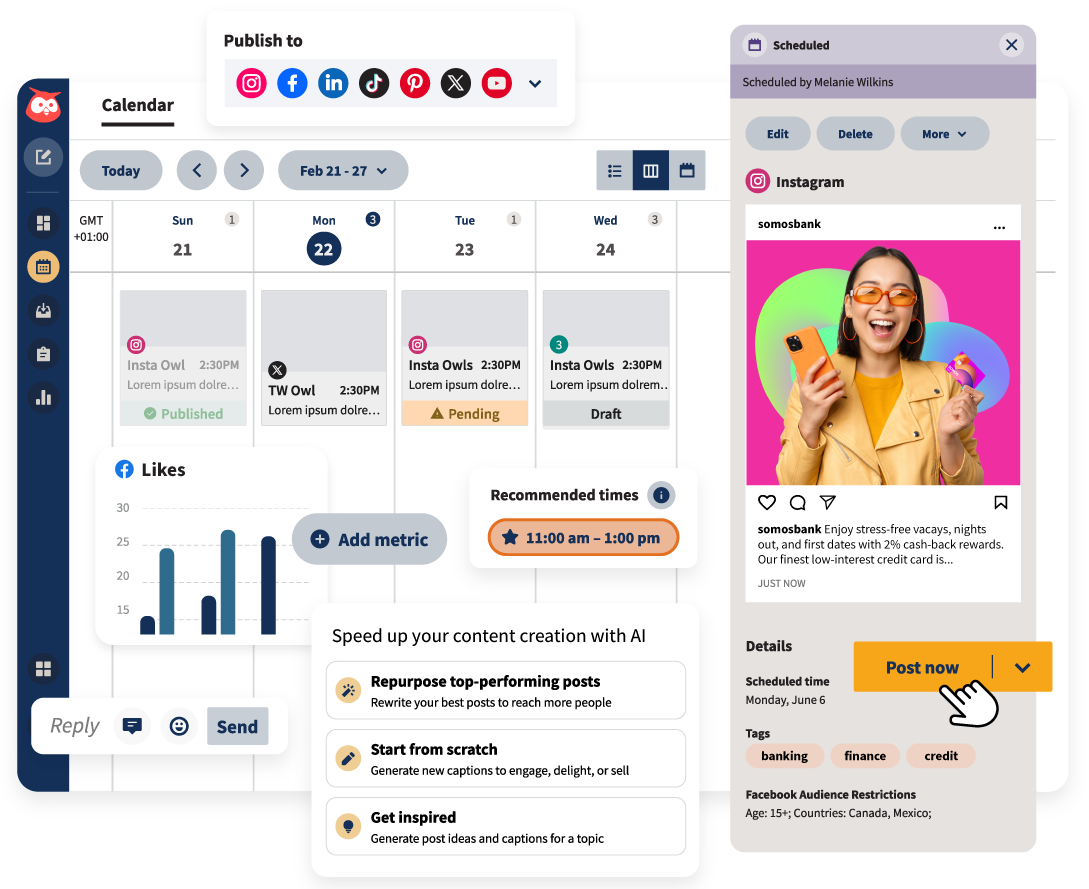
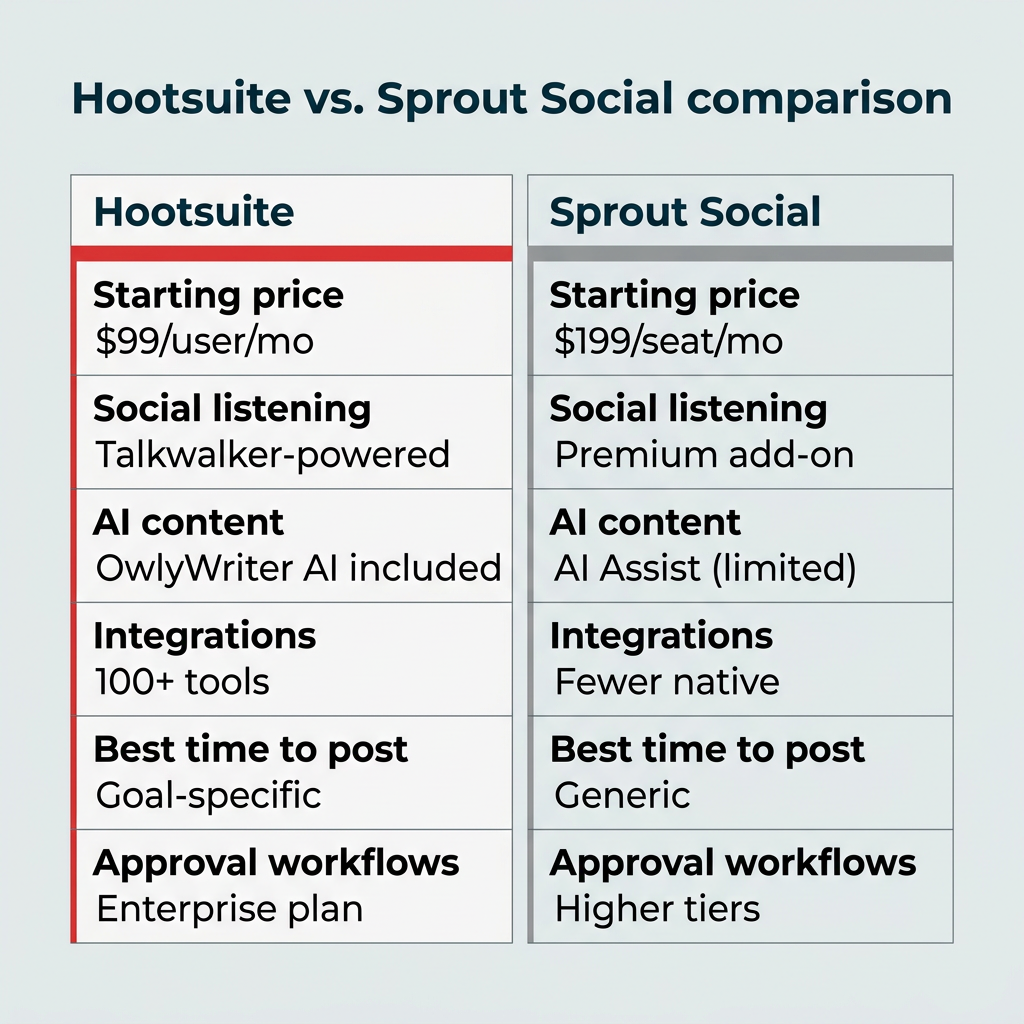
Hootsuite remains the most comprehensive alternative for teams managing complex, multi-brand social strategies. By integrating Talkwalker-powered social listening and the OwlyWriter AI content engine, it bridges the gap between creative production and data-driven strategy. Its strength lies in its maturity; for teams in regulated industries, its audit trails and compliance features are industry-leading.
- Best for: Enterprise teams and regulated industries.
- Key Advantage: Unmatched governance and integration depth (100+ integrations including Salesforce).
2. Agorapulse: The Mid-Market Powerhouse
For mid-sized marketing teams that value a unified inbox and clear ROI tracking, Agorapulse is a top contender. It eschews the "bloat" of enterprise software in favor of a clean, highly intuitive interface.
- Best for: Mid-size marketing teams and boutique agencies.
- Key Advantage: Unified inbox management with built-in, easy-to-read ROI reports.
3. Buffer: The Choice for Agility
Buffer continues to thrive by keeping things simple. It is the premier choice for startups and creators who need to maintain a consistent presence without the overhead of enterprise-grade features they will never use.
- Best for: Small businesses and individual creators.
- Key Advantage: Highly affordable, streamlined scheduling that focuses on core metrics.
4. Later: The Visual Specialist
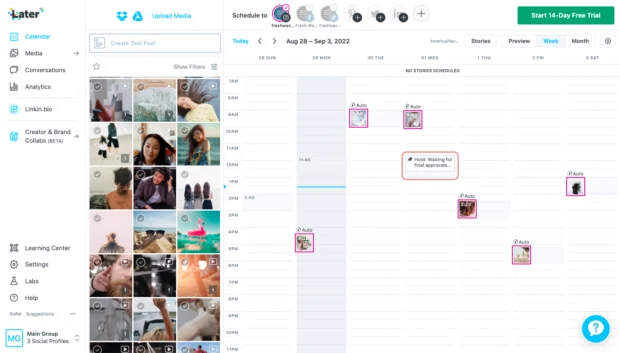
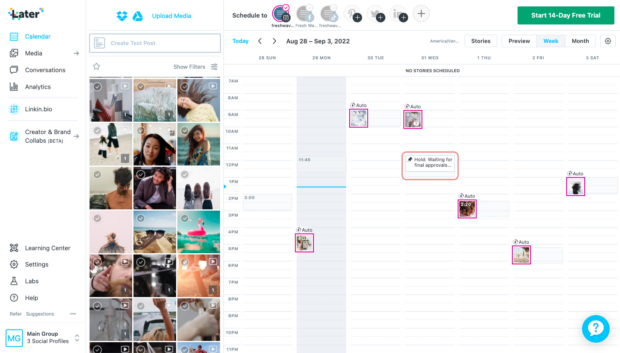
If your brand’s strategy lives or dies by Instagram or TikTok, Later is the standard. Its drag-and-drop visual calendar is specifically designed to curate the "grid aesthetic," a feature that generalist tools often fail to replicate effectively.
- Best for: E-commerce, lifestyle brands, and visual creators.
- Key Advantage: Visual-first content planning and Instagram-grid previewing.
5. Zoho Social: The Ecosystem Play
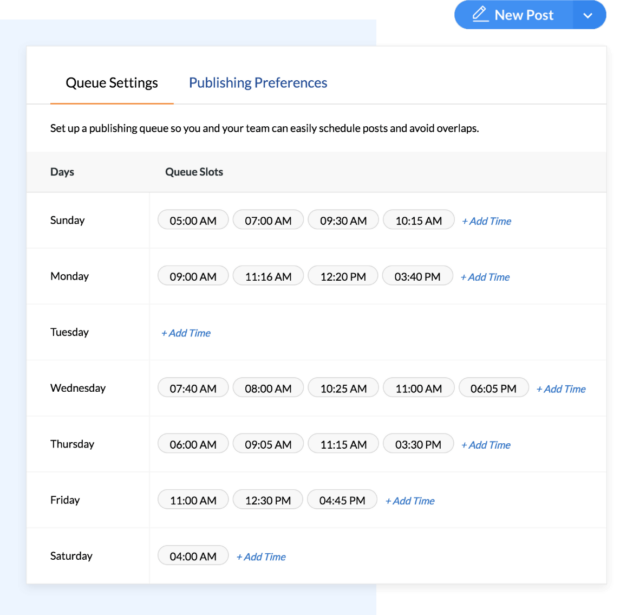
For organizations already tethered to the Zoho suite, Zoho Social is the logical choice. It provides a seamless data flow between social interactions and the company’s CRM, ensuring that every tweet or comment is recorded against the customer’s profile.
- Best for: Existing Zoho CRM users.
- Key Advantage: Deep, native integration with the broader Zoho business ecosystem.
Supporting Data: The Pricing Divide
The financial disparity between these platforms is significant. As of early 2026, the entry-level pricing structure demonstrates a clear choice for budget-conscious organizations:

| Tool | Starting Price (approx.) | Pricing Model |
|---|---|---|
| Hootsuite | $99/user/month | Per User |
| Agorapulse | $79/user/month | Per User |
| Buffer | $6/month/channel | Per Channel |
| Later | $25/month | Flat Rate |
| Zoho Social | $10/month | Flat Rate |
| Sprinklr | $299/month | Per Seat |
Official Industry Perspectives
Analysts from major firms, including Gartner, have noted that the 2026 market is moving toward "consolidation." Companies are increasingly skeptical of "tool sprawl," where they pay for five different subscriptions to cover what should be a single workflow.
Industry experts suggest that before migrating, companies should prioritize "Integrability over Feature-Density." A tool that has fewer features but integrates perfectly with your existing BI (Business Intelligence) tools is often more valuable than a "feature-heavy" platform that operates in a silo.

Strategic Implications: How to Choose
The process of choosing a replacement for Sprout Social should follow a rigorous three-step protocol:
Phase 1: The Audit
Document every interaction your team currently has with your social software. Are you using the deep social listening features, or are you just using it for basic scheduling? Be honest about your team’s usage patterns to avoid paying for "shelfware."
Phase 2: The Pilot
Do not sign a long-term contract based on a slide deck. Request a 14-to-30-day pilot program for your top two contenders. During this window, task your team with executing a full week’s worth of publishing, reporting, and engagement workflows. If the team finds the new interface cumbersome, no amount of "advanced features" will make the transition successful.
Phase 3: Total Cost of Ownership (TCO)
Calculate the TCO over 18 months, not just the monthly sticker price. Factor in the cost of training, the time required to migrate historical data, and the potential for "hidden" costs like additional seats or platform connection limits.
Conclusion: Making the Right Move
The transition away from a platform like Sprout Social is a signal of growth. It indicates that your social media operations have outpaced your current tools. Whether you prioritize the compliance-ready nature of Hootsuite, the aesthetic-focused workflows of Later, or the CRM-integration of Zoho, the goal remains the same: to create a tech stack that works for you, rather than one that dictates your strategy.
As you evaluate your options in 2026, keep your eyes on the horizon. The best tool is not the one with the most buttons; it is the one that allows your team to focus on what matters most—building meaningful, authentic connections with your audience.

Frequently Asked Questions (FAQ)
Q: Is it difficult to migrate historical social media data?
A: Migration complexity varies. While basic scheduling data is easy to export and import, historical engagement analytics are often tied to the platform’s proprietary database. Most teams choose to keep their old account active for a few months in a "read-only" state to preserve historical data before fully decommissioning it.
Q: Does Hootsuite offer better compliance than Sprout Social?
A: Hootsuite is specifically engineered for regulated industries, offering sophisticated approval workflows, audit trails, and integrations with enterprise-level security protocols that many teams find more robust than those found in Sprout Social’s mid-tier offerings.

Q: Can I use multiple tools at once?
A: While possible, it is generally discouraged due to data fragmentation. Maintaining a single "source of truth" for your social data is vital for accurate reporting and efficient team management.
Q: What is the most important factor when scaling?
A: Scalability in software is defined by the ability to manage increasing volumes of content and users without a linear increase in cost or technical complexity. Look for platforms that offer "flat-rate" or "volume-based" pricing rather than strict per-seat models as you move into enterprise-level growth.