The landscape of the American workforce has undergone a seismic shift since the onset of the COVID-19 pandemic. While the initial months of the global health crisis were defined by economic uncertainty and mass layoffs, they simultaneously acted as a massive catalyst for a new era of entrepreneurship. According to 2020 data from the U.S. Census Bureau, self-employed entrepreneurs already accounted for 10% of the labor force; however, in the years since, that number has been bolstered by a record-breaking surge in new business applications that shows no sign of abating.

What began as a necessity for those displaced by shuttered storefronts and corporate downsizing has evolved into a widespread cultural movement. Workers across the nation are reassessing their relationship with traditional employment, opting instead to take the "entrepreneurial plunge."
A Chronology of the Entrepreneurial Surge
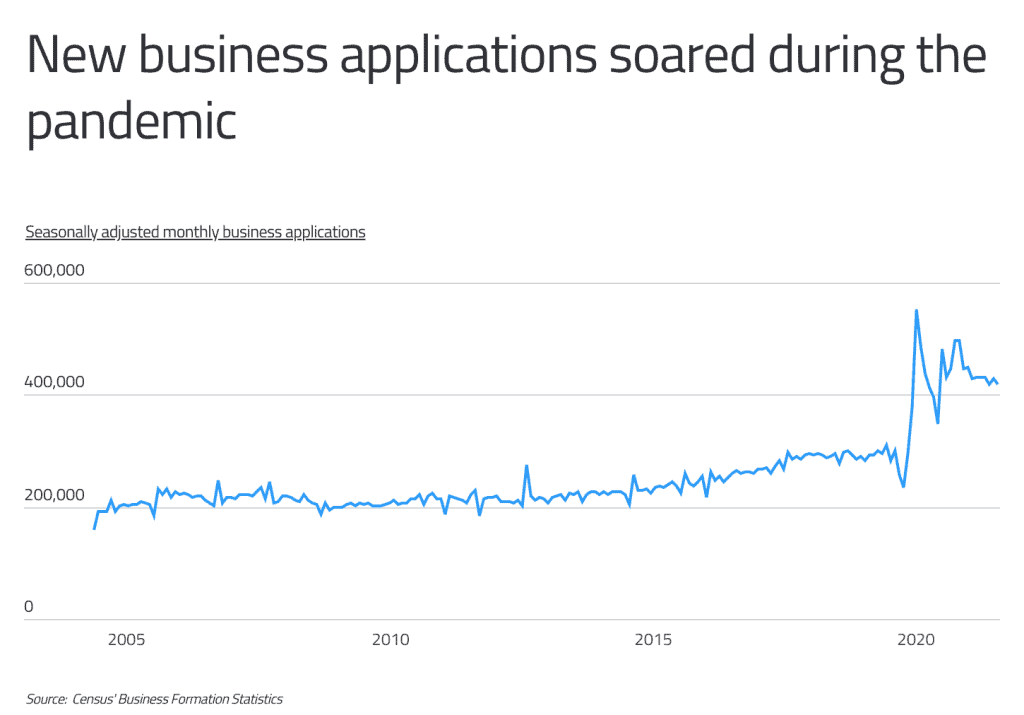
To understand the current boom, one must look back to the early months of 2020. As the pandemic took hold, the economy faced an unprecedented shock. Initially, new business applications plummeted as the country entered a state of lockdown. The uncertainty was paralyzing, and capital investment stalled.
However, this stagnation was remarkably brief. By late 2020, the trend had inverted. Monthly business applications began to soar, eventually hitting record-breaking levels. This was not a temporary spike; the most recent data confirms that application volumes remain significantly higher than pre-pandemic benchmarks.
This transformation occurred in distinct phases:
- The Survival Phase (Q2 2020): Following initial closures, the first wave of new applications was largely defensive. Displaced workers, faced with a lack of traditional job openings, pivoted to self-employment to replace lost income.
- The Structural Shift (Q3 2020–2021): As the pandemic wore on, supply chain disruptions and shifting consumer behaviors created gaps in the market. Entrepreneurs recognized these voids—such as the sudden demand for e-commerce, home-office logistics, and specialized local services—and established new businesses to fill them.
- The "Great Reshuffle" (2021–Present): With the rise of record-high quit rates, a third, more psychological phase emerged. Workers began to re-evaluate their professional priorities, leading to a wave of "lifestyle entrepreneurship" where individuals traded the constraints of the traditional office for the autonomy of independent business ownership.
Supporting Data: Where the Growth is Concentrated
The data paints a clear picture of what this new wave of entrepreneurship looks like. In the first year of the pandemic alone, new business applications increased by nearly 25%. While entrepreneurship grew across the board, the growth was not uniform; it was heavily concentrated in specific sectors that benefited from the stay-at-home economy.

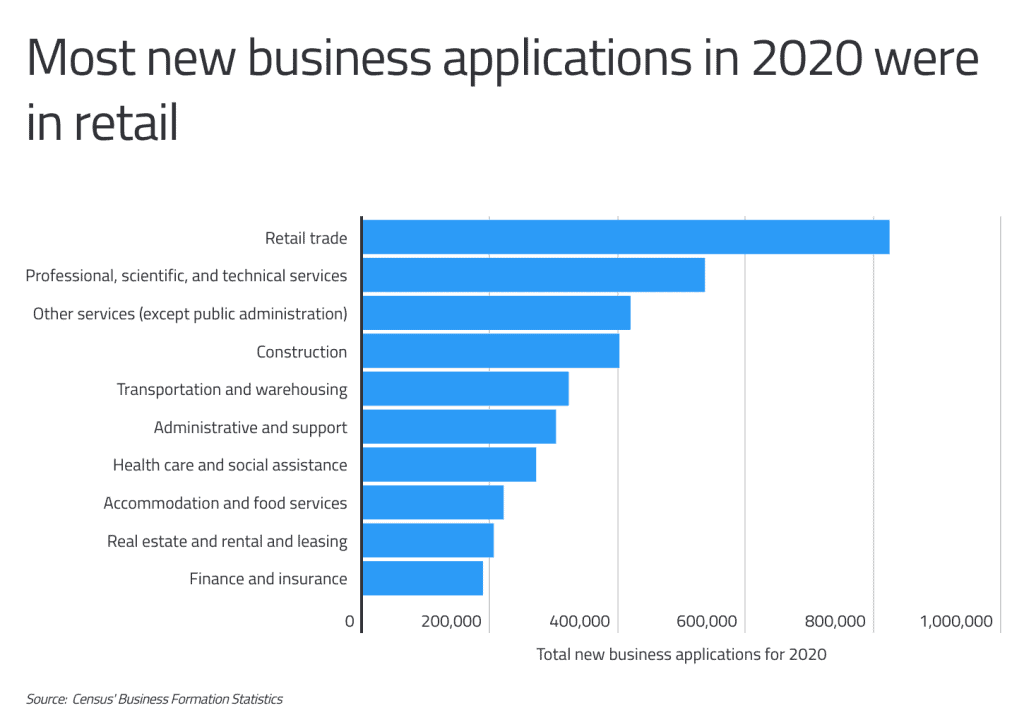
Nearly one-third of all new applications were tied to two primary sectors:

- Retail Trade: Accounting for 824,840 applications in 2020—roughly 19% of the total—this sector reflected the rapid transition to online shopping and direct-to-consumer goods.
- Professional, Scientific, and Technical Services: With over half a million applications (12% of the total), this sector saw a surge in freelance consultants, digital marketers, and tech-adjacent service providers who could operate effectively from home.
Crucially, research from the University of Maryland highlights that the engine of this growth is the "nonemployer" firm. These are sole proprietors, partnerships, or limited liability companies (LLCs) operating without staff. This lean model allows for lower overhead and greater agility, making it the preferred vehicle for the post-pandemic entrepreneur.
Regional Hotspots: Geography of the Independent Worker
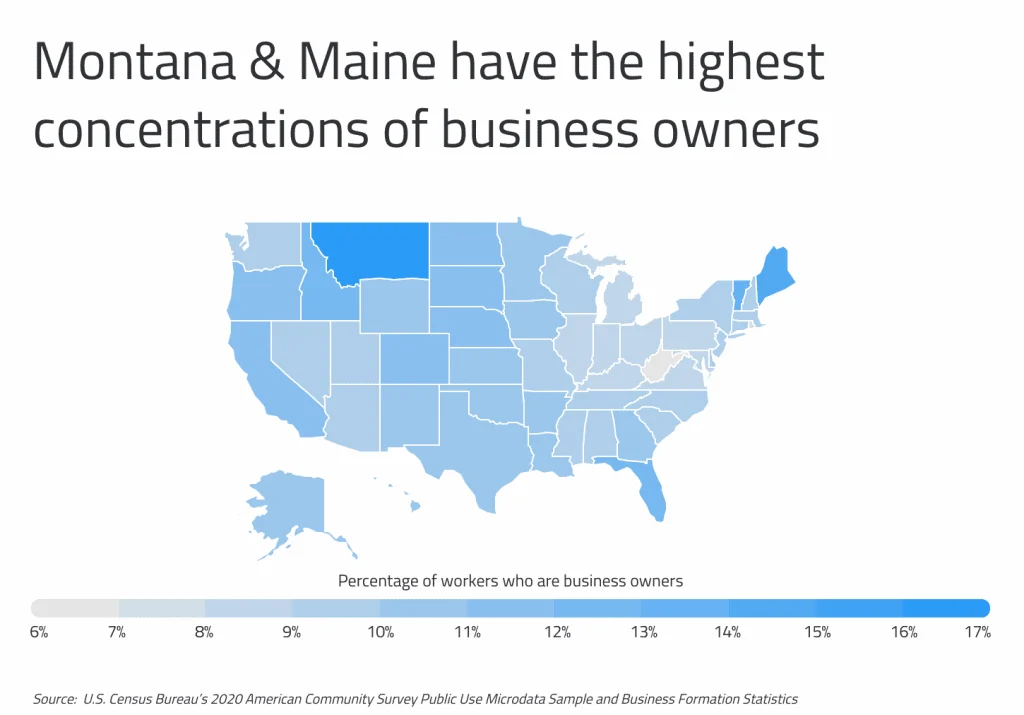
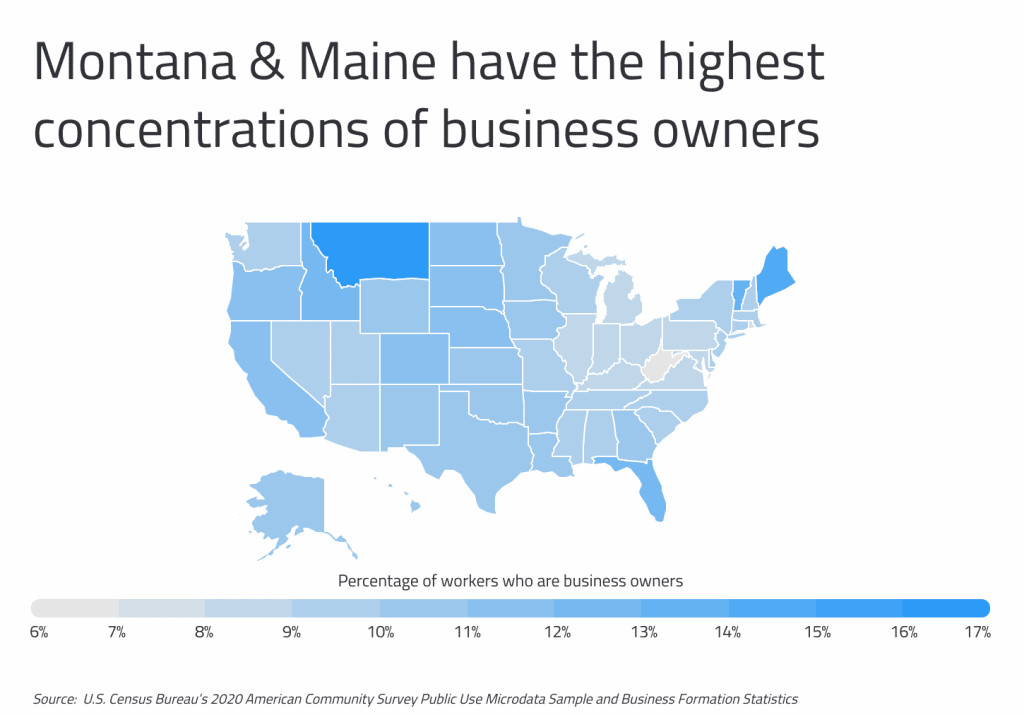
While the national trend is upward, the density of entrepreneurship varies wildly by region. In states like Montana and Maine, self-employment is a way of life, with 17% and 14% of the workforce, respectively, running their own businesses. Other states with high concentrations include Vermont (13%), Florida (12.5%), and Idaho (12.4%).

Conversely, the "Rust Belt"—including West Virginia, Ohio, and Pennsylvania—tends to show lower rates of self-employment. West Virginia, for instance, reports only 6.8% of its workforce as entrepreneurs. This disparity suggests that local economic incentives, the availability of broadband internet, and regional industry legacy play significant roles in determining where new businesses take root.

Top Metropolitan Areas for Entrepreneurs
Analysis of the 100 most populous U.S. metro areas reveals a clear dominance of Southern and Floridian cities in fostering independent work.

- North Port-Sarasota-Bradenton, FL: Currently leading the pack, this region reflects the broader Florida trend of high self-employment, fueled by an influx of remote workers and a thriving local service sector.
- Miami-Fort Lauderdale-West Palm Beach, FL: A perennial hub for international business and a rapidly expanding tech scene, this region continues to see high volumes of new firm creation.
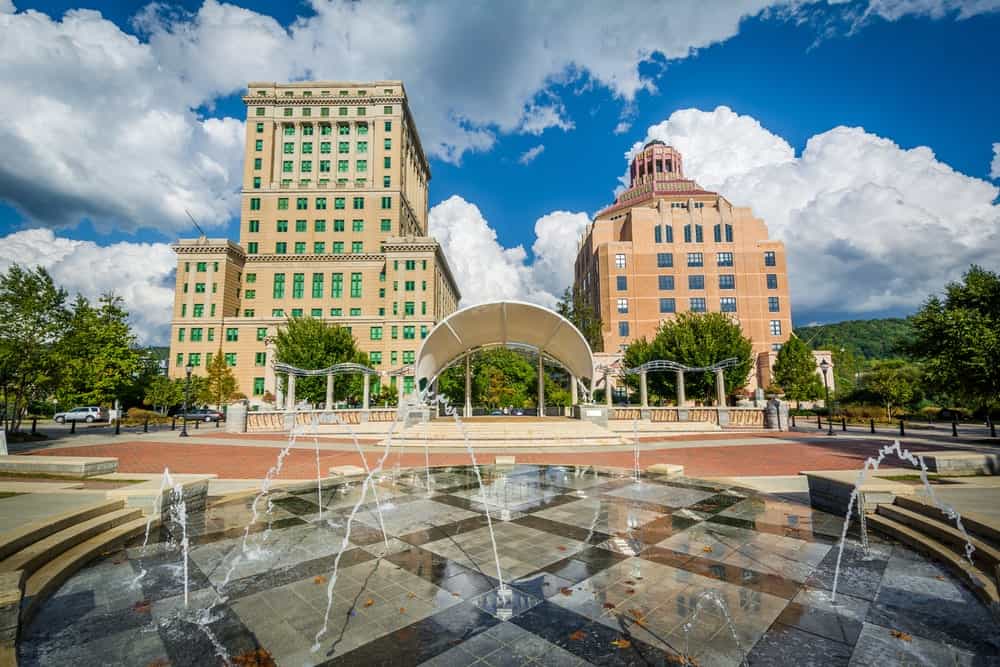
- Asheville, NC: A smaller, yet highly dense hub for creative and independent enterprises, drawing talent looking for a higher quality of life.
- Deltona-Daytona Beach-Ormond Beach, FL: Continuing the Florida trend, this area benefits from a shift in demographic migration patterns toward the Sun Belt.
- Cape Coral-Fort Myers, FL: Another Florida standout, reflecting the state’s role as a haven for the independent professional.
(Additional leaders include McAllen, TX; Los Angeles, CA; New Orleans, LA; Bridgeport, CT; and Oxnard, CA.)

Official Perspectives and Implications
Economists and policymakers are watching these trends closely. The rise of the independent contractor and the small-scale entrepreneur has significant implications for the U.S. tax code, labor protections, and social safety nets.

While proponents argue that this shift represents a democratization of the economy—allowing individuals to bypass traditional gatekeepers and build their own wealth—critics note the inherent instability of the "nonemployer" model. Without the benefits typically tied to traditional employment, such as health insurance, retirement matching, and disability coverage, the rise of the solo-entrepreneur places a greater burden of risk on the individual.

"The pandemic did not just change where we work; it changed how we define a career," says one labor analyst. "We are seeing a move away from the ‘company man’ model toward a ‘portfolio career’ model. The challenge for policymakers will be to ensure that the infrastructure of our economy—banking, insurance, and social security—keeps pace with this demographic reality."

The Long-Term Outlook
As the world moves further from the acute phases of the COVID-19 pandemic, the question remains: is this surge in entrepreneurship sustainable?

The data suggests that it is not merely a temporary reaction to job loss but a structural evolution of the labor market. Factors such as the proliferation of digital platforms that lower the barrier to entry, the normalization of remote work, and a renewed cultural emphasis on work-life balance provide a strong foundation for continued growth.
For the millions of Americans who have "taken the plunge," the goal is rarely to become a massive corporation. Instead, it is to achieve a level of control over their time and output that traditional employment often denies. As long as technology continues to facilitate decentralized work, the era of the entrepreneur is likely to define the American economy for the next decade.

Conclusion: Navigating the New Economy
Whether you are a sole proprietor in the hills of Montana or a digital consultant in the heart of Miami, the current landscape offers more opportunity for independence than at any point in the last century. However, success in this environment requires more than just a business license. It requires a mastery of new tools, a deep understanding of local and national market trends, and the resilience to navigate the risks of self-employment. As the data shows, you are not alone in this pursuit—you are part of a growing, nationwide shift toward the independence of the modern entrepreneur.