Executive Summary: The State of the Labor Market
The United States labor market continues to demonstrate remarkable endurance, according to the latest data released by the Department of Labor (DOL) on January 8, 2025. For the week ending January 3, 2025, seasonally adjusted initial unemployment claims rose to 208,000, an increase of 8,000 from the previous week’s upwardly revised figure. While the uptick represents a slight deviation from recent downward trends, the broader context remains one of stability.
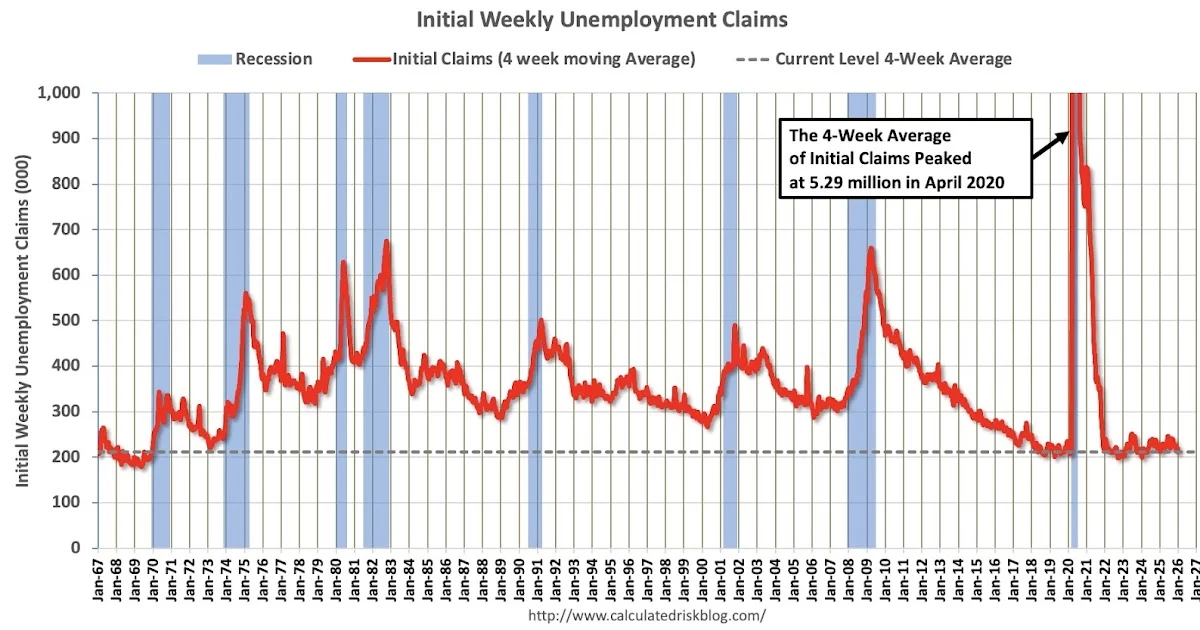
Most notably, the four-week moving average—a metric favored by economists for its ability to smooth out the volatility inherent in weekly reporting—fell to 211,750. This marks the lowest reading for this average since April 27, 2024, signaling that despite the modest weekly rise in new claims, the underlying trend for layoffs remains historically low. As the U.S. economy navigates a complex interest-rate environment and shifting fiscal policies, the resilience of the labor market serves as a critical anchor for macroeconomic stability.
Chronology of Recent Labor Market Trends
To understand the significance of the 208,000 figure, one must examine the trajectory of the labor market over the preceding quarter. Throughout late 2024, the labor market defied many analyst expectations that predicted a cooling period.
- Mid-December 2024: Claims maintained a consistent range between 200,000 and 215,000, reflecting a market that was neither overheating nor cooling rapidly.
- Late December 2024: Data indicated a temporary plateau, with the four-week moving average hovering near the 219,000 mark after minor upward revisions to the preceding data sets.
- Early January 2025: The current report indicates a minor recalibration. The previous week’s level was revised upward by 1,000—from 199,000 to 200,000—suggesting that the reporting process is subject to the usual post-holiday adjustments.
This chronology suggests that the U.S. workforce has remained largely insulated from the systemic shocks that characterized earlier phases of the post-pandemic economic recovery. The "Goldilocks" nature of the current job market—where demand for labor remains robust but not so intense as to trigger runaway wage inflation—continues to perplex those who anticipated a more aggressive downturn.
Supporting Data and Historical Context
The Department of Labor’s latest release includes a long-term look at the four-week moving average, dating back to 1971. This historical perspective is essential for contextualizing the current environment.
Analyzing the Four-Week Moving Average
The four-week moving average, which currently sits at 211,750, is a vital gauge of labor market health. When compared to the historical peaks of the 1970s, 1980s, and the 2008 financial crisis, the current figures are exceptionally low. Even when accounting for the growth in the total labor force, the current propensity for involuntary job loss remains near cyclical lows.
The data indicates a decrease of 7,250 from the previous week’s revised average of 219,000. This decline suggests that employers are continuing to prioritize retention over layoffs. In many industries, the memory of the "Great Resignation" and the subsequent difficulty in hiring has created a "labor hoarding" phenomenon, where companies retain staff even during minor dips in demand to avoid the costs associated with future recruitment and training.
Dissecting the Weekly Variance
The jump of 8,000 in initial claims is well within the standard deviation for weekly reporting. Economists often warn against over-interpreting single-week movements, as seasonal factors—particularly in the wake of the holiday season—can introduce noise into the data. The slight upward revision of the prior week’s data from 199,000 to 200,000 further highlights the necessity of focusing on the trend line rather than the raw weekly print.
Official Responses and Market Reactions
While the Department of Labor provides the raw data, the interpretation of these figures by market analysts and policymakers is what drives financial sentiment.

Analyst Consensus vs. Actual Results
The consensus estimate among Wall Street economists leading up to the release hovered slightly below the final 208,000 figure. While the print was technically "above consensus," the deviation was negligible. Financial markets largely shrugged off the news, as the figure remains consistent with a healthy labor market.
"The market is looking for evidence of a crack in the foundation," said one senior labor economist. "A jump to 208,000 isn’t a crack; it’s a minor tremor in a very stable landscape."
Federal Reserve Implications
The Federal Reserve has made it clear that their path toward interest rate adjustments is heavily dependent on labor market data. A reading of 208,000 is likely to be viewed as "neutral" by the Federal Open Market Committee (FOMC). It is neither low enough to signal an imminent threat of wage-push inflation nor high enough to suggest that the economy is slipping into a recessionary period.
Broader Economic Implications
The sustained low level of initial jobless claims has profound implications for the U.S. economy, affecting consumer confidence, corporate strategy, and fiscal policy.
The Consumer Sentiment Link
Job security is the primary driver of consumer spending. When workers are confident that they can maintain their employment—or find new work quickly if they are laid off—they are more likely to engage in discretionary spending. The current stability in the claims data suggests that consumer confidence is unlikely to see a sudden, sharp decline in the coming months, which provides a floor for the retail and services sectors.
Corporate Strategy and Labor Hoarding
The phenomenon of labor hoarding continues to be a defining feature of this cycle. With the unemployment rate remaining near historic lows, businesses are acutely aware of the "talent scarcity." Even in sectors experiencing modest revenue deceleration, the instinct is to hold onto skilled labor. This strategy, while beneficial for individual workers and household stability, presents a unique challenge for the Federal Reserve; if companies refuse to let go of workers, the "cooling" of the labor market that the Fed desires may take significantly longer than traditional models would suggest.
Potential Headwinds
Despite the positive report, economists are keeping a close watch on several potential headwinds:
- Interest Rate Lag: The full effects of previous rate hikes are still working their way through the economy. Some analysts argue that the labor market is the "last domino" to fall, and that we may see an uptick in claims as businesses face higher borrowing costs throughout 2025.
- Global Economic Slowdown: Weakness in international markets, particularly in Europe and parts of Asia, could eventually dampen U.S. export-oriented industries, leading to indirect layoffs.
- Technological Disruption: The rapid integration of AI and automation is changing the nature of work. While these technologies are currently driving productivity, they may eventually displace roles in white-collar sectors that were previously considered "safe" from cyclical layoffs.
Conclusion: A Labor Market in Equilibrium
The report for the week ending January 3, 2025, confirms that the American labor market remains remarkably resilient. With initial claims at 208,000 and the four-week moving average at 211,750, the data depicts an economy that is navigating the transition from a post-pandemic recovery to a new, more sustainable equilibrium.
While the minor increase in weekly claims serves as a reminder that the economy is not immune to volatility, the overarching trend remains one of strength. As we look toward the remainder of the first quarter, the focus will shift from simple claim counts to the broader labor participation rate and wage growth metrics. For now, however, the labor market remains the primary source of stability in an otherwise uncertain global economic environment. Employers remain cautious but committed, and the workforce continues to show high levels of engagement. This current state of affairs provides a solid foundation for the broader economy as it heads into the challenges and opportunities of 2025.