Regional Connectivity Takes Center Stage: Kosovo Speaker Haxhiu and North Macedonian PM Mickoski Cement Bilateral Cooperation
Main Facts
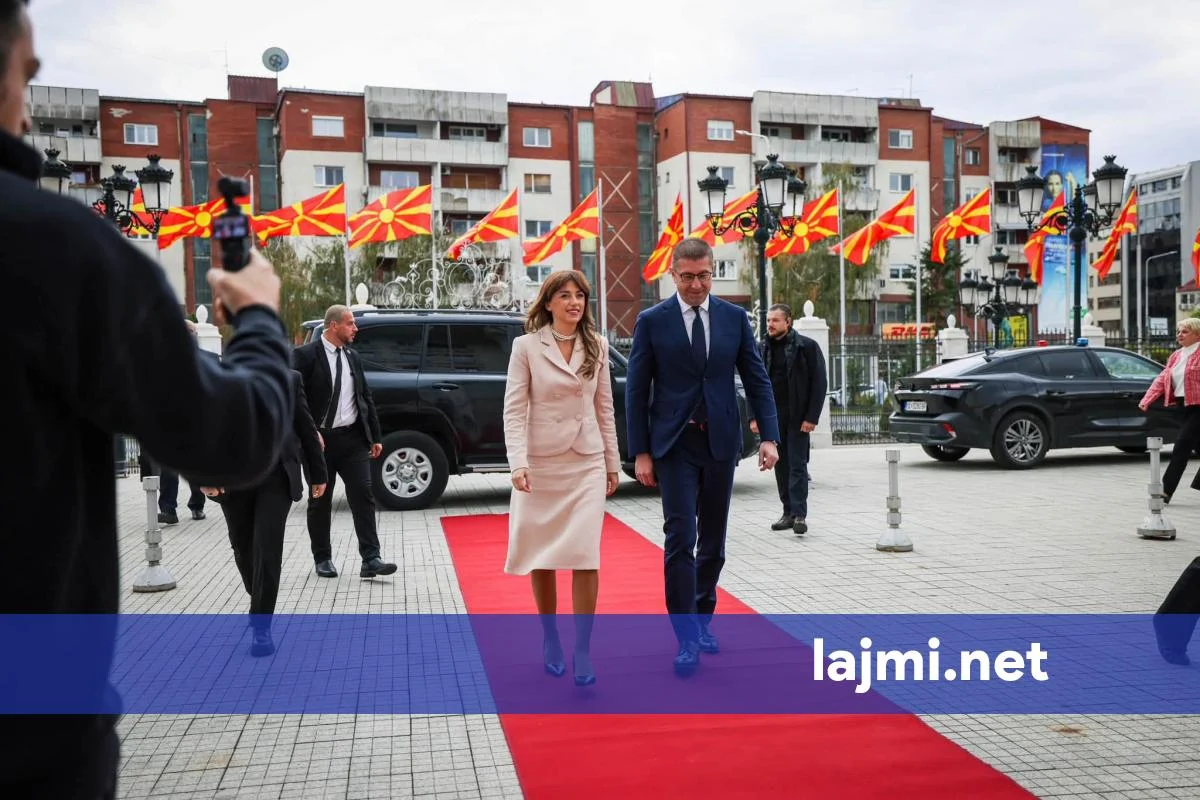
Skopje, North Macedonia – In a significant step towards bolstering regional integration and bilateral ties, Albulena Haxhiu, Speaker of the Assembly of Kosovo, conducted an official visit to North Macedonia, culminating in a pivotal meeting with Prime Minister Hristijan Mickoski. The high-level encounter, held today in Skopje, focused extensively on deepening the cooperative framework between the two Western Balkan nations and accelerating the implementation of crucial joint projects. At the heart of their discussions were strategic infrastructure initiatives, including the long-anticipated Prizren-Tetovo road link and the Skopje-Blace highway, alongside vital energy interconnection projects. Both leaders underscored the profound importance of these endeavors, not merely as conduits for transportation and energy, but as foundational pillars for enhanced economic prosperity, greater societal interaction, and the strengthening of good neighborly relations within the broader European context.
Speaker Haxhiu, in a subsequent statement disseminated via her official Facebook page, articulated the shared commitment to expediting these projects. She emphasized that the joint interest lies in translating existing pledges into tangible, concrete outcomes with measurable benefits for citizens and businesses alike. Beyond their immediate infrastructural scope, Haxhiu highlighted the transformative potential of these projects in facilitating the unimpeded movement of people and goods, thereby fostering a more integrated and interdependent regional economy. Her remarks underscored a shared vision of Kosovo and North Macedonia operating as exemplary neighbors, collaborating effectively towards common goals of stability and development. Furthermore, the Speaker reaffirmed the unequivocal support of the Assembly of Kosovo for these initiatives, pledging close oversight and active monitoring of their progress until successful completion. The meeting serves as a clear indicator of a renewed impetus to translate political will into practical, impactful cross-border initiatives that are critical for the region’s European future.
Chronology of Engagement and Regional Context
The meeting between Speaker Haxhiu and Prime Minister Mickoski is not an isolated event but rather a continuation of a long-standing diplomatic and cooperative trajectory between Kosovo and North Macedonia. Both nations, sharing a common border and complex historical ties, have consistently articulated a commitment to European integration and regional stability. This latest engagement, however, comes at a particularly salient moment, following recent political shifts in North Macedonia and amidst a renewed emphasis on regional connectivity initiatives across the Western Balkans.
Historical Ties and Shared Aspirations
Kosovo and North Macedonia have maintained a robust relationship since Kosovo declared its independence in 2008, with North Macedonia being among the first countries to recognize its sovereignty. This relationship is underpinned by shared strategic interests, particularly the aspiration for full membership in the European Union. Over the years, numerous bilateral agreements have been signed, covering diverse sectors from trade and security to education and culture. However, the implementation of large-scale infrastructure projects, while always on the agenda, has often faced bureaucratic hurdles, funding challenges, or shifts in political priorities.
The Prizren-Tetovo road link, for instance, has been a topic of discussion for over a decade, representing a critical artery that would significantly shorten travel times between western Kosovo and northwestern North Macedonia, areas with considerable ethnic Albanian populations and strong cultural ties. Similarly, the Skopje-Blace highway project, connecting North Macedonia’s capital to the main border crossing with Kosovo, is vital for the primary economic corridor between the two countries. The persistence of these projects on the bilateral agenda underscores their inherent strategic value despite past delays.
The Visit of Speaker Haxhiu: A Diplomatic Imperative
Speaker Haxhiu’s official visit to Skopje was meticulously planned to reinforce these foundational ties. As the head of Kosovo’s legislative body, her engagement carries significant political weight, signaling a robust parliamentary commitment to the executive-level agreements. The itinerary for such a high-profile visit typically involves a series of meetings beyond the prime minister, potentially including discussions with her North Macedonian counterpart, the President, and representatives of the Albanian community in North Macedonia. These engagements serve to broaden the scope of cooperation and foster goodwill across political spectrums.
Prime Minister Mickoski, having recently assumed office following the parliamentary elections in May 2024, represents a new governmental mandate in North Macedonia. His meeting with Speaker Haxhiu therefore takes on added significance, offering an early opportunity for the new administration to signal its commitment to regional cooperation and good neighborly relations, particularly with Kosovo. For both leaders, demonstrating tangible progress on cross-border initiatives is crucial for consolidating domestic support and projecting an image of proactive governance on the international stage.
Post-Meeting Commitments and Future Outlook
Speaker Haxhiu’s immediate public communication via Facebook, detailing the core outcomes of the meeting, reflects a modern approach to diplomatic transparency and accountability. Her emphasis on the "shared interest" in swift project realization and the transformation of "commitments into concrete results" sets a high bar for future action. The explicit pledge from the Assembly of Kosovo to "support these projects and closely monitor their realization until completion" indicates a multi-institutional commitment from the Kosovar side, suggesting that these initiatives will remain a priority across governmental branches. This proactive stance aims to ensure that the political momentum generated during the visit translates into sustained effort and measurable progress on the ground, ultimately benefiting the citizens of both nations.
Supporting Data: The Economic and Strategic Imperatives
The emphasis on infrastructure and energy projects by Speaker Haxhiu and Prime Minister Mickoski is rooted in robust economic and strategic imperatives that extend far beyond mere convenience. These initiatives are designed to unlock significant economic potential, enhance regional stability, and align both countries more closely with European standards and networks.
Economic Imperatives: Boosting Trade, Tourism, and Investment
The Prizren-Tetovo Road Link: This project is perhaps the most symbolic and economically impactful of the proposed infrastructure developments. Currently, travel between Prizren in Kosovo and Tetovo in North Macedonia involves a circuitous route, often taking several hours, particularly across the mountainous Sharr (Šar) Mountains. A direct road, potentially involving tunnels, would drastically reduce travel time, transforming economic and social dynamics in the region.
- Trade Facilitation: Reduced transport costs and times would significantly boost cross-border trade. Prizren, a key economic and cultural hub in Kosovo, would gain direct access to Tetovo, a major city in North Macedonia with strong industrial and agricultural sectors. This improved connectivity would streamline supply chains, lower operational costs for businesses, and encourage greater exchange of goods.
- Tourism Development: Both regions boast significant tourism potential, from the historical sites of Prizren to the natural beauty of the Sharr Mountains and Lake Ohrid. Easier access would facilitate cross-border tourism, allowing visitors to explore a broader regional offering and injecting vital revenue into local economies.
- People-to-People Connections: Beyond commerce, the road would ease movement for families, students, and workers, strengthening cultural ties and fostering a greater sense of regional cohesion.
The Skopje-Blace Highway: This highway is critical for the main north-south axis connecting Kosovo’s capital, Pristina, to North Macedonia’s capital, Skopje, and onward to the Pan-European Corridor X.
- Regional Connectivity: The completion of this highway would integrate Kosovo more fully into the regional transport network, providing a vital link to the broader European road system. This is crucial for Kosovo’s export-oriented industries and for attracting foreign direct investment.
- Economic Corridor Efficiency: The existing road is often congested and not up to modern highway standards. An upgraded highway would ensure faster, safer, and more efficient transport of goods and people, reducing logistical bottlenecks and supporting economic growth.
Strategic Energy Interconnection
Beyond roads, the focus on "energy interconnection" speaks to a critical regional challenge: energy security and diversification. Both Kosovo and North Macedonia, like many Western Balkan nations, face energy deficits and rely heavily on aging infrastructure and fossil fuels.
- Energy Security: Interconnecting national grids enhances energy security by allowing for mutual support in times of crisis, optimizing energy flows, and reducing reliance on single sources. It creates a more resilient regional energy market.
- Diversification and Renewables: A robust interconnection facilitates the integration of renewable energy sources (solar, wind) into the grid. Surplus renewable energy generated in one country could be transmitted to another, supporting the region’s green transition goals and alignment with EU climate policies.
- Market Integration: Improved energy links are essential for creating a functioning regional energy market, a key requirement for EU integration. This allows for more competitive pricing and greater efficiency in energy distribution.
Aligning with European Agendas
These projects are not just bilateral priorities; they align perfectly with broader European Union initiatives for the Western Balkans, particularly the "Connectivity Agenda" under the Berlin Process. The EU has consistently emphasized the importance of improving transport and energy links in the region as a prerequisite for economic development, political stability, and eventual EU membership. Projects that facilitate cross-border movement and integrate national economies are often eligible for significant EU funding and technical assistance, underscoring their strategic importance from a European perspective. The ability of Kosovo and North Macedonia to effectively implement these projects demonstrates their commitment to European standards and their capacity to absorb and manage large-scale investments.
Official Responses and Stakeholder Perspectives
The discussions between Speaker Haxhiu and Prime Minister Mickoski, while originating from a specific bilateral meeting, resonate widely across various official and unofficial circles. The stated objectives and proposed projects elicit distinct responses from the leadership of both nations, regional observers, and directly impacted communities.
Kosovo’s Official Stance: A Vision of Integration and Progress
Speaker Haxhiu’s public remarks provide a clear window into Kosovo’s strategic priorities. Her emphasis on the rapid realization of projects underscores a pragmatic approach, aiming for tangible results over prolonged planning. The assertion that these projects "have importance beyond infrastructure" and "facilitate the movement of people and goods" highlights a holistic view where physical connections foster deeper human and economic integration.
- Strategic Vision: For Kosovo, these projects are integral to its nation-building process and its aspiration for full international recognition and integration. Improved connectivity with North Macedonia strengthens its position within the Western Balkans and provides crucial access to regional and European markets.
- Commitment to Good Neighborliness: Haxhiu’s statement that the projects "show that Kosovo and North Macedonia cooperate as two good neighbors" is a diplomatic message affirming Kosovo’s commitment to constructive regional relations, often seen as a prerequisite for its own European path.
- Parliamentary Oversight: The pledge from the Assembly of Kosovo to "support these projects and monitor their realization until completion" is significant. It indicates a legislative commitment that transcends a single government’s term, aiming to provide continuity and accountability for these long-term investments. This parliamentary backing is crucial for ensuring sustained political will and efficient execution, signaling a unified state approach.
North Macedonia’s Perspective: Regional Stability and Economic Development
While the original article primarily quotes Speaker Haxhiu, Prime Minister Mickoski’s engagement in such a high-level meeting implies a reciprocal commitment to the discussed agenda. For North Macedonia, strengthening ties with Kosovo aligns with several key strategic objectives:
- Regional Stability: North Macedonia, as a multi-ethnic state and a relatively stable actor in the Western Balkans, consistently champions regional cooperation as a bulwark against potential ethnic or political tensions. Good relations with Kosovo contribute directly to this stability.
- Economic Revival: The new government under Prime Minister Mickoski has campaigned on a platform of economic revitalization. Infrastructure projects, particularly those that enhance trade and transit, are central to this agenda. The Skopje-Blace highway, in particular, is a vital component of North Macedonia’s national transport network and its ambition to serve as a regional logistical hub.
- European Path: Like Kosovo, North Macedonia is firmly committed to EU membership. Demonstrating effective bilateral and regional cooperation on connectivity projects is a key performance indicator for its accession process. Working with Kosovo on these initiatives reinforces North Macedonia’s image as a responsible and proactive partner in the region. While Mickoski’s public statements often focus on domestic economic priorities, his participation in these discussions underscores the inherent value his administration places on regional economic integration as a catalyst for national growth.
Business Communities and Local Residents: The Beneficiaries
Beyond official pronouncements, the business communities and local residents in both countries are the ultimate beneficiaries and keen observers of these developments.
- Business Sector: Chambers of commerce and individual businesses in both Kosovo and North Macedonia have long advocated for improved infrastructure. Logistics companies, exporters, importers, and tourism operators stand to gain significantly from reduced travel times and costs. The prospect of an "easier movement of goods" translates directly into enhanced competitiveness and expanded market access.
- Local Residents: For the citizens living in areas like Prizren, Tetovo, and along the Skopje-Blace corridor, these projects promise a better quality of life. Reduced commuting times, easier access to healthcare and education across borders, and increased economic opportunities are tangible benefits that resonate deeply with everyday lives. However, there can also be concerns regarding environmental impact during construction or potential displacement, which will require careful management and transparent communication from both governments.
International Organizations: Encouraging Regional Cohesion
International bodies, particularly the European Union and international financial institutions (IFIs) like the European Bank for Reconstruction and Development (EBRD) and the European Investment Bank (EIB), are strong proponents of such projects. They often provide crucial funding, technical assistance, and political backing. Their response to these discussions would likely be one of encouragement, viewing them as positive steps towards greater regional cohesion and alignment with European standards. Their role in facilitating and partially funding these projects will be crucial for their successful realization.
Implications for Regional Development and EU Integration
The commitment articulated by Speaker Haxhiu and Prime Minister Mickoski holds significant implications, not only for the bilateral relationship between Kosovo and North Macedonia but also for the broader trajectory of the Western Balkans, particularly concerning regional development and the elusive goal of European Union integration.
Catalyzing Regional Stability and Cooperation
In a region often characterized by complex geopolitical dynamics and historical sensitivities, initiatives that foster concrete cooperation are invaluable. The joint pursuit of infrastructure and energy projects serves as a powerful testament to the belief that shared interests can transcend political differences.
- Trust Building: Successful implementation of these projects can build trust and confidence between the two nations, setting a precedent for future collaborative endeavors. This "soft power" of cooperation can be far more effective in promoting stability than abstract political declarations.
- Interdependence: As infrastructure and energy grids become more interconnected, the economies and societies of Kosovo and North Macedonia will become increasingly interdependent. This interdependence creates a strong incentive for peaceful relations and mutual support, making conflict less likely and cooperation more attractive.
- Model for the Region: If these projects are completed efficiently and effectively, they can serve as a model for other Western Balkan countries, demonstrating the tangible benefits of regional cooperation and providing a blueprint for overcoming common challenges.
Advancing the European Integration Agenda
Both Kosovo and North Macedonia are on a declared path towards full membership in the European Union. While their progress varies, the EU consistently emphasizes the importance of regional cooperation as a fundamental pillar of its enlargement strategy.
- Meeting EU Benchmarks: The EU’s Connectivity Agenda and its focus on the "fundamentals" of rule of law, economic governance, and public administration reform are directly supported by these projects. Improved infrastructure and energy links contribute to better economic governance and foster a more integrated single market, which are key benchmarks for accession.
- Enhanced Economic Competitiveness: By improving transport and energy links, both countries become more attractive for foreign investment and more competitive within the broader European economy. This economic convergence is a critical element of the EU integration process.
- Visibility and Credibility: Demonstrating the political will and technical capacity to undertake and complete complex cross-border projects enhances the credibility of both nations in the eyes of Brussels. It shows that they are serious about reforms and capable of contributing constructively to the European project. For Kosovo, which still faces challenges with recognition from some EU member states, demonstrating robust regional cooperation is particularly important for its European aspirations.
Overcoming Challenges and Ensuring Sustainability
Despite the strong political will expressed, the path to project completion is rarely without obstacles.
- Funding: Large-scale infrastructure projects require substantial financial investment. While EU funds and IFIs are key partners, national budgets will also need to allocate significant resources. Ensuring sustainable funding mechanisms and transparent procurement processes will be crucial.
- Technical and Environmental Hurdles: The mountainous terrain for the Prizren-Tetovo link, for example, presents significant engineering challenges. Environmental impact assessments and adherence to high environmental standards will be necessary to ensure long-term sustainability and avoid negative ecological consequences.
- Political Continuity: Governments change, and with them, priorities can shift. The stated commitment from the Assembly of Kosovo to monitor projects beyond executive changes is a positive sign, but sustained political will from both sides will be paramount for consistent progress.
- Bureaucracy and Coordination: Cross-border projects often involve complex administrative procedures and require seamless coordination between multiple government agencies in two different countries. Streamlining these processes will be vital to avoid delays.
In conclusion, the meeting between Speaker Haxhiu and Prime Minister Mickoski represents a significant reaffirmation of the strategic partnership between Kosovo and North Macedonia. By prioritizing tangible infrastructure and energy projects, both nations are not only addressing immediate economic and social needs but are also laying down critical foundations for enhanced regional stability, greater economic prosperity, and an accelerated path towards their shared European future. The challenge now lies in translating these strong political commitments into concrete, timely, and sustainable results that will benefit generations to come across the Western Balkans.