Australia’s ambitious Snowy 2.0 pumped-storage project, once heralded as the crown jewel of the nation’s renewable energy transition, has hit another significant financial roadblock. Following a comprehensive cost reassessment, the project’s price tag has ballooned to a staggering A$25 billion—a massive departure from the initial A$2 billion estimate floated when the project was first announced in 2017. As the nation grapples with the complexities of retiring aging coal-fired power plants, this engineering colossus has become a focal point of debate regarding the viability, transparency, and management of large-scale green infrastructure.
Main Facts: The Scope of the Cost Crisis
The latest review, released by the project owner Snowy Hydro, confirms that the cost to deliver the 2.2 GW pumped-storage facility in the Snowy Mountains of New South Wales has escalated far beyond previous expectations. The principal contractor, Future Generation Joint Venture (FGJV), has established a target cost of A$22.2 billion, but Snowy Hydro has factored in a higher scenario of up to A$25 billion to account for the project’s unique risks, technical complexities, and ongoing estimation challenges.
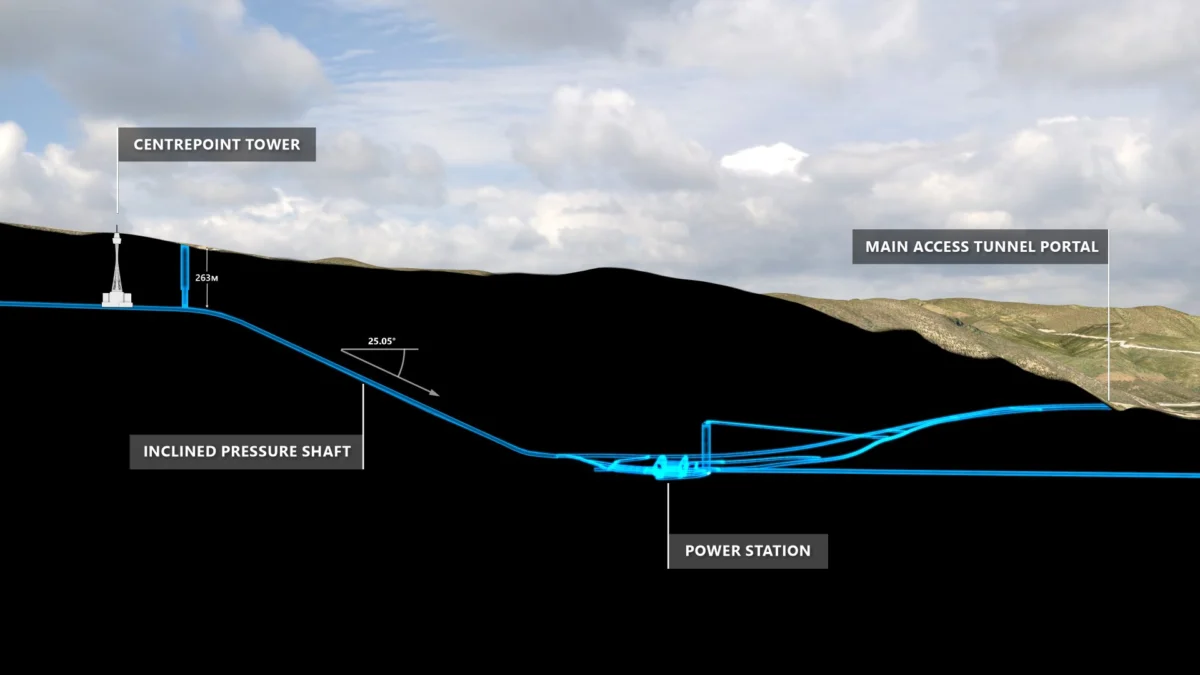
Beyond the financial hit, the project timeline has suffered another setback. While previous projections anticipated a completion date by December 2028, the commissioning of the facility has been officially shifted to late 2029. This delay is particularly concerning for policymakers who view Snowy 2.0 as a critical pillar for grid stability as Australia transitions to wind and solar power. Despite these challenges, physical progress continues: machine tunneling is reported to be 65% complete, and cavern excavation has reached 90% completion, with construction of the underground power station currently in full swing.
Chronology: From Grand Vision to Financial Headwinds
The trajectory of Snowy 2.0 serves as a cautionary tale in large-scale infrastructure procurement.
- 2017: The Announcement. Then-Prime Minister Malcolm Turnbull announces Snowy 2.0 with an initial estimated cost of A$2 billion. At the time, the project is framed as a visionary expansion of the existing Snowy Mountains Scheme, promising to provide massive, reliable energy storage.
- 2019: Final Investment Decision. Following feasibility studies, the project receives the green light. By this time, the complexity of the engineering—including the need for extensive tunneling through rugged mountain terrain—becomes clearer, though early estimates remain significantly lower than current figures.
- 2021–2022: Early Operational Challenges. The project encounters significant geological hurdles, including issues with the tunnel boring machines (TBMs) that were designed to carve out the massive underground cavern.
- 2023: The Project Reset. Recognizing that the original fixed-price contract with FGJV was fundamentally misaligned with the risks of the project, Snowy Hydro initiates a "project reset." This move transitions the project away from a fixed-price model, a decision that management argues was necessary to prevent a total work stoppage.
- 2024: The Latest Reassessment. The release of updated figures pushes the projected cost toward the A$25 billion mark, marking a profound shift in the project’s fiscal profile.
Supporting Data: Why the Costs Have Exploded
The disparity between the initial A$2 billion estimate and the current A$25 billion reality is attributed to a "perfect storm" of engineering, market, and management factors. Snowy Hydro’s recent disclosures point to three primary drivers:
1. Design Immaturity
Snowy Hydro executives have acknowledged that at the time the final investment decision was made, there was a significant degree of "design immaturity." Essentially, the full geological and technical requirements of tunneling through the Snowy Mountains were not sufficiently understood. This lack of initial clarity led to a cascade of technical challenges as the project progressed, necessitating costly redesigns and remediation efforts.
2. Construction and Productivity Shortfalls
The principal contractor, Future Generation Joint Venture (FGJV), has struggled to meet productivity targets. These failures, according to Snowy Hydro, were exacerbated by poor cost planning and an underestimation of the sheer scope of the delivery requirements. When combined with the inherent risks of working in deep, high-pressure underground environments, these inefficiencies have caused prolonged delays.
3. Global Economic Pressures
While project-specific issues are significant, they have been compounded by macroeconomic headwinds. The post-pandemic global economy has seen unprecedented escalation in the costs of raw materials, specialized labor, and equipment. Allowances for inflation and resource costs made during the 2023 reset have been outpaced by the actual market reality, leaving the project budget under constant upward pressure.
Official Responses: Managing the Narrative
Snowy Hydro CEO Dennis Barnes has taken a pragmatic, if defensive, stance regarding the budget blowouts. While he conceded that the cost increases are "disappointing," he has consistently argued that the company’s 2023 project reset was the only way to save the project from collapse.
"I have no doubt that moving from a fixed-price contract, which was never suitable for such scale, uniqueness, and complexity, has protected the project from an even greater cost increase," Barnes stated. He suggested that if the project had remained under a rigid, fixed-price structure, it would likely have been paralyzed by billions of dollars in legal claims from contractors, mirroring the stagnation seen prior to the 2023 intervention. By transitioning to a more flexible, collaborative contract, Snowy Hydro claims it has secured a pathway to completion, even if the price of that pathway is significantly higher than taxpayers initially expected.
Implications: A Grid in Transition
The implications of Snowy 2.0’s cost escalation extend far beyond the balance sheets of Snowy Hydro. As the centerpiece of Australia’s energy storage strategy, the project is designed to provide 350,000 megawatt-hours of storage—the equivalent of enough energy to power thousands of homes for extended periods when renewable output is low.
Impact on Energy Prices
Critics argue that the massive capital expenditure will inevitably filter down to consumer energy bills. If the cost of the project is recovered through grid tariffs or electricity pricing, the "green premium" on Australian energy could rise, placing a burden on households already struggling with cost-of-living pressures.
The Future of Large-Scale Infrastructure
The Snowy 2.0 debacle has sparked a national conversation about the way Australia plans and executes "mega-projects." Experts suggest that the government must move toward more transparent, risk-sharing procurement models for critical infrastructure. There is also a growing push for better initial site investigation to avoid the "design immaturity" that has haunted the Snowy project since its inception.
Grid Stability
Despite the costs, supporters of the project maintain that the fundamental logic remains sound. As Australia aggressively shifts away from coal, the need for long-duration energy storage is non-negotiable. Without a project like Snowy 2.0, the grid would be significantly more vulnerable to blackouts during peak demand periods or prolonged lulls in renewable generation. The dilemma, therefore, is not whether to build, but how to ensure that the necessary assets are delivered with greater fiscal discipline in the future.
Conclusion: The Long Road Ahead
As the project moves into its final phases, the focus for Snowy Hydro and the federal government will be on preventing further "scope creep" and maintaining the current 2029 timeline. The A$25 billion figure has set a high bar for accountability. Moving forward, the project will be subject to intense scrutiny from stakeholders, the media, and the public. Whether Snowy 2.0 ultimately succeeds as a transformative asset for the Australian grid or becomes a symbol of bureaucratic and engineering overreach remains to be seen. What is clear, however, is that the lessons learned from the Snowy 2.0 experience will dictate the shape of Australia’s energy infrastructure policy for decades to come.
As Australia continues its march toward a net-zero future, the Snowy 2.0 project serves as a stark reminder that the transition to renewable energy is not just a technological challenge—it is a massive logistical and financial undertaking that requires as much innovation in management and procurement as it does in engineering.