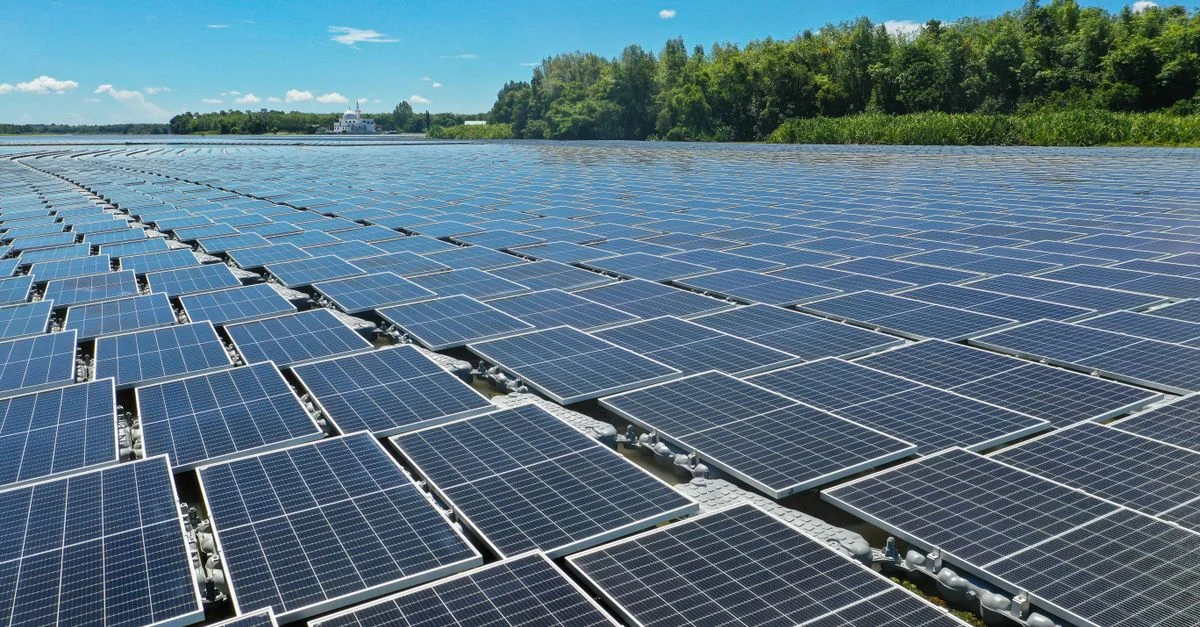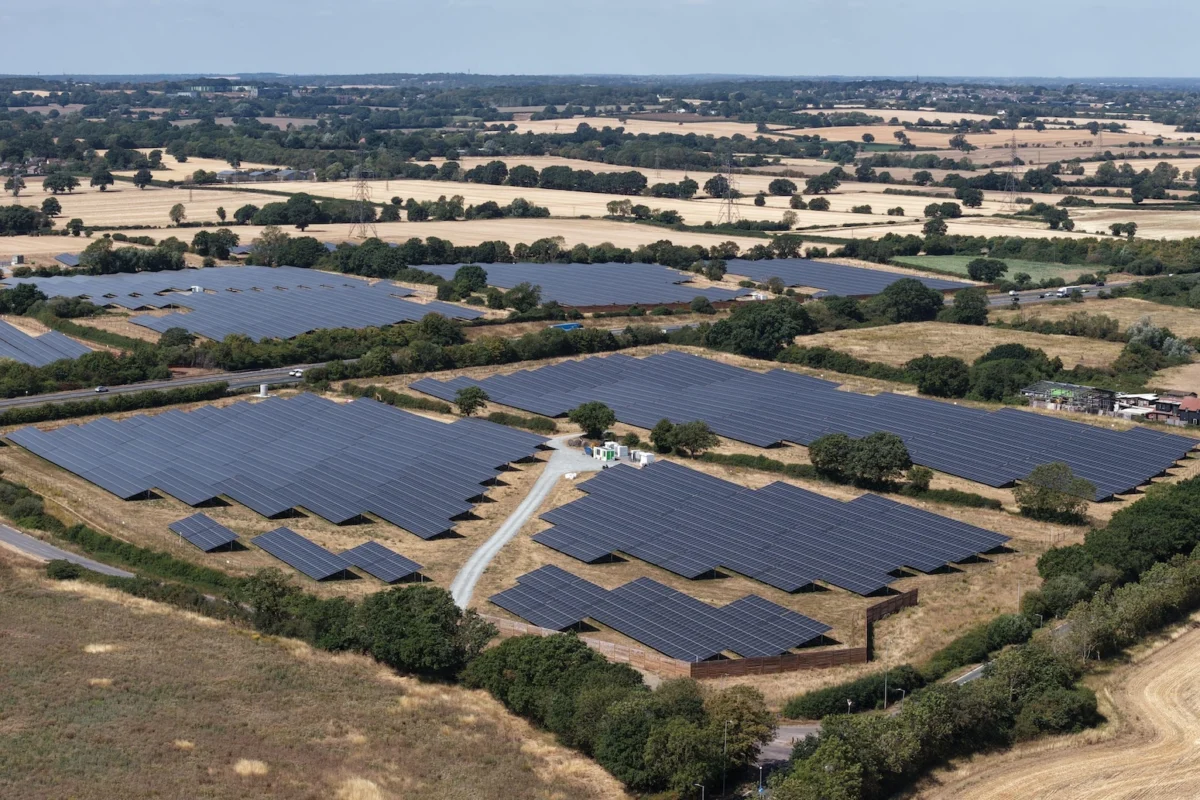
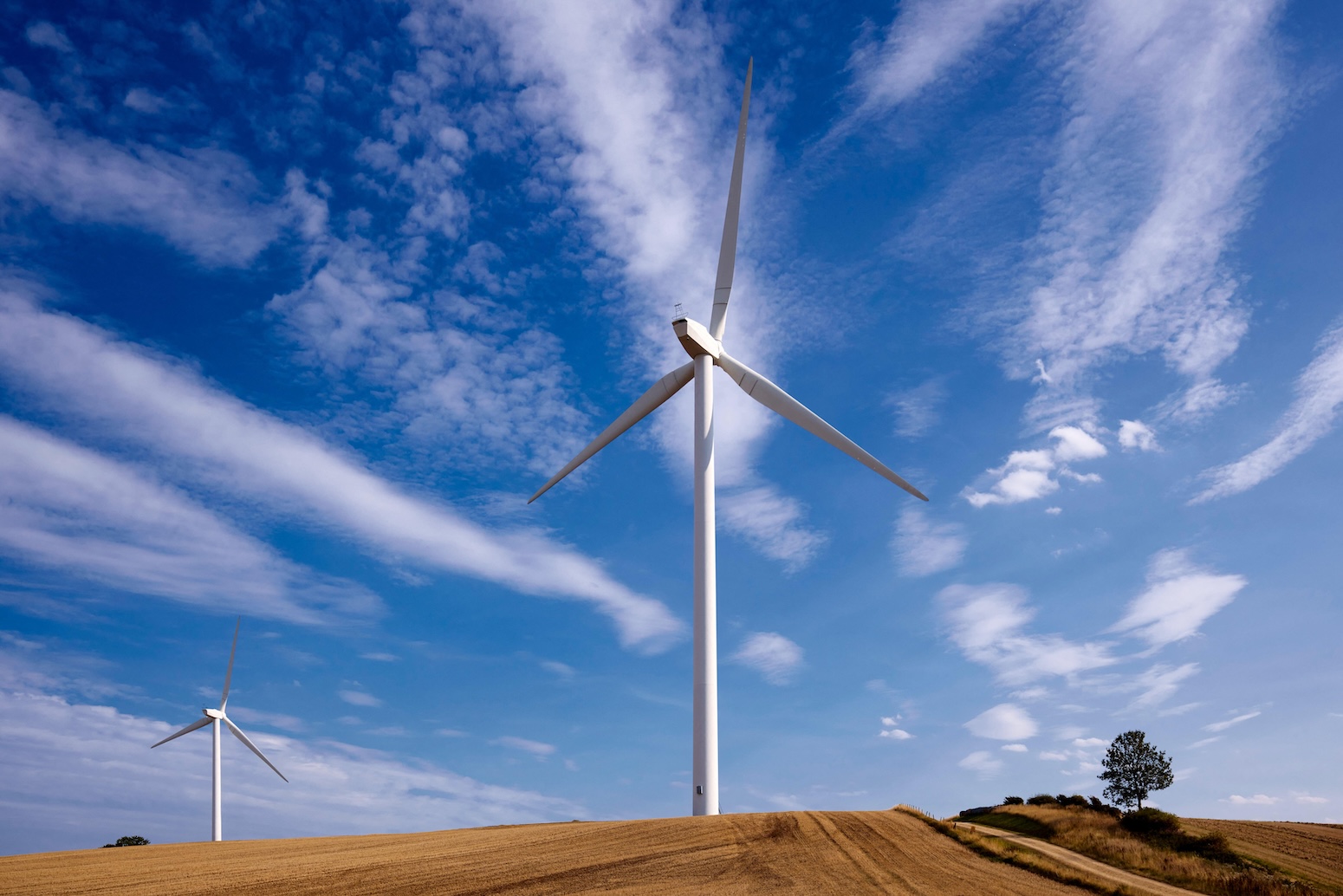
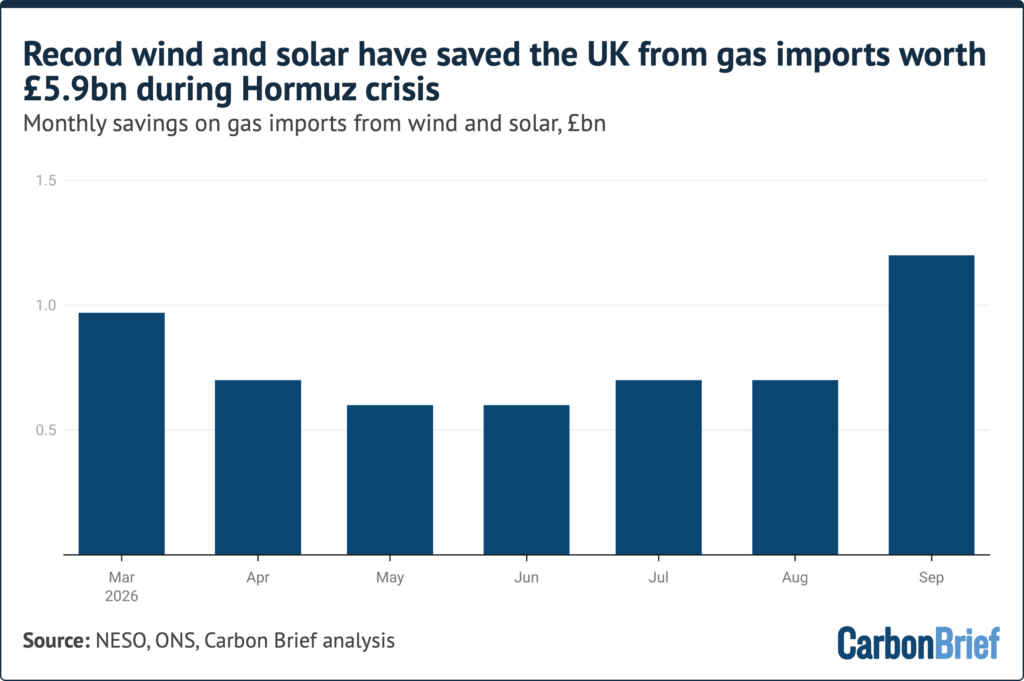
As geopolitical tensions in the Strait of Hormuz continue to throttle global energy markets, the United Kingdom has found itself in an unexpected race for energy security. While wholesale gas prices climb to levels unseen since the initial shock of the 2022 invasion of Ukraine, a quiet revolution in the UK’s energy mix is acting as a critical buffer. New analysis from Carbon Brief reveals that record-breaking generation from wind and solar power has spared the UK from the need to import £5.9 billion worth of natural gas since the onset of the Hormuz crisis in February 2026.
This surge in domestic clean-power generation—up 14% year-on-year—has fundamentally altered the UK’s vulnerability to external shocks. By decoupling a significant portion of the electricity grid from volatile global gas markets, the UK has effectively shielded itself from the worst of the inflationary pressure currently sweeping through the global economy.
The Anatomy of the Crisis: A Chronology
The current energy landscape is defined by a convergence of geopolitical instability and seasonal demand. The crisis, which began in early 2026, has seen the Middle East embroiled in a conflict that has jeopardized the transit of liquefied natural gas (LNG) through the critical chokepoints of the Strait of Hormuz.
- February 2026: War breaks out between the US and Iran, triggering immediate volatility in global energy markets. Wholesale gas prices begin a steady, concerning climb.
- March – May 2026: Carbon Brief reports indicate that the UK’s burgeoning renewable sector is already beginning to pay dividends, saving the economy roughly £1.7 billion in potential gas imports.
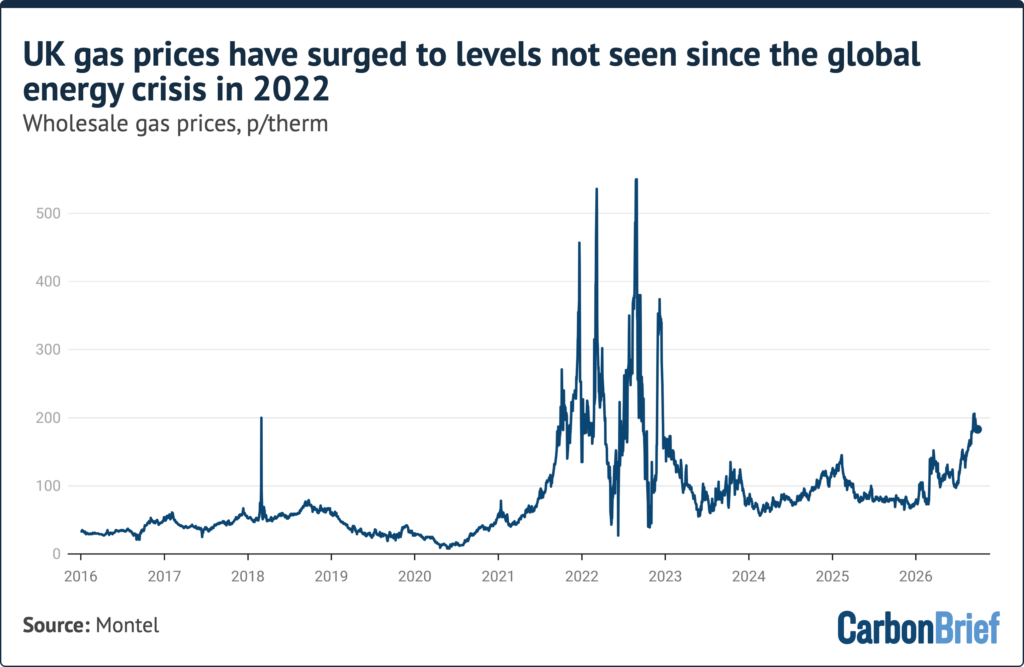
- September 2026: With winter approaching, demand for heating has surged. Wholesale gas prices have hit an average of 189p per therm—the highest level since the peak of the 2022 energy crisis.
- October 1, 2026: A scheduled adjustment to the Ofgem energy price cap results in a 33% increase in typical household gas bills, a stark contrast to the modest 4% increase seen in electricity bills.
This timeline underscores the fragility of a nation tethered to imported hydrocarbons. While the UK remains a net importer, the shift toward a decentralized, home-grown energy system is no longer just an environmental goal; it is a primary pillar of national security.
Supporting Data: The Renewable Buffer
The figures surrounding the UK’s clean energy performance are both unprecedented and transformative. In 2026, wind and solar energy have accounted for a staggering 41% of the UK’s total electricity needs. In contrast, gas-fired power generation has plummeted by nearly 10% compared to the same period last year.
The £5.9 billion in avoided import costs is a staggering figure, representing the equivalent of over 100 additional tanker deliveries of LNG that the UK would have otherwise been forced to purchase at inflated market rates.
Price Volatility: A Comparative Analysis
The divergence between gas and electricity prices has become a key indicator of the "green premium" currently protecting UK consumers. Since 2023, wholesale gas prices had stabilized at roughly 90p per therm—already triple the pre-2020 levels seen before the COVID-19 pandemic and the Ukraine conflict. However, the post-March 2026 environment has seen prices soar to an average of 134p, peaking at 189p this September.
This volatility has forced an urgent re-evaluation of the UK’s energy infrastructure. With European gas stocks at historically low levels, the UK is now caught in a "tug-of-war" with Asian markets to secure scarce LNG cargoes. As the colder months approach, this competition is expected to intensify, keeping the floor for gas prices exceptionally high.
Official Responses and Policy Shifts
The political establishment has taken note of these trends. During the recent Labour Party conference, the rhetoric surrounding energy policy underwent a noticeable shift, moving from a focus on climate targets to a focus on "energy sovereignty."
Energy Secretary Miatta Fahnbulleh emphasized the urgency of the situation, explicitly linking the high cost of living to the UK’s exposure to global fossil-fuel markets. "We are currently too exposed," she stated, noting that the volatility of these markets is a direct threat to the financial stability of British households.
Prime Minister Andy Burnham echoed this sentiment, framing the expansion of renewables and nuclear power as a strategic imperative. "We are already taking more control of our electricity prices," Burnham told the conference, confirming that he has tasked the Energy Secretary with accelerating the "breaking of the link" between domestic power prices and the international gas market. This policy shift aims to ensure that when the wind blows and the sun shines, those benefits are passed directly to the consumer, rather than being overshadowed by the pricing mechanisms of a global gas market.
Broader Economic and Societal Implications
The implications of this transition extend far beyond the electricity grid. The cost-of-living crisis is being driven by a broad spectrum of energy price spikes, including diesel and oil. The EU, for instance, has been forced to pay an additional €100 billion for fossil fuel imports since the start of the Hormuz crisis, a burden that is disproportionately affecting low- and middle-income nations.
In the UK, the impact is visible at the petrol pump, where diesel prices have hit record levels of approximately £2 per litre. This has created a secondary economic argument for the transition to electric vehicles (EVs). Recent analysis confirms that EVs are now nine times cheaper to drive than their internal combustion counterparts in the current market, providing a compelling economic incentive for consumers to shift away from refined petroleum products.
The Decoupling of Prices
Perhaps the most significant takeaway from recent months is the observation by industry experts, such as Andrew Sissons of the thinktank Nesta. Sissons notes that the historical correlation between gas and electricity prices has begun to fracture. For the first time, the surge in renewable generation is providing a tangible shield for electricity consumers that does not exist for those relying on gas for home heating.
This creates a new political mandate: if electricity can be decoupled from the volatility of international gas, then the rapid electrification of heat (via heat pumps) and transport (via EVs) is no longer merely a "green" policy—it is a comprehensive strategy for economic resilience.
Conclusion: A Path Forward
The £5.9 billion saved since February 2026 serves as a powerful validation of the UK’s investment in renewable energy. However, the data also highlights the dangers of the remaining reliance on gas. As long as the UK remains tethered to the global LNG market, it will remain a hostage to geopolitical events in the Strait of Hormuz and beyond.
The path forward, as articulated by the current government, involves a two-pronged approach: a massive, accelerated expansion of home-grown renewables and the systemic decoupling of the electricity market from the fossil-fuel price index.
While the winter of 2026 presents significant challenges—with low storage levels and a global scramble for supply—the UK enters this period with a stronger, more resilient energy grid than it had just a few years ago. The lesson of the Hormuz crisis is clear: energy independence in the 21st century is built on the foundation of wind, solar, and the smart management of domestic power. For the British consumer, the transition to clean energy has moved from being a long-term aspiration to a necessary and immediate economic defense.