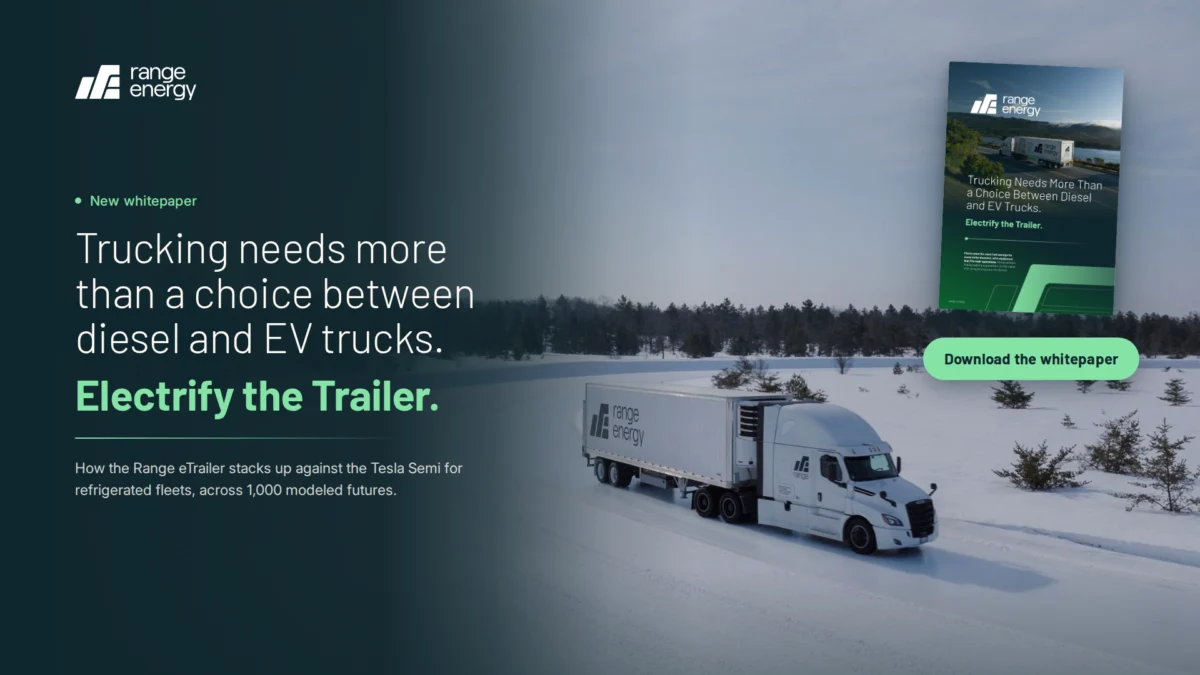
As diesel prices continue to fluctuate at record highs, the commercial trucking industry finds itself at a critical crossroads. For fleet operators, the pressure to reduce fuel consumption is no longer just a sustainability goal—it is a fiscal imperative. A new whitepaper published by Range Energy provides a comprehensive analysis of the options currently available to fleets, contrasting the traditional status quo with the emerging technological alternatives that promise to redefine the logistics landscape.
Main Facts: The Triple-Threat Dilemma for Modern Fleets
The core challenge facing modern logistics is the volatility of operating expenses, with fuel costs representing the most significant variable in the profit-and-loss statement. Range Energy’s whitepaper highlights three distinct pathways for fleet managers to consider: maintaining the status quo, transitioning to electric tractors, or adopting powered trailer technology, specifically the Range eTrailer.
The situation is particularly acute for refrigerated fleets—often referred to as “reefers.” These operators are burdened by a dual-engine penalty. Unlike standard dry van operators, refrigerated fleets must power both the truck’s primary engine and the Transport Refrigeration Unit (TRU). This creates a constant, high-volume demand for diesel, even when the vehicle is stationary or idling during loading and unloading.
The whitepaper emphasizes that the choice between these technologies is not merely a technical one; it is a strategic business decision that involves capital expenditure, infrastructure readiness, and long-term operational viability.
Chronology: Navigating the Transition Timeline
The transition to a low-emission or zero-emission fleet is not an overnight occurrence. Range Energy points to a distinct timeline that fleet managers must navigate when making capital commitments today.
The Short-Term: The "Do Nothing" Approach
For many, the current strategy remains to maintain legacy diesel fleets. While this requires no immediate capital outlay for new technology, it leaves fleets highly vulnerable to energy market volatility and tightening environmental regulations.
The Medium-Term: The Electric Tractor Queue
Transitioning to electric tractors, such as the Tesla Semi, represents a significant leap forward in decarbonization. However, this path is fraught with logistical hurdles. Beyond the vehicle acquisition, fleets must invest in extensive charging infrastructure—a process that often involves local utility upgrades, permitting, and construction, which can span several years.
The Long-Term: The eTrailer Pivot
The Range eTrailer, which is slated for serial production in late 2027, offers a middle-ground solution. By integrating a powered drivetrain directly into the trailer, it allows existing diesel tractors to operate with significantly higher efficiency, or allows for a transition to hybrid-electric operations without requiring an immediate, full-scale overhaul of the charging grid at every facility.
Supporting Data: Why Refrigerated Fleets are the Canary in the Coal Mine
To understand the urgency of this transition, one must look at the math behind refrigerated transport.
- Fuel Consumption: A standard TRU unit can burn up to 0.5 to 1.5 gallons of diesel per hour, depending on the temperature set point and ambient conditions. Over a year of constant operation, this can add thousands of dollars per trailer to a fleet’s overhead.
- The Power Gap: Electric tractors offer immense potential, but the current grid limitations mean that charging a heavy-duty electric vehicle (EV) requires a massive amount of power. For a fleet of 50 trucks, the peak demand could mirror that of a small industrial park, necessitating multi-year grid capacity studies.
- Efficiency Gains: Range Energy’s analysis suggests that powered trailers can provide a "force multiplier" effect. By adding propulsion and regenerative braking to the trailer, the workload on the tractor—whether it is diesel, electric, or hydrogen—is reduced, effectively extending the range and lowering the cost per mile.
Official Responses and Industry Perspectives
Industry analysts have noted that the "Range Energy" whitepaper arrives at a time of extreme skepticism regarding rapid electrification. While many stakeholders agree that electric is the ultimate destination, the consensus among fleet managers is that the infrastructure is lagging behind vehicle availability.
"The industry is currently in a ‘wait-and-see’ mode," says one logistics consultant. "Fleet operators are hesitant to commit to a fleet of electric tractors when they cannot guarantee the vehicle will be charged and ready to depart on time. The appeal of a powered trailer is that it bridges that gap—it provides the benefit of electric power without requiring a complete redesign of the depot’s electrical distribution system."
Range Energy, in its documentation, advocates for a pragmatic approach. They suggest that by investing in eTrailers, fleets can begin their decarbonization journey today, reducing diesel dependency incrementally while the broader charging infrastructure matures.
Implications: The Impact on the Bottom Line
The financial implications of these decisions are profound. Reducing diesel consumption is the most direct way to protect a fleet’s operating margin.
Capital Allocation
Fleets must decide whether to tie up capital in long-lead-time assets like charging depots or to invest in modular technology like the eTrailer, which can be deployed with existing tractor assets. The whitepaper argues that the latter offers a more flexible capital strategy, allowing fleets to scale up as their specific lanes and routes prove to be suitable for electrification.
Competitive Advantage
In an era where shippers are increasingly setting their own "Scope 3" emissions reduction targets, carriers that can prove a lower carbon footprint gain a distinct competitive advantage. A fleet that proactively adopts powered trailer technology may find itself favored in contract negotiations, effectively securing higher-quality freight and more stable revenue streams.
Regulatory Readiness
With governments worldwide tightening emissions standards for heavy-duty vehicles, the "do nothing" approach is becoming increasingly risky. Potential carbon taxes or mandates to eliminate diesel idling in urban centers could render non-compliant fleets obsolete in certain jurisdictions. Investing in eTrailers provides a hedge against these future regulatory headwinds.
Conclusion: Moving Toward a Sustainable Future
The decision-making process for fleet operators has never been more complex. The options presented by Range Energy highlight a transition period where innovation must meet operational reality. Whether a fleet chooses to wait for the next generation of electric tractors or decides to leverage the immediate efficiency gains of a powered trailer, the goal remains the same: reducing diesel reliance to secure a more profitable and sustainable future.
As the industry prepares for the upcoming FreightWaves F3: Future of Freight Festival in October 2026, these themes of technological integration and infrastructure readiness will undoubtedly take center stage. For fleet managers looking to stay ahead of the curve, the message is clear: informed, data-driven decisions made today will define the competitive landscape of tomorrow.
Engaging with the Future: Industry Events
For those seeking to dive deeper into the challenges and opportunities facing the logistics industry, FreightWaves is hosting a series of critical events in late 2026. These gatherings provide a venue for operators, technologists, and policymakers to discuss the very innovations discussed in this report.
- Brokerage Compliance Symposium (Oct 26, 2026): A deep dive into the legal and regulatory frameworks governing the modern broker, essential for those navigating the complexities of carrier liability and insurance in an evolving market.
- F3 Awards Dinner (Oct 26, 2026): A celebration of excellence in FreightTech, honoring the companies and leaders who are pushing the boundaries of what is possible in logistics.
- F3: Future of Freight Festival (Oct 27-28, 2026): The premier event for industry-defining keynotes and technology demonstrations. This festival is the ideal environment to see firsthand how advancements in equipment, software, and strategy are coming together to solve the industry’s most pressing problems.
By engaging with these resources and analyzing the whitepapers provided by industry leaders like Range Energy, fleet operators can navigate the complexities of the current energy transition with confidence and foresight. The path forward is challenging, but for those who leverage the right tools, it is also paved with significant opportunity.