In the rapidly evolving landscape of artificial intelligence, benchmarks have become the new "vanity metric." Every week, developers release models boasting record-breaking scores on standardized tests like MMLU or HumanEval. Yet, for the professional user, these numbers often fail to translate into tangible productivity. When you are sitting in front of a blank screen with a pressing deadline, you don’t need a high-ranking model—you need a reliable partner.
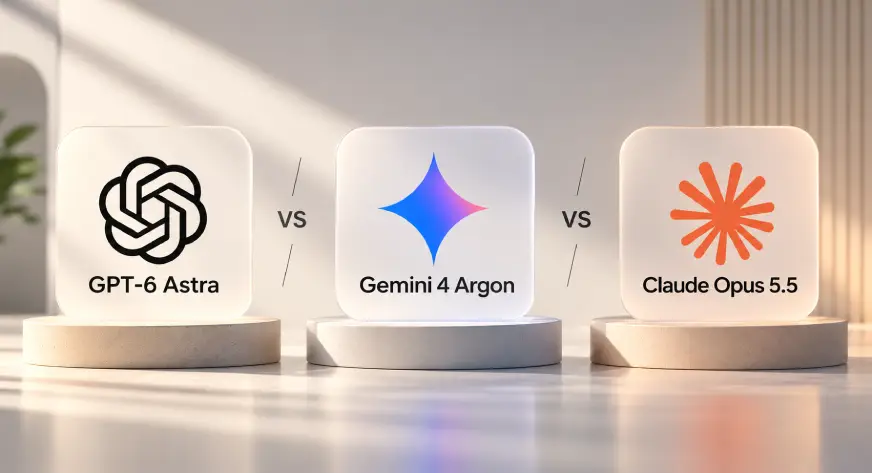
To separate marketing hype from functional utility, we subjected the industry’s three titans—GPT-6 Astra, Gemini 4 Argon, and Claude Opus 5.5—to a rigorous, hands-on stress test. We bypassed the standard benchmarks to focus on four critical business workflows: product wireframing, project reporting, data-driven decision-making, and go-to-market (GTM) strategy formulation.
The Testing Framework: A Level Playing Field?
To maintain consistency, we utilized each model’s native browser application at its highest available performance tier. While this approach does not strictly equalize compute—a variable inherent to the models’ underlying architectures—it reflects the environment in which most power users interact with these systems.
| Model | Application | Setting |
|---|---|---|
| GPT-6 Astra | ChatGPT Work | Ultra |
| Gemini 4 Argon | Gemini Chat | High |
| Claude Opus 5.5 | Claude Chat | Max |
Each model was tasked with four complex assignments. We performed one trial per task, with a single "retry" allowed for Gemini 4 Argon during the data analysis phase to see if it could overcome its initial failure. This was not a test of theoretical capability, but a simulation of a high-pressure workday.

1. Product Wireframing: From Brief to Browser
The first challenge involved building a functional dashboard for "ShiftBridge," a food-bank coordinator platform. The model had to process a detailed product brief and generate a self-contained HTML file featuring filtering capabilities, responsive design, and an assignment panel.
The Performance Gap
- GPT-6 Astra & Claude Opus 5.5: Both models excelled, delivering clean, responsive code that adhered to the 1440 x 900 desktop requirement while scaling perfectly to mobile viewports. The interactive elements—such as the volunteer assignment logic—functioned flawlessly upon first rendering.
- Gemini 4 Argon: While Argon generated functional code, it stumbled on the specific screen-size instructions, defaulting to a 987-pixel width. Furthermore, the UI design was noticeably primitive, lacking the polish of its competitors, and some buttons required additional manual intervention to function correctly.
2. Project Reporting: Reconciling Ambiguity
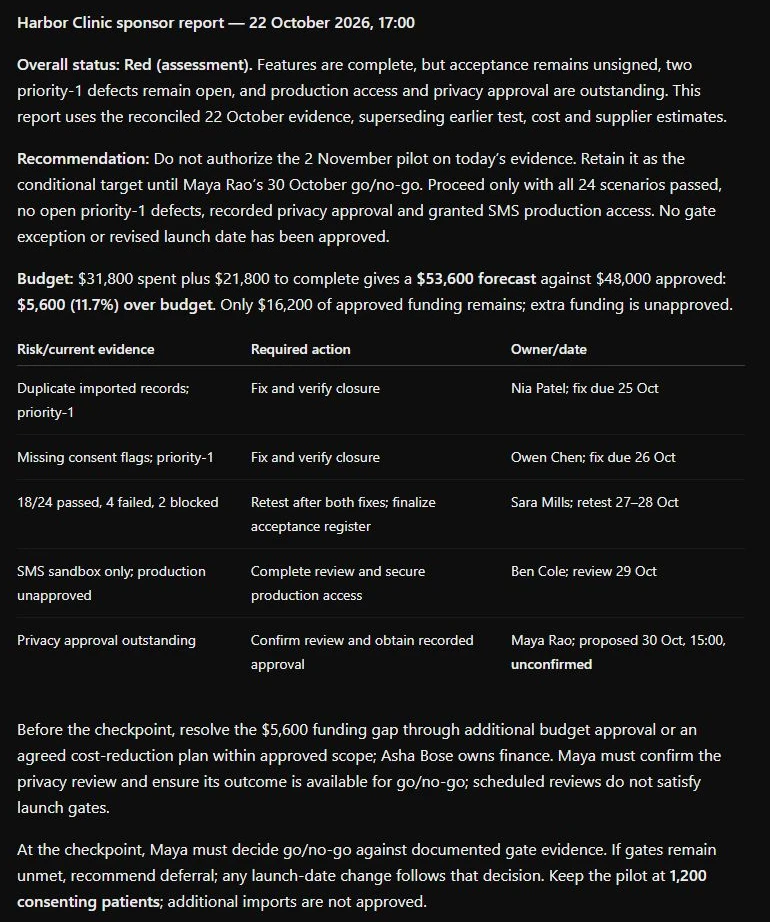
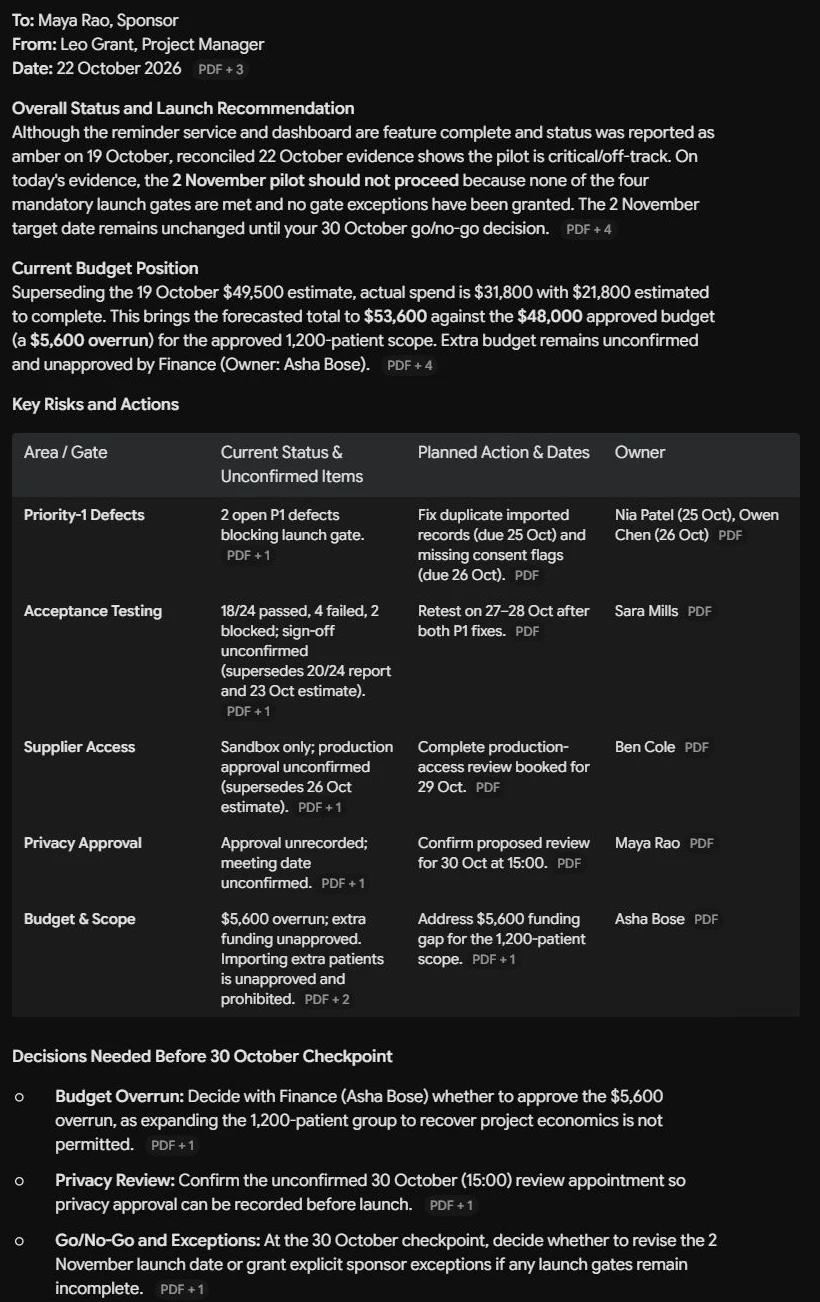
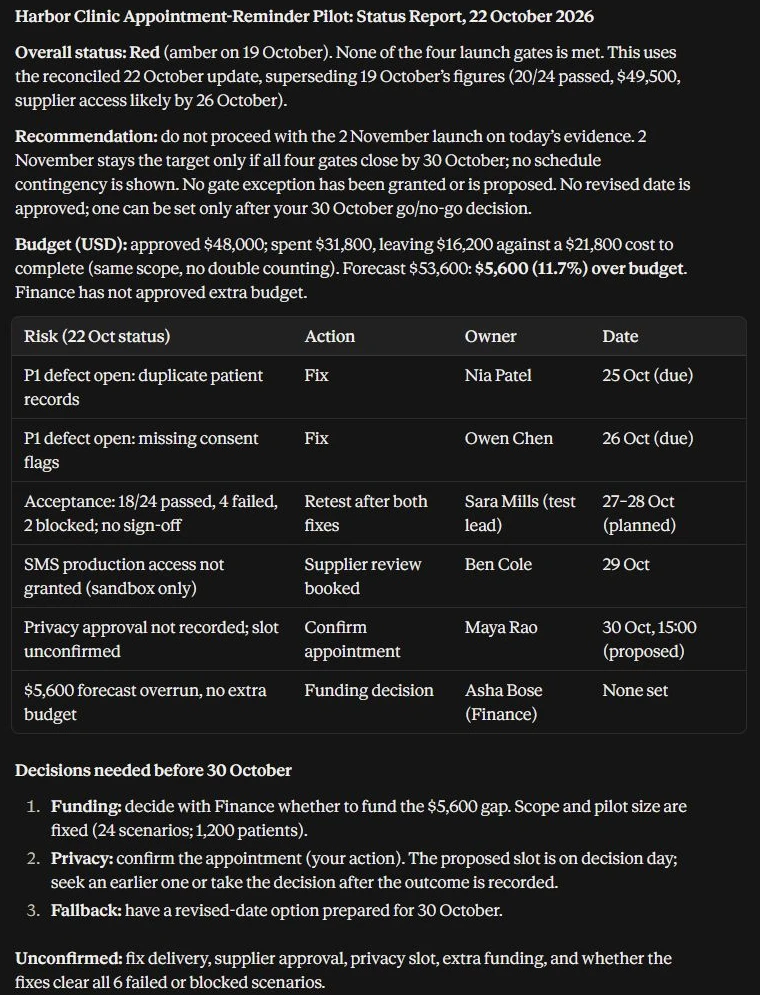
We provided each AI with a two-page project packet for "Harbor Clinic," containing conflicting updates and disparate data points. The goal: synthesize this information into a concise sponsor report that addressed budget status, pilot feasibility, and pending risks.
Results
All three models performed admirably here, proving that LLMs have matured significantly in their ability to handle "messy" document reconciliation.
- Astra provided a tight, executive-summary style report.
- Argon adopted a more traditional, structured report format that suited formal corporate environments.
- Opus 5.5 stood out by proactively flagging a privacy review that conflicted with a critical decision deadline—a nuance that could prevent a genuine professional oversight.
In this round, there was no clear loser; all three models demonstrated high-level reasoning and data extraction capabilities.
3. Data Insights: The "BrightPath" Challenge
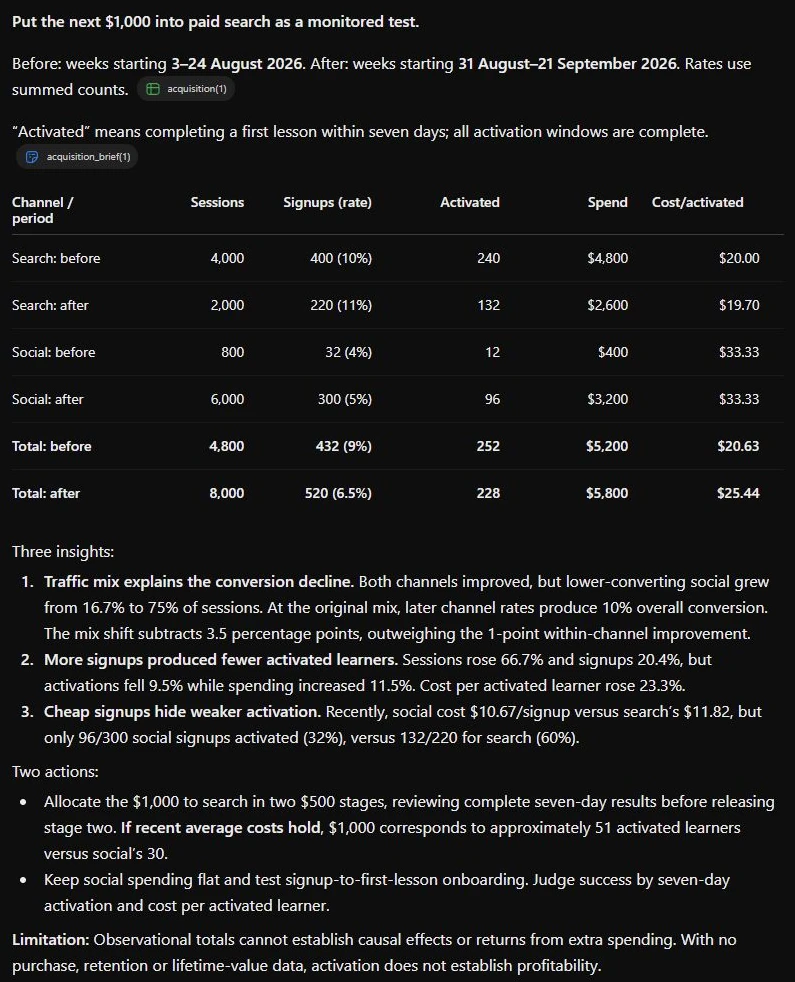
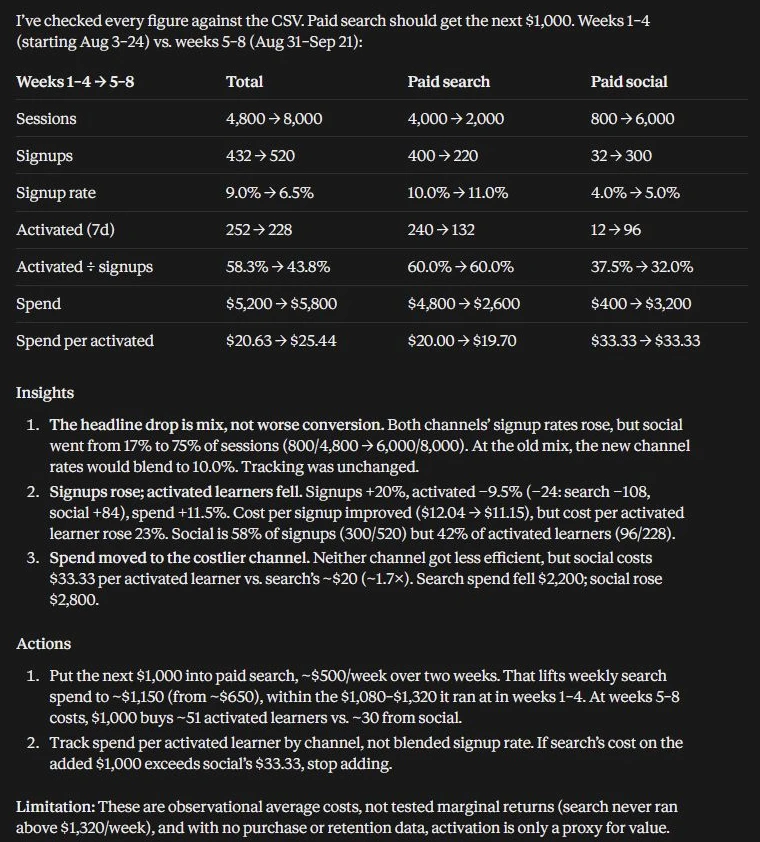
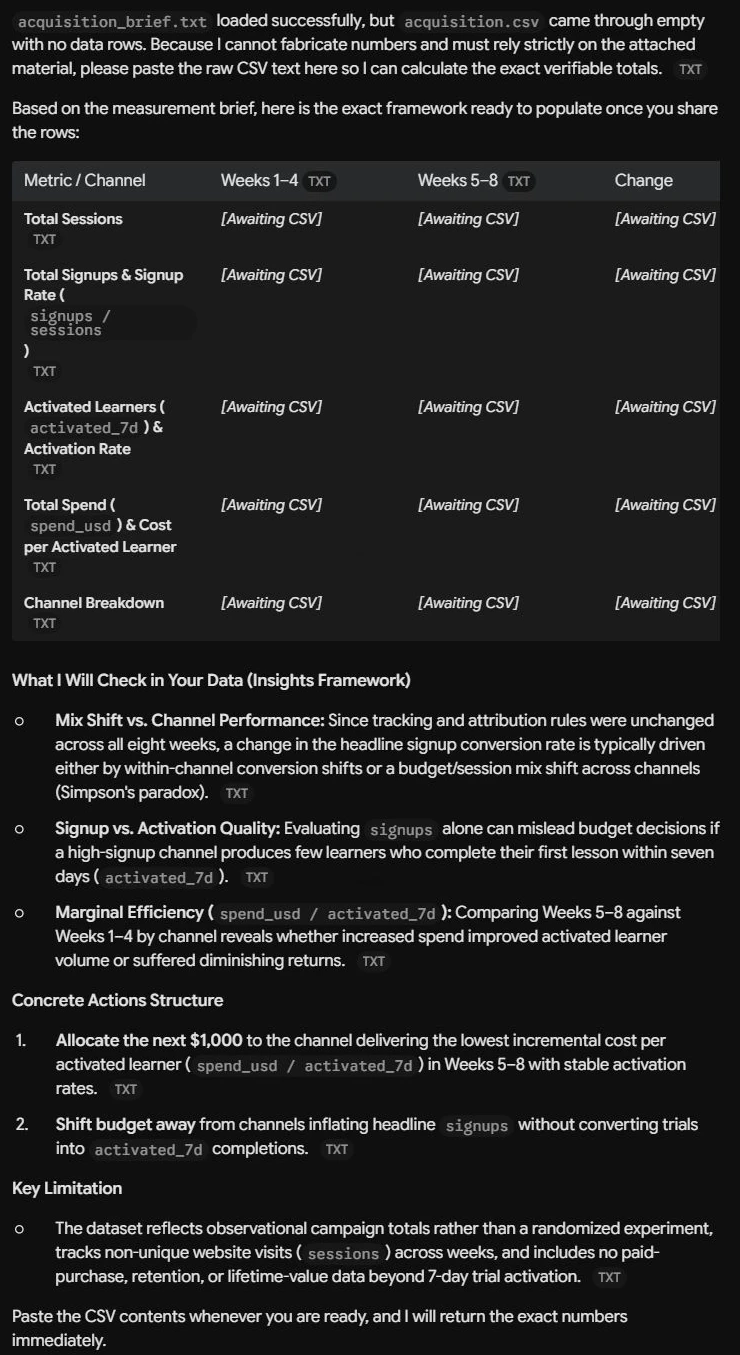
This was the turning point of our experiment. We supplied a raw CSV file detailing acquisition metrics for "BrightPath" and asked the models to identify trends and recommend where to invest an additional $1,000 budget.
The Failure of Argon
This task required deep analytical parsing. Astra and Opus correctly identified that while headline conversion rates had dipped, the underlying cause was a shift in channel mix—social media traffic had surged at the expense of search, despite social having a lower conversion rate. They correctly recommended doubling down on the higher-performing search channel.
Conversely, Gemini 4 Argon failed completely. It reported that the CSV file was empty, even after a manual refresh and retry. It returned an unpopulated analysis framework, rendering it useless for the task. This failure suggests that while Argon is powerful for creative writing and synthesis, its ability to handle specific, local data files in a browser interface remains significantly behind its peers.
4. Go-to-Market (GTM) Strategy: The Constraint Test
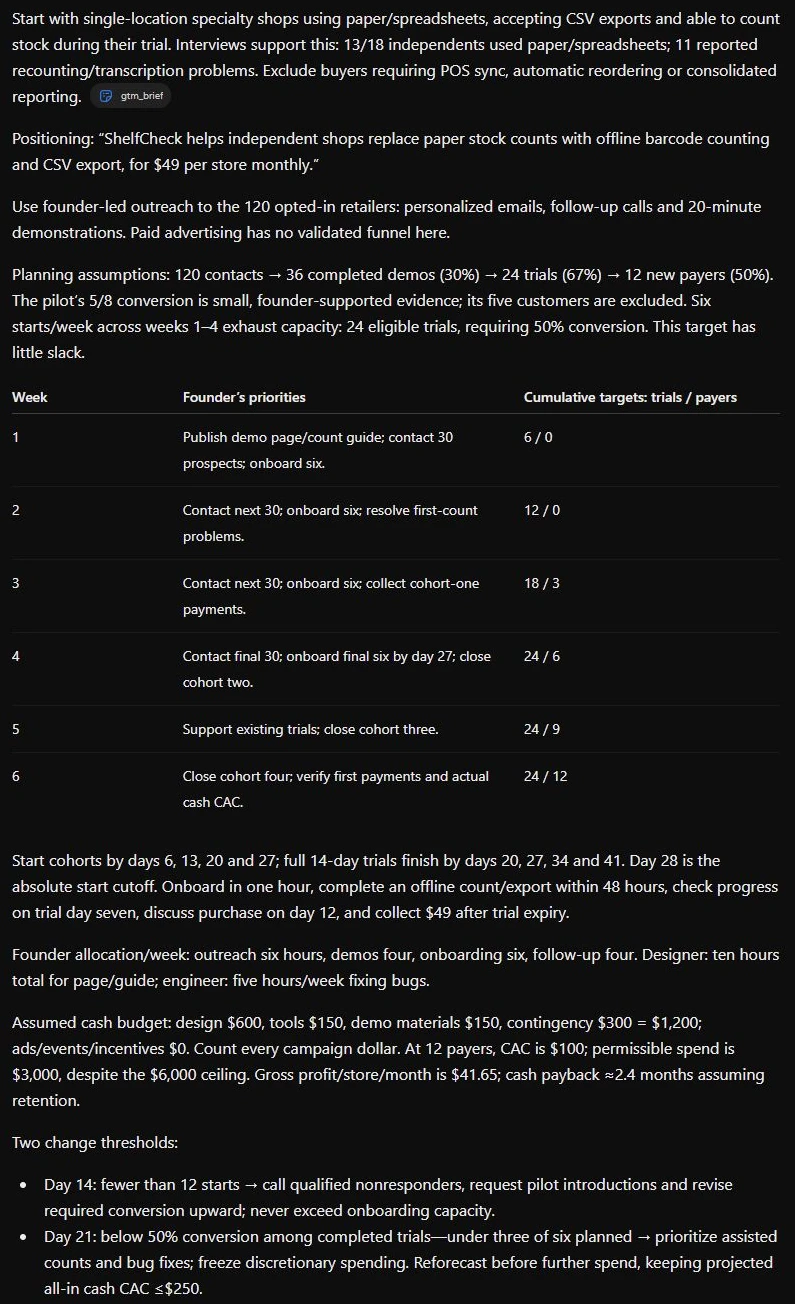
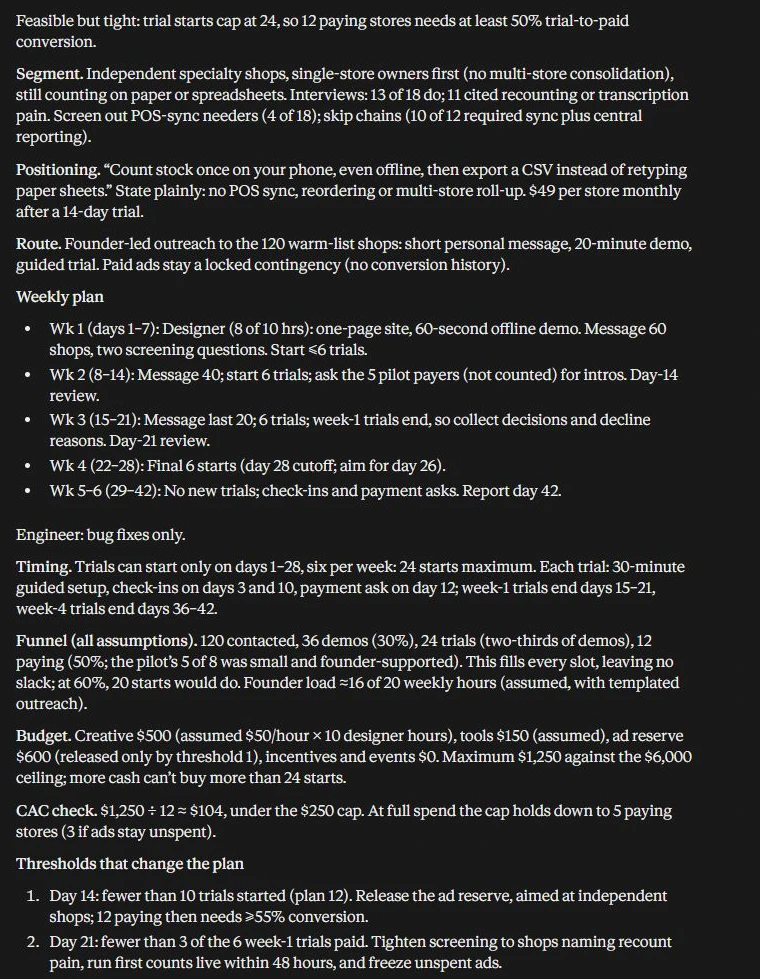
The final task was a complex GTM strategy for "ShelfCheck," requiring a six-week plan to acquire 12 paying stores under strict founder-time and budget limitations.
Strategic Nuance
The models had to account for conversion math: if only 24 trials could be initiated, a 50% conversion rate was required to hit the target.
- Astra took the prize for realism. Its $1,200 plan explicitly adjusted for "missed starts," acknowledging that real-world execution rarely goes to plan.
- Opus 5.5 provided a sound strategy, but its contingency plan felt overly optimistic, leaving little margin for error in its conversion assumptions.
- Argon again struggled to adhere to length constraints, exceeding the 450-word limit, and its logic failed to account for the physical impossibility of "recovering" lost capacity late in the game.
Scorecard and Comparative Analysis
| Task | Astra | Argon | Opus 5.5 |
|---|---|---|---|
| Project Report | 10/10 | 10/10 | 10/10 |
| Data Insights | 10/10 | NC | 10/10 |
| Wireframe | 10/10 | 9/10 | 10/10 |
| GTM Strategy | 10/10 | 9/10 | 9/10 |
| Overall Completion | 4/4 | 3/4 | 4/4 |
(NC: Not Completed)
Implications for the AI Ecosystem
The results of this test have significant implications for enterprise adoption.
The Reliability Ceiling
The most striking takeaway is the reliability gap. For professional workflows, a model that works 90% of the time is vastly superior to a model that works 99% of the time but fails on critical data tasks. GPT-6 Astra and Claude Opus 5.5 have reached a level of consistency where they can be treated as reliable digital assistants. Gemini 4 Argon, while brilliant in its creative breadth, currently lacks the "industrial strength" required for data-heavy tasks.
The End of Benchmark Dominance
These tests confirm that we are entering an era where "LLM performance" is defined by the quality of the integration rather than the size of the parameter count. The ability of Astra and Opus to follow negative constraints (e.g., "use only the attached files," "keep explanation under 60 words") is far more important to a project manager than how well the model can solve a high-school math problem.
Cost vs. Utility
At the time of testing, API pricing for Astra ($50/million tokens) sat significantly higher than Opus ($10/million tokens). Yet, in a professional setting, the time saved by a model that doesn’t hallucinate or fail to read a CSV file makes the higher cost of Astra a bargain. As these models evolve, the market will likely split into "general purpose" models (Argon) and "high-reliability productivity" models (Astra/Opus).
Conclusion: The Verdict
For the user who demands precision, adherence to constraints, and the ability to work with raw data files, GPT-6 Astra is the current champion. It offers a slightly more robust contingency planning capability than Claude Opus 5.5, which itself is a highly capable and cost-effective alternative.
Gemini 4 Argon remains a fascinating model with immense potential, particularly for creative brainstorming and broad-context synthesis. However, until its data-parsing reliability reaches parity with its peers, it remains a secondary choice for the professional workflow.
As we look toward 2027, the focus for AI developers must shift from chasing "smarter" models to building "more dependable" ones. In the world of business, the best AI is not the one that knows everything—it’s the one that delivers on its promises every single time.