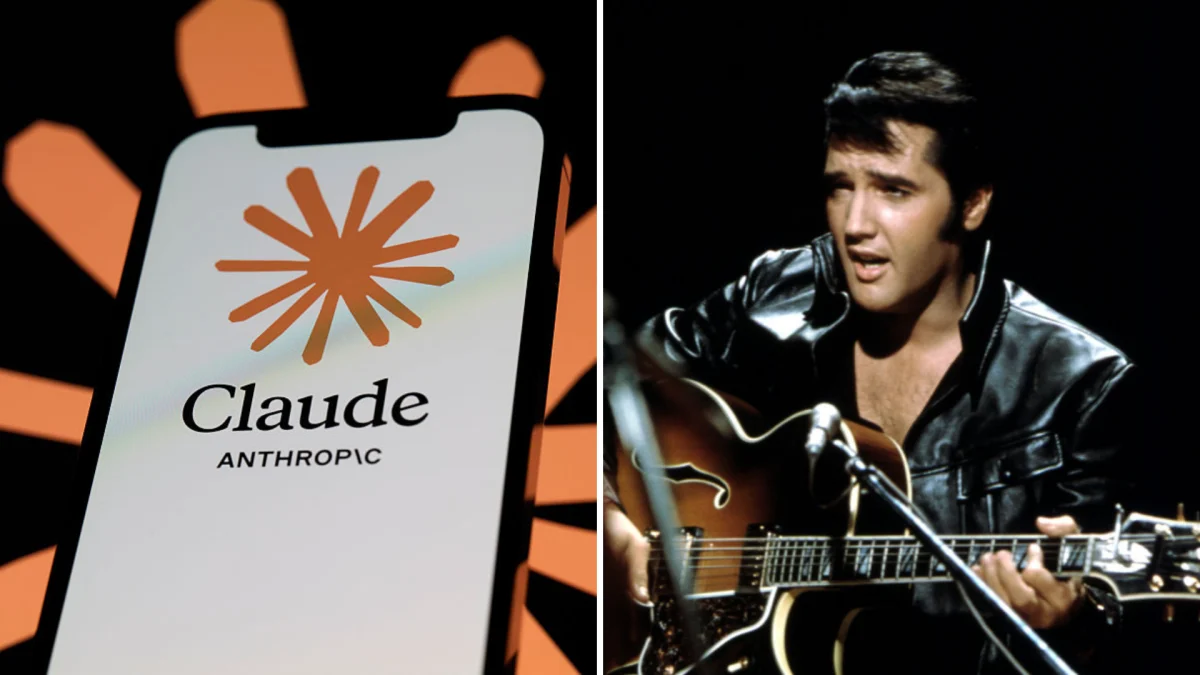
The intersection of generative artificial intelligence and intellectual property law has reached a new, high-profile boiling point. This week, the estate and rights holders of the legendary Elvis Presley launched a significant legal offensive against AI powerhouse Anthropic, accusing the tech company of systematically utilizing the rock icon’s discography to train its Claude large language models (LLMs) without authorization.
The lawsuit, filed on Friday, marks a pivotal moment in the ongoing battle between content creators and AI developers. By alleging that Anthropic’s business model is built upon the “unfathomable” scale of copyright infringement, the plaintiffs are seeking to establish a legal precedent that could fundamentally alter how AI companies source data for training their systems.
The Core Allegations: Beyond "Inspiration"
At the heart of the complaint is the assertion that Anthropic’s Claude AI does not merely "learn" from the patterns of music, but actively reproduces the structural and creative essence of Elvis Presley’s work. The plaintiffs identified 274 specific songs—including iconic tracks such as "Can’t Help Falling in Love," "Don’t Be Cruel," "Return to Sender," and "(You’re the) Devil in Disguise"—that were allegedly ingested into the model’s training data without consent or compensation.
The lawsuit argues that Claude is capable of generating content that mimics the Presley catalog with startling precision. According to the filing, users can prompt the AI to recreate or update Presley’s songs, resulting in output that mirrors the original compositions’ structure, melodic hooks, and lyrical arrangements, albeit with minor alterations.
"These renders keep landing very close to the originals: same structure, same hooks reused with light rewording, and full sets of verses/choruses/bridges," the filing states. The plaintiffs argue that this process goes well beyond the scope of "inspiration" or transformative use, effectively serving as a mechanism for the unauthorized reproduction of protected copyrighted material.
Chronology of Conflict: A Growing Legal Pattern
This lawsuit is far from an isolated incident; rather, it is the latest in a series of high-stakes legal challenges directed at Anthropic. The company, which is heavily backed by industry giants like Amazon and Google, has become a frequent target for copyright holders across the publishing and music industries.
- October 2023: Universal Music Group (UMG) initiated legal action against Anthropic, marking one of the earliest major music industry challenges regarding AI training data.
- January 2024: UMG filed a subsequent, even larger lawsuit against the company, alleging damages that could potentially reach $3 billion. This case has been described as one of the largest non-class action copyright cases in United States history.
- July 2024: Anthropic reached a major milestone in its legal troubles, settling a $1.5 billion class-action lawsuit brought by a group of authors who accused the company of using pirated versions of their books to train its models.
- August 2024: Sony Music Publishing and Warner Chappell Music joined the chorus of plaintiffs, filing suit against Anthropic for what they characterized as a "brazen campaign of illegally torrenting, scraping, and downloading" copyrighted music.
The Presley estate’s filing acts as a continuation of this aggressive trend, suggesting that the music industry is coalescing around a strategy to force AI companies to negotiate licensing agreements or face debilitating financial penalties.
The Financial Stakes: A Multi-Million Dollar Liability
The financial demands of the current lawsuit are significant. The plaintiffs are seeking a permanent injunction that would effectively bar Anthropic from using Elvis Presley’s intellectual property in any future model training or generation.
Furthermore, the estate is seeking statutory damages of up to $150,000 for each of the 274 allegedly infringed works. If the court rules in favor of the plaintiffs on every count, the total financial liability for Anthropic could reach approximately $41.1 million—a sum that, while manageable for a company of Anthropic’s valuation, would set a dangerous precedent for the potential total damages across their entire training library.
Official Responses and Defense Strategy
Anthropic has remained resolute in its defense. In a brief statement issued following the announcement of the lawsuit, an Anthropic spokesperson addressed the allegations directly: "We disagree with the claims and intend to defend this case fully."
The company’s defense strategy is expected to rely on the "fair use" doctrine, a legal principle that allows for the limited use of copyrighted material without permission under certain circumstances, such as for the purposes of criticism, comment, or transformation. AI developers often argue that the act of "training" a model is a transformative process, as the resulting model does not store the original data in a traditional database but rather "learns" the underlying statistical relationships.
However, the plaintiffs in this case are clearly anticipating this argument. By highlighting that the AI can reproduce the "hooks" and "structure" of the songs, they are attempting to demonstrate that the output is not transformative enough to qualify for fair use protection.
The Broader Implications for the AI Industry
The outcome of the Elvis Presley Estate v. Anthropic case will likely have far-reaching consequences for the future of generative AI.
1. The Licensing Paradigm Shift
If Anthropic is forced to settle or loses in court, it may signal the end of the "wild west" era of data scraping. Currently, many AI companies operate under the assumption that public, or even protected, internet data is fair game for model training. A loss here would force developers to transition to a licensed model, where they must pay rights holders—such as record labels, publishers, and estate managers—to access high-quality creative data.
2. The Definition of "Creative" AI
Legal experts are closely watching how the courts define the "creativity" of an AI. If a model can be legally restricted from "recreating" a song’s structure, it places a hard limit on what generative AI is permitted to do. This could lead to a future where AI tools have "guardrails" that prevent them from accessing or mimicking specific copyrighted artistic styles, effectively walling off certain creative sectors from AI influence.
3. The Future of Intellectual Property
The Presley estate’s lawsuit is a test of how well current copyright law holds up against technology that was not even a fantasy when the laws were written. The core of the issue is whether the "expression" of a song (the specific notes and lyrics) is the only thing protected, or if the "compositional style" is also under the purview of copyright. If the court sides with the estate, it could expand the scope of intellectual property protections to include the "pattern" of a creator’s work, providing artists with new legal tools to protect their brand and legacy.
Conclusion: A Defining Moment
As artificial intelligence continues to evolve, the tension between technological innovation and the protection of human artistry is becoming increasingly volatile. The case against Anthropic is not just about 274 songs; it is about the fundamental value of human creativity in a digital age.
For now, the legal battle lines are drawn. As the proceedings move forward, the tech world will be watching to see if the courts will force AI companies to compensate the creators whose work made the current generation of AI possible, or if the legal system will continue to provide the space necessary for these models to grow and scale at their current, unprecedented pace. For the estate of the King of Rock and Roll, the message is clear: the music belongs to the artist, not the algorithm.