The landscape of LinkedIn is undergoing a seismic shift. For years, the platform has been the professional bedrock of networking, but the recent influx of generative AI has threatened to turn its feed into a digital wasteland of "slop"—generic, repetitive, and soulless content. LinkedIn is fighting back, and for marketers and personal brands, the stakes have never been higher.
Learning to navigate this new environment isn’t just about avoiding penalties; it is about reclaiming the human element that makes professional networking valuable. By integrating AI as a strategic assistant rather than a primary author, creators can maintain authority while benefiting from the efficiency of modern technology.
The War on AI Slop: Understanding the Platform’s Stance
LinkedIn’s recent actions have been definitive. The platform has waged a quiet, massive offensive against automated content, blocking hundreds of thousands of AI-generated comment attempts daily and billions of automated posts in recent months. This is not merely a technical adjustment; it is a fundamental shift in user experience.
The Mechanism of Detection
The crackdown relies on a combination of sophisticated algorithmic monitoring and, crucially, user-led reporting. LinkedIn has introduced features that allow members to flag content they perceive as "AI slop." According to industry expert AJ Wilcox, this reporting feature currently functions as a training ground for LinkedIn’s detection models. While these reports may not result in immediate account suppression today, they are feeding the data that will refine the platform’s future enforcement.
Furthermore, LinkedIn has pivoted its internal tools. Its native "enhance your post" feature, which previously offered generic rewrites, has been replaced with a proofreading-focused tool. The message is clear: LinkedIn wants AI to serve as an editor and a structural assistant, not as a surrogate for human thought.
The Cost of Inauthenticity
For the individual creator, the cost of relying on AI is becoming tangible. Posts perceived as inauthentic often suffer from low engagement rates—few likes, fewer comments, and almost no meaningful shares. Because LinkedIn’s algorithm prioritizes genuine human interaction, content that feels like a robot wrote it is effectively "buried" by the lack of community response. In this new era, your ability to sound human is your primary competitive advantage.
The Ideation-Expertise-Polish Model
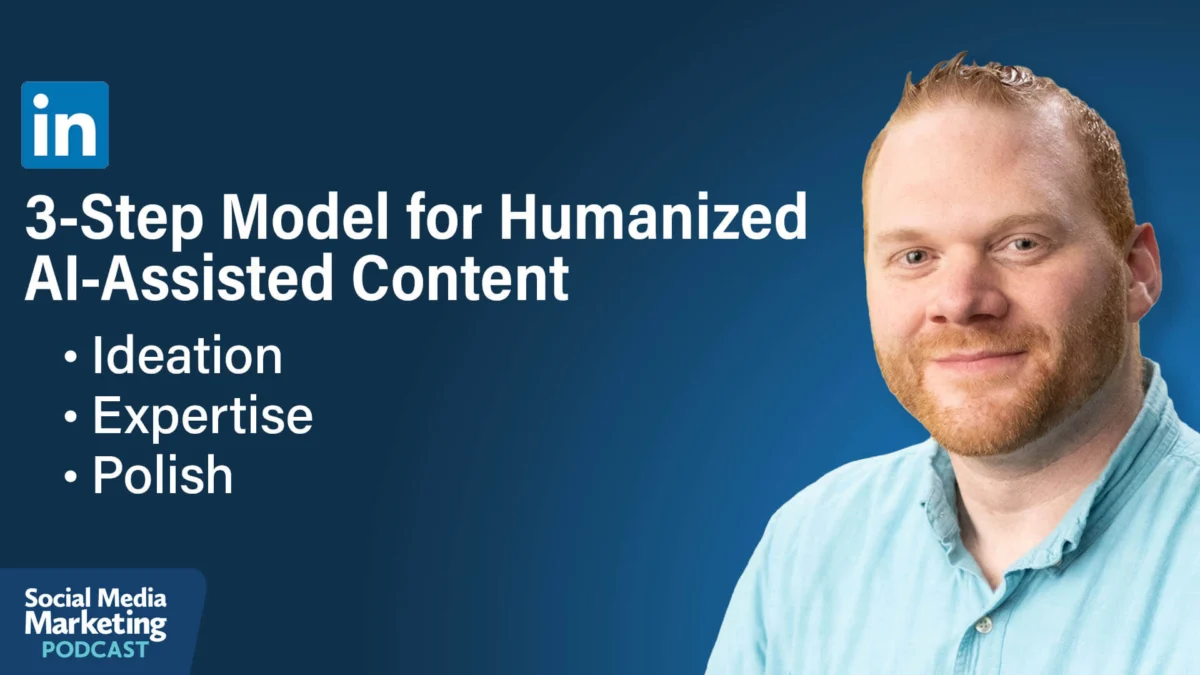
To survive and thrive, creators must adopt a "sandwich" approach to content creation. This framework, championed by AJ Wilcox, relies on human expertise as the non-negotiable core of every post.
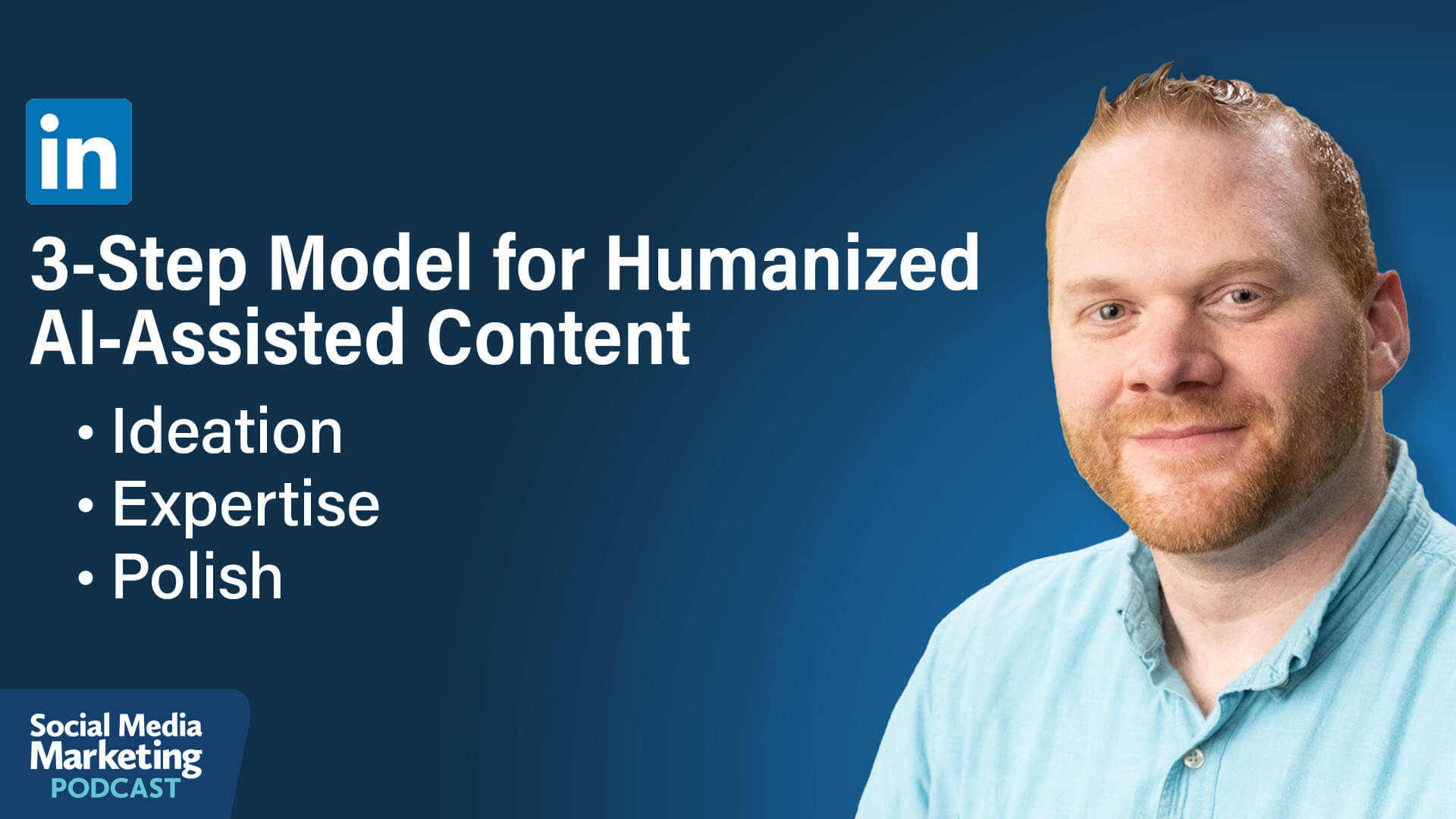
1. Ideation: AI as the Brainstorming Partner
At the start of the workflow, AI excels at volume. Use tools like ChatGPT or Claude to generate frameworks, identify potential angles on a topic, or outline a series of supporting points. This stage is about possibility, not prose. AI can help you overcome the "blank page" syndrome by offering ten different ways to approach a complex B2B topic.
2. Human Expertise: The Non-Negotiable Middle
This is the "meat" of the sandwich. AI cannot replicate your specific professional history, the nuances of a client success story, or the emotional intelligence required to address a sensitive industry shift. If you remove this layer, the content loses its authority. When you write from your own experience, you provide the unique value that AI lacks.
3. Polish: The Final Refinement
Once the draft is written in your voice, AI can return to the process to provide the final polish. Use AI to tighten sentences, correct grammatical errors, and ensure the formatting is visually scannable. By using AI to edit your words rather than generate theirs, you preserve your unique tone while maintaining a professional standard.
Identifying and Avoiding "AI Tells"
Detection is a perpetual game of cat and mouse, but some patterns are unmistakable. Readers are becoming increasingly savvy at spotting content that lacks a human touch.
- Syntax Patterns: AI models have a penchant for overusing em dashes and specific, dramatic phrasing (e.g., "this is silently killing your productivity"). When you see these patterns, you are likely looking at a prompt-generated output.
- The Emoji Problem: AI often places emojis in positions that feel unnatural or overly uniform. If your commenting style suddenly changes to include emojis that don’t match your brand voice, your audience will notice.
- The Trap of "Perfect" Typos: Some creators attempt to "trick" the algorithm by intentionally inserting typos. This is a failing strategy. Modern AI can be instructed to include human-like errors, making typos an unreliable signal of authenticity.
Pro Tip: If your post provides genuine, actionable value, the audience will be far more forgiving of polish. The audience reacts to the emptiness of the content, not its grammatical perfection.
The Strategy of Strategic Commenting
With the rise of "commenting as a growth strategy," LinkedIn has made it easier to gain visibility without necessarily needing to produce high-volume original content.
Leveraging Comment Impressions
LinkedIn now displays comment impressions to the user, allowing creators to track the reach of their interactions. By engaging with larger accounts in your niche, you can siphon some of that visibility toward your own profile.
The Rule of "Comment Density"
Not all engagement is equal. The LinkedIn algorithm is increasingly prioritizing "comment density"—the depth and substance of a thread. Shallow, bot-like comments such as "Great post!" or "Thanks for sharing" provide zero algorithmic boost. Instead, you should aim for substantive replies that add a unique perspective. Use open-ended questions like "What am I missing?" or "Am I looking at this the wrong way?" to invite further discussion.
The Ted Lasso Principle
When disagreeing, adopt the "Ted Lasso" approach: be curious, not judgmental. A framework for professional disagreement involves three steps:
- Acknowledge: Start with a compliment or an observation about the original post.
- Differentiate: State your position clearly: "I have a slightly different take on this."
- Invite: Ask for their perspective to close the loop. This keeps the conversation productive and builds professional relationships.
Optimizing for Visibility: Timing and Frequency
The rhythm of your posting schedule can determine whether your content reaches its potential or dies in the feed.
- Frequency: For most creators, two posts per week (Tuesday and Thursday) is the sweet spot. Wednesday is the strongest day for a single-post strategy.
- The "Cannibalization" Rule: Never post twice in one day. LinkedIn’s algorithm will shift attention to the newest post, effectively killing the engagement of the first. Even spacing posts too closely together can be detrimental, as the algorithm needs time to distribute your content to your network.
- The 1-2 Hour Window: The most critical window for engagement is the first two hours after publishing. During this time, your active presence in the comments section can significantly amplify your reach.
Modernizing Video and Ads
AI-Powered Live Streams
LinkedIn has introduced tools that automatically generate "chapters" and "short-form clips" from live streams. This is a game-changer for executive branding. Leaders who previously avoided video due to the production burden can now host live interviews—which require no post-production editing—and let the platform’s AI handle the distribution of highlights.
LinkedIn Ads: Quality Over Quantity
When using AI for LinkedIn Ads, the biggest mistake is over-testing. While some platforms encourage dozens of creative variations, LinkedIn’s system is different. Because of LinkedIn’s frequency caps, running more than four variations per ad set can actually hurt your performance by causing the system to compete against itself. Stick to 2–4 high-quality creatives to maximize your budget and stay within the platform’s auction mechanics.
Implications for the Future
The implication of these shifts is clear: The "content factory" model of marketing is dead. As AI tools continue to evolve, the premium on human perspective will only increase. Marketers who use AI to handle the tedious tasks—research, formatting, and scheduling—while reserving the creative and strategic heavy lifting for themselves will be the ones who maintain authority in the long run.
The future of LinkedIn belongs to those who view AI as a tool to enhance their humanity, not as a replacement for it. By focusing on substantive engagement, authentic expertise, and strategic, human-led workflows, you can navigate the algorithm and build a brand that stands the test of time.