Brazil stands at a historic crossroads this Sunday as 159 million voters prepare to cast ballots in a presidential runoff that feels less like an election and more like a battle for the soul of the nation. The contest, which has pitted the veteran leftist leader Luiz Inácio Lula da Silva against the far-right senator Flávio Bolsonaro, has transcended traditional political discourse to become a referendum on the country’s democratic integrity, its constitutional future, and its geopolitical alignment.
Main Facts: A Dead Heat in a Divided Nation
The political climate in Brazil has shifted dramatically in the three weeks since the first round of voting. Senator Flávio Bolsonaro, the 45-year-old eldest son of former president Jair Bolsonaro, secured a surprising lead in the first round—an outcome that defied the consensus of most polling agencies and initially positioned him as the clear frontrunner.
However, the momentum has since evaporated. Aggressive campaigning by the 81-year-old Lula da Silva has closed the gap, and as of this weekend, the two candidates are locked in a statistical dead heat. The first-round margin, which separated the two by less than 2% of the vote, stands as the narrowest in Brazilian history, underscoring a society split almost perfectly down the middle.
Lula’s campaign has pivoted toward a singular, existential focus: maximizing turnout. Abstention reached a record high in the initial round, a trend that disproportionately suppressed the leftist vote. By painting a dire picture of the consequences of a Bolsonaro victory, Lula’s team is attempting to mobilize the disenfranchised and the undecided to prevent a return of the "Bolsonarismo" brand of politics to the presidential palace.
Chronology: The Road to the Runoff
To understand the current tension, one must look at the recent, tumultuous history of Brazilian governance.

- The 2022 Defeat: The current crisis traces its lineage back to the 2022 presidential election, where Jair Bolsonaro was defeated by Lula. The aftermath was marked by civil unrest and allegations of an attempted coup to subvert the democratic process.
- The Fall of the Patriarch: Following his loss, the former president, Jair Bolsonaro, was indicted and subsequently sentenced to 27 years in prison for his role in orchestrating a plot to overturn the 2022 results. He remains under house arrest, casting a long shadow over his son’s campaign.
- The Rise of Flávio: Flávio Bolsonaro, a congressman with over two decades of experience but a limited legislative record, emerged from his father’s shadow to claim the right-wing mantle. His campaign has been defined by a promise to pardon his father and a vow to "re-democratize" Brazil by rewriting the constitution.
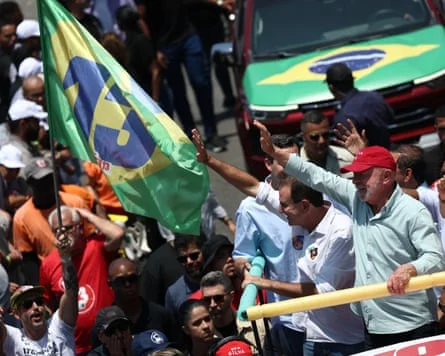
- The Closing Rallies: As of Saturday, both candidates held massive, final-push rallies across major urban centers—Rio de Janeiro, São Paulo, and Belo Horizonte—attempting to galvanize their respective bases before the cooling-off period mandated by electoral law.
Supporting Data and Political Dynamics
The shift in the polls—from a comfortable Bolsonaro lead to a virtual tie—has puzzled many political analysts. The "crystallization" of the electorate has meant that neither side is likely to convert voters from the opposing camp. Instead, the election rests on a small, fickle demographic: the undecided voter who identifies with neither the left nor the right.
The Stagnation of the Far-Right
Bolsonaro’s campaign began with the institutional backing of several defeated candidates and a strong tailwind of conservative support. Yet, he has failed to grow beyond his core constituency. Analysts suggest that the "fear factor" has taken hold; as voters scrutinized the prospect of a Bolsonaro presidency, concerns over his ongoing legal troubles—including two federal police investigations into corruption and money laundering—have stalled his progress.
The Civil Society Surge
Lula’s resurgence is largely attributed to a pivot in strategy. While his initial campaign was criticized for failing to connect with the grassroots, the latter half of the runoff has seen an organic swell of support. Student-led movements and various civil society organizations have taken up the mantle, organizing protests and digital campaigns that operate independently of the official campaign structure. As political scientist Helcimara de Souza Telles notes, "In the first round, Lula’s campaign failed to connect with the population, but now it has been civil society movements that have driven his growth."
Official Responses and Voter Sentiments
The discourse on the ground reflects a nation struggling to reconcile two fundamentally incompatible visions of the future.
Nuno Rau, a 63-year-old architect, encapsulates the apprehension felt by the center-left: "We’re facing two completely different projects for the country. One points towards the end of social rights and the end of democracy itself; on the other side is someone who fought for income distribution and free public education. I may have criticisms of Lula, but there is no way to choose Bolsonaro."
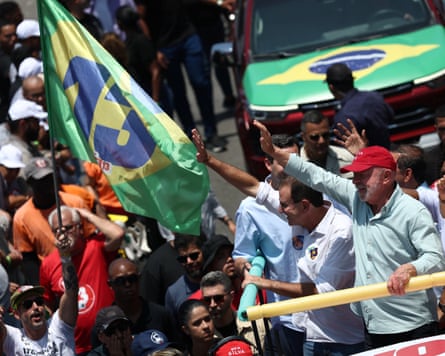
Conversely, the base of the Bolsonaro campaign remains fiercely loyal, driven by a desire for security and a rejection of the establishment. Aparecida Moreira, a 62-year-old lawyer, supports the senator primarily for his "iron fist" security platform. She advocates for the construction of "mega-prisons" modeled after the policies of El Salvador’s Nayib Bukele and supports the proposal of chemical castration for rapists. For supporters like Moreira, the enemy is not just the opposing candidate, but the judiciary itself, which they label as a tool of "dictatorship" under Justice Alexandre de Moraes.
Global Implications: Brazil as a Regional Bulwark
The outcome of this election holds profound implications far beyond Brazil’s borders. With right-wing candidates having claimed victory in all seven presidential elections held in Latin America since the beginning of Donald Trump’s second term, Brazil remains one of the last bastions of resistance against the wave of populist authoritarianism sweeping the continent.
The "Trump Connection"
The international dimension is impossible to ignore. There is a palpable fear among democratic observers that should Flávio Bolsonaro lose, he may follow his father’s playbook and refuse to concede. Furthermore, there is significant concern regarding the role of foreign actors, specifically former US President Donald Trump, in influencing the legitimacy of the results.
"Trump wants to ‘colonize’ all of Latin America in pursuit of its own interests," says Telles. The concern is that a Bolsonaro victory would not merely be a domestic political shift; it would signify the total alignment of Latin America’s largest economy with a model of autocracy that is explicitly backed by nationalist movements in the United States.
The Constitutional Risk
Perhaps the most chilling aspect of the campaign has been Flávio Bolsonaro’s overt threats to the constitutional order. With a more conservative congress poised to take office next year, his vow to "change the constitution" is viewed by legal scholars as a potential opening for the dismantling of democratic checks and balances. Whether or not this rhetoric is mere campaign hyperbole remains to be seen, but for the millions of Brazilians heading to the polls, the risk is real enough to define their choice.

Conclusion: A Decision at the Brink
As the sun rises on Sunday, the world will be watching Brazil. Whether the electorate chooses the return of the seasoned leftist who promises a restoration of social programs or the far-right senator who pledges a radical constitutional overhaul, the result will be transformative.
The narrow margins and the high stakes suggest that the aftermath of the vote may be as volatile as the campaign itself. Brazil is not just voting for a president; it is voting on whether to continue on a path of democratic participation or to embark on a new, uncertain trajectory of authoritarian governance. Whatever the outcome, the polarization of the electorate ensures that the country will remain, for the foreseeable future, a nation deeply divided against itself.