Executive Summary: A Continent on High Alert
The delicate stability of public health across sub-Saharan Africa faces a renewed and formidable challenge. On Tuesday, the Nigerian Ministry of Health confirmed that a woman in the capital, Abuja, had tested positive for the Ebola virus. This development marks a significant escalation in an ongoing epidemic that has already claimed thousands of lives across the continent. With Nigeria—Africa’s most populous nation—now added to the list of affected countries, the Africa Centers for Disease Control and Prevention (Africa CDC) has mobilized an emergency summit. Health ministers from across the continent are scheduled to convene on Wednesday to harmonize a regional strategy, aiming to contain a virus that thrives on porous borders, fragile infrastructure, and systemic governance deficits.
The current outbreak, driven by the rare and lethal Bundibugyo strain, has pushed healthcare systems to their breaking point. As global health observers watch the situation with trepidation, the narrative surrounding the virus has shifted from a localized crisis in the Democratic Republic of Congo (DRC) to a potential regional catastrophe.
The Genesis of the Crisis: A Chronology of Spread
To understand the gravity of the current situation, one must look back to the origins of the current surge.
- Mid-May: The Bundibugyo strain, a notoriously difficult variant of the Ebola virus, was identified in the Democratic Republic of Congo. Epidemiologists believe the virus had been circulating undetected for several months, moving silently through remote provinces before reaching population centers.
- Late Spring to Mid-Summer: Despite early warnings from local clinicians, the response was hampered by limited diagnostic capabilities and skepticism within affected communities. The virus capitalized on the delays, jumping from isolated rural clusters into major transit hubs.
- August – September: The mortality rate climbed at an alarming velocity. By the beginning of autumn, the DRC had reported over 9,400 cases, with confirmed fatalities exceeding 4,500. This has officially eclipsed all previous records, cementing this as the deadliest Ebola outbreak in the history of the Democratic Republic of Congo.
- October (Current Week): The geographic containment failed as the virus breached international borders. The positive test result in Abuja, Nigeria, represents a critical pivot point, signaling that the contagion has successfully transitioned from a domestic outbreak to a transnational epidemic.
Supporting Data: The Brutal Metrics of an Epidemic
The statistics surrounding the current Bundibugyo outbreak are harrowing. Unlike previous iterations of the virus, the Bundibugyo strain is particularly insidious because of its prolonged incubation period and the absence of a verified, widely available vaccine.
The Human Toll
- Total Confirmed Cases: 9,400+
- Confirmed Fatalities: 4,500+
- Case Fatality Rate (CFR): Nearly 48%
- Regional Spread: Three primary nations are currently managing active transmission chains, with several neighboring states categorized as "high-risk" for imported cases.
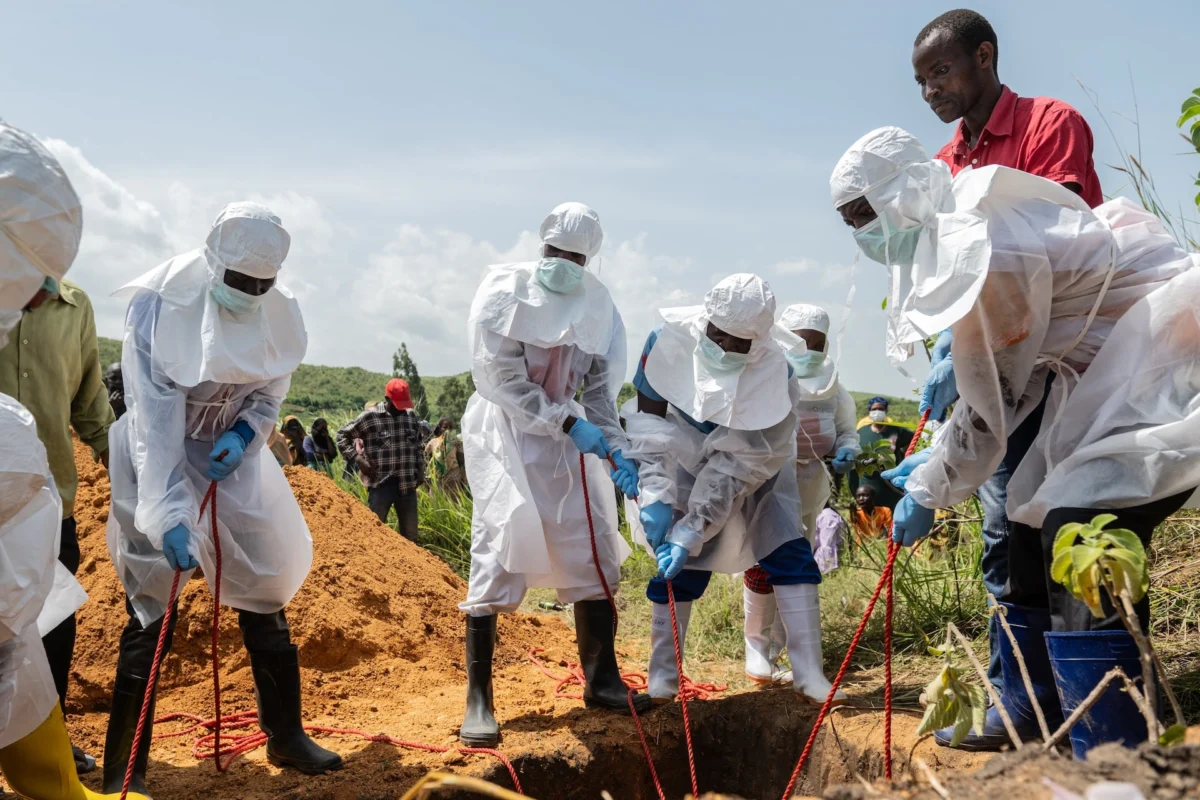
Data provided by regional health ministries indicates that the primary mode of transmission remains direct contact with the bodily fluids of infected individuals, including those who have recently succumbed to the disease. The strain’s ability to survive in both living hosts and through traditional burial practices—where physical contact with the deceased is customary—has been a major driver of the high transmission rates.
Governance and Infrastructure: A Systemic Vulnerability
The severity of this outbreak cannot be attributed solely to the biology of the virus. In a recent analytical briefing for World Politics Review, experts Mohamed Keita and L.A. Mustafa argued that the rapid spread of the pathogen is a direct symptom of deep-seated governance crises.
The Underfunded Frontline
The healthcare systems in the hardest-hit regions are, by almost any metric, chronically underfunded. Decades of political instability have left hospitals without basic personal protective equipment (PPE), reliable refrigeration for samples, or sufficient staffing levels to implement rigorous contact tracing.
The Prioritization Failure
Beyond the lack of physical resources, the political response has been criticized as lethargic. In the DRC, where the outbreak originated, the government has faced scrutiny for failing to prioritize the Ebola response over broader political maneuvering. This lack of centralized, decisive leadership has allowed the virus to gain a foothold in densely populated urban centers, where the speed of transmission exponentially increases compared to rural settings.
Official Responses and Strategic Realignment
In response to the news from Abuja, the Africa CDC has signaled a shift toward a more aggressive, unified continental strategy.
The Emergency Summit
The virtual meeting scheduled for Wednesday is not merely a briefing; it is a call to arms for the continent’s health infrastructure. The agenda includes:
- Border Surveillance: Implementing mandatory screening at major international airports and land crossings.
- Cross-Border Data Sharing: Establishing a real-time digital portal for member states to share infection maps and contact tracing data.
- Resource Mobilization: Coordinating an immediate deployment of medical supplies, specialized biocontainment units, and trained epidemiologists to Nigeria and other hotspots.
International Cooperation
While the Africa CDC is leading the effort, global bodies such as the World Health Organization (WHO) are under mounting pressure to accelerate the approval of potential vaccine candidates. The lack of a vaccine for the Bundibugyo strain remains the most significant gap in the international defense strategy. Pharmaceutical research is ongoing, but the current clinical trials have yet to yield a scalable solution that can be deployed to the front lines immediately.
Implications: A Continent at a Crossroads
The presence of Ebola in Nigeria, the continent’s largest economy, brings profound implications that extend far beyond the immediate public health crisis.
Economic Fallout
The psychological impact of an Ebola outbreak often leads to a sharp decline in trade, tourism, and foreign direct investment. If the virus is not contained within the coming weeks, the disruption to regional supply chains could be catastrophic. Nigeria serves as a vital economic hub for West Africa; a prolonged outbreak could lead to the closure of borders, the grounding of regional flights, and a significant contraction of trade in the ECOWAS bloc.
The Social Contract
At the heart of the epidemic lies a test of the social contract between African governments and their citizens. When citizens perceive that their government is unable or unwilling to protect them from a lethal pathogen, the trust necessary for successful public health interventions—such as vaccination campaigns or isolation protocols—erodes.
As noted by Keita and Mustafa, the failure to contain the virus is a litmus test for regional stability. If the continent’s health ministers cannot present a united, effective front, the resulting social unrest could mirror the instability seen in previous health crises.
Future Outlook
The path forward is fraught with difficulty. The Bundibugyo strain is unpredictable, and the current political climate in affected regions is volatile. However, the move toward an integrated continental response is a necessary evolution.
For now, the focus remains on containment. Nigeria’s ability to isolate the patient in Abuja and trace every individual she has encountered in the last fortnight will determine whether this is a manageable isolated incident or the start of a wider West African epidemic. As the world watches, the African continent is once again reminded that in an era of globalization, the health of one nation is inextricably linked to the health of all. The emergency meeting on Wednesday will serve as the first true test of whether the continent can move past bureaucratic paralysis to implement the life-saving measures required to stop the virus in its tracks.