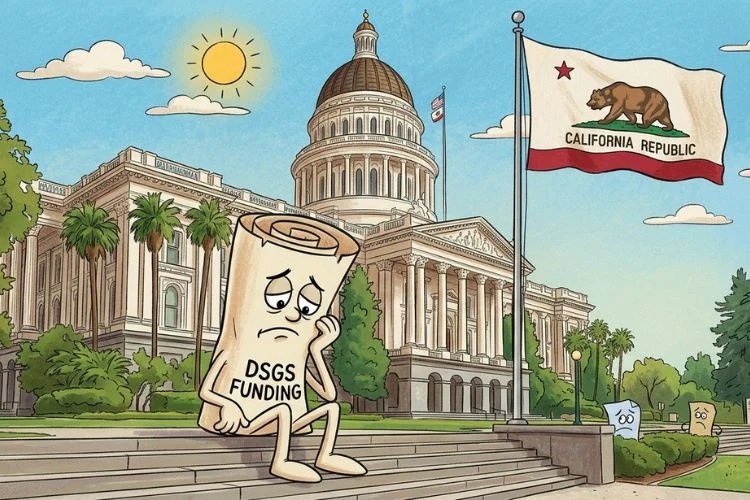
California’s energy landscape is currently defined by a paradox: its most effective tool for maintaining grid reliability is simultaneously its most endangered. The Demand Side Grid Support (DSGS) program, launched in 2022 as a bold experiment in decentralized energy, has become the backbone of the state’s modern power strategy. Yet, as it faces a looming funding cliff, the program stands at a crossroads that will determine whether California continues to lead the national transition to a distributed grid or retreats into the uncertainties of legacy infrastructure.
The State of the Grid: A Triumph of Decentralization
Launched in the wake of intensifying climate pressures, the DSGS program was designed to tap into the "hidden" power of the people. By coordinating over 1 gigawatt (GW) of dispatchable capacity—sourced from more than 200,000 unique customer sites—the program effectively turns the state’s distributed energy resources (DERs) into a unified, responsive entity. From smart thermostats and solar-plus-storage systems to home batteries, these resources have become a vital safety net.
The results speak for themselves. Since the program’s inception, the California Independent System Operator (CAISO) has not issued a single "Flex Alert"—the state’s traditional, voluntary call for energy conservation—in over four years. This is not merely a coincidence; it is a testament to the engineering prowess of a virtual power plant (VPP) that can be dispatched during grid emergencies to prevent blackouts and stabilize prices.
Chronology of a Success: From Pilot to Powerhouse
The trajectory of the DSGS program represents a rapid evolution in how the state views its energy assets:
- 2022: The Genesis. Faced with a growing need for flexible, clean capacity to replace retiring fossil fuel plants, California launches the DSGS program to incentivize residential and commercial participation in grid stability.
- 2023: Proof of Concept. The program begins to scale, with thousands of participants enrolling home batteries and other smart appliances, providing the grid with a rapid-response mechanism that traditional, centralized power plants cannot match.
- June 2026: The Funding Stopgap. As the initial scope of the program nears its end, the California legislature allocates $27 million to sustain operations through the end of the year, signaling a belief in the program’s utility but a hesitation to commit to permanent infrastructure funding.
- October 2026: The Stress Test. During a prolonged and severe heatwave, the grid faces its most significant test in years. In a historic display of effectiveness, Sunrun and Tesla fleets, acting under the DSGS and the California Public Utilities Commission’s (CPUC) Emergency Load Reduction Program (ELRP), dispatch record-breaking energy to the grid. On October 5, they delivered 669 MW, followed by 745 MW on October 6—enough to power the entirety of San Francisco multiple times over.
- Late 2026–2027: The Horizon. The program is currently operational, but its coffers are rapidly depleting due to high usage during extreme weather events. Without legislative intervention, the program faces an uncertain future in 2027 and beyond.
Supporting Data: The Economics of Reliability
The efficacy of the DSGS program is backed by rigorous economic analysis. A recent report from The Brattle Group, titled The Affordability Advantage, highlights the immense financial potential of VPPs. The data suggests that scaling residential VPPs could cut expected household electricity bill increases by more than 50% over the next five years.
The economic argument for the VPP is built on efficiency. As Lauren Nevitt, senior director of California policy and energy markets at Sunrun, noted on the Factor This Policycast, "The total value created by a VPP is over seven times the cost of enabling it, and the majority of that value goes back to consumers as performance payments."
This performance-based model shifts the paradigm from passive consumption to active contribution. By incentivizing consumers to allow the grid to draw on their stored energy during peak times, the state avoids the astronomical costs associated with building new, underutilized "peaker" plants. In essence, the DSGS program is not just an energy project; it is a macroeconomic stabilizer.
Official Responses and Stakeholder Perspectives
The debate over the program’s future has drawn in some of the most influential voices in California’s energy sector. Brandon García, California Director for Advanced Energy United, emphasizes that the depletion of the program’s budget is not a sign of failure, but rather a badge of success.
"If there was no need for the program, then we would have the full $27 million," García explains. "But it got used; people needed it."
For García and his peers, the path forward is clear: the next state administration must view the DSGS program as a foundational asset rather than a temporary fix. He advocates for "early budget action," a mechanism that would allow the state to secure funding before the current pool runs dry, ensuring continuity for the 200,000-plus participants who have integrated their homes into the state’s grid strategy.
However, some industry leaders suggest that a simple renewal of the existing program might not be enough. Lauren Nevitt offers a more radical perspective, suggesting that the expiration of the DSGS, while risky, could serve as a catalyst for a more permanent, systemic market structure.
"We really want to move beyond these kinds of one-off programs," Nevitt says. "If it’s not funded, it just points to the need to find another vehicle right for these resources." Her argument is that the state should move away from stopgap measures and toward a long-term, predictable market pathway that treats DERs with the same institutional weight as traditional power plants.
The Implications: A State at the Breaking Point
The failure to maintain the DSGS program would have profound consequences. First, it would remove a vital, low-cost buffer during peak demand, forcing the grid to rely on more expensive and carbon-intensive generation. Second, it would undermine consumer confidence in the state’s clean energy transition. Californians have invested heavily in solar and battery technologies; if the state fails to provide a platform for those assets to support the grid, it risks stalling the adoption of these vital technologies.
Moreover, the implications reach beyond California. As the most robust VPP in the nation, the DSGS serves as a blueprint for the rest of the United States. If the program is allowed to wither due to political inertia, other states looking to emulate California’s success may be deterred.
As noted by Brandon García, the current state of the energy grid is "untenable," and voters are hungry for solutions. "Whoever the next governor is, they’re going to take a very proactive approach to address these things," he suggests. "We can make the world better, and I don’t know why we’re scared to do so."
Conclusion: Bridging the Gap
The DSGS program has proven that the "power to the people" is not just a political slogan—it is a functional, scalable, and highly reliable reality of the modern energy grid. Whether through an immediate budget infusion or the transition to a permanent market-based framework, the mandate is clear: the virtual power plant must survive.
As California moves toward a future defined by increased electrification, more frequent climate-driven extreme weather, and rising affordability concerns, the tools that have successfully kept the lights on for the past four years are no longer optional. They are the essential infrastructure of the 21st century. The challenge for policymakers is to move past the temporary, the patchwork, and the hesitant, and to embrace the full potential of a decentralized energy future. The grid of the future is already here, and it resides in the batteries and solar panels of California’s households. The only question remains whether the state will provide the leadership necessary to keep it connected.