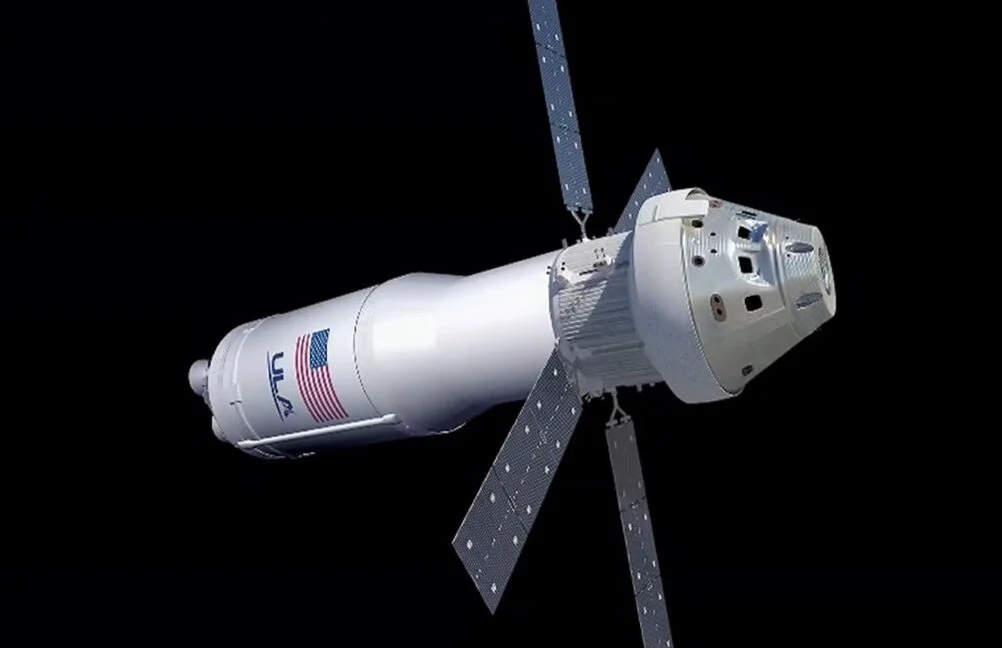
In a significant shift for the Artemis program, NASA has signaled a move toward optimizing lunar transit, aiming to bring the Orion spacecraft into low-lunar orbit (LLO) to support lander operations. By partnering with United Launch Alliance (ULA) to develop an “extended” version of the Centaur V upper stage, the agency is addressing a long-standing technical limitation that has constrained mission architecture since the inception of the Space Launch System (SLS).
This strategic realignment, highlighted by recent internal discussions, suggests that NASA is moving away from its reliance on complex, high-altitude orbits—such as the Near-Rectilinear Halo Orbit (NRHO) utilized by the Lunar Gateway—to provide more robust support for commercial partners like Blue Origin.
Main Facts: The New Lunar Architecture
For years, the Artemis program’s trajectory has been dictated by the performance limitations of the Orion Service Module. Orion was never designed to possess the "delta-V" (change in velocity) capability required to enter a low-lunar orbit, conduct a landing mission, and successfully return to Earth for a Pacific splashdown.
To compensate, NASA adopted the Lunar Gateway concept, placing a station in a high-altitude halo orbit. While this provided a stable outpost, it placed the entire burden of descent and ascent on commercial landers, such as Blue Origin’s Blue Moon or SpaceX’s Starship. These vehicles had to expend massive amounts of propellant to travel from the high-orbit rendezvous point down to the lunar surface and back.
NASA’s new plan, as revealed in recent concept illustrations, shows Orion docking with the Blue Moon lander at an altitude of approximately 8,500 km. However, the agency is actively working to shift this rendezvous point to low-lunar orbit—just a few hundred kilometers above the surface. By moving the rendezvous closer to the Moon, NASA effectively "shortens the leash" for the lander, providing critical relief for mission timelines and propellant mass budgets.
Chronology: From Concept to Necessary Correction
The evolution of the Artemis mission profile has been a complex saga of engineering trade-offs:
- The Early Design Phase: During the development of the Space Launch System and Orion, the focus was on heavy-lift capability to deep space. The Service Module, inherited from the European Space Agency’s Automated Transfer Vehicle design, was optimized for versatility but lacked the specific high-impulse thrust required for low-lunar orbit insertion and return.
- The Gateway Era: Recognizing the limitations of Orion, NASA pivoted to the Lunar Gateway. The NRHO orbit was chosen specifically because it was a "stable" orbit that required relatively little fuel for Orion to reach, albeit at a high altitude.
- The Commercial Pivot: As NASA awarded contracts to Blue Origin and SpaceX, the realities of deep-space landing became apparent. Lander companies reported that the high-altitude rendezvous significantly increased the complexity of their propulsion systems.
- The 2026 Shift: NASA officials, including Artemis Program Manager Jeremy Parsons, acknowledged that the agency must adapt its flight architecture to support its commercial partners. The announcement of the "Extended Centaur V" marks the current phase of this transition, aimed at correcting the delta-V deficit.
Supporting Data: Why Low-Lunar Orbit Matters
The physics of lunar missions are unforgiving. Every kilogram of propellant saved on a lander is a kilogram that can be allocated to scientific instruments, life support redundancy, or expanded mission duration.
According to Parsons, lowering the docking altitude to a few hundred kilometers provides three primary advantages:
- Propellant Efficiency: By reducing the distance the Blue Moon lander must travel to meet Orion, the lander requires significantly less propellant for the descent/ascent cycle. This "mass dividend" allows Blue Origin to either increase the payload capacity of their lander or simplify the vehicle’s design, reducing the risk of failure.
- Abort Scenarios: A low-lunar orbit allows for faster, more frequent "launch windows" from the lunar surface. If an emergency occurs on the surface, the lander has a more direct path to reach the command module. The dynamics of a high-altitude rendezvous involve longer transit times; in an emergency, every minute counts.
- Operational Flexibility: Lower orbits allow for higher resolution reconnaissance and communications, bridging the gap between orbital survey and surface operations.
Official Responses: Turning the Knobs
The decision to develop the Extended Centaur V is a direct response to the "listening" culture currently permeating NASA’s Artemis leadership. Isaacman, speaking on behalf of the agency’s strategic efforts, emphasized that the shift is driven by a desire to ensure partner success.
"We’re listening to the data, and looking at what’s happening around us," Isaacman stated. "What progress are our landing partners making? Where are they struggling? What can we do to be helpful?"
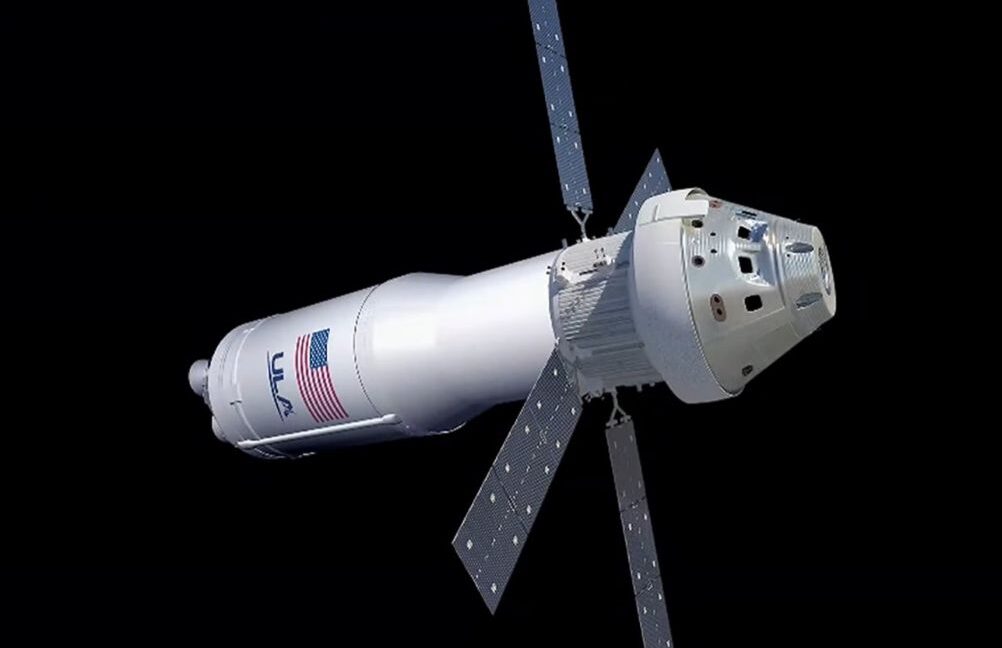
This admission marks a departure from the "contractor-client" relationship where the prime contractor bears all the risk. NASA is now actively looking at ways to "turn the knobs" to alleviate technical burdens. The development of the Extended Centaur V—an upgraded version of the powerful upper stage already used on ULA’s Vulcan rocket—will provide the necessary additional push to get Orion into a position that makes the entire lunar architecture more efficient.
"Getting Orion to low-Lunar orbit means solving propulsion and spacecraft integration problems that were left unaddressed for far too long," Isaacman noted. By addressing these, NASA is not just helping Blue Origin; they are finally providing the Artemis program with the robust infrastructure it was intended to have.
Implications: A New Era for Deep Space Logistics
The move to low-lunar orbit carries profound implications for the future of space exploration.
1. The End of the "Workaround" Philosophy
For years, critics have argued that the Artemis program relied on "workarounds"—such as the Gateway—to hide the performance flaws of the Orion spacecraft. By committing to an upgraded Centaur stage, NASA is finally addressing the root cause rather than building layers of complexity on top of it. This suggests a more pragmatic, engineering-first approach to lunar exploration.
2. Streamlining the Commercial Landscape
As Blue Origin and other partners navigate the technical hurdles of building a lunar lander, NASA’s willingness to adjust the flight path shows a level of flexibility that was previously unseen. If NASA can effectively act as an orbital "gas station" or rendezvous point in a more accessible orbit, the barrier to entry for smaller, innovative space companies may decrease.
3. Sustainability and Reusability
The long-term goal of Artemis is a permanent human presence on the Moon. Achieving this requires cost-effective transport. Reducing the propellant requirements for landers makes the entire system more sustainable. If a lander requires 20% less fuel to complete its mission, the number of SLS launches required to support that mission could theoretically be reduced, saving billions in taxpayer funding.
4. Technical Challenges Ahead
While the decision to use an Extended Centaur V is logical, it is not without risk. Integrating a modified upper stage with the SLS/Orion stack involves significant testing and certification. The agency must ensure that the "extended" version maintains the safety margins required for crewed flight. Furthermore, the logistical coordination required to manage a lunar rendezvous in a lower, faster-moving orbit is significantly more demanding than the stable, high-altitude NRHO orbit.
Conclusion
NASA’s pivot toward low-lunar orbit represents a maturation of the Artemis program. By admitting the limitations of the current architecture and taking proactive steps to rectify them via the Extended Centaur V, the agency is demonstrating a commitment to the success of its commercial partners.
As the program moves toward its upcoming milestones, the transition from high-altitude halo orbits to a more direct, LLO-focused architecture will likely be remembered as the moment Artemis shifted from a series of experimental flights to a true, sustainable lunar transportation system. For Blue Origin and other contractors, this is a welcomed change—one that replaces complex orbital gymnastics with a more straightforward, efficient, and safer path to the lunar surface.