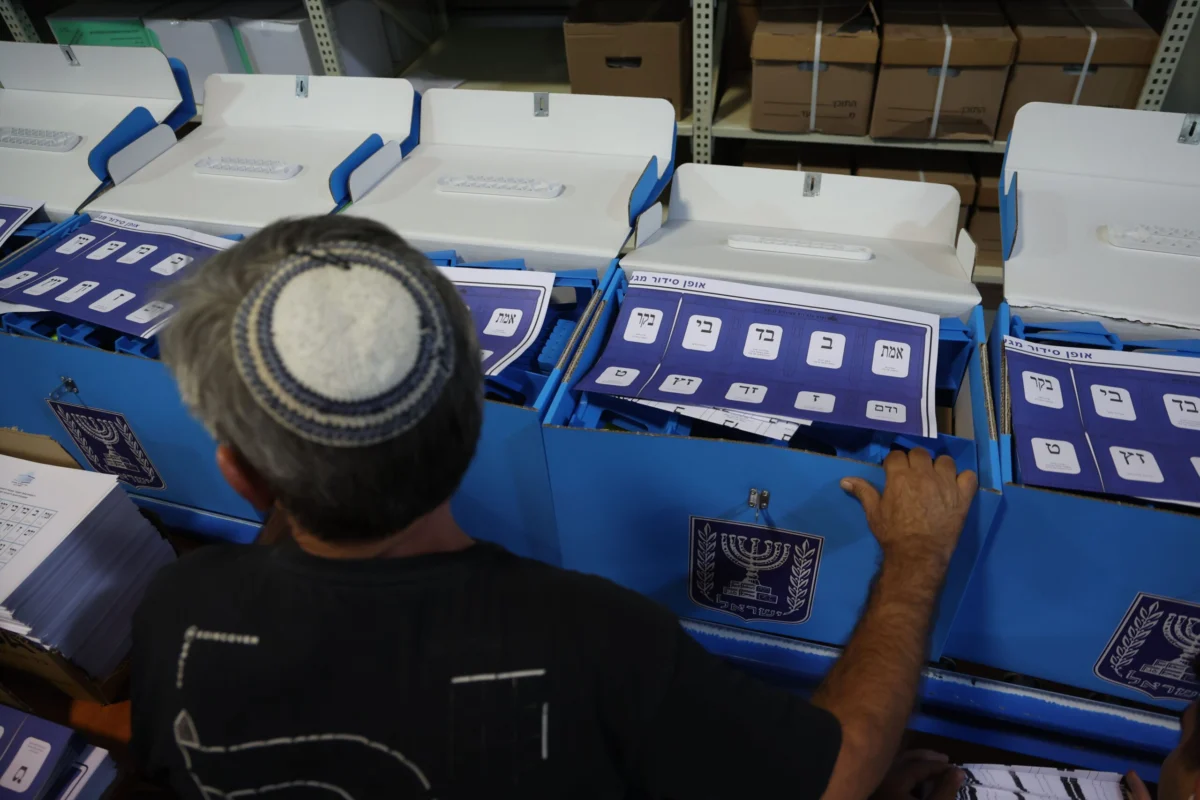
WASHINGTON — On Tuesday, the State of Israel will descend into the voting booths, marking the first time the nation has cast ballots for its 120-seat Knesset since the inauguration of the most far-right coalition in its history in December 2022. This election, however, carries the weight of a country profoundly transformed by trauma, conflict, and deep internal division. As voters prepare to have their say, the political landscape remains stubbornly deadlocked, suggesting that the path to a stable government may be fraught with the same volatility that has defined Israeli politics for nearly a decade.
The Mechanics: A System in Flux
The Israeli electoral system is famously unforgiving. With no single party ever having secured an outright majority in the history of the Knesset, the art of coalition building is not merely a preference—it is a requirement. Any party that clears the 3.25 percent electoral threshold is awarded a proportional number of seats. This system forces a reliance on small, often ideological, factions that can effectively hold the balance of power.
The current atmosphere is one of intense mathematical anxiety. Most polling suggests that Prime Minister Benjamin Netanyahu’s right-wing bloc will fall short of the 61-seat majority required to govern. Conversely, the opposition’s path is equally precarious. Success for the anti-Netanyahu coalition may once again depend on the participation of Arab parties, a strategy that previously proved both transformative and controversial when the Ra’am party joined the governing coalition in 2021.
The administrative burden is significant: approximately 500,000 Israelis live abroad, and in an act of civic dedication, many have flown back to their homeland to participate. Once the final tallies are in, President Isaac Herzog—who remains a neutral arbiter above the partisan fray—will begin the delicate process of interviewing party leaders to determine who holds the best chance of forming a functional government. The clock will then start on a 28-day window for the designate to build a cabinet, with a potential 14-day extension. Should that fail, the cycle repeats or leads to the dreaded prospect of a fifth or sixth election in a short span.
Chronology: Four Years of Upheaval
To understand the current tension, one must look at the turbulent trajectory of the last four years. The current coalition, led by Netanyahu, holds the distinction of being the first to survive a full four-year term in nearly four decades. This longevity, however, was not marked by peace.
- 2023: The year began with massive, nationwide protests against a proposed judicial overhaul that threatened to tear the social fabric of the country. Millions took to the streets, signaling a deep-seated fear that Israel’s democratic foundations were being compromised.
- October 7, 2023: The Hamas terrorist attack and subsequent hostage crisis shattered the nation’s sense of security. The trauma of that day remains the central psychological and political event of the current election cycle.
- 2024–2025: The war in Gaza escalated into regional conflicts, including operations in Lebanon and direct military engagements with Iran. The involvement of the United States in regional defense, coupled with the 2025 Gaza ceasefire and hostage-release agreement, briefly shifted the political narrative, but the fundamental insecurities remain.
- 2026: The political campaign has been oddly muted, largely confined to digital spheres and television studios, reflecting a public that is exhausted yet deeply aware that this vote is existential.
Supporting Data: The Voter’s Calculus
Data from the Israel Democracy Institute reveals a clear hierarchy of concerns among the electorate. While foreign policy, security, and the economy dominate the conversation, the once-volatile issue of judicial reform has largely receded, with only 18 percent of voters citing it as a primary driver of their choice.
Key Economic and Social Indicators
- Cost of Living: Prices have soared by 20 percent since Netanyahu’s return to office in 2022, creating a "kitchen-table" crisis that rivals the preoccupation with national security.
- The Conscription Debate: The exemption of Ultra-Orthodox citizens from military service has become a flashpoint. Following the intense manpower requirements of the post-October 7 wars, the perceived inequality of the burden on secular and non-Ultra-Orthodox reservists has fueled deep resentment.
- Polling Dynamics: The electorate is effectively bifurcated. Recent polls indicate that Gadi Eisenkot’s "Yashar" party is gaining momentum, often trading places with Netanyahu’s Likud, which struggles to maintain its historical dominance in the face of widespread public criticism regarding the security failures of 2023.
The Players and Official Positions
The electoral field is crowded with figures who have shaped, and in some cases, attempted to dismantle, the status quo:
- Benjamin Netanyahu (Likud): Framing himself as "Mr. Security," Netanyahu is fighting for his political life. His supporters emphasize his leadership in the war against Hezbollah and Iran, while his detractors argue his long-term strategy of "managing" Hamas was a catastrophic failure. His campaign received a late-stage boost from former U.S. President Donald Trump, who endorsed him as a "Great Warrior Prime Minister."
- Gadi Eisenkot (Yashar): A former IDF Chief of Staff who brings significant moral authority to the race, particularly after the personal tragedy of losing his son in the Gaza war. He represents the "change" bloc, emphasizing reform and unity.
- Bennett-Lapid (B’Yachad): Having reunited their political partnership, they are campaigning on a platform of mandatory conscription for all and an aggressive crackdown on monopolies.
- The Fringe Kingmakers: Figures like Itamar Ben-Gvir (Otzma Yehudit) and Bezalel Smotrich (Religious Zionism) continue to occupy the far-right flank, while Mansour Abbas (Ra’am) holds the potential to act as the decisive vote should the major blocs fail to reach a clear majority.
Implications: The Road Ahead
The implications of this election extend far beyond the Knesset floor. Israel is currently engaged in a profound internal debate about its identity—balancing its character as a Jewish state with its democratic commitments.
International Standing and the U.S. Relationship
The relationship with Washington remains a critical variable. While the Trump administration’s involvement in the 2025 ceasefire initially generated goodwill, current polling suggests that fewer than one-third of Israelis view the U.S. President’s actions as primarily driven by Israeli security interests. As the U.S. navigates its own transition, the incoming Israeli government will need to reconcile its domestic agendas—such as the potential expansion of settlements or changes in the status of the West Bank—with international pressure.
The Risk of Institutional Gridlock
If the election produces a stalemate, two "nuclear" options are being discussed in political corridors. The first is a minority government, requiring "passive support" from Arab factions—a move that would be fiercely opposed by the right. The second is a maneuver to seize control of the Knesset legislative agenda even before a government is formed, by electing a new speaker. Both paths are legally murky and would likely trigger an immediate and high-stakes intervention by the Supreme Court.
Ultimately, Tuesday’s vote is a test of whether the Israeli public prefers the familiar, if flawed, path of the Netanyahu era or is willing to gamble on a coalition of disparate forces that promise to end the cycle of political paralysis. As the country approaches this tipping point, the only certainty is that the outcome will dictate the regional security architecture and the internal social contract of the Jewish state well into 2027 and beyond. The impulse to turn inward, triggered by the horrors of October 7, is now colliding with a desperate need for a forward-looking strategy. Whether the ballot box can resolve this tension remains the defining question of the year.