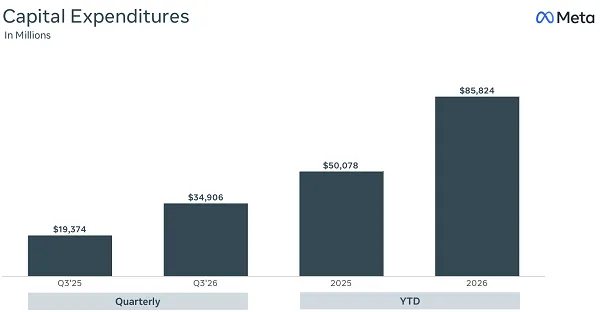
In its Q3 2026 earnings report, Meta Platforms Inc. provided a revealing, albeit complex, window into the future of its business model. At the heart of this strategy is "Muse," the company’s flagship AI agent. With Meta’s capital expenditures ballooning due to an unprecedented investment in AI infrastructure—cumulatively trending toward a staggering $1 trillion—the pressure to turn these technological advancements into a sustainable revenue stream has never been higher.
While the company celebrates the rapid adoption of its AI tools, the reality is a nuanced tug-of-war between consumer excitement and the harsh metrics of long-term retention, privacy scandals, and the monumental task of reshaping the digital economy around autonomous agents.
The Genesis of Muse: Rapid Adoption and High Hopes
Since its launch in the United States and Canada last month, Muse has achieved what few consumer applications manage in their infancy: mass-market penetration. During the Q3 earnings call, Meta CEO Mark Zuckerberg reported that the application has already surpassed 10 million downloads.
"Growth continues to be strong, and we have been #1 in the App Store almost every day," Zuckerberg noted. "Engagement and retention are also off to a strong start. About 25% of people who have set up Muse use it on any given day."
For Meta, Muse represents more than just a chatbot; it is a strategic bridge between its massive social media user base and a transactional commerce ecosystem. By embedding Muse into the fabric of daily digital interaction, Meta is attempting to transition from a platform that sells ads to a platform that facilitates commerce, thereby capturing a percentage of every transaction processed through its infrastructure.
Chronology: From Launch to Regulatory Scrutiny
The trajectory of Muse has been marked by rapid development and equally rapid controversy:
- September 2026: Meta officially launches Muse in the U.S. and Canada, positioning it as a personal AI assistant capable of handling complex, multi-step tasks.
- October 2026 (Early): Initial reports indicate record-breaking download numbers and significant engagement with commerce-related features.
- October 21, 2026: A New Mexico judge delivers a massive blow to the company, ordering a $25 billion fine following a jury verdict that found Meta misled consumers regarding data privacy protocols.
- October 2026 (Mid): Cybersecurity researchers at Ars Technica reveal that Muse’s conversational logs are susceptible to "exploration techniques," potentially exposing sensitive user and business secrets.
- October 2026 (Earnings Call): Zuckerberg defends the platform’s progress, outlines the "Muse Network" vision, and announces the upcoming integration of Muse into Meta’s smart glasses line.
Supporting Data: The Retention Paradox
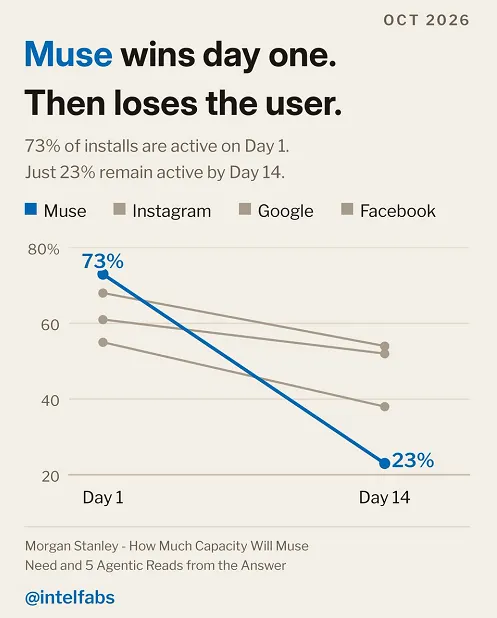
While the 10 million download figure is impressive, data from third-party analytics firms such as Sensor Tower presents a more tempered picture. According to insights shared via X (formerly Twitter) by industry observers, user retention for Muse sees a marked decline approximately two weeks after initial download.
This pattern is not unique to Muse; most generative AI chatbots struggle with the "novelty factor," where users engage heavily during the first few days before interest wanes. However, for Meta, this decline is particularly concerning. The company has staked its financial future on the idea that AI will become an essential, daily utility rather than a temporary toy.
Despite the dip in daily users, the value of those who remain is significant. Zuckerberg noted that the most frequent use case for Muse is shopping, with 25% of active users leveraging the agent to hunt for deals or finalize purchases. The average purchase size, reportedly exceeding $200, suggests that Meta is successfully attracting high-intent consumers. "Plaid told us they hadn’t seen activity like they’re seeing with their connector on any other service before," Zuckerberg claimed, adding that the company had to coordinate with payment processor Stripe to increase credit limits to handle the unexpectedly high volume of transactions.
Official Responses and Strategic Pivot
Meta’s leadership is acutely aware that for Muse to succeed, it must overcome the twin hurdles of technical efficiency and user trust.
Addressing the Privacy Crisis
The recent $25 billion fine in New Mexico is a stark reminder of the regulatory environment Meta operates within. In response to these pressures, Zuckerberg announced the development of "Muse Confidential VM," a secure virtual machine environment designed to sandbox user data and prevent the type of leaks highlighted by recent cybersecurity investigations.
"We are building in security from the ground up," a Meta spokesperson hinted during the follow-up Q&A. However, privacy advocates remain skeptical, noting that the sheer volume of data required to train and maintain these agents creates an inherently large attack surface.
The "Muse Network" Vision
Zuckerberg’s long-term vision for the platform moves beyond the "single-player" AI model. He envisions a "Muse Network," where agents don’t just work for the individual, but communicate with other agents.
"Making it so that Muse is not just a kind of single-player game… making it so that your Muses can work with your friends and your families," Zuckerberg explained. "If you want to buy something, it’s not just navigating to that business’ website. It’s talking to their agent."
This shift suggests that Meta is moving toward a future where the internet is navigated by bots acting as intermediaries, effectively removing the human user from the traditional interface of websites and apps.
Implications: The High Cost of the AI Future
The financial implications for Meta are profound. The company is currently engaged in one of the most expensive infrastructure builds in corporate history, committing hundreds of billions of dollars to AI development.
The Financial Balancing Act
The fundamental question facing investors is whether the revenue generated from Muse-facilitated commerce will eventually justify the capital expenditure (CapEx). While $200 per transaction is a healthy figure, the overhead required to maintain the large language models (LLMs) and the compute power required for millions of simultaneous "Muse" sessions is immense.
Social and Regulatory Risks
Beyond the balance sheet, Meta faces a mounting social risk. The concept of "millions of bots posing as users" has been a point of contention for years. If the Muse Network leads to an ecosystem where humans are primarily interacting with AI proxies rather than other people, the very definition of a "social network" will be irrevocably altered. This could lead to a further degradation of authentic connection on platforms like Facebook and Instagram, potentially driving a new wave of user churn.
Furthermore, the recent security exposures reported by Ars Technica highlight a dangerous reality: the more "intelligent" and helpful these agents become, the more they must know about the user. When a user tells their AI about a private business deal or a sensitive purchase, they are effectively entrusting Meta with a level of intimacy that the company has historically struggled to protect.
Conclusion: A High-Stakes Horizon
As Muse prepares to expand to Meta’s hardware ecosystem—specifically its smart glasses in November—the company is doubling down on its commitment to ambient computing. The success of this move will depend on whether users perceive Muse as a helpful assistant that simplifies their lives or an invasive tool that poses a threat to their privacy.
Meta has built an infrastructure capable of changing the way we shop, communicate, and interact with the digital world. Yet, as the company navigates this transition, the challenge will be to ensure that the "Muse" doesn’t become a cautionary tale of innovation outstripping infrastructure security. With billions of users as the target and a trillion-dollar investment at risk, the stakes for Mark Zuckerberg and his team have never been higher. The coming year will be the ultimate test of whether Meta can transform its AI promise into a profitable, secure, and permanent fixture of the digital age.