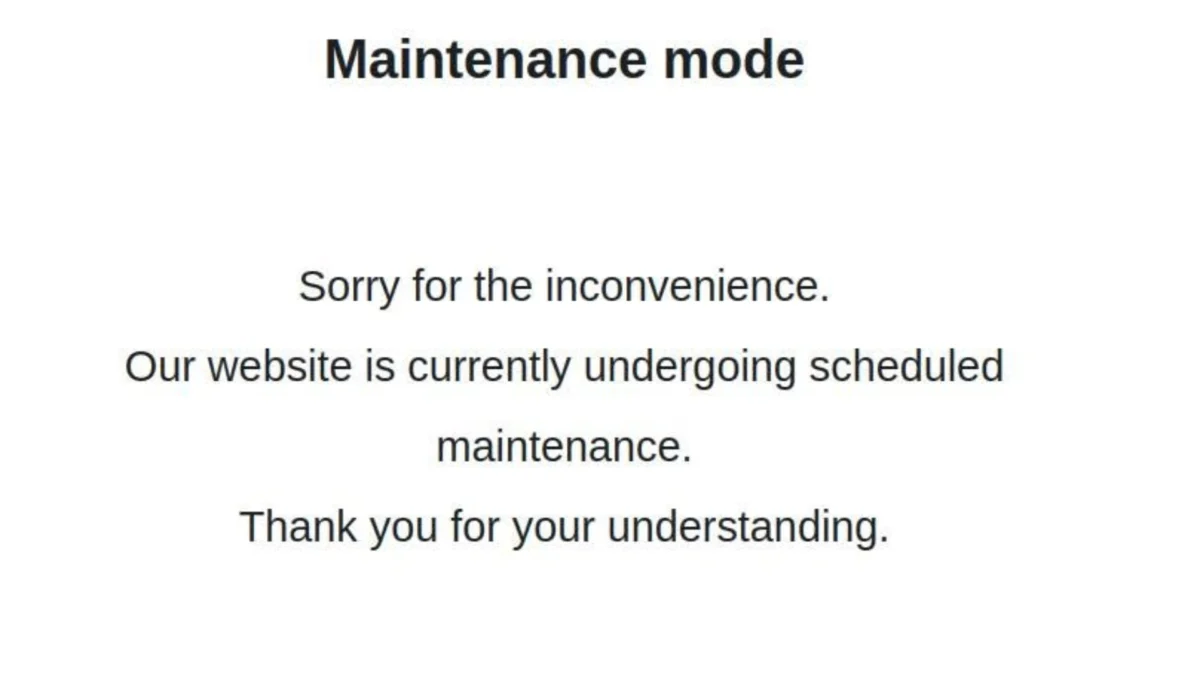
In a move that has sent shockwaves through the digital infrastructure of the Australian business landscape, a significant number of organizations have proactively taken their websites offline this week. This mass migration to “offline mode” follows the disclosure of a critical security vulnerability discovered within PHP, the server-side scripting language that serves as the backbone for approximately 70% of the world’s websites.
From local service providers like Mount Martha’s ByteOn Computer Services to massive enterprise platforms, the directive has been clear: pull the plug, patch the system, and wait for the all-clear. While official patches were released by the PHP development team on October 21, the digital cleanup process is proving to be a complex, slow, and labor-intensive task.
The Anatomy of the Threat: A "Once-in-a-Generation" Security Flaw
The alarm was raised late this week when OpenAI, in collaboration with a coalition of global cybersecurity researchers, announced the discovery of what is being described as one of the most impactful security vulnerabilities in recent history.
PHP (Hypertext Preprocessor) is the engine room of the web. It powers content management systems like WordPress, Drupal, and Joomla, as well as countless bespoke enterprise applications. Because it is so deeply embedded in the fabric of the internet, a vulnerability at the core of the language is not just a software bug—it is a systemic risk.
Security researchers have yet to release the full technical details of the exploit to prevent malicious actors from weaponizing it before patches are fully deployed. However, early reports indicate that the flaw allows for Remote Code Execution (RCE), the "holy grail" for hackers. An RCE vulnerability allows an attacker to execute arbitrary commands on a server, potentially granting them total control over a website, access to sensitive customer databases, and the ability to pivot into wider corporate networks.
A Chronology of the Crisis
The unfolding of this event has been rapid, characterized by a mix of high-stakes coordination and sudden operational disruption.
- October 20: Cybersecurity researchers and OpenAI verify the existence of the critical vulnerability, confirming that it affects multiple versions of the PHP core.
- October 21: The PHP development team officially acknowledges the flaw and publishes security patches. Simultaneously, a global alert is issued to hosting providers and web administrators.
- October 21 (Evening): Realizing the severity of the threat, many Australian businesses—aware of the risk of being targeted by automated scanning tools—begin taking their sites offline.
- October 22: The "Great Web Shutdown" becomes apparent. Many smaller businesses, lacking dedicated 24/7 security teams, find themselves struggling to implement the patches, leading to prolonged downtime.
- October 23-24: As of Thursday morning, many Australian websites remain dark. The bottleneck has shifted from the discovery of the flaw to the deployment of the fix, as developers race to test updates against existing site configurations to ensure the patches do not "break" site functionality.
The Economic and Operational Implications for Australia
The decision to take a business website offline is never made lightly. For many Australian SMEs, the website is the primary point of sale, customer service, and lead generation. The financial impact of this precautionary blackout is expected to be significant.
The "Cost of Caution"
For a retail business, 48 hours of downtime can equate to tens of thousands of dollars in lost revenue. However, security experts argue that the cost of an active compromise—which could include data breaches, ransomware demands, and the permanent loss of customer trust—is infinitely higher.
"The decision made by companies like ByteOn is a textbook example of responsible risk management," says an industry analyst. "When you are faced with a vulnerability that can be exploited by an automated script in seconds, the only way to ensure 100% security is to remove the attack surface entirely."
The Infrastructure Bottleneck
The current crisis has exposed a critical weakness in the digital supply chain: the reliance on a single, aging, but essential technology. Because PHP is so ubiquitous, the sheer volume of servers requiring updates simultaneously has stretched the capacity of managed service providers (MSPs) and hosting companies to its limit. Many businesses are stuck in a queue, waiting for their hosting provider to apply the patches at the server level, leaving them with little agency to expedite the process.
Official Responses and Industry Guidance
The response from the tech community has been swift, though tempered by the need for extreme caution. The PHP Group has urged all users to upgrade their installations immediately.
"The vulnerability is critical. If you are running an affected version of PHP, you are effectively running an open door," the group stated in a recent advisory.
Industry bodies in Australia, including the Australian Cyber Security Centre (ACSC), have begun issuing guidance for businesses. The core recommendations are as follows:
- Identify Versions: Businesses must verify which version of PHP they are running. The vulnerability primarily affects specific branches of the language; identifying if you are on an affected version is the first step.
- Apply Patches Immediately: Updates are available via the official PHP website. These should be applied in a staging environment first to ensure compatibility.
- Audit for Compromise: Simply patching the system is not enough. If a site was online while the vulnerability was active, administrators must conduct a thorough audit to ensure no backdoors were installed by malicious actors prior to the patch.
- Engage Experts: For small businesses without internal IT teams, the current advice is to contact their hosting provider immediately. If the provider cannot guarantee a patch window, businesses are advised to maintain the site in "maintenance mode" until a secure environment can be confirmed.
The Long-Term Fallout: A Lesson in Resilience
This incident will undoubtedly serve as a turning point for how Australian businesses approach their web architecture. The "set it and forget it" mentality toward server management is being replaced by a more rigorous, security-first mindset.
The Rise of Immutable Infrastructure
We are likely to see a shift toward more resilient hosting models. Technologies like containerization (e.g., Docker) allow businesses to spin up and replace web environments rapidly. In a scenario like this, an "immutable" setup—where the server environment is destroyed and redeployed with the latest security updates in minutes—is far more effective than manually patching legacy servers.
The Need for Proactive Monitoring
Furthermore, the event has highlighted the importance of real-time threat intelligence. Businesses that had early warning systems in place were able to patch before the exploit was widely weaponized, minimizing their downtime. Moving forward, investing in managed security services that provide automated patching and monitoring will become a standard cost of doing business online, rather than an optional luxury.
Conclusion: A Wake-Up Call
As of Thursday, the digital dust is still settling. While the immediate threat is being mitigated by the application of patches, the psychological and economic ripples of this event will be felt for weeks.
For the average Australian consumer, the temporary disappearance of their favorite local retailers’ websites is a mere inconvenience. But for the business owners behind those sites, it has been a harrowing reminder of the fragility of the open internet. As our dependence on digital infrastructure continues to grow, the ability to respond to these "once-in-a-generation" vulnerabilities will become the defining characteristic of a successful, resilient enterprise.
The message from the cybersecurity community is clear: the internet is an evolving, hostile environment. While we cannot always prevent the discovery of a new vulnerability, we can choose how prepared we are to respond when the inevitable happens. The "Great Web Shutdown" of October 2026 will go down in the history of Australian tech as the moment the industry finally learned that in the digital age, security is not a product—it is a continuous, collective process.