In an era where consumers are increasingly skeptical of polished corporate advertising, businesses are turning to their most authentic asset: their employees. Employee advocacy—the practice of encouraging staff members to share brand-approved content on their personal social media channels—has evolved from a grassroots social media trend into a high-stakes, data-driven marketing strategy.
As trust in institutional advertising wanes, the "human touch" has become a competitive necessity. By transforming employees into brand ambassadors, organizations are not only expanding their reach but also humanizing their corporate identity in a way that traditional paid media cannot replicate.

The Evolution of Employee Advocacy
The shift toward employee advocacy is rooted in a fundamental change in consumer psychology. According to the 2026 Edelman Trust Barometer, 88% of consumers view trust as a critical purchase criterion, placing it on par with product quality and value. When a corporation speaks, audiences often hear a sales pitch; when an employee speaks, audiences hear a peer.
Historically, advocacy was informal—an enthusiastic staff member sharing a photo of a company milestone on LinkedIn. Today, that spontaneity has been replaced by structured, strategic programs. These initiatives provide employees with curated content, clear compliance guidelines, and the training necessary to build their personal professional brands while simultaneously advancing the company’s marketing goals.

The Strategic Blueprint: Why Companies Invest
Companies are investing in formal advocacy programs because they deliver measurable business outcomes. By leveraging the combined social networks of their workforce, brands can achieve massive organic reach without the soaring costs of paid social media advertising.
1. Exponential Reach and Awareness
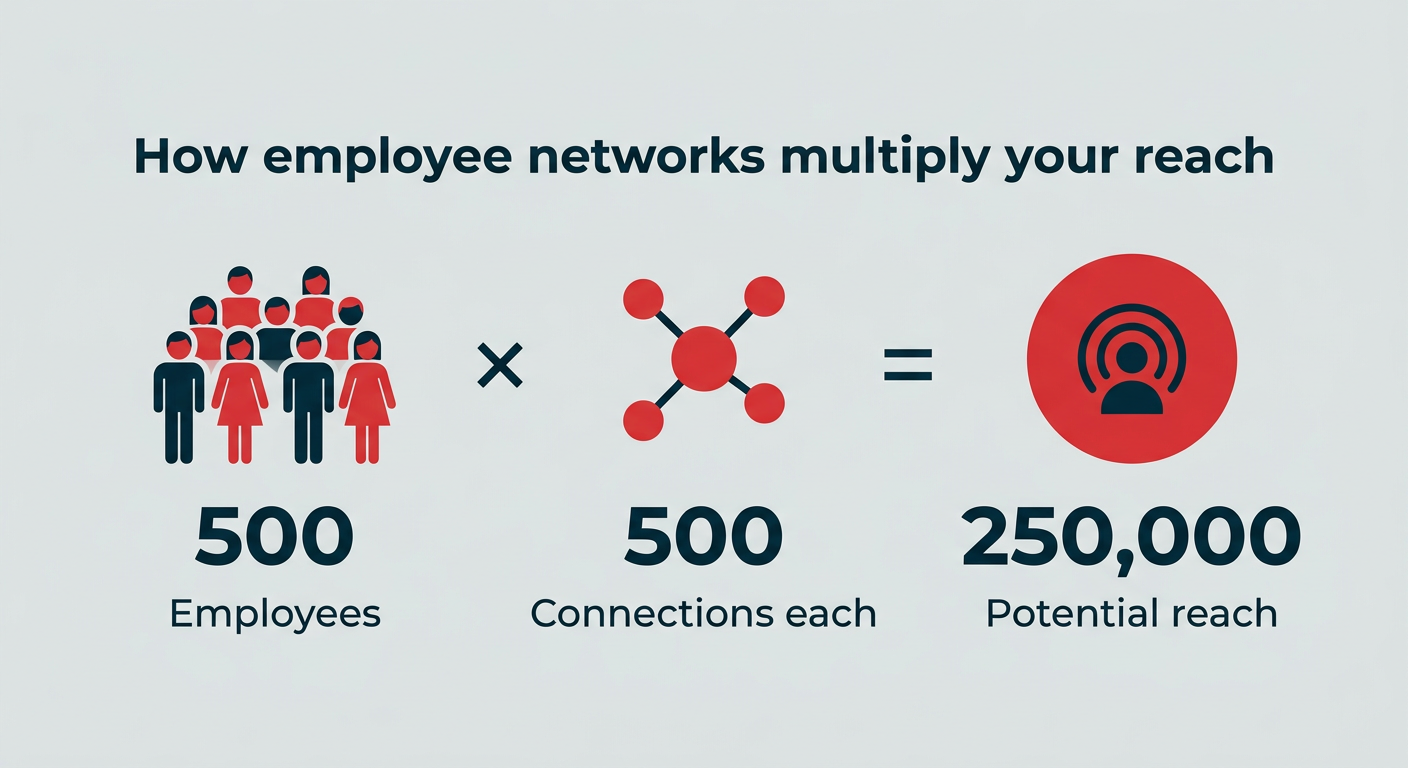
The mathematics of advocacy are compelling. A company with 500 employees, each possessing 500 connections on LinkedIn, gains potential access to a network of 250,000 people. This reach is highly targeted and possesses a level of social proof that corporate ads lack.
2. The Talent Acquisition Engine
Recruitment is no longer just about job boards; it is about culture. When prospective employees see authentic posts about team dynamics, company culture, and daily work life from current staff, the recruitment process becomes significantly more effective. Evidence from organizations like DaVita shows that advocacy-driven employer branding can boost application volume by over 130%.
3. Driving the Sales Pipeline
Social selling has emerged as a cornerstone of B2B strategy. Data from Hinge Marketing suggests that 64% of employees in formal advocacy programs credit their participation with attracting and developing new business. Real-world examples, such as the digital agency Major Tom, demonstrate this in action: their advocacy-led campaigns successfully generated over $100,000 in pipeline opportunities with higher-than-average win rates.
Chronology of a Successful Program Launch
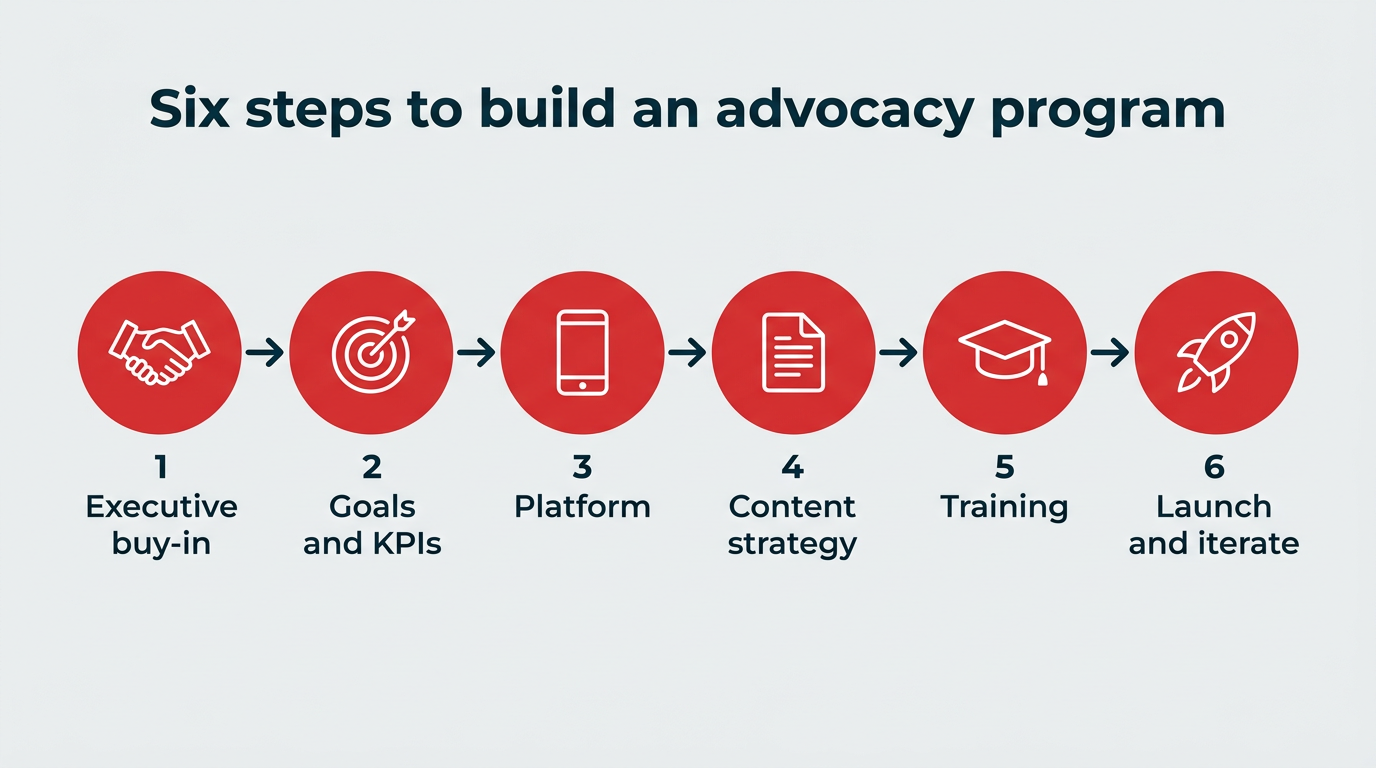
Building a sustainable advocacy program requires more than just a social media policy. Successful companies follow a structured six-step framework to ensure long-term engagement and brand safety.
- Step 1: Executive Buy-in: Leadership support is the catalyst. When executives participate, they set the tone for the entire organization.
- Step 2: Objective Setting: Programs that attempt to serve too many masters—recruitment, sales, and brand awareness—often fail. Narrowing the focus to one or two clear KPIs is essential.
- Step 3: Platform Integration: As programs scale, manual efforts like emailing links to staff become unsustainable. Dedicated platforms—such as Parliament, integrated into the Hootsuite Social OS—provide the necessary infrastructure for content curation, approval workflows, and analytics.
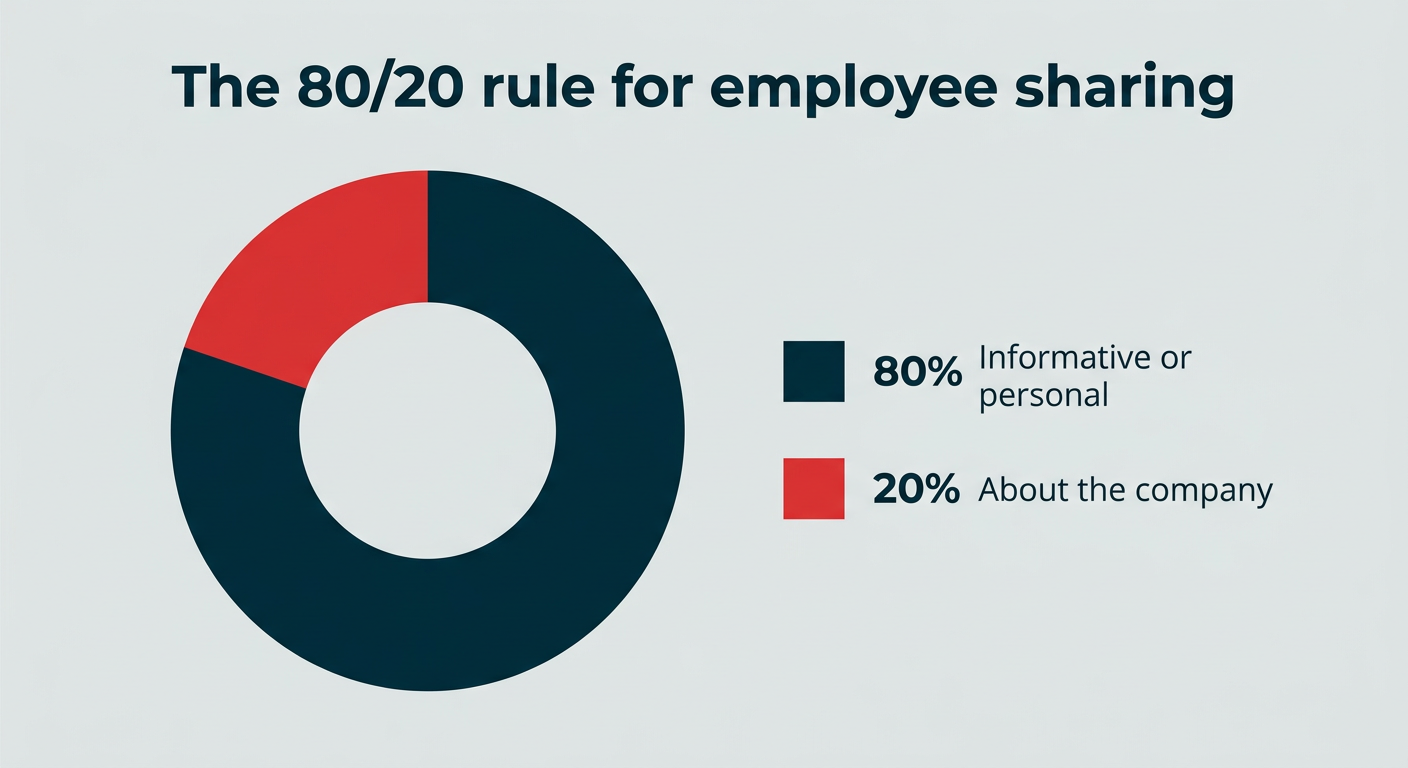
- Step 4: Strategic Content Curation: Content must be shareable and relevant. The "80/20 rule" is the industry gold standard: 80% of content should be educational or industry-relevant, while only 20% should be promotional.
- Step 5: Training and Empowerment: Fear of saying the wrong thing is the biggest barrier to participation. Workshops and "brand bootcamps" provide employees with the confidence to share content in their own unique voice.
- Step 6: Incentivization and Iteration: Gamification—such as leaderboards and internal rewards—keeps momentum alive. Regularly updating the content library prevents the program from feeling stagnant.
Supporting Data: Proof in the Metrics
The efficacy of employee advocacy is reflected in the success stories of major global brands. From SaaS leaders like Salesforce and Hootsuite to global giants like Starbucks and Dell, the data is consistent: advocacy drives performance.
| Company | Industry | Primary Result |
|---|---|---|
| Hootsuite | SaaS | 250% YoY revenue growth from advocacy |
| Armanino | Consulting | 638% increase in social reach (19.2M total) |
| DaVita | Healthcare | 136% increase in LinkedIn applicants |
| Morgan Philips | Recruitment | 8,000 leads generated |
These figures demonstrate that advocacy is not a "soft" metric; it is a hard-hitting contributor to the bottom line. By tracking metrics such as Earned Media Value (EMV)—the paid equivalent of the reach achieved by employees—companies can demonstrate clear ROI to stakeholders.
Official Perspectives: The Human Element
Industry leaders emphasize that the success of these programs lies in the balance between structure and individual autonomy. Victoria Samways, Marketing & Brand Manager at Major Tom, notes that employees are far more likely to engage when the content highlights a teammate’s achievement rather than a generic corporate update. "Employees are naturally more inclined to support a co-worker," Samways explains. "This creates a level of authenticity that traditional corporate messaging cannot emulate."

Similarly, companies like Adobe and Dell have found that allowing employees to tailor content to their specific roles and interests increases both adoption rates and the quality of the engagement. The goal is to make the employee feel like an empowered expert, not a corporate mouthpiece.
Implications for the Future of Work
As we move deeper into 2026, the implications of these programs are clear. Employee advocacy is shifting the power dynamic of digital marketing. It suggests that the future of brand communication is not found in a centralized marketing department, but in the distributed networks of the employees themselves.
Challenges to Consider
While the benefits are significant, organizations must remain vigilant about potential pitfalls:
- Maintaining Authenticity: If a program becomes too "corporate" or scripted, employees will stop participating, and the audience will disengage.
- Governance and Compliance: In regulated industries, such as healthcare or finance, ensuring that all shared content adheres to strict legal guidelines is paramount. This is where centralized, enterprise-grade tools become essential.
- Avoiding Burnout: A program that demands too much of an employee’s time will eventually see a drop in participation. Ease of use—specifically mobile-first platforms—is critical to keeping the barrier to entry low.
Conclusion
The rise of employee advocacy represents a return to the oldest form of marketing: word-of-mouth. By providing employees with the right tools, training, and strategic support, companies can harness the collective power of their workforce to build trust, attract top-tier talent, and drive sustainable growth.
As the digital landscape becomes increasingly crowded and noisy, the brands that win will be those that empower their people to tell their stories. In the modern marketplace, the most effective marketing channel is no longer a corporate account—it is the person sitting at the desk next to you. Organizations that recognize and cultivate this potential will be the ones that thrive in the years ahead.