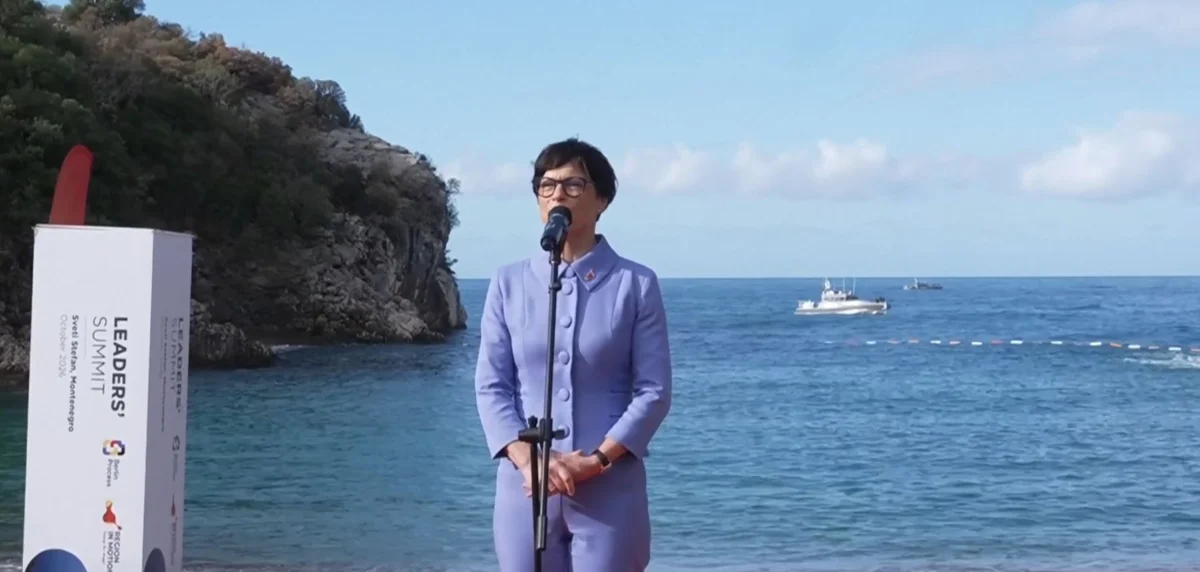
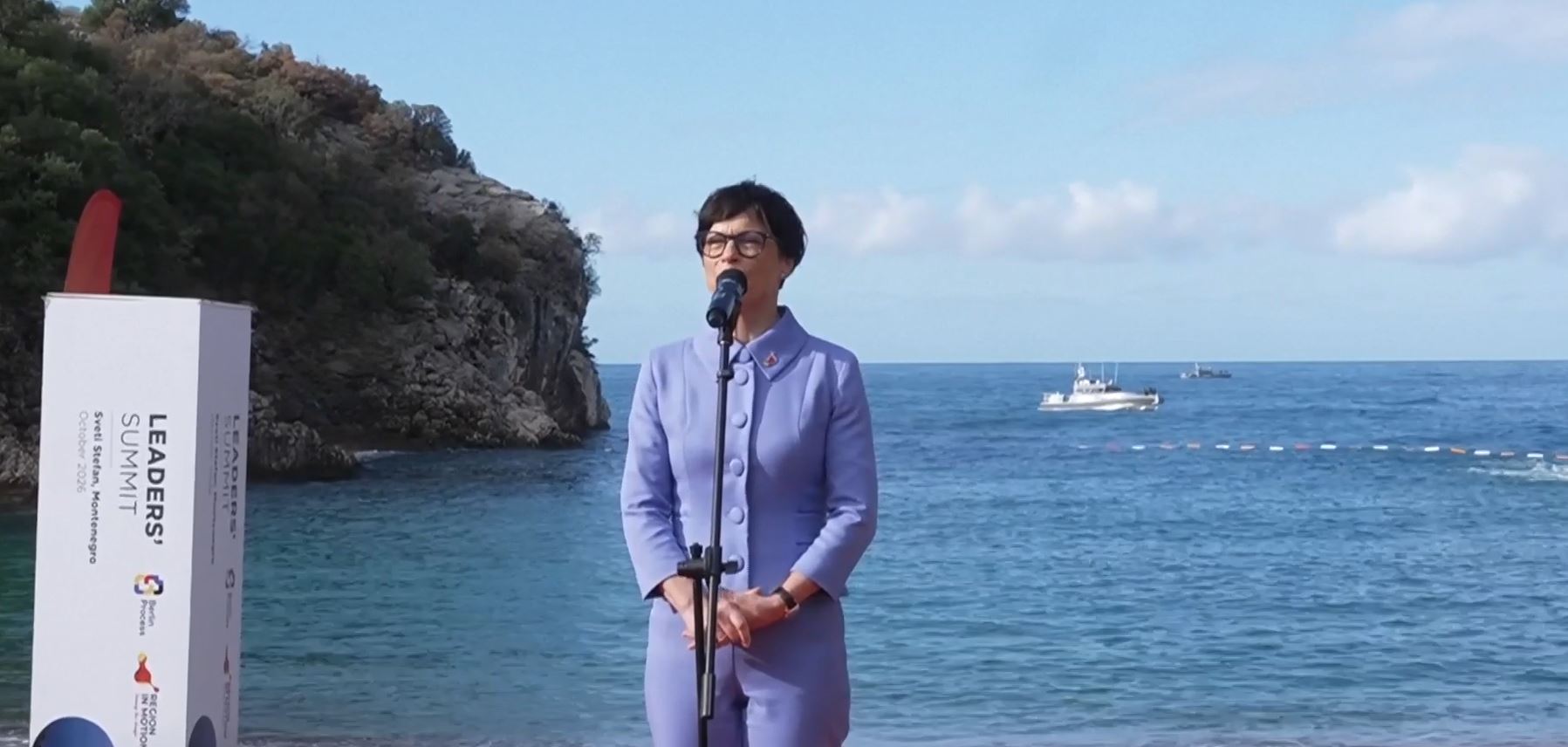
BUDVA, MONTENEGRO – October 22, 2026 – The Western Balkans stand at a pivotal moment in their journey towards European Union membership, a reality underscored by EU Enlargement Commissioner Marta Kos during her address at the Berlin Process Summit held today in Budva, Montenegro. Commissioner Kos lauded Montenegro’s significant strides in the accession process, identifying it as the leading candidate, while simultaneously issuing a clear call for sustained reforms and commitment across the entire region. Her remarks set a serious tone for the summit, emphasizing that the coming weeks and months will be "decisive" for Montenegro, Serbia, Albania, and Kosovo in charting their European future.
The high-level gathering, convening leaders from the Western Balkans and senior EU officials in the picturesque setting of Miloćer, near Budva, served as a crucial platform to reaffirm the European perspective of the region. Discussions centered on fostering deeper regional cooperation, accelerating necessary reforms, and reinforcing the commitment to rule of law – all indispensable elements for advancing toward full EU membership. Commissioner Kos’s presence and direct message highlighted the EU’s continued, albeit increasingly scrutinizing, engagement with its southeastern neighbors.
The Berlin Process: A Decade of Engagement and a Renewed Impetus
The Berlin Process, initiated by Germany in 2014, was conceived as a diplomatic initiative aimed at reinvigorating the EU enlargement process in the Western Balkans and enhancing regional cooperation. It provides a framework for high-level political dialogue between the six Western Balkan countries (Albania, Bosnia and Herzegovina, Kosovo, Montenegro, North Macedonia, and Serbia) and several EU member states, along with the European Commission. Its core objectives revolve around improving connectivity (transport and energy infrastructure), fostering economic development, promoting good governance, and addressing persistent bilateral disputes, all seen as prerequisites for successful EU integration.
Over the past decade, the Berlin Process has facilitated numerous regional projects and agreements, from youth exchanges to cross-border infrastructure initiatives. However, progress has often been uneven, hampered by internal political dynamics within the Balkan states and occasional "enlargement fatigue" within the EU itself. This year’s summit in Budva, hosted by Montenegro, carries particular weight as the geopolitical landscape in Europe has shifted dramatically, lending a new urgency to the stabilization and integration of the Western Balkans. The choice of Montenegro as host nation underscores its frontrunner status, offering a tangible example of progress while also placing a spotlight on the challenges that remain.
Commissioner Kos’s Keynote: A Roadmap for the Region
Commissioner Marta Kos, a seasoned diplomat with extensive experience in the complexities of European integration, delivered a keynote address that was both encouraging and challenging. Her commendation of Montenegro’s progress was particularly noteworthy, recognizing the consistent efforts of Podgorica to align its legislation and institutions with EU standards. "Montenegro is the country I have visited more than any other this year, which is natural, as Montenegro is the country progressing the most in the process of accession to the European Union," Kos stated, adding, "I am always happy to return to see firsthand how a country determined to become a member of the European Union is moving forward." This acknowledgment serves as both an incentive for Montenegro and a benchmark for its regional counterparts.
However, Kos quickly pivoted to the broader regional picture, emphasizing that the "weeks and months ahead will be decisive for all of us." She then meticulously outlined the specific junctures facing each of the four primary candidates:
Montenegro: Nearing the Finish Line
For Montenegro, Commissioner Kos articulated the immediate goal: "For Montenegro, the decisive moment will be crossing the finish line in the accession process." This statement reflects Podgorica’s advanced position, having opened all 33 negotiation chapters and provisionally closed three. Its progress has been marked by a relatively stable political environment and a sustained commitment to reforms, particularly in the rule of law area, which remains a key focus. The "finish line" implies a final push to fully implement reforms related to chapters 23 (Judiciary and Fundamental Rights) and 24 (Justice, Freedom, and Security), tackling organized crime and corruption effectively, and ensuring judicial independence. Success for Montenegro would not only be a triumph for the country but also a powerful signal to the rest of the Western Balkans that the path to EU membership is indeed tangible.
Serbia: An Electoral Crossroads
Turning to Serbia, Kos directly linked its immediate future to upcoming political events: "For Serbia, the elections next Sunday." The reference to imminent elections highlights the democratic foundations crucial for EU membership and the potential for a new mandate to either accelerate or slow down reforms. These elections are not merely about domestic governance; they carry significant implications for Serbia’s alignment with EU foreign policy, particularly concerning Russia, and its commitment to the EU-facilitated dialogue with Kosovo. The EU expects a stable and pro-European government in Belgrade that is willing to make difficult but necessary decisions for its European path. The outcome of these elections will be closely scrutinized by Brussels for indicators of future political will and strategic orientation.
Albania: Sustaining the Momentum of Reforms
Albania received a message of encouragement coupled with an imperative for continuity: "For Albania, maintaining the pace on the road to the European Union." Albania officially opened accession negotiations in July 2022, a significant milestone after years of diligent, albeit challenging, reforms, especially in the judiciary. The country has embarked on a comprehensive justice reform, including the rigorous vetting of judges and prosecutors, which has been praised by the EU but remains an ongoing process. Maintaining momentum means continuing to fight corruption, strengthening public administration, ensuring media freedom, and protecting minority rights. The EU’s expectation is clear: the initial enthusiasm and political will for reform must not wane, but rather translate into sustained, tangible results across all sectors.
Kosovo: Rule of Law and International Commitments
Kosovo’s situation, often intertwined with its relationship with Serbia, was framed around fundamental principles: "And, of course, for Kosovo, the decisive choice is to continue to proceed in accordance with international law and the rule of law." This statement speaks to the complex challenges Kosovo faces, particularly in solidifying its statehood and ensuring good governance. Adherence to international law is paramount, implying respect for agreements reached in the EU-facilitated dialogue with Serbia, including the implementation of the Association/Community of Serb-majority Municipalities. Furthermore, strengthening the rule of law internally involves combating organized crime, corruption, and ensuring the protection of human rights and minority communities. The EU’s message is a call for responsible governance and a commitment to stability and peaceful resolution of disputes, both internally and externally.
Commissioner Kos concluded her specific country assessments by reiterating the value of the summit itself: "Precisely for this reason, I think it is very positive that the leaders of the region and of the entire Berlin Process have gathered today in this beautiful country, Montenegro." Her words emphasized that such gatherings are vital for fostering dialogue, building trust, and collectively addressing the challenges on the path to European integration.
A Gathering of Regional and European Leaders: A Testament to Commitment
The Berlin Process Summit in Miloćer brought together an impressive array of political figures, signaling the enduring importance of the Western Balkans agenda for both the region and the wider European continent. From the Western Balkans, attendees included Albanian Prime Minister Edi Rama, Kosovo Prime Minister Albin Kurti, and North Macedonian Prime Minister Hristijan Mickoski. Their presence underscored the region’s collective commitment to the European path, despite the individual challenges each nation faces.
The participation of key EU member states was equally significant. German Chancellor Friedrich Merz, whose country initiated the Berlin Process, reinforced Germany’s sustained leadership role. Croatian Prime Minister Andrej Plenković, representing a relatively recent EU member state from the region, offered valuable perspective on the journey ahead. Austrian Chancellor Christian Stocker highlighted Austria’s historical and economic ties to the Western Balkans. On the broader European stage, Italian Foreign Minister Antonio Tajani and French Minister for Europe Benjamin Haddad demonstrated the broader EU’s strategic interest in the region’s stability and integration. Commissioner Marta Kos’s central role, as the EU’s point person for enlargement, tied these diverse threads together, providing the institutional voice of the European Union.
The summit’s agenda extended beyond individual country assessments, focusing on concrete initiatives to bolster regional cooperation. Discussions covered areas such as further developing the Common Regional Market, enhancing digital connectivity, promoting green transition initiatives, and strengthening civil society engagement. These practical measures are designed to bring the Western Balkans closer to EU standards and foster an environment conducive to economic growth and stability, making the region more attractive for investment and its citizens more connected to the broader European project.
The Broader Geopolitical Stakes: Securing Europe’s Southern Flank
The integration of the Western Balkans into the European Union is not merely a bureaucratic exercise; it is a profound geopolitical imperative. The region, strategically located at the crossroads of Europe, has historically been a nexus of competing influences. In an era of renewed geopolitical competition, with Russia seeking to destabilize European unity and China expanding its economic footprint, the EU’s commitment to the Western Balkans takes on added urgency.
Successful enlargement would solidify democratic governance, enhance security, and promote economic prosperity across Europe’s southern flank. It would counter the narratives of fragmentation and external interference, offering a clear vision of a united and stable continent. Conversely, any stagnation or reversal in the enlargement process risks creating a vacuum that could be exploited by actors antithetical to European values, leading to renewed instability and undermining the long-term security interests of the EU. The Berlin Process, therefore, serves as a critical mechanism for the EU to project its influence and demonstrate its commitment to a shared European future.
Challenges and Opportunities on the Path Ahead
Despite the renewed impetus, the path to full EU membership for the Western Balkans remains fraught with challenges. Internally, within the EU, "enlargement fatigue" persists in some member states, driven by concerns over absorption capacity, democratic backsliding in candidate countries, and unresolved bilateral issues. The need for internal EU reform to accommodate new members is also a continuous discussion point.
Within the Western Balkans themselves, persistent issues include high levels of corruption, the prevalence of organized crime, shortcomings in judicial independence, and sometimes fragile democratic institutions. Bilateral disputes, such as the Kosovo-Serbia dialogue, border issues, and historical disagreements, continue to cast shadows over regional cooperation and progress.
However, the opportunities presented by EU integration are immense. Membership offers access to the EU’s single market, significant structural funds for development, enhanced political stability, and strengthened democratic institutions. For the EU, it means completing its geographical and political project, securing its borders, and enhancing its voice on the global stage. The demographic challenges facing many Western Balkan countries could also be mitigated by the prospect of European prosperity and mobility, potentially stemming brain drain.
Future Outlook and Implications
Commissioner Kos’s declaration that the "months ahead will be decisive" signals a period of heightened activity and crucial decisions. For Montenegro, it implies an accelerated push to close remaining chapters and demonstrate irreversible progress in rule of law. For Serbia, the elections will determine its future trajectory regarding EU alignment and the Kosovo dialogue. Albania is expected to deliver tangible results from its ongoing reforms, while Kosovo must double down on strengthening the rule of law and fulfilling its international commitments.
The Berlin Process Summit in Budva served as a powerful reminder that the European Union remains committed to the Western Balkans’ European perspective, but also that the onus is on the candidate countries to deliver on their promises. The journey is complex, demanding sustained political will, difficult reforms, and genuine regional cooperation. The long-term vision remains clear: a fully integrated Western Balkans within a united, peaceful, and prosperous European Union. The coming months will indeed reveal the extent to which this vision can be transformed into reality.