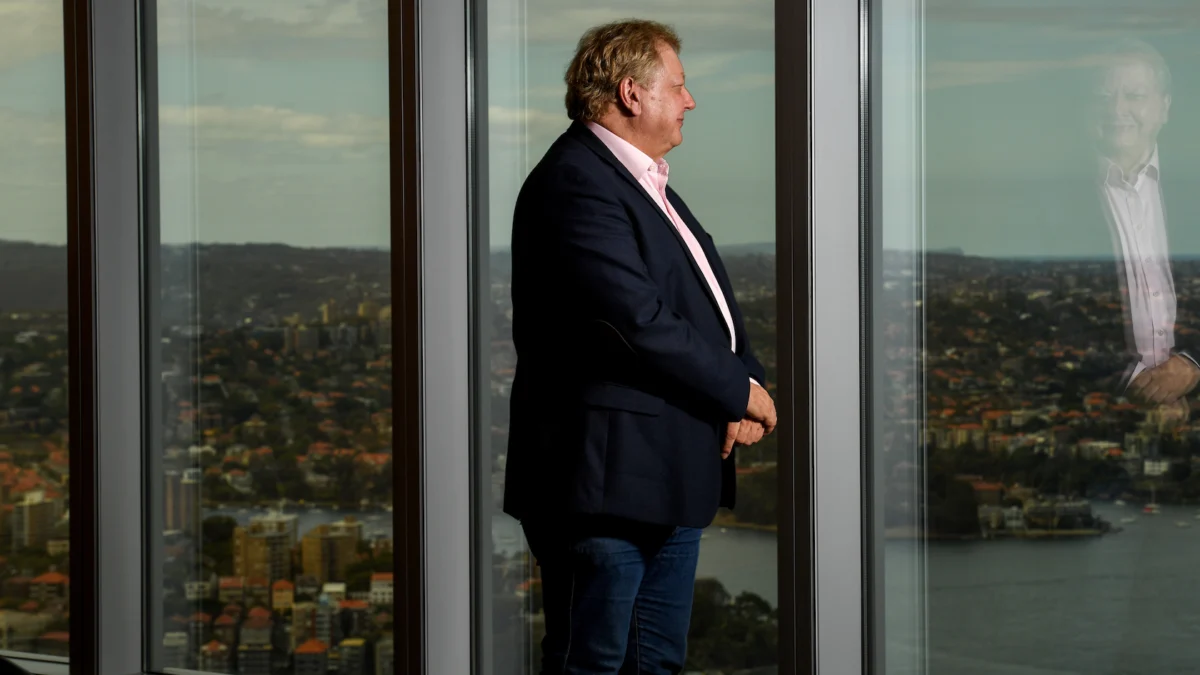
Executive Summary: Regulatory Clearance for WiseTech’s Co-Founder
The Australian Securities and Investments Commission (ASIC) has officially concluded its year-long investigation into Richard White, the co-founder and CEO of logistics software giant WiseTech Global (ASX: WTC). In a significant development for the company’s corporate governance standing, the regulator confirmed it will take no enforcement action against White or two other WiseTech employees regarding the controversial sale of company shares during a restricted “blackout period.”
The investigation, which cast a shadow over one of Australia’s most successful tech exports, centered on whether the share transactions breached insider trading provisions or corporate disclosure protocols. While the regulatory hurdle for White has been cleared, ASIC noted that its inquiries continue regarding a fourth individual, who is not affiliated with the company, leaving a final chapter of the saga open.
The Chronology of the Investigation
The saga began approximately 12 months ago when market scrutiny intensified over a series of share transactions executed by White. As a key executive, White is subject to strict "blackout periods"—designated timeframes surrounding the release of financial results during which senior leadership is prohibited from trading company stock to prevent the potential misuse of non-public, price-sensitive information.
- Mid-2025: Regulatory concerns were raised regarding the timing of share sales by WiseTech insiders. The volume and timing of these trades coincided with the lead-up to sensitive financial disclosures, prompting ASIC to launch a formal probe.
- Late 2025: WiseTech Global acknowledged the ongoing investigation, maintaining that the company and its leadership were cooperating fully with the regulator. The company’s share price faced intermittent volatility as investors weighed the potential legal risks to the firm’s founder.
- Mid-2026: After a exhaustive review of the trading logs, communication records, and corporate policy compliance, ASIC issued "no-action" letters to White and two other staff members.
- Present Day: The company has formally communicated the resolution to the market, signaling an end to the primary phase of the regulatory inquiry.
Supporting Data: The Scale of the Trades
The investigation focused on the sale of over 1.8 million shares by Richard White. For a company of WiseTech’s market capitalization—which has consistently ranked among the top performers on the ASX 200—the divestment represented a substantial movement of capital.
The core of the investigation was not the sale itself, but the timing. Corporate law mandates that executives must ensure their trading activities do not overlap with periods where they possess "inside information." ASIC’s scrutiny sought to determine if White had access to, or was influenced by, material financial results that had not yet been disseminated to the public at the time of the sale.
By closing the file without taking action, the regulator has effectively signaled that, in their view, the evidence did not meet the high threshold required for a prosecution regarding insider trading or breach of financial services law.
Official Responses and Corporate Governance
WiseTech Global’s official response was one of measured relief. By securing the "no-action" letters, the company has successfully mitigated a significant legal risk that threatened to distract its leadership team from its global expansion strategy.
In a statement to the ASX, WiseTech reiterated its commitment to strict adherence to its internal Share Trading Policy. The company noted that the conclusion of the investigation underscores the effectiveness of its compliance frameworks.
“The company has cooperated fully with ASIC throughout this process,” a spokesperson stated. “We are pleased that the matter has been resolved for our founder and the involved employees, allowing the business to remain focused on its core mission of providing world-class logistics solutions.”
From a corporate governance perspective, the incident serves as a case study in the rigorous oversight applied to ASX-listed technology firms. It also highlights the inherent tension between the personal financial management of high-net-worth founders and their fiduciary duties to the public company they lead.
Implications: What This Means for WiseTech and the Market
The closure of the investigation has several profound implications for the Australian startup and tech ecosystem.
1. The Stability of Leadership
Richard White is synonymous with the success of WiseTech. His vision transformed the company from a small Australian software provider into a global powerhouse in logistics. The threat of an ASIC enforcement action—which could have resulted in fines, disqualification from management, or reputational damage—was a material risk to the stock price. The "all-clear" provides stability for institutional investors and board members alike.
2. Regulatory Vigilance
While White was cleared, the fact that ASIC is still investigating a fourth, non-WiseTech individual suggests that the regulator is looking at a broader network of information flow. This serves as a warning to market participants that ASIC’s surveillance technology is increasingly capable of detecting anomalous trading patterns, regardless of the status or seniority of the individual involved.
3. Investor Confidence
In the tech sector, where founder-led companies are common, investor confidence is heavily tied to the perceived integrity of the leadership. By clearing the air, WiseTech has removed a potential "governance discount" that may have been applied to its share price during the period of uncertainty. Investors can now refocus on the company’s underlying fundamentals: its recurring revenue, global market penetration, and technological dominance.
4. The "Blackout" Debate
The investigation has reignited discussions regarding the rigidity of blackout periods. Critics often argue that these periods can be overly restrictive for founders who may need to sell shares for personal liquidity, estate planning, or tax obligations. However, the resolution of this case confirms that while the rules are strict, they are not insurmountable, provided that the execution of trades is done with total transparency and alignment with disclosure requirements.
Conclusion: Turning the Page
The decision by ASIC to drop its probe into Richard White marks a significant milestone in the recent history of WiseTech Global. For a company that operates in the complex, high-speed world of international logistics, the ability to operate with regulatory certainty is paramount.
While the investigation into the fourth party continues, the primary tension surrounding the founder’s conduct has been diffused. As WiseTech continues to scale its operations and navigate the evolving global supply chain, it does so with a clean bill of health from the regulator.
For the Australian startup sector, this episode is a reminder of the heightened expectations placed upon successful founders. As these companies grow from humble origins to become cornerstones of the Australian economy, the scrutiny from regulators becomes more intense. The ability to navigate these legal and ethical waters is now as much a part of a founder’s job description as product innovation and market strategy.
WiseTech moves forward from this event with its leadership intact, its governance policies validated, and its focus firmly on the future of global logistics. The market will undoubtedly be watching to see how the final, remaining thread of this investigation is tied off, but for now, the tech giant can count this as a decisive win for corporate continuity.
Disclaimer: This article is based on recent disclosures and public regulatory information. It does not constitute financial or legal advice.