As Halloween candy sits on store shelves, the "holiday creep" is no longer just a retail phenomenon—it is a survival strategy. For the 2026 shopping season, the window for capturing consumer attention has widened significantly, yet the economic reality of tighter household budgets has created a high-stakes environment for brands.
According to Sprout Social’s Q3 2026 Pulse Survey, this year’s holiday landscape is defined by a trifecta of evolving forces: the strategic timing of campaigns, heightened price sensitivity driven by global trade fluctuations, and the definitive shift of gift discovery to social media platforms. As brands navigate this complex terrain, they must balance the need for early visibility with the risk of "holiday fatigue."
The Chronology of Consumption: Navigating the "Early-Bird" Paradox
One of the most persistent questions for marketing executives is when to initiate holiday messaging. The 2026 data reveals a nuanced consumer sentiment that rejects a "one-size-fits-all" calendar.
While nearly half of consumers (49%) report that campaigns launched as early as August increase their likelihood of making a purchase, a deeper look reveals a divide between awareness and execution. When asked explicitly for the "ideal" launch window, 50% of respondents identified October or November as their preference. Only 21% favored the August or September timeline.
This apparent contradiction highlights a shift in consumer psychology: shoppers are open to "holiday inspiration" and product discovery in late summer, but they are resistant to an aggressive, full-scale holiday takeover of their digital feeds while the weather is still warm.

The Strategic Sweet Spot
The data suggests a bifurcated strategy for brands. The most successful retailers are utilizing August and September as a "soft launch" period. During these months, the focus is on brand awareness, product education, and gift-guide inspiration rather than hard-hitting seasonal sales messaging. By the time October arrives, these brands have already planted the seeds of consideration, allowing them to pivot seamlessly into high-intensity promotional campaigns.
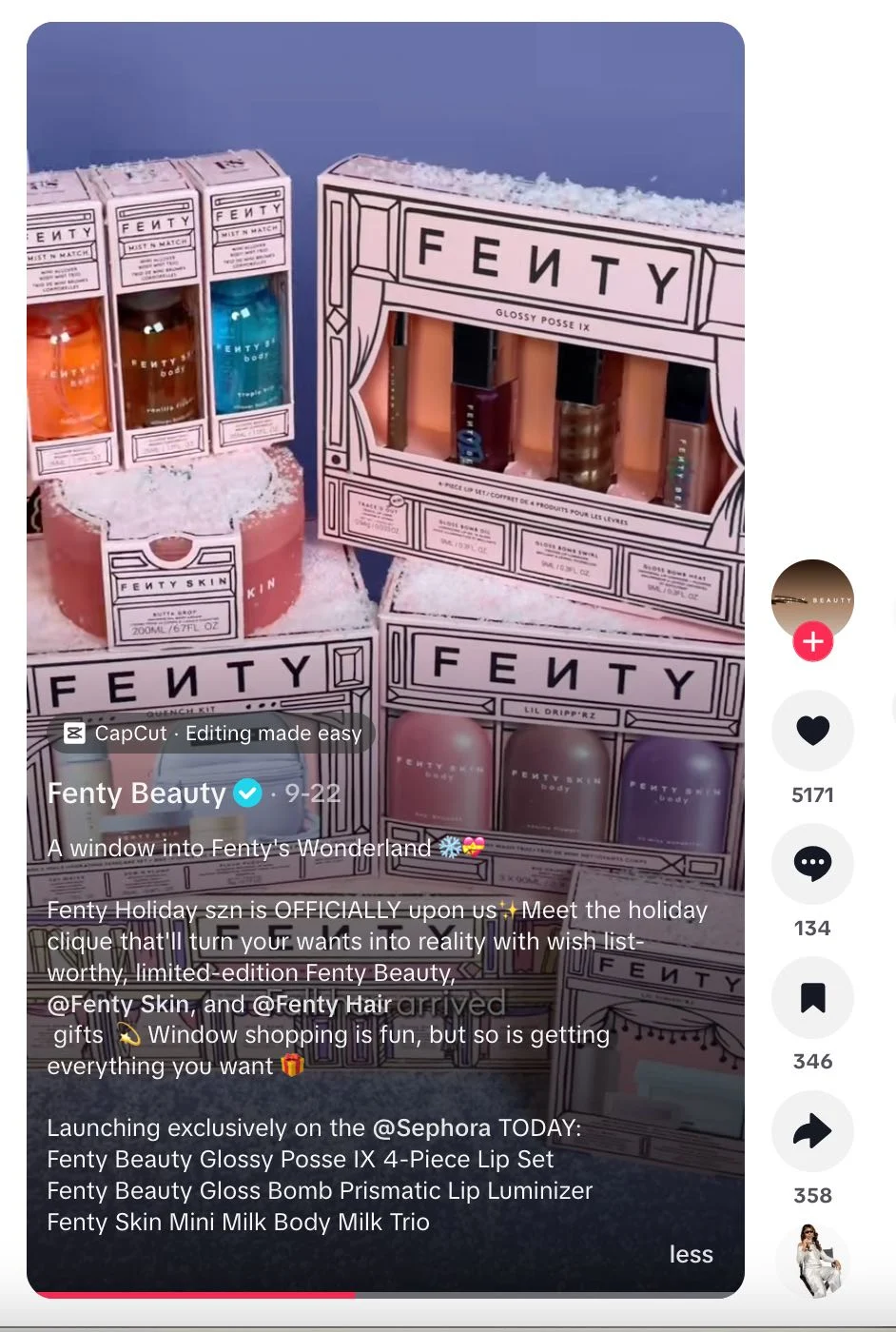
This approach is already yielding measurable results. Fenty Beauty, for example, successfully introduced its limited-edition 2026 holiday collection in September. By offering an early glimpse, the brand generated significant social buzz—garnering over 100,000 views and 5,000 likes on a single TikTok post—long before the traditional peak shopping season began. This early-entry strategy is particularly effective among Gen Z, with 66% of that demographic stating they are more likely to buy when campaigns start as early as August.
Economic Headwinds: Tariffs and the Cost of Living
If timing is the engine of the 2026 holiday season, economic anxiety is the steering wheel. With inflation and shifting tariff policies creating uncertainty, consumers are approaching this year’s shopping with a protective, calculated mindset.
The survey indicates that 63% of holiday shoppers are acutely aware of how economic pressures—specifically tariff-related price hikes—are influencing their behavior. Consequently, 36% of respondents have explicitly started their shopping earlier than usual to circumvent anticipated price surges.
This environment has forced a sobering realization for retailers: more than half (56%) of consumers explicitly state they intend to reduce their total holiday spending compared to previous years.
From "Lowest Price" to "Highest Value"
For brands, this does not necessarily mean entering a "race to the bottom" in terms of pricing. Instead, it demands a shift toward communicating value. In a price-sensitive market, consumers are looking for reasons to justify every purchase. Marketing content that emphasizes product quality, versatility, and long-term utility is resonating more effectively than generic clearance messaging.
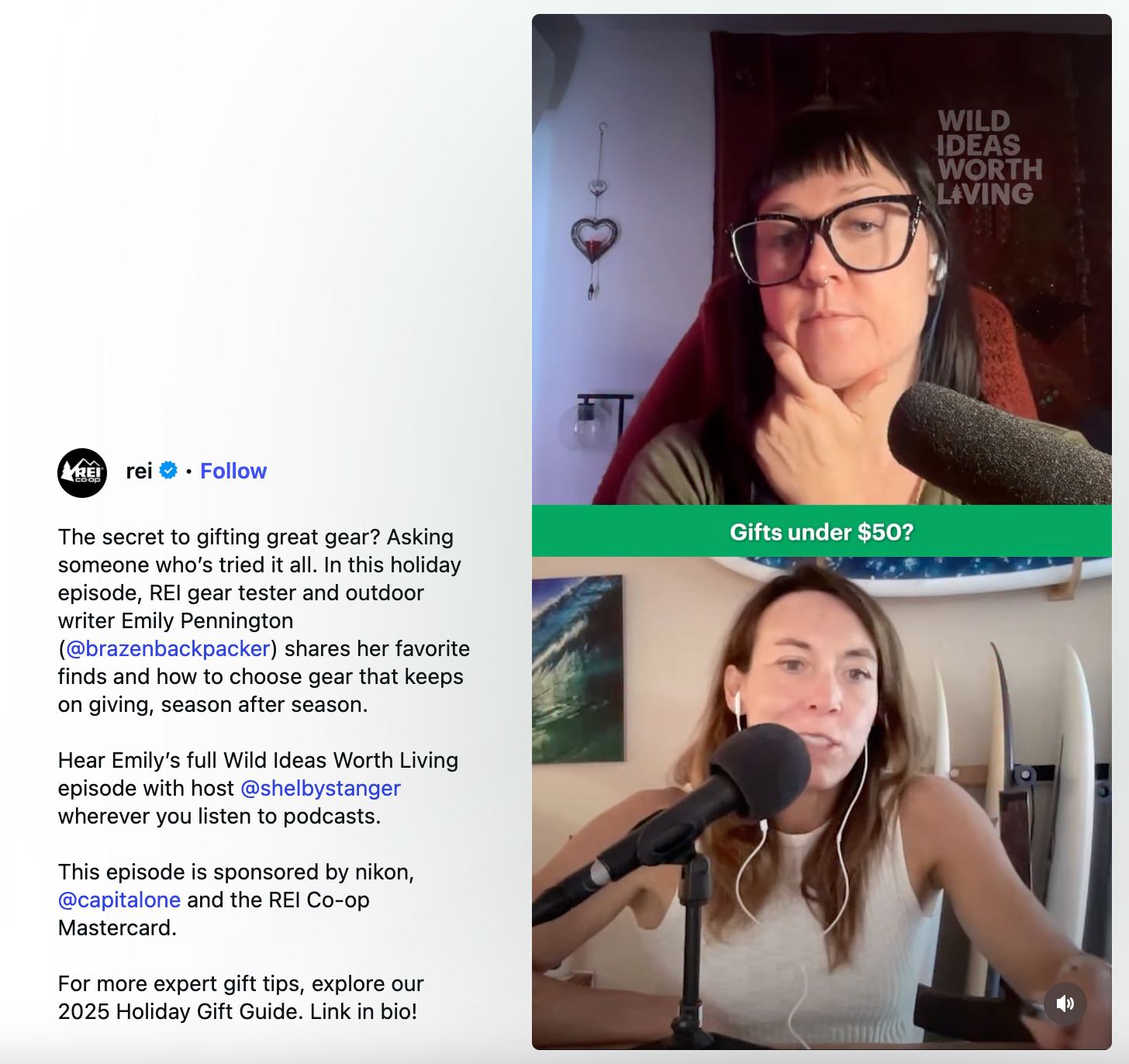
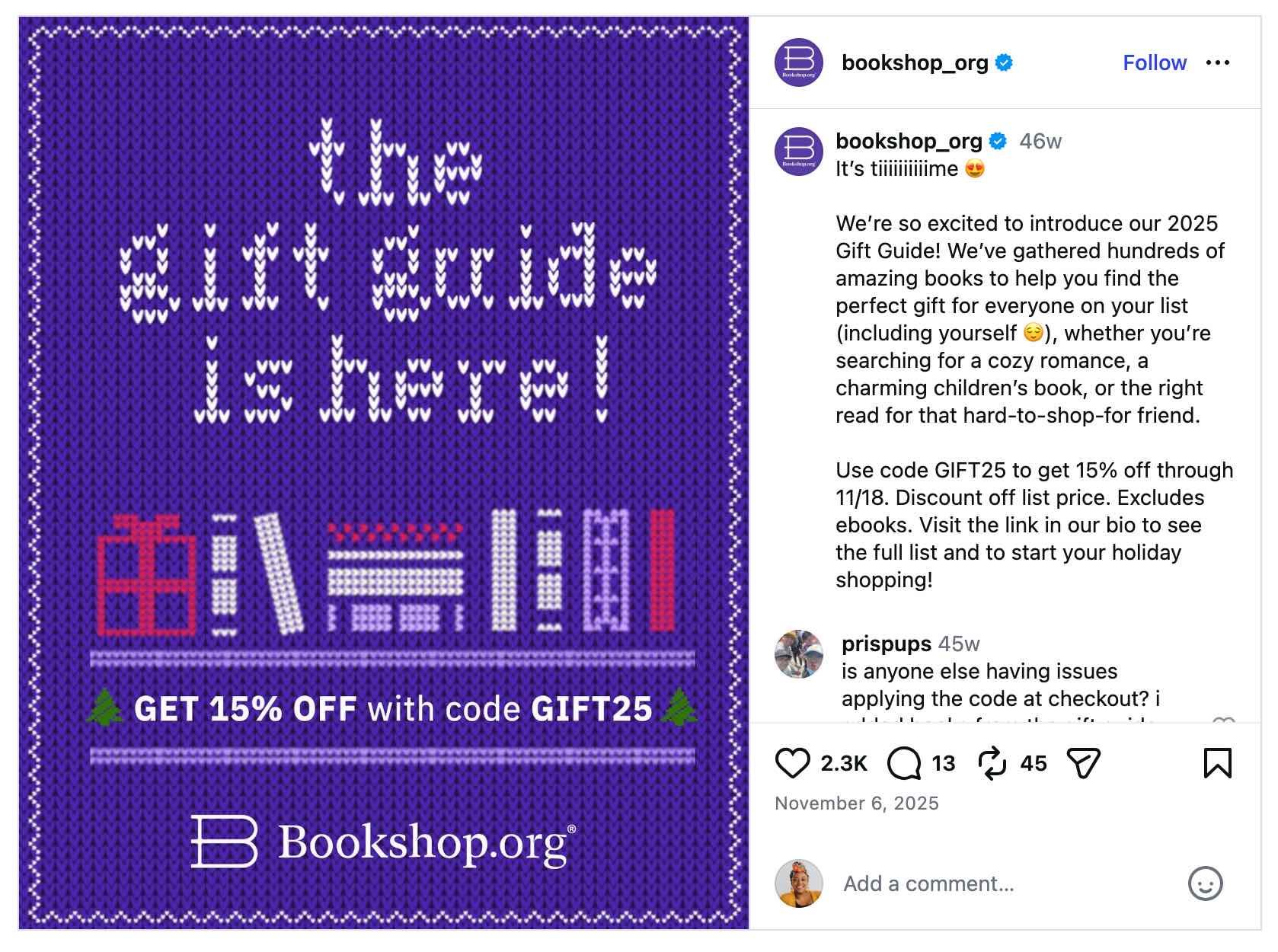
Furthermore, price transparency remains a key driver. Retailers like REI have demonstrated the power of curated "budget-friendly" content. By organizing gift guides by price point—such as collections under $50—brands reduce the "cognitive load" for shoppers, making it easier to find gifts that align with their constrained budgets without sacrificing quality.
The Social Media Frontier: Discovery and Purchase Integration
The days of relying solely on physical storefronts or traditional e-commerce websites for gift discovery are fading. Social media has ascended to become the primary engine of discovery, standing neck-and-neck with brick-and-mortar retail.
According to the 2026 survey, 46% of consumers now turn to social media platforms for gift ideas and product research. This trend is accelerating, with 28% of consumers indicating they plan to use social media more for holiday shopping this year than they did in 2025.
What Converts the Social Shopper?
Discovery, however, is only the first step. Converting a passive scroller into a paying customer requires a tactical mix of content. The survey identifies the top purchase drivers on social media:
- Promo Codes: 30% of shoppers are driven by codes shared by brands or influencers.
- Product-in-Action Content: 28% prefer videos or posts that demonstrate the item in a real-world setting.
- Original Brand Content: 26% are influenced by high-quality, seasonal brand storytelling.
- Peer/User Content: 22% trust recommendations from non-influencer users.
The implication is clear: a diversified social strategy is essential. Brands must cycle through these content types, ensuring that their social presence isn’t just a billboard for ads, but a hub for education, social proof, and exclusive incentives.
Implications: The Convergence of Commerce and Care
As the path from discovery to purchase shortens, the line between social commerce and customer service is blurring. With 57% of consumers expressing comfort in purchasing directly within a social media app, the need for a frictionless experience is paramount.
The "Service-First" Commerce Model
Retailers must prepare for a significant uptick in social customer service inquiries. Because social media is now a top-of-funnel discovery tool, it is also becoming a primary channel for bottom-of-funnel questions regarding shipping, returns, sizing, and inventory availability.
A customer asking a question in a social comment section is often in the "final mile" of their purchase journey. Brands that respond with speed and accuracy are seeing higher conversion rates. Conversely, a lack of social customer care is increasingly viewed as a barrier to purchase. The data shows that 27% of consumers expect to use social media more for customer service than they did in 2025, a trend that mandates that social teams be equipped with the same resources and access to internal data as traditional customer service departments.
Conclusion: A Strategic Blueprint for 2026
To succeed in the 2026 holiday season, marketers must move beyond traditional "Black Friday" thinking. The landscape has been permanently altered by the demand for earlier, more integrated, and highly transparent shopping experiences.
Key Priorities for the Season:
- The Hybrid Launch: Leverage August and September for brand-building and discovery, reserving aggressive promotional efforts for October and November.
- Value-Driven Storytelling: Acknowledge the economic climate by emphasizing the quality and longevity of products rather than just the price tag. Organize gift guides by budget to ease the consumer’s decision-making process.
- Frictionless Social Commerce: Audit the path to purchase within your social channels. Ensure that product details, shipping policies, and support workflows are readily available to prevent abandonment at the point of sale.
As we look toward the end of 2026, the brands that win will be those that view their social media presence as a holistic ecosystem—a place where discovery, education, community, and commerce occur in a seamless, unified experience. The holiday season is no longer just a quarter of the year; it is a long-form conversation with the consumer. Those who start the conversation early and sustain it with value will be the ones who secure a larger share of the holiday wallet.