By Global Affairs Correspondent
Published: October 14, 2026
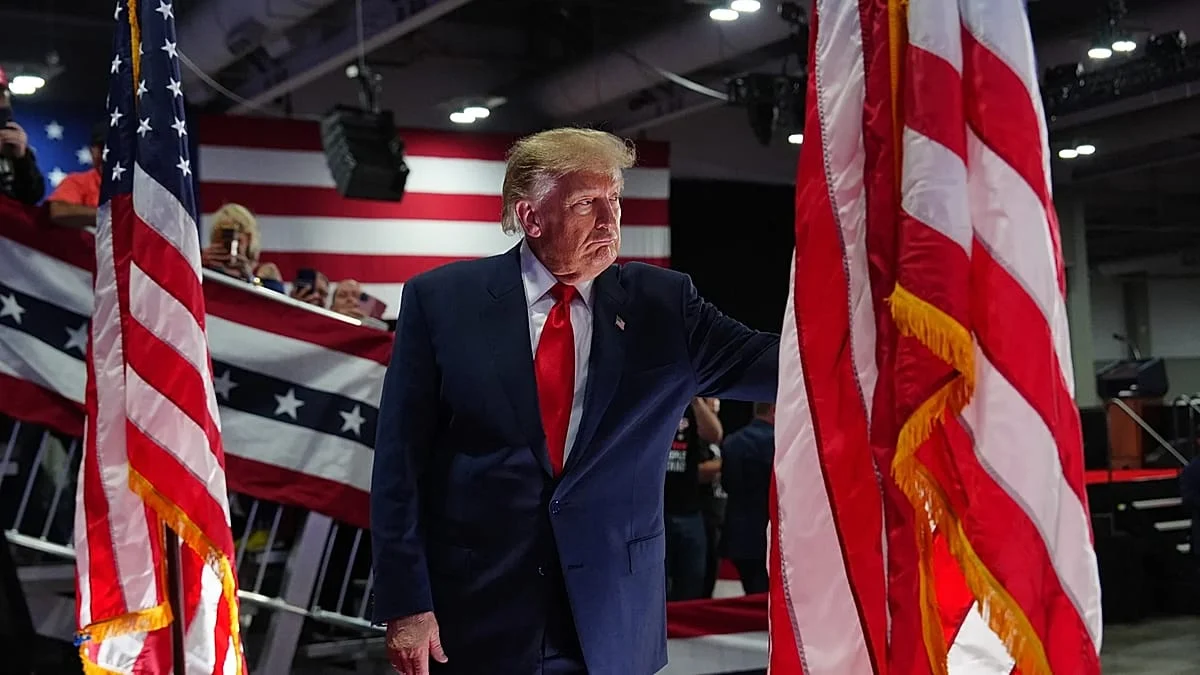
In a major shift in North Atlantic defense policy, United States President Donald Trump has officially designated Greenland as the linchpin of American national security. In a series of statements released via Truth Social on Wednesday, the President underscored the island’s indispensable role in the defense of both the United States and Europe, framing the Arctic territory as a "second to none" defensive bastion against modern aerial threats.
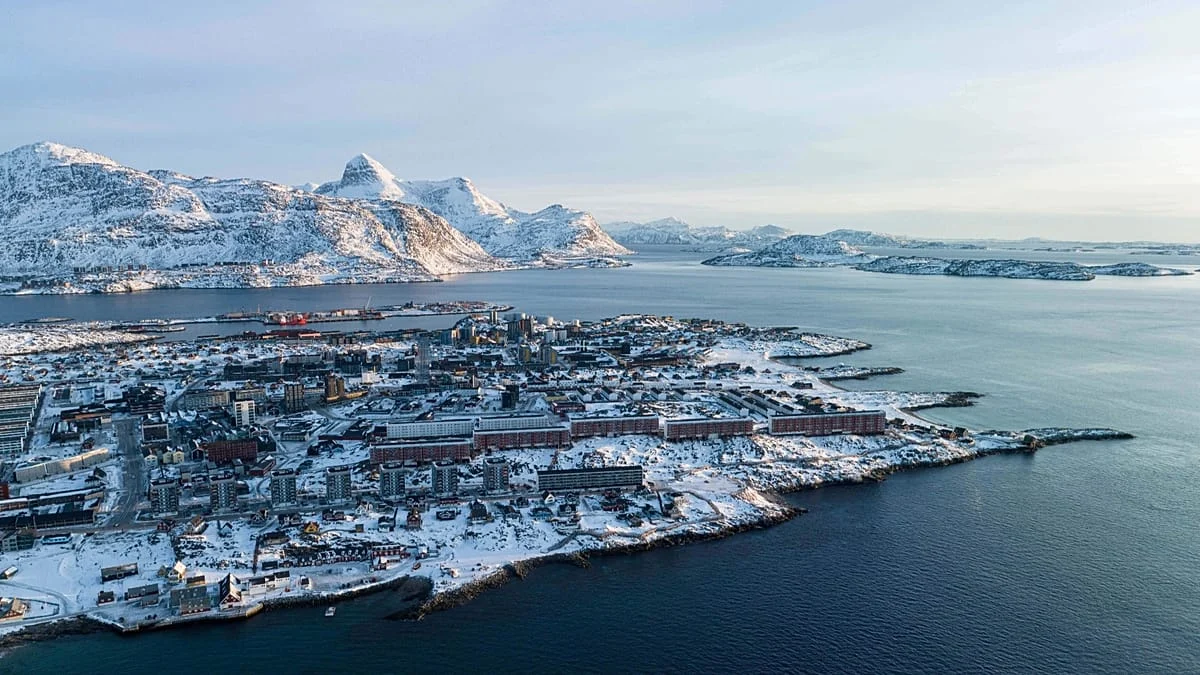
This declaration comes on the heels of a landmark security agreement signed in September between Washington, Copenhagen, and Nuuk, marking a new era of geopolitical realignment in the High North. As climate change renders the Arctic more accessible, Greenland has transitioned from a remote frozen outpost to the primary theater for the U.S. "Golden Dome" defense initiative, while simultaneously emerging as a focal point for global energy and mineral competition.
The Strategic Imperative: A Shield in the North
President Trump’s recent remarks characterize Greenland as the geographic "chokepoint" for any potential future aggression against the North American continent. "Any future attack on America would have to pass through the Arctic island," Trump asserted, emphasizing that the U.S. military is preparing to utilize the territory to neutralize advanced weaponry.
The President’s vision for the Arctic includes the routine deployment of sophisticated defensive systems capable of intercepting drones, ballistic missiles, and "any other form of weapon not yet even conceived." This rhetoric signals a pivot toward a more aggressive posture in the region, aimed at securing the shortest flight paths between Russia and the United States.
The "Golden Dome"—a multi-layered missile defense architecture—is no longer merely a conceptual framework; it is being physically manifested through the modernization of existing infrastructure and the establishment of new, exclusive defense zones across Greenlandic territory.
Chronology: From Purchase Threats to Strategic Partnership
The current state of affairs is the culmination of a volatile diplomatic journey that began during President Trump’s first term.
- 2019: The "Purchase" Controversy: President Trump famously floated the idea of buying Greenland from Denmark, a proposal that was dismissed by Danish officials as "absurd." The diplomatic friction caused a temporary cooling of relations between Washington and Copenhagen.
- 2025: The Escalation: Tensions reached a fever pitch as the President threatened to take the territory by force, arguing that the security of the Arctic was too vital to be left to the whims of European bureaucracy.
- September 2026: The UN General Assembly Summit: A historic turning point was reached on the sidelines of the UN General Assembly in New York. Washington, Copenhagen, and Nuuk signed a tripartite security agreement. This pact averted a potential military standoff and instead formalized an expanded U.S. military footprint.
- October 2026: Official Implementation: Following the ratification of the agreement, President Trump confirmed that large-scale oil, gas, and mineral exploration is imminent, citing the island’s vast, untapped natural wealth as a pillar of future American economic and security independence.
Supporting Data: The Military and Economic Calculus
The Military Infrastructure Expansion
Under the terms of the September agreement, the U.S. military has been granted unprecedented operational freedom in Greenland. The expansion includes:
- Modernization of Pituffik Space Base: Long the jewel of the U.S. Space Force in the Arctic, Pituffik is receiving massive upgrades to its missile warning and space surveillance capabilities.
- New Defense Zones: The establishment of permanent defense sites at Narsarsuaq and Mestersvig provides the U.S. with strategic coverage of the North Atlantic and the Greenland Sea.
- Logistical Sovereignty: The U.S. has secured "free access to and movement between" all defense areas, including territorial waters, by land, air, and sea. American aircraft now have the authority to land at any facility on the island, a significant shift in sovereignty-sharing.
The Resource Frontier
Beyond defense, the economic allure of Greenland has become impossible for Washington to ignore. President Trump, citing internal expert analysis, noted that "the amount of easily available oil is far greater than that of almost anywhere in the world."
While specific details regarding U.S. corporate involvement remain sparse, preliminary operations by American oil companies in eastern Greenland have already begun, causing significant unease among the local Inuit population and Greenlandic authorities who worry about environmental degradation and the pace of resource extraction.
Official Responses: A Fragile Consensus
The diplomatic consensus surrounding the new security pact is one of cautious optimism tempered by local anxiety.
The Danish Perspective:
Prime Minister Mette Frederiksen has framed the agreement as a necessary evolution of Arctic security. "This deal strengthens our common security in the Arctic and the North Atlantic Area," Frederiksen stated, emphasizing the importance of keeping the North Atlantic stable in the face of rising global tensions.
The Greenlandic Stance:
Premier Jens-Frederik Nielsen echoed these sentiments, labeling the partnership "to the benefit of us all." However, internally, there is pressure. Greenlandic citizens have expressed concerns regarding the "militarization" of their homeland, fearing that the island’s strategic value to the U.S. may come at the cost of its autonomy and pristine environment.
International Observations:
Military analysts point out that the U.S. presence on the island was once massive, peaking during the Cold War with 17 military facilities and over 10,000 personnel. The return to a high-density military presence represents a "re-Cold War" shift, moving the Arctic from a zone of scientific cooperation to a zone of active, high-stakes military competition.
Implications: The New Geopolitical Reality
The implications of President Trump’s "Arctic First" policy are profound and multifaceted.
1. The End of the Arctic "Exclusion Zone"
For decades, the Arctic was considered a region of low military tension. That era has definitively ended. By formalizing a U.S.-led defensive perimeter that includes offensive capabilities, Washington has signaled that it views the Arctic as the primary theater for the next generation of global power projection.
2. Environmental and Social Tensions
The push for "Massive Oil, Gas, and Mineral Exploration" creates a collision course between economic development and environmental protection. As polar ice continues to melt, the opening of new shipping routes and the exploitation of rare earth minerals—essential for modern technology—will likely turn Greenland into a magnet for international corporate interest, potentially creating friction with local environmental regulations.
3. A Shift in Transatlantic Security
By insisting on a security deal that links the defense of Europe directly to the defense of Greenland, the Trump administration has tied the security of the continent to the survival of the Arctic corridor. This creates a "security umbrella" that forces European allies to align their own Arctic policies with those of the United States, effectively centralizing command-and-control of Northern defense in Washington.
4. Technological Dominance
The mention of the "Golden Dome" suggests that the U.S. is not just looking to observe the Arctic, but to dominate its airspace. With the ability to neutralize drones and missiles, the U.S. effectively creates a "denial of access" for any adversary attempting to use the Arctic as an approach vector.
Conclusion
President Trump’s declaration on Wednesday is more than a policy statement; it is a declaration of a new world order in the North. By leveraging Greenland’s unique geography, the United States is constructing a defensive architecture that attempts to mitigate the risks posed by modern high-speed weaponry while simultaneously securing the resources of the future.
As the first units of the expanded military presence begin their operations, the world will be watching the Arctic closely. Whether this initiative brings the promised security to the North Atlantic or creates a new, more dangerous flashpoint in the global hierarchy remains to be seen. What is clear, however, is that Greenland—the world’s largest island—has moved from the periphery of global politics to the very center of the American security apparatus.