In an era where the global fashion industry faces mounting pressure to decouple growth from environmental degradation, YKK Corporation—the world’s foremost fastening manufacturer—is positioning itself at the vanguard of the circular economy. With the recent publication of its latest integrated report, This is YKK 2026, the company has provided a comprehensive roadmap of its performance throughout Fiscal Year 2025, underscoring a pivot from traditional manufacturing to a sustainability-first operational model.
The report, which outlines progress across the company’s expansive global footprint, serves as both an audit of past milestones and a strategic blueprint for the future. It is anchored by the "YKK Sustainability Vision 2050," a long-term framework centered on five non-negotiable pillars: Climate Change, Material Resources, Water Resources, Chemical Management, and Respect for People. As the company navigates the complexities of global supply chain management, this latest disclosure highlights a critical inflection point: the transition of sustainable products from niche offerings to industry standards.
The Milestone of Mainstream Sustainability
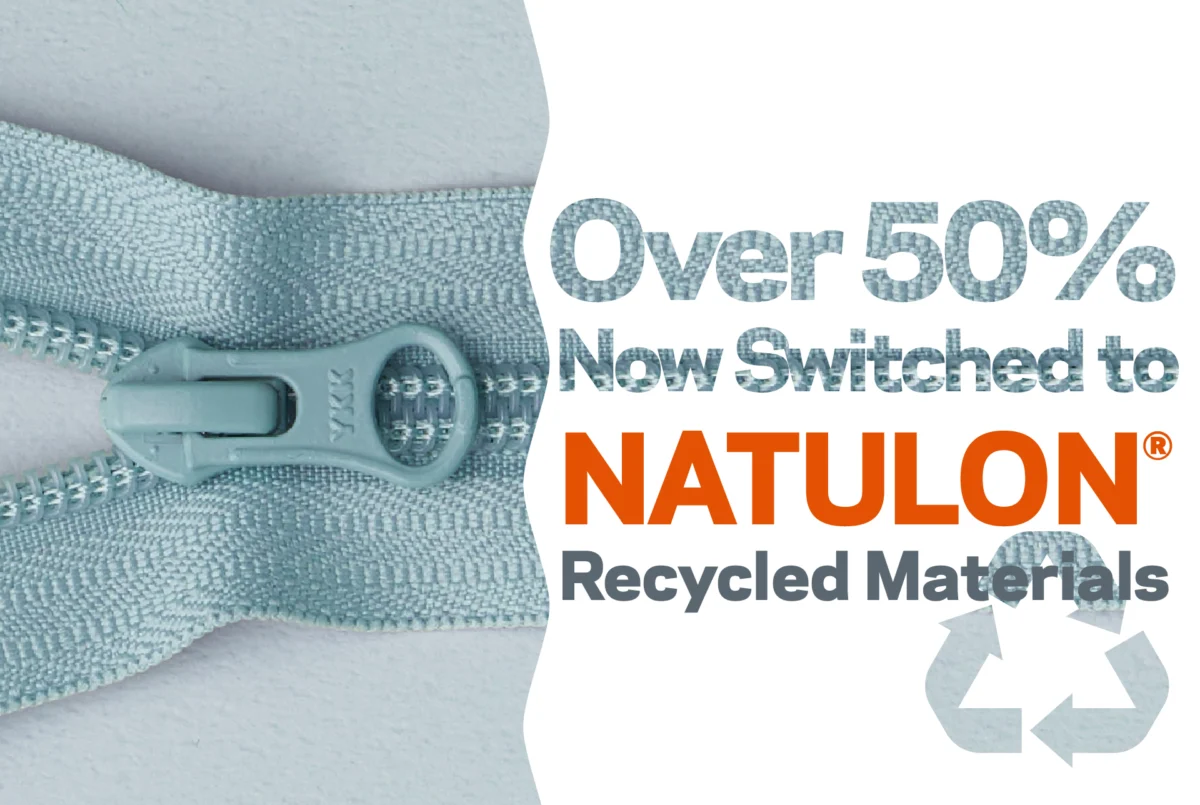
The headline achievement of FY2025 is undoubtedly the performance of the NATULON® zipper series. Having surged to account for 56% of YKK’s total global zipper sales volume—a staggering climb from just 3% in FY2019—the NATULON® line has evolved from an eco-conscious alternative into the backbone of YKK’s portfolio.
This growth is not merely a product of market demand but a result of a massive, systemic scaling of sustainable production. YKK has successfully integrated recycled polyester into its zipper tapes across its global manufacturing network, ensuring that the transition to circular materials does not compromise the rigorous quality, durability, and functionality that the brand is synonymous with. By maintaining high-volume production while simultaneously lowering the carbon footprint of its core components, YKK has effectively proven that circularity is scalable at an industrial level.
Chronology of Change: The Evolution of YKK’s Vision
To understand YKK’s current trajectory, one must look at the timeline of its commitment to the planet. The YKK Sustainability Vision 2050 was not a reactionary measure but a strategic evolution of the company’s "Cycle of Goodness" philosophy—a foundational principle that dictates that no enterprise can prosper without serving the society of which it is a part.
The Path to 2050:
- Pre-2019: Focus on incremental efficiency in production and initial experimentation with recycled materials.
- FY2019: The NATULON® series accounts for only 3% of global volume. R&D intensifies regarding mono-material construction.
- FY2022–2023: YKK begins to receive consistent global recognition for its climate efforts, including inclusion in the CDP Climate Change "A List."
- FY2025: A watershed year. NATULON® hits the 56% milestone. The company introduces the Circular Design Special Award, institutionalizing the mentorship of the next generation of fashion designers.
- Looking Forward (2026–2050): The company moves toward deeper decarbonization, including aggressive targets for renewable energy procurement and the refinement of repairable, modular fastening components.
Engineering the Circular Economy: Product-Level Innovation
Beyond the impressive sales statistics, This is YKK 2026 provides a detailed look at the engineering innovations that are facilitating a shift toward a "cradle-to-cradle" approach. The design philosophy is currently shifting toward two primary objectives: modularity for repair and material purity for recycling.
The Rise of Mono-Materiality
One of the most significant challenges in textile recycling is the "contamination" of garments by mixed materials. If a jacket is made of polyester but contains a metal or mixed-plastic zipper, the entire garment is difficult to process through mechanical or chemical recycling. YKK’s development of the NATULON Plus® Fiber Sourced™ Zipper aims to mitigate this. By utilizing fiber-derived recycled PET in specified components and striving for a mono-material structure, YKK is enabling garments to be processed in their entirety, significantly increasing the potential for textile-to-textile recycling.
Repair as a Strategy
Recognizing that the most sustainable garment is the one that stays in use longer, YKK has expanded its portfolio of "revived renewal components." These are engineered to allow for the replacement of damaged zipper elements without necessitating the complete removal and replacement of the entire zipper tape—a process that often damages the fabric of the garment. This focus on repairability recently earned the company an iF DESIGN AWARD 2026 for its Revived Replacement Elements for VISLON® zippers.
Official Perspectives: The Leadership Mandate
Koichi Matsushima, President of YKK Corporation, acknowledges that while these achievements are significant, they represent only the beginning of a long-term transformation. In his message accompanying the report, Matsushima emphasized the dual nature of the company’s progress:
"Since formulating the YKK Sustainability Vision 2050, we have continued to advance initiatives under its five themes. In FY2025, YKK was named to CDP’s Climate Change ‘A List’ for the third consecutive year… these results demonstrate progress while underscoring the work ahead, including further reductions in CO2 emissions and expanded use of renewable energy."
Matsushima’s statement highlights a critical theme within the report: the humility of a global leader that understands its role as a steward of environmental health. By securing a spot on the CDP’s "A List" for three consecutive years, YKK has established a level of transparency and accountability that serves as a benchmark for the broader manufacturing sector. The leadership’s focus now turns to the "difficult work" of decarbonizing scope 3 emissions—those that occur throughout the value chain—and scaling renewable energy infrastructure across their global factories.
Fostering the Next Generation of Circularity
YKK’s influence extends beyond its own factories and into the design studios of the future. The company recognizes that sustainable manufacturing is only half the battle; the other half is circular design. To address this, YKK introduced the Circular Design Special Award in FY2025, marking the 25th anniversary of the YKK Fastening Awards.
The inaugural recipient, Kanade Konno of Bunka Fashion College, was honored for her project "Re Tree," a concept that ingeniously utilizes zippers to facilitate the easy disassembly and repair of garments. By incentivizing young designers to think about the "end-of-life" of a garment at the "start-of-life" design phase, YKK is cultivating a design ecosystem that views fastenings not as permanent fixtures, but as gateways to longevity and recyclability.
Implications for the Global Apparel Industry
The data presented in This is YKK 2026 has profound implications for the apparel industry at large. As brands and retailers face tightening regulations regarding extended producer responsibility (EPR) and environmental disclosure, the availability of high-quality, circular fastening solutions becomes a strategic necessity.
- Supply Chain Resiliency: YKK’s successful scaling of NATULON® proves that sustainable supply chains do not require a sacrifice in product reliability.
- Regulatory Compliance: As the EU and other jurisdictions move toward mandatory textile recycling targets, YKK’s emphasis on mono-material components provides its clients with a ready-made solution to meet these upcoming compliance hurdles.
- The Shift to Repair: The industry’s pivot toward "repair-as-a-service" models will be heavily supported by YKK’s investment in revival components, potentially turning a cost-center (repairs) into a brand-loyalty driver for fashion retailers.
A Data-Driven Future
For stakeholders interested in the granular details of this transition, the report is accompanied by a comprehensive Data Book. This document provides the transparency needed to track YKK’s performance on ESG (Environmental, Social, and Governance) metrics, from water usage per kilogram of product to the specific energy mix powering their facilities.
As YKK moves toward 2026 and beyond, the company’s trajectory is clear: the focus will remain on the intersection of technical excellence and planetary responsibility. The report suggests that the company is not merely waiting for the market to demand sustainability; it is actively creating the tools, the infrastructure, and the design talent to ensure that the circular economy becomes the only viable way forward for the textile industry.
For those tracking the pulse of global manufacturing, This is YKK 2026 is more than a summary of numbers—it is a testament to how a legacy company can reinvent its purpose in a rapidly changing world. The full report, along with its detailed ESG disclosures, can be accessed through the YKK official website.