The opinions expressed by expert contributors are their own and do not necessarily reflect the official positions of Trellis or its affiliates.
For nearly a decade and a half, the landscape of packaging recyclability has remained largely stagnant, governed by outdated standards that often confused more than they clarified. However, as of October 4, the regulatory environment is shifting dramatically. California’s “Truth in Labeling” law, formally known as Senate Bill (SB) 343, has arrived, setting a rigorous new standard for what can legally be labeled as “recyclable” within the state.
For consumer-packaged goods (CPG) companies and manufacturers, this shift is not merely a bureaucratic hurdle; it represents a fundamental change in how products must be presented to the end user. As the industry grapples with the transition, the tension between legal compliance and consumer communication has reached a boiling point.
The Main Facts: Defining the 60 Percent Threshold
At the heart of SB 343 is a mandate for empirical accuracy. Under the new law, a product cannot be labeled with the ubiquitous “chasing arrows” symbol or otherwise described as recyclable unless it meets a strict, data-driven threshold. Specifically, the packaging must be:
- Widely Collected: It must be collected in at least 60 percent of California communities.
- Successfully Sorted: It must be demonstrated that the material is actually sorted into defined streams for recycling in at least 60 percent of the state’s recycling facilities.
These requirements aim to eliminate "wish-cycling"—the practice of placing non-recyclable materials in blue bins under the assumption that they might be processed. By tethering the definition of "recyclable" to infrastructure reality, California is forcing a synchronization between marketing claims and actual waste management capabilities.
Chronology: A Long Road to Enforcement
The path to the implementation of SB 343 has been paved with legislative maneuvering and legal resistance.
- 2021: SB 343 was signed into law, signaling a departure from previous, more lenient labeling standards that allowed the use of the resin identification code (the number inside the chasing arrows) to be misinterpreted by consumers as a signal of recyclability.
- 2023–2024: As the deadline for enforcement approached, the packaging industry expressed significant concern regarding the feasibility of these mandates. Trade groups argued that the law’s requirements were overly prescriptive and placed an undue burden on manufacturers to track municipal infrastructure data that is constantly in flux.
- Mid-2024: Several industry coalitions initiated legal challenges, arguing that the legislation restricted free speech by effectively banning the use of certain recycling symbols on products that didn’t meet the 60 percent threshold.
- October 4, 2024: The legislation officially takes effect, creating a landscape of "enforcement uncertainty." While the law is technically active, the mechanics of how the state will monitor and penalize non-compliance remain a subject of intense debate among legal experts and industry stakeholders.
Supporting Data: What Consumers Actually Want
Despite the legal maneuvering between industry lobbyists and legislative bodies, the most critical stakeholder—the consumer—has been largely sidelined in the debate. Recent research from the Sustainable Packaging Coalition (SPC) sheds light on a crucial disconnect: while companies worry about the legal costs of compliance, consumers are signaling a desperate need for simplicity.
In a survey of 1,000 U.S. consumers regarding North America’s most common recyclability labels, the SPC found that:
- 66% of Americans report that they recycle "often" or "always."
- The primary barrier to entry is not a lack of intent, but a lack of information. When individuals do not recycle, it is predominantly because they are either unsure if an item is recyclable or they lack convenient access to infrastructure.
- The "Judgment Gap": More than 50% of consumers rely on their own "best judgment" when disposing of packaging. This means that at the moment of disposal, they are not looking for complex codes; they are making a split-second decision based on visual cues.
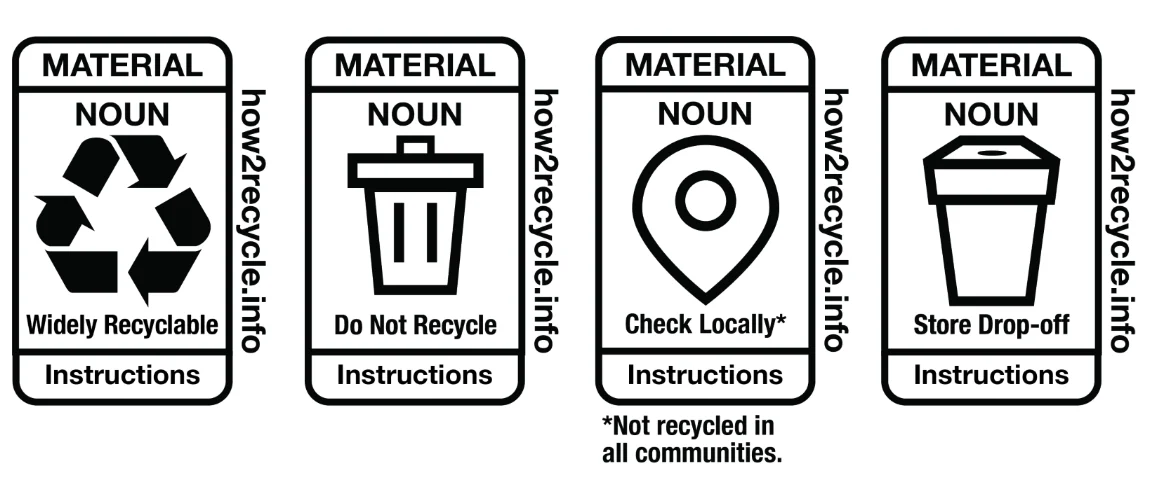
- Symbol Recognition: 84% of consumers recognize at least one of the labels within the How2Recycle program, suggesting that established, clear labeling systems are already highly effective at capturing consumer attention.
Official Responses and Industry Stance
The response from the industry has been bifurcated. On one side, packaging trade groups maintain that the state is overstepping, potentially creating a "patchwork" of regulations that makes national distribution nearly impossible. Their argument hinges on the idea that manufacturers cannot be expected to constantly recalibrate their packaging designs to match the fluctuating collection rates of individual municipalities.

Conversely, environmental advocacy groups and the SPC argue that the law is a necessary corrective measure. They contend that for too long, the “chasing arrows” symbol has been used as a marketing tool to imply sustainability without the infrastructure to back it up. By forcing brands to substantiate their claims, the law incentivizes the adoption of packaging materials that are actually compatible with modern, high-tech sorting facilities.
Implications: The Three Pillars of Compliance
For brands seeking to navigate this new regulatory landscape without alienating their customer base, the path forward involves three strategic pillars:
1. Address Persistent Knowledge Gaps
Brands must acknowledge that their consumers are active participants in the circular economy, even if they lack technical expertise. Educational campaigns are no longer "nice to have"; they are a core component of the product experience. By providing clear, actionable information—not just on the package but through QR codes or website resources—brands can demystify the disposal process and bridge the trust gap.
2. Design for Both Compliance and Comprehension
The research is clear: simple text and intuitive visual cues outperform complex symbols. Labels should move away from vague, potentially misleading icons and toward explicit instructions. Programs like How2Recycle have already paved the way by aligning their messaging with the 60 percent threshold. Utilizing these established frameworks ensures that when a package says "Widely Recyclable," it is backed by verifiable data, shielding the company from litigation while providing the consumer with the clarity they crave.
3. Master the Nuance of Material-Specific Disposal
Not every piece of packaging is destined for the curbside bin. Many materials—such as flexible films—require store drop-off programs. Our research shows that while consumers understand these labels, they are often lost when it comes to the "how" and "where" of disposal. Brands should focus on providing localized tools, such as store locators, to help consumers navigate the end-of-life process for specialized materials.
Looking Ahead: The Future of Labeling
As California moves forward with SB 343, the rest of the nation is watching. Historically, California’s environmental policies have served as a bellwether for national standards. If the "Truth in Labeling" law proves successful in increasing the purity of recycling streams and reducing consumer confusion, it is highly probable that other states will move to adopt similar legislation.
For the CPG industry, the lesson is clear: the era of ambiguous environmental claims is ending. Regulatory uncertainty is the new baseline, but it does not have to be an impediment to progress. The companies that will thrive in this environment are those that stop viewing compliance as a hurdle and start viewing it as a catalyst for better consumer communication.
Ultimately, the goal of recycling is to ensure that materials remain in the loop and out of the landfill. By aligning labeling strategies with the physical realities of the recycling system, brands can do more than just follow the law—they can empower their customers to be active, informed participants in a more sustainable future. The debate between industry and advocacy may continue in the courtroom, but the final verdict will be delivered by the consumer, standing at the bin, looking for a clear, honest answer.