Executive Summary: Bridging the Gap in Renewable Innovation
The U.S. Department of Energy’s (DOE) Hydropower and Hydrokinetic Office (H2O) has officially selected 14 hydropower projects to enter negotiations for technical support vouchers. This initiative, facilitated through the Hydropower Testing Network (HyTN), represents a strategic push by the federal government to modernize one of the nation’s most reliable, yet aging, renewable energy assets. By connecting private-sector innovators with elite national laboratory and university-based testing facilities, the DOE aims to compress the timeline for bringing next-generation hydropower technologies to commercial viability.
As the U.S. grapples with an unprecedented surge in electricity demand—driven by the electrification of transportation, the proliferation of data centers, and industrial re-shoring—hydropower is being re-evaluated not just as a baseload source, but as a critical stabilizer for an increasingly intermittent grid.
The Role of HyTN: A Catalyst for Technical Readiness
The Hydropower Testing Network acts as a "one-stop-shop" for developers, providing access to over 65 specialized physical testing and modeling capabilities. These range from high-velocity hydraulic flumes and biological impact assessments to sophisticated techno-economic modeling.
For many startups and smaller engineering firms, the barrier to entry in the hydropower sector is the prohibitive cost of physical infrastructure required to validate performance. By providing in-kind support, the DOE removes these capital-intensive hurdles, allowing developers to focus on iterating their designs. According to H2O Director Nichole Fitzgerald, the initiative is a force multiplier for domestic energy security. "By pairing industry innovators with leading U.S. test facilities and technical expertise, HyTN accelerates the development of next-generation technologies that keep hydropower reliable and abundant," Fitzgerald noted.
Chronology of the Initiative
The current selection marks the second major cohort for the HyTN program, following a successful pilot phase.
- June 2024: The DOE’s Water Power Technologies Office (WPTO) officially launched the first phase of the HyTN, focusing on the identification and vetting of testing facilities capable of meeting the rigorous demands of the hydropower sector.
- Early 2025: The program reached its first major milestone with the selection of 12 technology developers to receive initial testing support. This cohort focused on foundational innovations in turbine design and environmental monitoring.
- October 2026: The current expansion sees 14 new projects entering negotiations. This second round represents a broader spectrum of innovation, including modular hydropower and advanced materials testing.
The program is managed through a collaborative partnership between the DOE, the Office of Technology Commercialization, and ENERGYWERX, utilizing a partnership intermediary agreement designed to streamline federal bureaucracy and facilitate faster public-private collaboration.
Supporting Data: Why Hydropower Matters
Hydropower currently accounts for approximately 6% of the total utility-scale electricity generation in the United States. However, its importance transcends its raw percentage of the energy mix.

The Reliability Factor
Unlike solar and wind, which are variable, hydropower provides consistent, dispatchable power. It serves as the "battery" of the American grid, offering essential ancillary services such as frequency regulation, black-start capabilities, and grid inertia.
The Modernization Imperative
Much of the U.S. hydropower fleet was built in the mid-20th century. While these structures remain robust, the electro-mechanical components—turbines, generators, and governors—are often outdated. The DOE estimates that retrofitting existing dams with modern, high-efficiency turbines could increase output by significant margins without the environmental footprint of building new dams.
Furthermore, the integration of "hydrokinetic" technologies—which capture energy from ocean waves, tides, and river currents—promises to unlock vast, untapped energy potentials that do not require the traditional dam-and-reservoir infrastructure.
Official Perspectives: Industry and Government Synergy
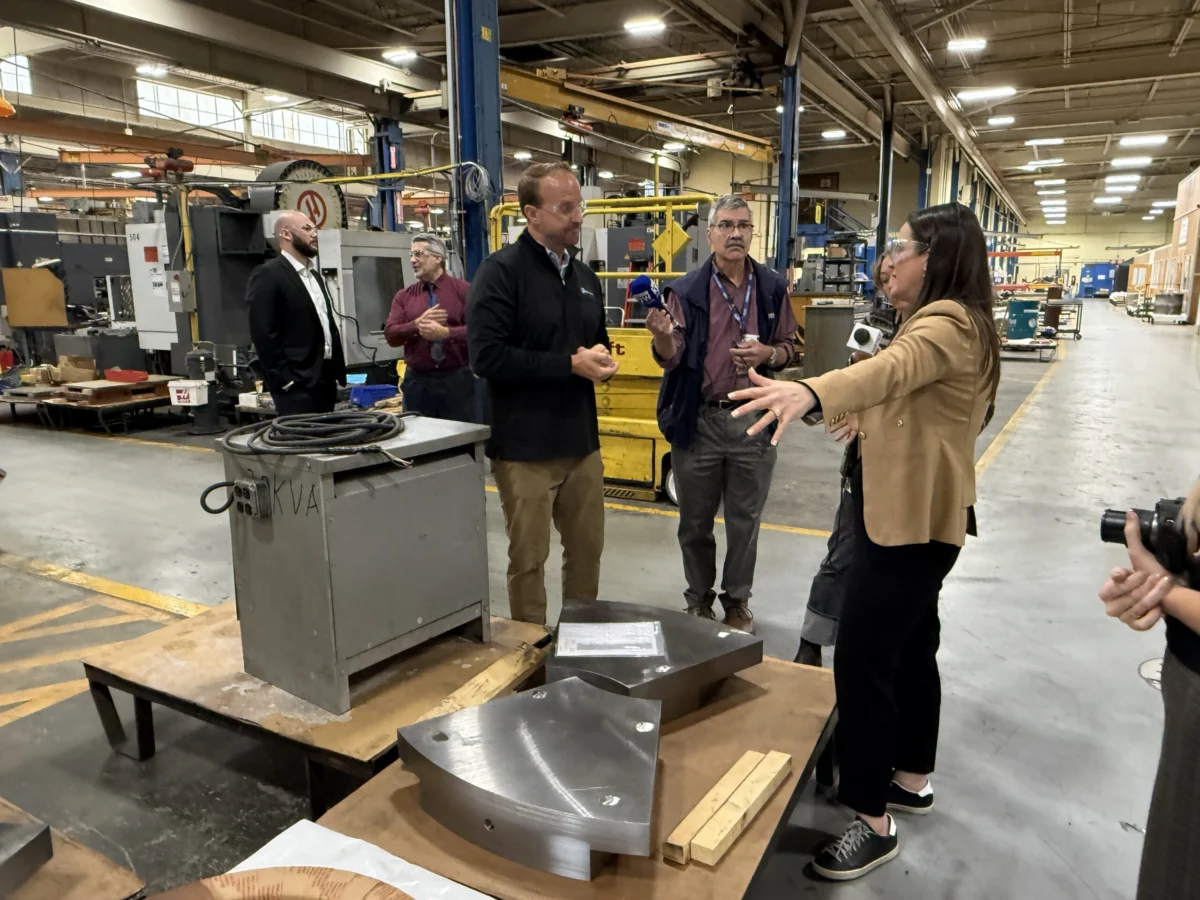
During a recent visit to the Kingsbury facility, Assistant Secretary of Energy Audrey Robertson underscored the importance of this public-private alignment. The visit served as a symbolic bridge between legacy expertise and future-forward engineering.
"For more than a century, Kingsbury technology has supported hydropower generation across North America," said Mike Brawley, President and CEO of Kingsbury. "We are proud to continue collaborating with Oak Ridge National Laboratory and the Department of Energy on research that can help improve the reliability and longevity of critical hydropower equipment."
This sentiment reflects the broader goal of the HyTN: to ensure that the U.S. does not lose its industrial edge in heavy engineering while pivoting toward a decarbonized economy. By embedding federal research capabilities into the commercial development pipeline, the DOE is fostering an ecosystem where failure is contained within a testing environment, and success leads directly to deployment.
Implications for the Future Grid
The implications of the HyTN program reach far beyond the 26 total projects supported to date. The program is fundamentally shifting how the U.S. views its water resources.

1. Driving Down Energy Costs
The DOE contends that by improving the efficiency of existing plants through better modeling and testing, the operational costs of hydropower will drop. As these plants become more efficient, the cost-per-megawatt-hour is expected to decrease, helping to mitigate the rising energy prices currently being felt across the American industrial and residential landscape.
2. Addressing the "Capacity Cliff"
The grid is currently facing a precarious moment. As coal and aging gas plants retire, grid operators are looking for stable, carbon-free alternatives. As highlighted in recent industry discussions, such as the Factor This! Policycast regarding PJM’s energy emergency, the grid needs dispatchable resources that can fill the gap left by retiring fossil fuel plants. Hydropower, modernized through HyTN-supported tech, is the most viable candidate to provide that stability.
3. Fostering a Domestic Supply Chain
By utilizing domestic testing facilities—such as those at Oak Ridge and other national labs—the program ensures that the intellectual property and engineering breakthroughs remain within the U.S. This is vital for national security, as the global race for clean energy dominance intensifies.
Conclusion: A Long-Term Vision for Water Power
The selection of these 14 projects is a milestone in a larger, multi-year strategy. The HyTN is not just a funding mechanism; it is a collaborative platform designed to de-risk innovation. As the U.S. continues to navigate the complexities of a 21st-century energy transition, the lessons learned through these vouchers—from turbine blade durability to fish-passage technology—will serve as the blueprint for a modernized, reliable, and sustainable power grid.
The path forward will require continued investment, both from the federal government and the private sector. However, with the current trajectory of the HyTN program, the outlook for American hydropower is increasingly optimistic. By leveraging over 100 years of mechanical expertise and blending it with modern digital modeling and AI-driven analysis, the U.S. is positioning itself to lead the global evolution of water-based energy.
As negotiations conclude for these 14 projects, the industry will be watching closely to see which innovations move from the test flume to the river. One thing is certain: the future of American energy will be built on the steady, reliable foundation of water.