The digital commerce landscape has undergone a seismic shift. According to the sixth annual eCommerce Trends Report—which aggregates data from 300 business owners representing $3.5 billion in combined revenue—the "playbook" that defined success for the last decade is no longer just outdated; in many cases, it is actively detrimental to growth.
Produced by the eComFuel community and the Operators Network, this year’s report serves as a reality check for founders and investors alike. From the surprising resilience of paid traffic to the disappointing ROI of current AI implementations, the data suggests that the next generation of successful brands will be defined by extreme operational leanness rather than reckless expansion.
The Core Findings: A Paradigm Shift
The report dismantles several pillars of modern eCommerce dogma. For years, founders were told to minimize reliance on paid advertising, treat Amazon as a growth engine, invest heavily in AI tools, and own their own warehouse infrastructure to ensure quality control.
The data suggests the opposite. The most profitable businesses today are those that have embraced paid traffic as a primary lever, moved away from Amazon-centric models, prioritized financial literacy over technological bloat, and adopted a "lean-at-all-costs" operational philosophy.
Part 1: Deconstructing the Modern Blueprint
The Paid Traffic Paradox
For years, the industry narrative has warned that heavy dependence on paid traffic creates a "margin trap." The data from 2026 suggests this is a fallacy.
Surprisingly, stores that lean the hardest into paid traffic are not just surviving; they are thriving. These high-intensity advertisers are growing net income at a rate of 71.7%, compared to just 18% for those who shy away from paid channels. The secret, according to the report, is not an elite Return on Ad Spend (ROAS)—the winning brands actually average a modest 2.5x ROAS, well below the industry-wide average of 4.0x.
Instead, the competitive advantage lies in the P&L structure. These brands maintain superior gross margins (63.7%) and keep overhead ultra-low (16.6%). The lesson is clear: if your business model supports paid ads as a foundational line item, you don’t need a viral ad campaign to win; you need a lean, high-margin foundation that allows you to outbid competitors who have higher overheads.
The Decline of the Amazon Empire
Amazon, once the undisputed titan of growth, is showing signs of long-term fatigue. Its share of revenue within the surveyed group has plummeted to 20.1%—a level not seen since 2017. While 63% of operators still maintain a presence on the platform, it has shifted from a primary engine of growth to a secondary, often begrudged, channel.
DTC-first brands are outperforming their Amazon-reliant counterparts by nearly 65% in revenue growth. Perhaps more telling is the sentiment: 91% of DTC-first operators report satisfaction with their model, while only 17% express positive feelings toward Amazon. For the next generation of founders, the message is clear: build your own house, or you will forever be a tenant in Amazon’s ecosystem.
The AI ROI Gap
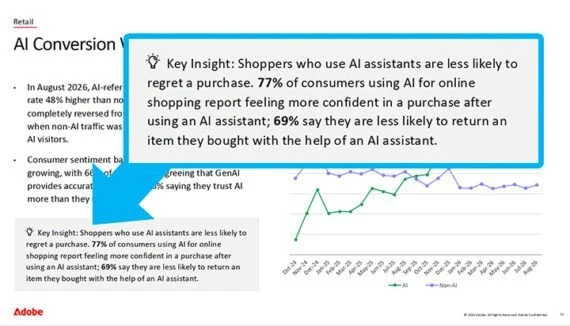
Artificial Intelligence is the most discussed topic in tech, and 72% of store owners have already integrated AI into their workflows. However, the financial data provides a sobering reality check.
Revenue growth for AI adopters is virtually identical to non-adopters, and non-adopters are actually seeing faster net income growth (55.3% vs. 32.7%). The issue is not the technology itself—which is evolving rapidly—but the "complexity tax." The time, capital, and mental bandwidth required to integrate, maintain, and stay current with AI tools currently outweigh the direct financial benefits. While the long-term potential for AI is immense, the current "gold rush" is consuming resources without delivering a commensurate bottom-line impact.

The Warehouse Myth
The traditional scale-up strategy involved buying a warehouse and hiring a large team. The 2026 data identifies this as a "growth anchor." Stores that own their own warehouses recorded a dismal revenue growth rate of 3.9%, compared to 33.5% for those who lease and 22.2% for those who outsource fulfillment entirely.
Furthermore, remote-first teams are vastly more efficient, boasting nearly double the median revenue per employee ($1.25M vs. $583K). By offloading the logistical burden, operators free up capital to focus on product and marketing—the true drivers of modern success.
Part 2: The Macroeconomic Landscape
The Manufacturing Pivot
Proprietary product manufacturing has become the primary defensive moat. The percentage of store owners manufacturing their own products has jumped by 50% in the last three years. In an era where "me-too" products are being commoditized by international competitors and rising ad costs, owning the product lifecycle provides the necessary margin buffer to compete.
The Tariff Absorption
When faced with tariff pressures, brands have largely chosen to protect their market share rather than pass costs to consumers. 58% of the tariff impact has been absorbed as a direct hit to margins, with 40% of U.S. brands refusing to raise prices at all. This highlights the intense pressure on mid-market brands to remain competitive in a landscape where consumers are increasingly price-sensitive.
The Power of Financial Intelligence
Perhaps the most underrated factor in business longevity is financial literacy. The study indicates a direct correlation between an owner’s self-rated financial expertise and the business’s profitability.
Founders who rated themselves as "masters" of their finances saw 37% higher net margins and had more than double the financial runway (109 months vs. 48 months) compared to those with lower financial fluency. In a year defined by high interest rates and operational complexity, the ability to read a P&L is more valuable than the ability to run a Facebook ad.
Implications for 2026 and Beyond
Capital Extraction: The "Small Distribution" Sweet Spot
The data highlights a "sweet spot" for founders: taking a modest salary combined with small, consistent distributions. Contrary to the "reinvest everything" growth-at-all-costs philosophy, this approach resulted in the highest net income growth (45.3%) and the highest levels of founder "hopefulness." Small, regular payouts encourage operational discipline, provide a hedge against risk, and keep founders focused on long-term sustainability rather than just vanity metrics.
Looking Ahead: An Optimistic, Lean Future
Despite the challenges of tariff-related margin compression and the ongoing AI learning curve, 80% of business owners remain optimistic. The roadmap for 2026 is simple:
- Prioritize Lean Operations: Minimize fixed overhead and inventory burdens.
- Double Down on Product: Manufacturing unique, proprietary goods is the only way to avoid the "me-too" death spiral.
- Master the Finances: Financial literacy is a tangible, measurable competitive advantage.
- Iterate, Don’t Overhaul: Use AI for specific tasks rather than wholesale operational shifts, and keep a watchful eye on the true ROI of every software investment.
The 2026 Trends Report serves as a definitive reminder that in a rapidly changing world, the most agile and financially disciplined operators are the ones who survive the cycles. The era of reckless growth is over; the era of surgical, high-margin efficiency has arrived.
For more in-depth benchmarking and access to the full 55-page study, visit the eComFuel community.