
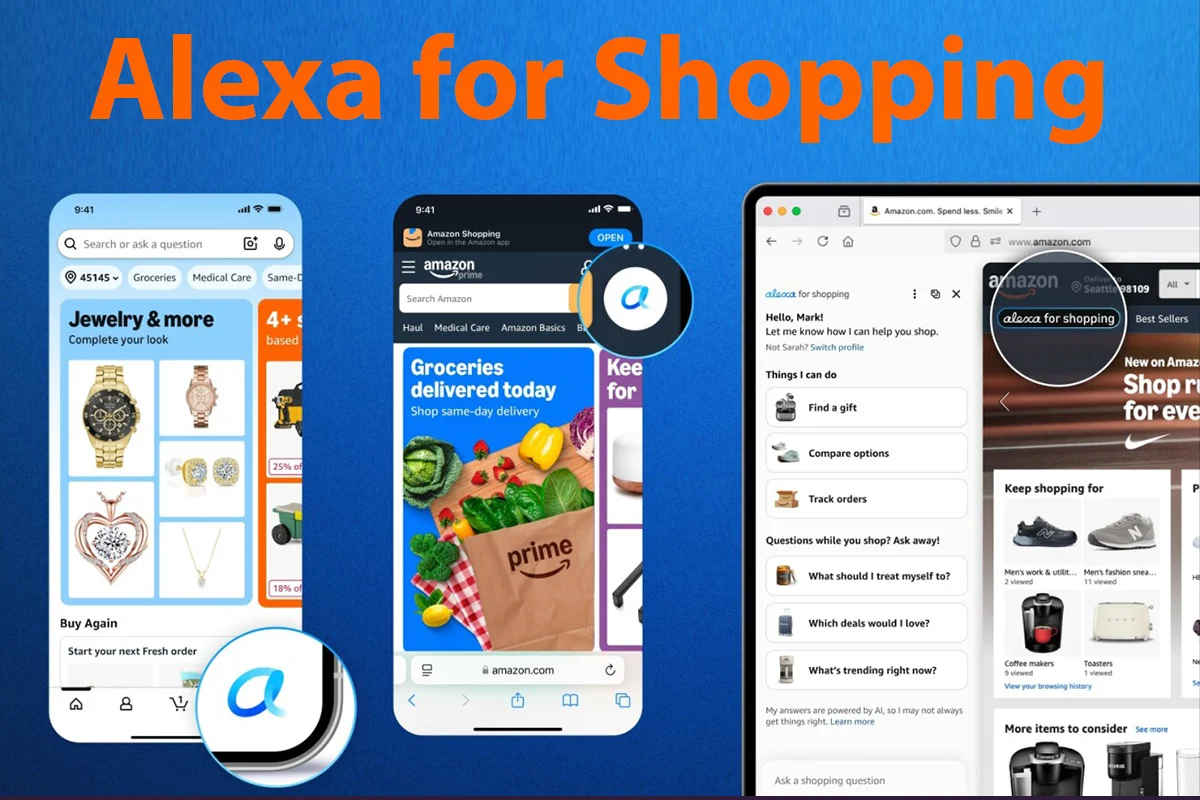
In a landmark shift for the digital marketplace, Amazon has officially unveiled Alexa for Shopping, a unified, highly personalized AI assistant designed to transform how consumers interact with the world’s largest online store. By converging the specialized product expertise of "Rufus"—Amazon’s generative AI shopping assistant—with the pervasive, context-aware utility of "Alexa+," the retail giant is setting a new standard for agentic commerce.
This integration is not merely a feature update; it represents a fundamental change in the shopping journey. By synthesizing data from Amazon’s vast product catalog with the personal preferences and behavioral history of its millions of users, Alexa for Shopping aims to move beyond simple search queries to offer a truly conversational, anticipatory, and helpful shopping companion.
The Convergence: Defining the New AI Ecosystem
At its core, Alexa for Shopping is built upon the backbone of sophisticated large language models (LLMs). According to industry experts and internal disclosures, the platform leverages the power of Anthropic’s Claude alongside Amazon’s own proprietary "Nova" model. This hybrid architecture allows the system to process complex consumer intent while maintaining the speed and security required for real-time transactional environments.
What is Alexa for Shopping?
The service is a cross-platform interface available to U.S. customers via the Amazon Shopping app, the Amazon website, and Echo Show devices. Its primary function is to act as a bridge between the user’s daily life—managed by the existing Alexa+ ecosystem—and their commercial needs on Amazon.
By breaking down the silos between these services, Amazon has created a feedback loop where, for example, your household’s dietary preferences shared with Alexa in the kitchen directly influence the product recommendations you see when browsing for groceries on the Amazon app.
Chronology of a Retail Evolution
To understand the magnitude of this launch, one must look at the rapid technological trajectory Amazon has followed over the past 24 months:
- Early 2025: Amazon introduces "Rufus" to the general public. Designed as an expert shopping assistant, Rufus begins helping over 300 million customers research, compare, and discover products at competitive price points.
- Mid-2025: The maturity of Alexa+ reaches a critical mass, with the service becoming an indispensable tool for smart home management, reservations, and personal coordination across hundreds of millions of devices.
- Late 2025: Amazon begins testing the integration of "agentic" capabilities, allowing AI to perform actions rather than just providing information—such as tracking prices and executing purchases at specific user-defined price points.
- 2026 (Present): The formal launch of "Alexa for Shopping" marks the merger of these two giants. The system is now fully multimodal, allowing for voice, touch, and visual input, particularly on devices like the Echo Show.
Supporting Data: Why This Matters to the Market
The scale of this operation is unprecedented. With over 300 million active users engaging with Rufus for product discovery and the ubiquitous nature of Alexa+ across smart devices, Amazon is capturing a massive volume of consumer intent data.
The Power of "Agentic" Commerce
Industry thought leader Scot Wingo of ReFiBuy has highlighted that we are entering the era of "Agentic Commerce." In a recent interview, Wingo emphasized that for retailers and brands, optimizing for these AI assistants is no longer optional.
The importance of the underlying LLMs—specifically the synergy between Claude and Nova—cannot be overstated. As the AI becomes more "agentic," it stops functioning as a search engine and begins functioning as a procurement agent. For instance, if a user tasks the assistant with "finding the best blender under $150 that is compatible with my current kitchen setup," the AI is now capable of cross-referencing:
- Product Specs: The technical details of the blenders available on the marketplace.
- Contextual Data: The user’s past purchase history and household inventory.
- Real-Time Market Data: Current pricing, discounts, and delivery timelines.
Retailers who fail to optimize their product metadata, imagery, and video content for these AI agents risk becoming invisible in this new, conversational interface.
Official Perspectives and Technical Underpinnings
Amazon’s strategy is clearly focused on "frictionless utility." By ensuring that conversations and preferences flow in both directions, the company is creating a "flywheel" effect. The more you use Alexa to manage your home, the more intelligent your shopping experience becomes. The more you shop on Amazon, the better Alexa becomes at assisting you with non-shopping tasks, such as reordering essentials or providing guidance on product maintenance.
The Role of Multimodality
A key differentiator for Alexa for Shopping is its presence on the Echo Show. Unlike standard chatbots that rely on text, the Echo Show allows for a rich, visual shopping experience. Customers can browse aisles, view product videos, and finalize purchases using a blend of voice commands and touch gestures. This versatility caters to both the "quick reorder" user and the "deliberate researcher" who wants to compare features in detail.
Implications: The Retail Landscape Reimagined
The rollout of Alexa for Shopping carries profound implications for the retail sector, ranging from small-business owners to massive enterprise brands.
1. The Death of the Static Search Bar?
While the search bar will remain, the primary mode of interaction is shifting toward natural language. Consumers are increasingly bypassing traditional category pages in favor of direct queries. This means that brands must focus on "conversational SEO"—ensuring their products appear as relevant, context-aware answers to user queries rather than just keywords in a search results page.
2. The Rise of "Target-Price" Shopping
One of the most disruptive features of the new assistant is its ability to track prices and execute purchases at a user’s target price. This places immense pressure on dynamic pricing strategies. Retailers will need to manage their automated pricing models more carefully to avoid being undercut by AI agents that are programmed to find the absolute best value for the consumer.
3. Cross-Platform Integration
Alexa for Shopping is not restricted to the Amazon ecosystem. The system is designed to provide guidance for shopping from other online stores across the web. While Amazon remains the primary marketplace, the AI’s ability to act as a general-purpose shopping agent increases its value to the consumer, making it a "sticky" utility that users will rely on for all their purchasing needs, not just those on Amazon.com.
4. A New Paradigm for Customer Loyalty
Loyalty is no longer just about points or subscriptions; it is about the "cognitive load" that the assistant takes off the user. By managing reorders, tracking shipments, and providing personalized recommendations based on deep historical context, Amazon is building a level of loyalty that is difficult for competitors to replicate.
Conclusion: Adapting to the AI-First Era
The introduction of Alexa for Shopping is a watershed moment in the history of e-commerce. It marks the transition from the "Search Era," defined by keywords and scrolling, to the "Agentic Era," defined by conversations and personal context.
For consumers, the benefits are clear: a more efficient, helpful, and personalized shopping experience that integrates seamlessly into their daily lives. For retailers, the path forward requires a fundamental rethink of their digital presence. Optimizing for Rufus and Alexa is not merely about adjusting keywords; it is about providing the granular, high-quality data that these AI models require to serve as effective shopping assistants.
As Amazon continues to refine these tools, the gap between traditional online retail and personalized, AI-driven procurement will only widen. Brands and retailers who embrace this shift, ensuring their products are discoverable and "understandable" by these new AI entities, will find themselves at the forefront of the next generation of commerce.
The future of shopping is here, and it is conversational, intuitive, and increasingly autonomous. Whether you are a casual shopper or a professional seller, the era of Alexa for Shopping is one that demands attention, adaptation, and an early start in mastering the mechanics of agentic commerce.


