By PYMNTS | July 25, 2026
Spain may have hoisted the trophy in a dramatic 1-0 extra-time victory over Argentina, but the 2026 FIFA World Cup delivered a far more significant, systemic victory for the global digital economy. Over the course of 39 days and 104 matches, the tournament functioned as the largest behavioral experiment in human history, proving that when billions of people are tethered to the same emotional pulse, the boundaries between physical attendance, digital engagement, and consumer spending dissolve entirely.
As the dust settles on the host cities across North America, the data is clear: the modern World Cup is no longer just a sporting event. It is a massive, multi-platform catalyst for e-commerce, mobility, logistics, and digital media, creating a "power user" generation that views a 266-mile ride-share trip or a midnight pizza delivery as standard match-day infrastructure.
The Anatomy of a Global Behavioral Experiment
The scale of the 2026 tournament was unprecedented. By the conclusion of the Round of 16, FIFA estimated that 5.2 billion people had interacted with the event. By the time the final whistle blew in New York, the organization’s digital channels had generated an eye-watering 34 billion impressions and two billion direct engagements.
This was the ultimate test of the "always-on" economy. The tournament forced a shift where the "second screen"—the smartphone or tablet used while watching the match—became the primary driver of commercial activity. From impulsive travel bookings to the rapid-fire purchasing of team kits, the tournament demonstrated that the global consumer is now permanently linked to the action through a complex web of apps, social platforms, and logistics networks.
Chronology of a Digital Surge
The tournament’s commercial impact followed a distinct trajectory, mirroring the intensity of the competition on the pitch.
- The Group Stage (The Engagement Explosion): Early matches served as the initial catalyst for digital traffic. FIFA reported 11 billion video views and 39 million new followers in the first few weeks alone. This phase established the habit loop: watch the match, check the highlights on TikTok, share the meme, and order the food.
- The Quarterfinals (The Peak Consumption): As the stakes rose, so did the financial commitments. This was the period where high-ticket items, such as merchandise and international travel, saw their most dramatic spikes.
- The Final Stretch (The Emergency Economy): The final between Spain and Argentina triggered a frenzy of last-minute logistics. When Argentina secured their spot in the final, the search for travel hit a breaking point. Data from Despegar showed a 6,000% surge in flight searches to New York within hours, with premium-priced emergency flights selling out before the next sunrise.
The Convergence of Media and Consumption
The "living room" experience has fundamentally changed. It is no longer a static environment; it is a hub for high-speed, multi-tab browsing. While linear television still holds massive sway—as evidenced by the 51.3 million people who tuned into Brazil versus Haiti via Globo—the growth of streaming platforms like CazéTV and dedicated YouTube channels for organizations like the BBC confirms that the future of broadcast is fragmented and highly interactive.
The BBC’s metrics provide a masterclass in this shift: while they averaged 9.7 million viewers for the final, their YouTube channel generated 100 million views, and their social media clips reached 2.55 billion. This isn’t just "watching"; it is a fragmented consumption model where the match is the anchor, but the highlights, the analysis, and the social commentary are the revenue-generating engines.
Supporting Data: By the Numbers
The commercial footprint of the 2026 World Cup can be summarized by the sheer volume of transactions it facilitated:
- Retail/Apparel: Nike saw national-team kit sales climb 2.5 times higher than at the same stage in 2022. Adidas, which outfitted both finalists, reported 250 million euros in World Cup-related product sales in Q1 alone, with projections for a similarly robust Q2.
- Mobility: Uber recorded fans from 122 different countries utilizing their platform during the tournament. One fan logged trips at 10 different venues across all three host nations, while another fan treated a 266-mile ride from Arlington to Houston as a standard commute.
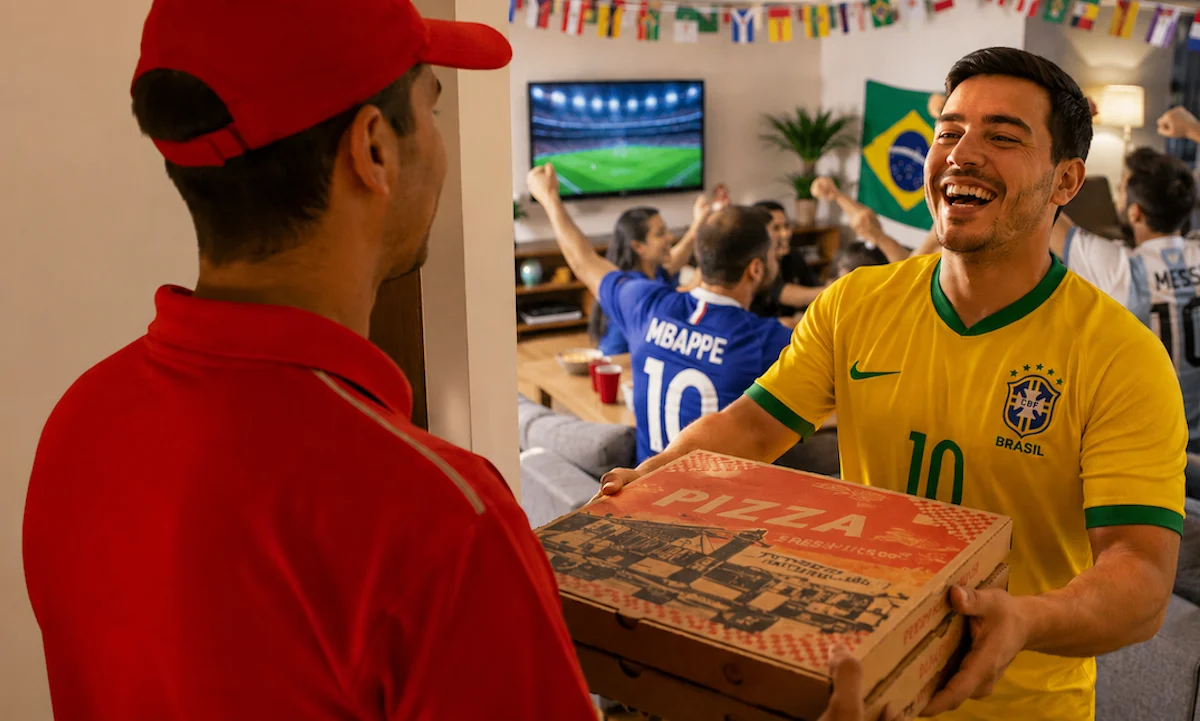
- The Snack Economy: The "midnight match" phenomenon in regions like India saw delivery platforms face unprecedented demand. One customer in Chandigarh placed a single order for finger foods totaling 16,444 rupees ($140). In Israel, Wolt reported a 20% increase in match-hour orders, with a specific 44% spike in ice cream sales.
- The "Ranch" Metric: Perhaps the most illustrative statistic of the tournament’s logistics impact was Uber’s report of over 10 million orders containing ranch dressing. This was followed by a convenience store "podium" of high-demand items: water, electrolytes, and Tylenol—the classic recovery kit for the modern, sleep-deprived fan.
Official Responses and Strategic Implications
FIFA President Gianni Infantino recently characterized the 2026 tournament as a record-breaking success, citing not just the attendance figures, but the unprecedented global reach enabled by digital infrastructure. For FIFA, the strategy was clear: leverage the passion of the fan base to build a permanent, year-round digital relationship.
"The tournament proved that the World Cup is the world’s most effective commercial laboratory," noted industry analysts at the tournament’s close. "FIFA, sponsors, and logistics providers have successfully integrated the fan journey from the couch to the stadium and back again."
The implications for brands are profound. The tournament proved that consumers are willing to bypass traditional constraints—such as distance, time zones, or high costs—to participate in a communal event. For the product managers and digital strategists, the fans who traveled hundreds of miles or spent thousands on last-minute flights are not just "superfans"; they are the "power users" of the future, whose behavior defines the limits of what a digital-first economy can extract.
The Future of Global Sporting Events
The 2026 World Cup has set a new benchmark for how global events are monetized. The lessons learned here will dictate the commercial strategy for the next decade of international sports.
- Hyper-Local Logistics: The success of food delivery and ride-share platforms shows that the "last mile" of the sporting experience is now as important as the game itself.
- Dynamic Pricing as an Expectation: The rapid adjustment of flight and service prices during the knockout stages was met with little resistance from fans, suggesting that during high-emotion events, the price-elasticity of demand shifts in favor of the service provider.
- The Multi-Screen Ecosystem: Brands that succeeded during the tournament were those that met the user across three or more digital touchpoints. The "first screen" provides the content, the "second screen" provides the context, and the "third screen" provides the commerce.
Conclusion: Beyond the Pitch
As Spain celebrates its title, the real legacy of the 2026 World Cup lies in the data logs of the platforms that powered it. A goal in this tournament was rarely just a goal; it was a notification, a stream, a social clip, an order for a pizza, or an urgent search for a flight.
The tournament redefined "too far" as merely a surge-pricing category and turned the global living room into a marketplace that never sleeps. The World Cup has ended, but the infrastructure built to support it—the digital habits formed, the loyalty programs joined, and the data harvested—will persist. For the digital economy, the game is only just beginning.