In a move that marks one of the most significant technological pivots in the history of the video game industry, Epic Games has officially embraced an "AI-first" development mandate for its high-profile partnership with The Walt Disney Company. According to a recent report by Bloomberg, the Unreal Engine developer is fundamentally restructuring its internal workflow, shifting away from traditional human-led programming and artistry in favor of generative artificial intelligence models.
This transition, which aims to replace hand-written code and manual asset creation with machine-generated outputs, has sent shockwaves through the gaming sector. As Epic attempts to modernize its pipeline, the ambitious $1.5 billion project—a sprawling, interconnected gaming universe featuring iconic Marvel and Star Wars intellectual property—has been delayed indefinitely.
The Genesis of a $1.5 Billion Vision
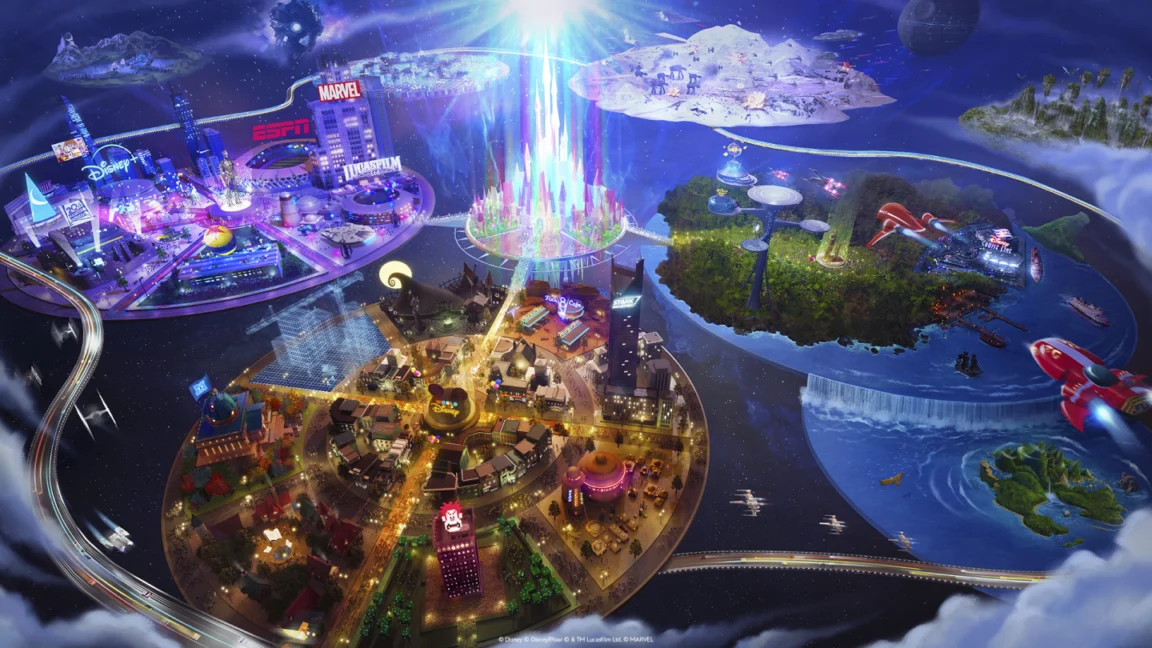
To understand the gravity of this shift, one must look back to February 2024, when Epic Games and Disney announced a historic partnership. Disney revealed a $1.5 billion investment in Epic, signaling an intention to create a massive, persistent, and open "gaming universe" that would serve as a digital sandbox for Disney’s expansive catalog of brands.
The project was initially framed as the "next big thing" in interactive entertainment, designed to function as an extension of the Fortnite ecosystem while standing as a premier destination for fans to play, watch, shop, and engage with content. For over a year, the industry watched with bated breath, expecting a March 2027 launch for a flagship shooter set within this shared reality. However, behind the scenes, the sheer scale of the undertaking—compounded by the technical complexity of integrating disparate intellectual properties into a single, seamless engine—appears to have hit critical bottlenecks.
Chronology: From Ambition to AI Acceleration
The trajectory of this project reveals a clear progression from traditional game development hurdles to a radical technological pivot:
- February 2024: Disney announces a $1.5 billion equity stake in Epic Games. The two companies commit to building a "persistent, open, and interoperable" gaming universe.
- Late 2024–Mid 2025: Development ramps up. Internal reports suggest the project faced significant logistical challenges in synchronizing the disparate creative teams of Marvel, Lucasfilm, and Epic.
- Early 2026: Development velocity slows. Understaffing and technical debt begin to plague the project timeline.
- October 2026: Bloomberg reports that Epic has hit an indefinite delay on the project, citing a forced shift to an "AI-first" development strategy to overcome productivity plateaus.
- Late October 2026: Epic leadership, including CEO Tim Sweeney, publicly confirms the strategy, emphasizing that the shift is designed for "maximum AI acceleration."
The Mechanics of the "AI-First" Mandate
The internal directive at Epic is unambiguous: developers are being instructed to stop writing code by hand. Instead, human staff are transitioning into "supervisory" roles, tasked with guiding AI models—specifically citing tools like Anthropic’s Claude—to generate the foundational architecture and aesthetic assets of the game.
According to internal communications reviewed by Bloomberg, the shift is absolute. The workflow now dictates that codebases and art assets are to be generated via full AI-led pipelines. This is not merely a pilot program or a supplementary tool; it is a total overhaul of the software development life cycle (SDLC).
The implication is a transformation of the "developer" role. Rather than acting as architects who meticulously script game logic, Epic’s engineers are becoming curators, prompters, and debuggers of AI-generated content. The objective is to utilize the speed of large language models (LLMs) and generative image/model tools to bypass the human bottleneck of manual iteration.
Official Responses and Strategic Rationale
The response from Epic Games has been a blend of corporate public relations and transparent, albeit controversial, leadership discourse.
An official spokesperson for Epic stated: "We’re embracing AI-accelerated development, led by Epic developers who are the visionaries and creative drivers for everything we do." This statement emphasizes the "human-in-the-loop" aspect of the transition, framing the AI as a force multiplier rather than a replacement.
However, CEO Tim Sweeney’s commentary on social media provided a more candid look at the company’s internal philosophy. Addressing the Bloomberg report, Sweeney wrote: "We have a huge pivot underway here at Epic, moving developers around to retool for maximum AI acceleration. The aim isn’t to do the same stuff with fewer people, but to enable everyone here to build MORE and BETTER stuff, and to bring the benefits to all teams using Unreal."
Sweeney’s messaging focuses on the scalability of the technology. By offloading the "grunt work" of code generation and asset modeling to AI, Epic believes it can solve the chronic issue of "development hell" that has plagued AAA gaming for the last decade.
Implications for the Industry
The shift at Epic Games is a watershed moment that will likely define the next decade of software development. The implications are multifaceted:
1. The Quality Control Crisis
The primary concern among industry analysts is the "black box" nature of AI code. When developers hand off the architecture of a $1.5 billion project to an LLM, the risk of technical debt and hidden, hard-to-trace bugs increases exponentially. If the AI hallucinates or produces inefficient code, the debugging process could potentially take longer than the original manual creation would have.
2. The Transformation of Labor
This pivot signals a potential contraction in demand for entry-level programming and junior art roles. If "no more hand-written code" becomes an industry standard, the apprenticeship model of gaming—where junior developers learn the ropes by writing basic scripts—could vanish. The industry may find itself with an abundance of "AI managers" but a scarcity of individuals who actually understand how the engine functions at a low level.
3. Unreal Engine’s Competitive Edge
By "eating their own dog food," Epic is effectively turning the entire Disney project into a massive test bed for AI-integrated tools within Unreal Engine. If successful, Epic will likely package these AI-first workflows into a future version of Unreal, effectively forcing the rest of the industry to adopt similar AI-first strategies to remain competitive.
4. Creative Homogenization
There is a palpable fear that an AI-led creative process will result in a "sameness" of design. Generative models are trained on existing data; if they are used to generate the entirety of an art style or a game’s mechanics, the industry risks entering a loop where games are designed based on the average of what has already been successful, rather than through the unique, idiosyncratic vision of human creators.
Conclusion: A Gamble on the Future
The indefinite delay of the Disney-Epic project is not merely a scheduling setback; it is the physical manifestation of a massive structural gamble. Epic Games is betting that the speed of AI, combined with the guidance of human visionaries, will result in a superior, more scalable product than traditional methods ever could.
However, the history of "disruptive technology" is littered with projects that prioritized the method over the outcome. As Epic forces its staff to abandon the craft of manual coding, the industry watches with a mix of awe and trepidation. Whether this "AI-first" strategy leads to a new golden age of interactive entertainment or a collapse under the weight of machine-generated complexity remains to be seen. For now, the most anticipated gaming universe of the decade remains behind a veil of synthetic code, waiting to see if the machine can deliver where the humans, thus far, have struggled to keep pace.