India’s digital payment landscape, anchored by the Unified Payments Interface (UPI), has undergone a metamorphosis that has left the rest of the world studying its playbook. With transaction volumes now surpassing 750 million daily, the National Payments Corporation of India (NPCI) is setting its sights on an ambitious new horizon: the one-billion-daily-transaction milestone.
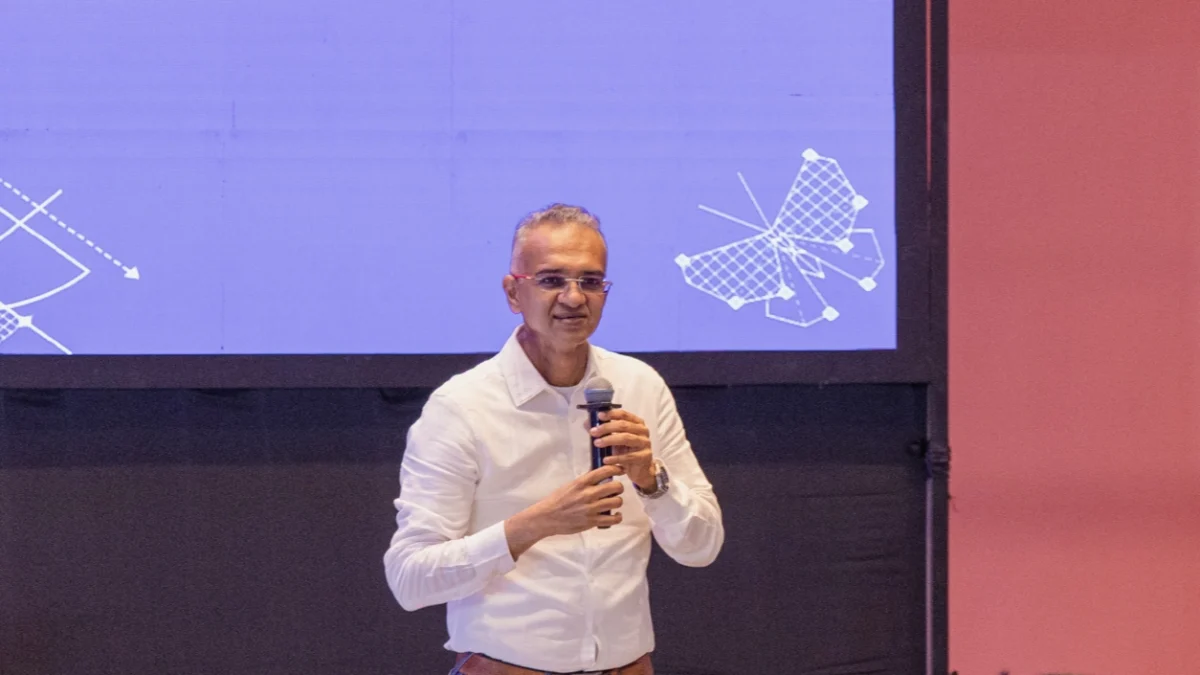
However, scaling to this level is no longer just about increasing internet penetration or adding more QR codes to local shops. According to Dilip Asbe, Managing Director and CEO of the NPCI, the next phase of India’s digital transformation will be defined by Artificial Intelligence (AI). Speaking at Mumbai Tech Week (MTW) 2026, Asbe outlined a vision where AI serves as the backbone for user onboarding, fraud detection, and the democratization of credit.
Main Facts: The New Mandate for Growth
The NPCI is currently architecting a strategy to bring the next "half a billion" users into the formal digital financial ecosystem. This isn’t merely about quantity; it is about accessibility and security.
Asbe believes that the future of UPI lies in three specific domains:
- Seamless Onboarding: Utilizing multilingual AI and voice-based interfaces to bridge the digital divide for non-tech-savvy populations.
- Fraud Mitigation: Deploying sophisticated, real-time AI models to identify "mule" accounts and neutralize bad actors before they can compromise the network.
- Credit Distribution: Leveraging digital footprints—the bread and butter of the UPI ecosystem—to provide instant, data-backed credit to users and small merchants who were previously invisible to traditional banking systems.
A Chronology of the UPI Evolution
The journey of UPI has been marked by rapid innovation and strategic pivots.
- 2016: NPCI launches UPI, a revolutionary real-time payment system that transformed peer-to-peer and merchant payments in India.
- 2023: The NPCI introduces a voice-assistant-based interactive system, "Hello UPI," aimed at making payments accessible to those who prefer conversational interfaces over traditional app menus.
- 2024: The payment body spins off its BHIM UPI app as a wholly-owned subsidiary, signaling a push to create a more competitive, sovereign, and secure alternative in a market dominated by private players.
- 2025: NPCI pilots agentic commerce and payments in collaboration with fintech major Razorpay, testing the waters for AI-driven, automated financial transactions.
- 2026 (Present): NPCI unveils FIMI, a specialized AI language model designed to resolve user disputes, which is currently scaling to handle over a million user mandates.
Supporting Data: Market Concentration and The AI Opportunity
The current UPI landscape is characterized by a significant concentration of market share. Data suggests that Walmart-owned PhonePe and Google Pay collectively control over 80% of the market. This dominance has sparked intense debate among regulators regarding competition and systemic risk.
Despite this, Asbe remains optimistic about the potential for new entrants. He argues that the high concentration is not necessarily a failure of policy, but a result of the lack of a clear, viable commercial model for smaller players. "The moment we see the commercial model being available to the ecosystem, I believe newer players will start investing very heavily," Asbe noted.
Furthermore, the data potential within the NPCI ecosystem is immense. Asbe advocates for the development of "Small Language Models" (SLMs)—AI models that are lean, specific, and deterministic. Unlike massive, generalized models, these SLMs are designed to be highly efficient, leveraging the rich, localized data sets unique to the Indian financial landscape.
Official Responses: Navigating the Regulatory Landscape
The transition to an AI-powered financial system requires more than just technological prowess; it necessitates a robust regulatory framework. As India looks toward the U.S. market—where platforms like Coinbase and Robinhood are already integrating AI agents—the NPCI is taking a more cautious, structured approach.
Asbe emphasizes that consumer protection is non-negotiable. Any rollout of agentic commerce must be governed by clear consent frameworks. In the event of an error or a dispute, the system must be able to audit the specific instructions provided by the user to the AI agent, ensuring accountability remains with the platform and the user’s clear intent.
"We must use AI effectively to protect our current citizens," Asbe stated. This sentiment underscores the NPCI’s philosophy: AI should be an engine for inclusion, but it must be tempered by a "security-first" design.
Implications: The Future of Digital Finance
The implications of this strategy are far-reaching, both domestically and internationally.
1. The Rise of Voice-First Finance
While voice assistants have yet to see widespread adoption, Asbe views them as a "critical component" in the long term. The challenge lies in the accuracy of voice models across India’s diverse linguistic landscape. Once these models reach the required level of precision, they will effectively lower the barrier to entry for millions of rural users, transforming a smartphone into a voice-operated bank branch.
2. Solving the "Mule" Problem
Financial fraud has evolved as quickly as the payment technology itself. AI-powered fraud detection is no longer a luxury; it is a necessity. By deploying predictive analytics to track transaction patterns, the NPCI aims to identify and block fraudulent activity in milliseconds, protecting the integrity of the entire network.
3. Credit Democratization
Perhaps the most significant implication is the shift in credit availability. For years, small merchants have struggled to secure loans due to a lack of traditional credit history. With AI analyzing the vast digital footprint generated by UPI transactions, the NPCI is laying the groundwork for a credit revolution. Merchants can be assessed based on real-time cash flow and transaction reliability, rather than outdated credit scores.
4. A New Competitive Equilibrium
With the looming December 31, 2026, deadline for the 30% market share cap on UPI apps, the industry is at an inflection point. Whether this cap is enforced or deferred, the message from the NPCI is clear: the focus is shifting from "acquiring users" to "building value." As the market matures, the competitive advantage will likely shift toward companies that can successfully integrate AI to provide better user experiences, lower costs, and improved financial services.
Conclusion: The Road Ahead
As India marches toward a trillion-dollar digital economy, the NPCI’s shift toward AI is a strategic necessity. By focusing on Small Language Models, robust fraud prevention, and user-centric voice interfaces, India is not just following global trends—it is setting them.
The transition will not be without challenges. Regulatory hurdles, the need for increased accuracy in voice-based AI, and the balancing act of market competition will define the next two years. However, if the NPCI’s success with the initial UPI rollout is any indicator, the "next wave" of Indian fintech—AI-powered, inclusive, and highly secure—is well on its way to becoming the global benchmark.
For now, all eyes are on the NPCI as it prepares to integrate these sophisticated AI tools into the lives of millions, ensuring that the digital payment revolution continues to serve every citizen, from the bustling tech hubs of Bengaluru to the most remote corners of the country.