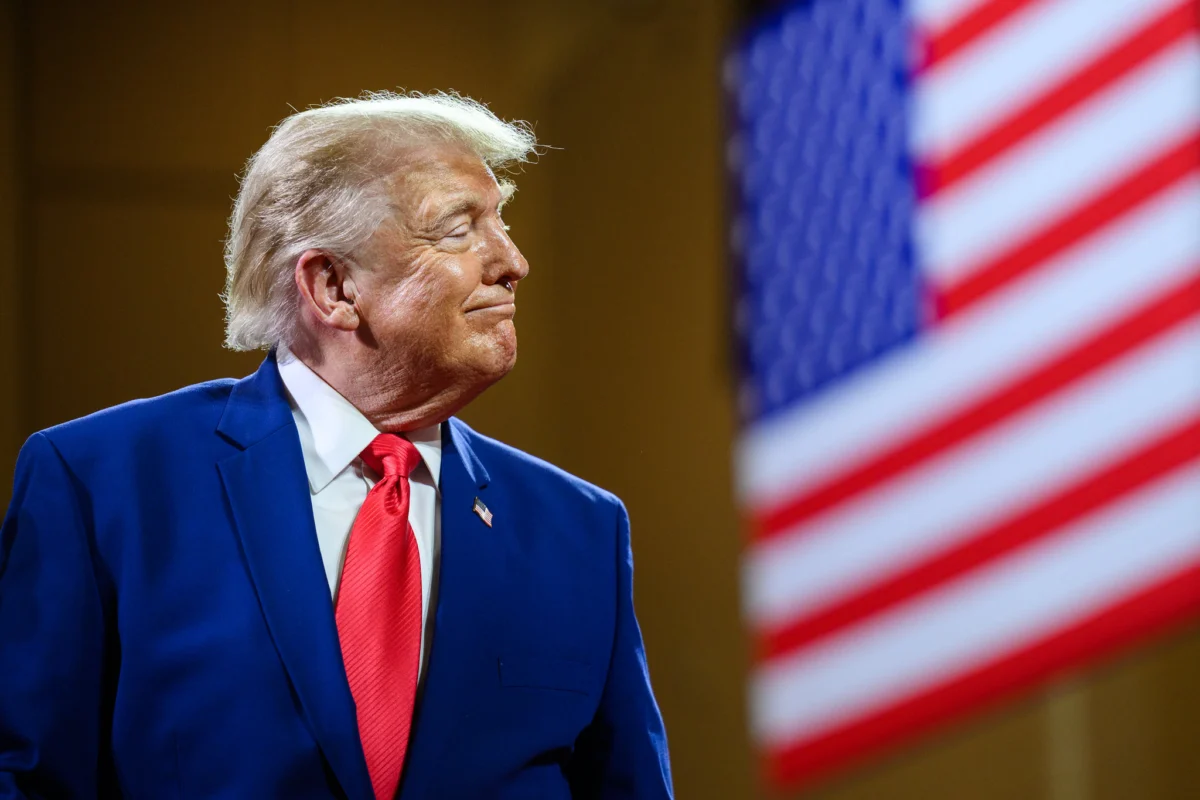
In a bold move that has set the political and economic landscape ablaze, President Donald Trump recently announced a sweeping campaign proposal at the Republican National Convention in Dallas. The President pledged a $5,000 direct payment to every adult citizen in the United States, contingent upon the Republican Party securing and maintaining control of both the House of Representatives and the Senate in the upcoming midterm elections.
The proposal, which Vice President JD Vance has since publicly championed, frames these massive payouts as a "dividend" of the administration’s aggressive tariff-based trade strategy. By leveraging revenue generated from new import taxes, the administration argues that it can directly redistribute wealth to the American populace. However, independent economists and fiscal analysts warn that the math behind this promise is precarious, potentially destabilizing a federal budget already strained by record-level deficits.
The Chronology of a Campaign Promise
The announcement, delivered with characteristic fanfare at the Dallas convention, was initially viewed by some as rhetorical flourishes common in election cycles. However, the subsequent endorsement from Vice President Vance signaled that the White House views this not merely as a talking point, but as a potential pillar of their second-term economic agenda.
The logic presented by the administration is straightforward: the new, comprehensive tariff regime has turned the federal government into a revenue-generating machine. By taxing foreign goods, the White House claims, the government is collecting enough capital to effectively "buy back" the support of the electorate.
However, the path from this promise to implementation is fraught with legislative and fiscal hurdles. Critics point out that the proposal remains notably thin on technical details. There are no specified income caps, no provisions for dependents, and no clear mechanism for distribution. As the campaign trail heats up, the administration faces mounting pressure to clarify how such a massive transfer of funds would be reconciled with the realities of federal spending.
Breaking Down the Cost: A Fiscal Mirage
To understand the magnitude of this proposal, one must look at the raw numbers. There are approximately 250 million adults eligible to vote in the United States. A $5,000 payment to every one of these individuals results in a total cost of $1.25 trillion.
To place this figure in perspective, the federal government is currently projected to run a budget deficit of nearly $1.9 trillion for fiscal year 2027. Introducing a one-time payment of $1.25 trillion—assuming no other spending cuts are implemented—would effectively balloon the annual deficit to roughly $3 trillion.
Economists argue that even if one accepts the administration’s optimistic revenue projections from tariffs, the math does not reach the necessary threshold to cover the cost. According to analysis from the Tax Foundation, the new tariffs are expected to generate approximately $125 billion in net revenue for the federal government in 2027. Consequently, the revenue raised by these tariffs would cover only about one-tenth of the total cost of the promised dividend payment. It would take nearly a decade of tariff collections just to reach the $1.25 trillion mark required to fund the program for a single year.
The Tariff Trap: Economic Reality vs. Campaign Rhetoric
The administration’s argument relies heavily on the success of its tariff policy. While it is true that tariff collections have seen an uptick under the current administration—rising from $79 billion in 2024 to $264 billion in 2025—the narrative of a "surplus" is misleading.
Tariffs are not a free revenue source; they are essentially taxes on domestic businesses and consumers. When the U.S. imposes a tariff, it acts as a trade barrier that raises prices, restricts the availability of goods, and places a significant economic burden on the domestic supply chain. Furthermore, recent federal data shows that the initial surge in collections has begun to taper off. In recent months, net collections have even dipped into negative territory as the government has been forced to issue refunds for tariffs that were struck down as illegal by the Supreme Court.
Moreover, the "net" revenue from tariffs is lower than the gross figures suggest for two critical reasons:
- Import Contraction: As tariffs increase, the volume of imported goods decreases. This naturally erodes the tax base, meaning pre-existing tariffs generate less revenue over time.
- Economic Displacement: Every dollar collected in tariffs acts as a drag on the broader economy. By increasing the costs of production, tariffs reduce the profitability of businesses and the wages of employees, which in turn shrinks the revenue collected from income and payroll taxes.
Official Responses and Political Calculations
The political calculus behind the $5,000 dividend is transparent. By linking the payment to the retention of Republican control in Congress, the administration is attempting to create a powerful incentive for voters to turn out in favor of the incumbent party.
Vice President Vance’s support has been instrumental in framing the debate. By emphasizing that these are "shared" revenues from foreign competitors, the administration attempts to bypass the traditional arguments against deficit spending. However, the opposition has been vocal, with critics labeling the plan as "irresponsible populism." They argue that the promise of a dividend is a distraction from the structural issues—such as the national debt and inflation—that require more disciplined fiscal management.
The Implications: Inflation and Market Stability
Perhaps the most significant concern regarding the $5,000 dividend is its impact on the nation’s long-term financial health. We are currently operating in an environment where inflation remains a persistent challenge, hovering above the Federal Reserve’s 2 percent target.
Introducing $1.25 trillion into the economy via direct cash injections would likely exacerbate inflationary pressures. When the supply of money increases without a corresponding increase in the supply of goods and services, the inevitable result is a rise in the general price level. This "hidden tax" of inflation would likely negate the purchasing power benefits of the $5,000 payment for many families, effectively creating a cycle where the cost of living rises to meet the new, temporary influx of cash.
Furthermore, the international financial markets track U.S. fiscal policy with extreme scrutiny. A move of this magnitude, financed entirely through deficit spending, would signal to global investors that the United States is no longer prioritizing fiscal discipline. This could lead to:
- Higher Interest Rates: As investors demand higher yields to hold U.S. debt, the government’s cost of borrowing will increase, further straining the federal budget.
- Currency Volatility: A lack of fiscal credibility can weaken the dollar, making imports more expensive and fueling further domestic inflation.
- Reduced Investment: Businesses, wary of a volatile economic environment characterized by unpredictable tariffs and deficit-fueled spending, may choose to scale back capital investment.
Conclusion: A Misguided Use of Funds
The promise of a $5,000 dividend is, at its core, an attempt to solve complex structural economic problems with a superficial, albeit expensive, monetary transfer. While the appeal of a direct payout to citizens is understandable in an era of high costs, the long-term cost to the U.S. economy is too high to ignore.
Even if the program were to be scaled back through income limitations or other criteria, the fundamental premise remains flawed. The government would be better served by focusing on policies that lower the cost of doing business, simplify the tax code, and address the root causes of inflation, rather than pursuing a program that risks ballooning the deficit and destabilizing the financial system.
Ultimately, the administration’s reliance on tariff revenue to fund domestic policy is a strategy that ignores the basic economic reality: you cannot tax your way into prosperity while simultaneously burdening the very businesses and consumers who drive that prosperity. If the goal is to improve the lives of Americans, the focus should shift from temporary, deficit-financed dividends to sustainable economic growth. Abandoning the current tariff regime, which acts as a drag on the economy, would be a far more effective way to increase the long-term wealth and stability of the American people than a one-time, trillion-dollar check.