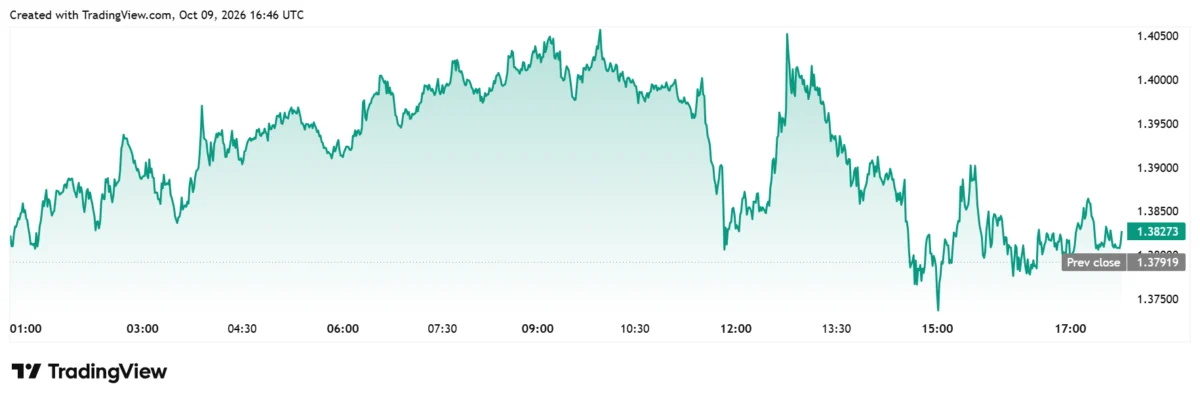
Helium [HNT], the decentralized physical infrastructure network (DePIN) project, has captured the attention of the cryptocurrency markets with a dramatic 36% surge in its asset value over the past 24 hours. This sudden price appreciation marks a significant deviation from the project’s broader year-to-date performance, which has been characterized by a 38% decline. As market participants scramble to analyze whether this rally represents a fundamental trend reversal or a transient bull trap, the underlying metrics suggest a complex narrative of localized growth clashing with macroeconomic and structural vulnerabilities.
Main Facts: A Tale of Two Timelines
The immediate market reaction to Helium’s recent price action has been overwhelmingly bullish, driven by a surge in demand and investor optimism. On a short-term basis, the 36% climb has pushed HNT to the forefront of mid-cap altcoin discussions. However, long-term investors remain wary, as the year-to-date performance data from CoinGlass highlights a deep 38% deficit.
The current sentiment gauge—a proprietary metric assessing market psychology on a scale of -10 to 10—sits firmly at 5.6. This reading signals that, despite the long-term historical losses, the current market climate is optimistic, with traders favoring the "long" side in anticipation of further momentum.
Chronology: From Network Utility to Market Volatility
The rally did not occur in a vacuum. It is intrinsically linked to the tangible expansion of Helium’s network utility. The protocol has seen a notable increase in cell coverage usage, specifically in geographically diverse regions such as Celina, Texas, and the Waimea Valley in Hawaii. In these locations, residents and businesses have increasingly turned to Helium’s decentralized infrastructure to satisfy their internet connectivity requirements.

This shift from speculative asset to utility-driven protocol is precisely what advocates of the DePIN model have long championed. By decentralizing the deployment of cellular and internet infrastructure, Helium has managed to create a real-world use case that provides tangible value. The current rally, therefore, serves as a market recognition of this expanding footprint. However, this growth has yet to translate into institutional-grade profitability for the network itself, creating a temporal disconnect between the protocol’s adoption and its financial health.
Supporting Data: The Perpetual Market Paradox
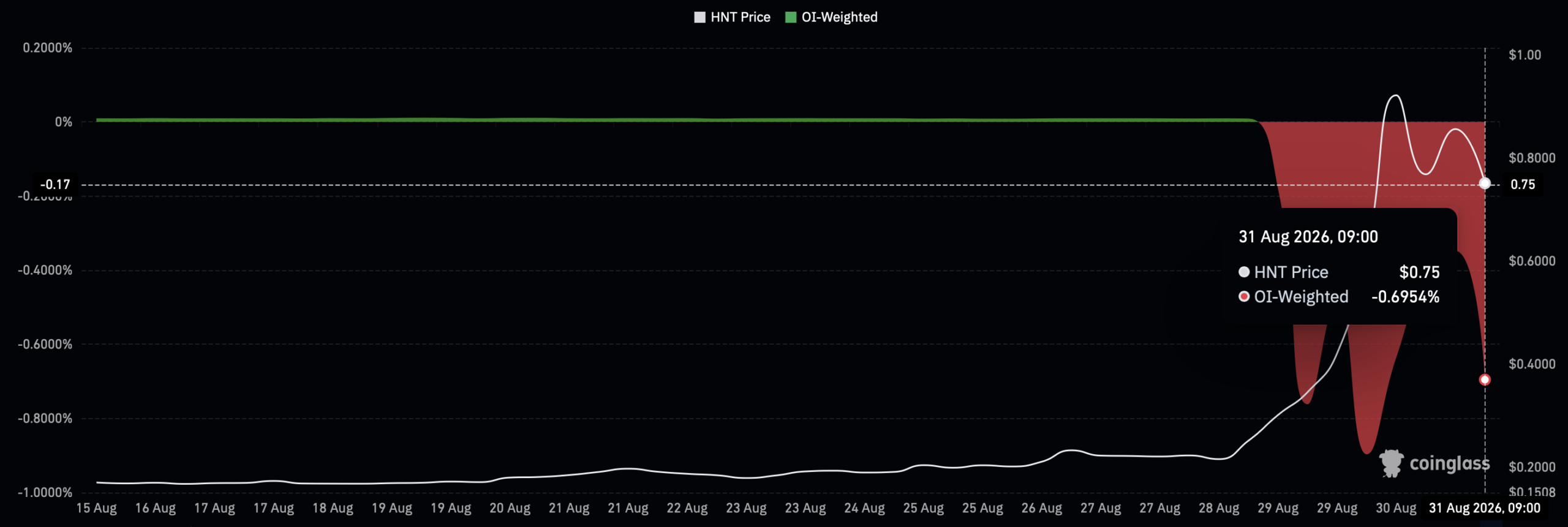
While price action and sentiment analysis paint a picture of recovery, the derivatives market suggests that the "smart money" is not yet fully convinced. A deep dive into the perpetual market positioning for HNT reveals a significant disconnect. Despite the spot price rally, the funding rate for HNT perpetual contracts has plummeted to roughly -0.6954%.
In derivatives trading, a negative funding rate typically indicates that short-position holders are paying a premium to maintain their positions, reflecting a strong expectation that the price will decline. Currently, approximately $16.94 million in open interest is tilted toward short contracts. This creates a high-pressure environment where any exhaustion in buying momentum could trigger a cascade of liquidations, potentially forcing the price back down.
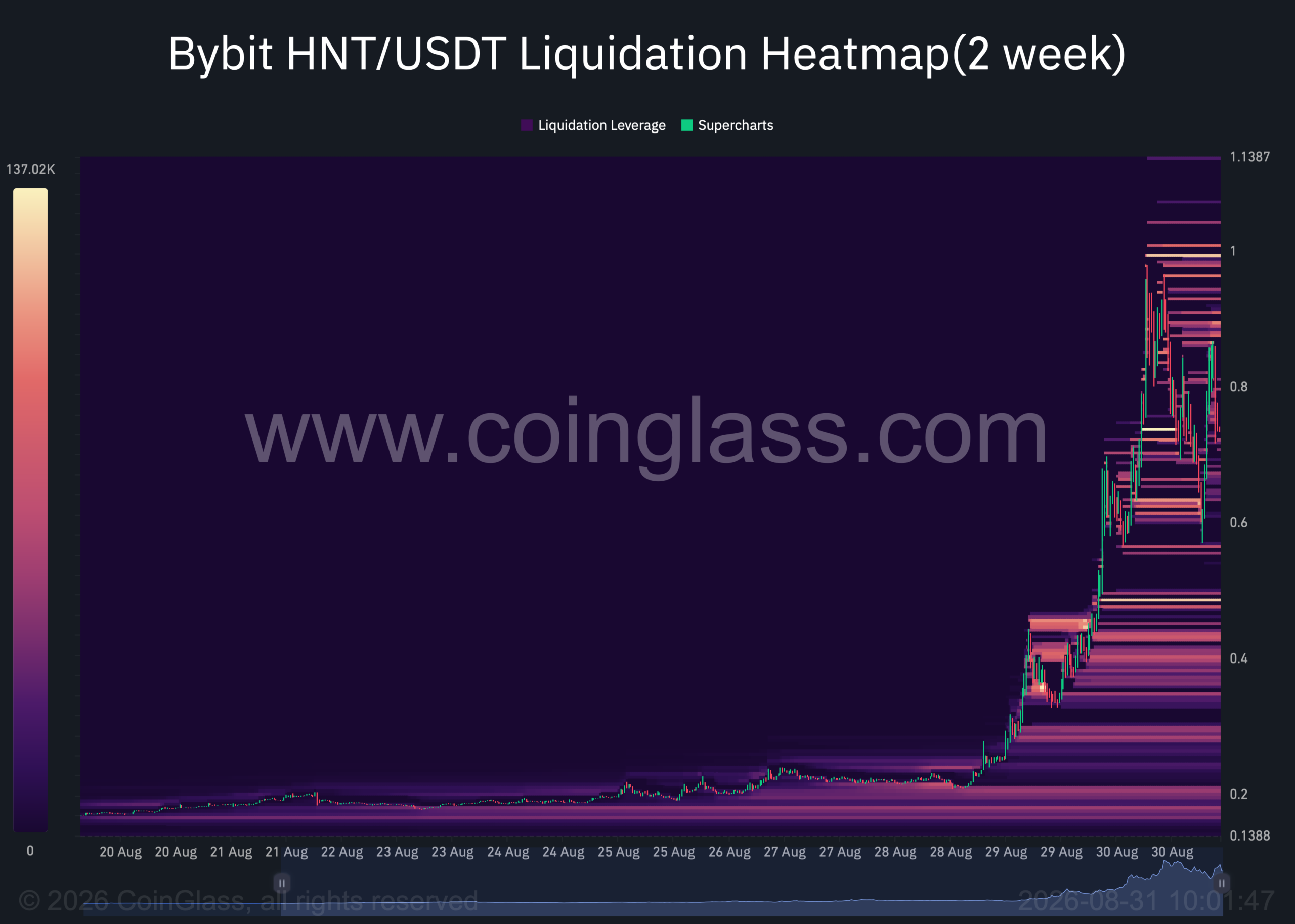
Liquidation heatmap analysis adds further clarity to these risks. Data indicates a cluster of unfilled orders residing below the current price point, with potential support levels hovering near the $0.20 mark. These "shaded regions" on the heatmap act as both magnets and danger zones; if the price fails to sustain its upward trajectory, the lack of depth in the order book could exacerbate a downward move. Conversely, there is an upper cluster of orders that, if cleared, could signal a breakout, but the prevailing short-biased funding rate suggests that the path of least resistance remains skewed to the downside.
Financial Fundamentals: The Challenge of Profitability
A critical component of Helium’s long-term sustainability is the financial performance of its underlying protocol. According to data from DeFiLlama, the Helium network is currently operating at a net loss. While the project has successfully reduced its losses to approximately $178,000—a figure that represents the lowest accumulated loss for the year—the absence of profitability remains a significant hurdle.
For a network to maintain its value proposition, it must eventually transition from a subsidized growth phase to one of self-sustaining economics. The current burn rate, while improved, highlights that the cost of maintaining the infrastructure still outpaces the revenue generated by user adoption. Investors are now forced to weigh the excitement of regional coverage expansion against the fiscal reality of the protocol’s bottom line.
Spot Market Dynamics and Capital Flow
The spot market provides further evidence of the ongoing struggle between bulls and bears. Over the last 24 hours, netflow data indicates roughly $218,000 in net outflows. This metric, which measures the difference between assets entering and leaving exchanges, serves as a proxy for investor confidence. While the rate of selling pressure has noticeably decreased in recent days, the continued net outflow suggests that liquidity is still exiting the ecosystem rather than accumulating.
Until the spot netflow turns positive—indicating that buying volume has decisively overtaken selling pressure—the rally remains fragile. The market is currently in a "wait-and-see" phase, where the speculative fervor of the last 24 hours is being tested against the reality of institutional capital flows.
Implications: What Comes Next?
The implications of this market activity for HNT are twofold:
- The Potential for a "Short Squeeze": Given the highly negative funding rate and the high volume of short interest, there is a technical possibility for a short squeeze. If momentum carries the price through the upper liquidation clusters identified in the heatmap, short sellers may be forced to buy back their positions, further accelerating the price toward the upside.
- The Risk of a Structural Correction: Conversely, if the protocol fails to demonstrate a path toward profitability or if user growth in regions like Texas and Hawaii plateaus, the lack of fundamental backing could lead to a swift reversal. The $0.20 level remains a critical watchpoint for traders, as a break below this could signal that the current rally was merely a deviation from a long-term bearish trend.
Conclusion: A Delicate Balance
Helium [HNT] is currently standing at a crossroads. The project has demonstrated an impressive ability to scale its infrastructure in key regions, providing a glimmer of hope that the decentralized wireless model can indeed function at scale. However, the derivative markets and the project’s internal financial data remind us that market sentiment and protocol reality are not always in alignment.
Investors and stakeholders should monitor the funding rates closely in the coming days. A stabilization of the funding rate, coupled with a shift toward positive net spot flows, would be the strongest indicator that the 36% rally is the beginning of a sustainable trend. Until then, the market remains in a state of high volatility, where the promise of decentralized connectivity must battle against the harsh realities of liquidity, profitability, and short-term speculative pressure.
As we look toward the remainder of the year, Helium’s ability to turn its current "reduced loss" status into positive cash flow will be the definitive metric to watch. For now, the asset remains a high-risk, high-reward play, caught between the excitement of real-world utility and the caution of the financial markets.