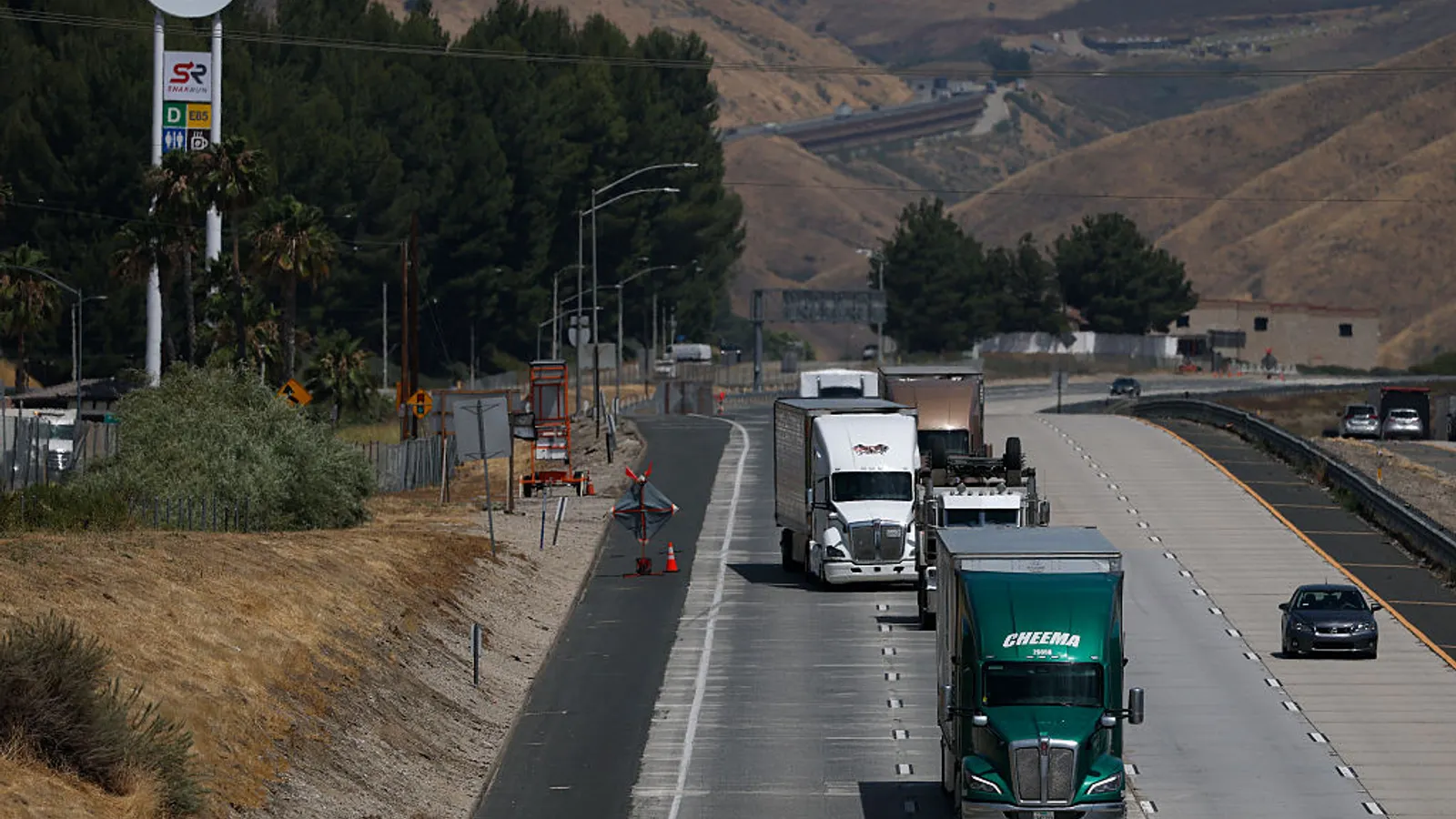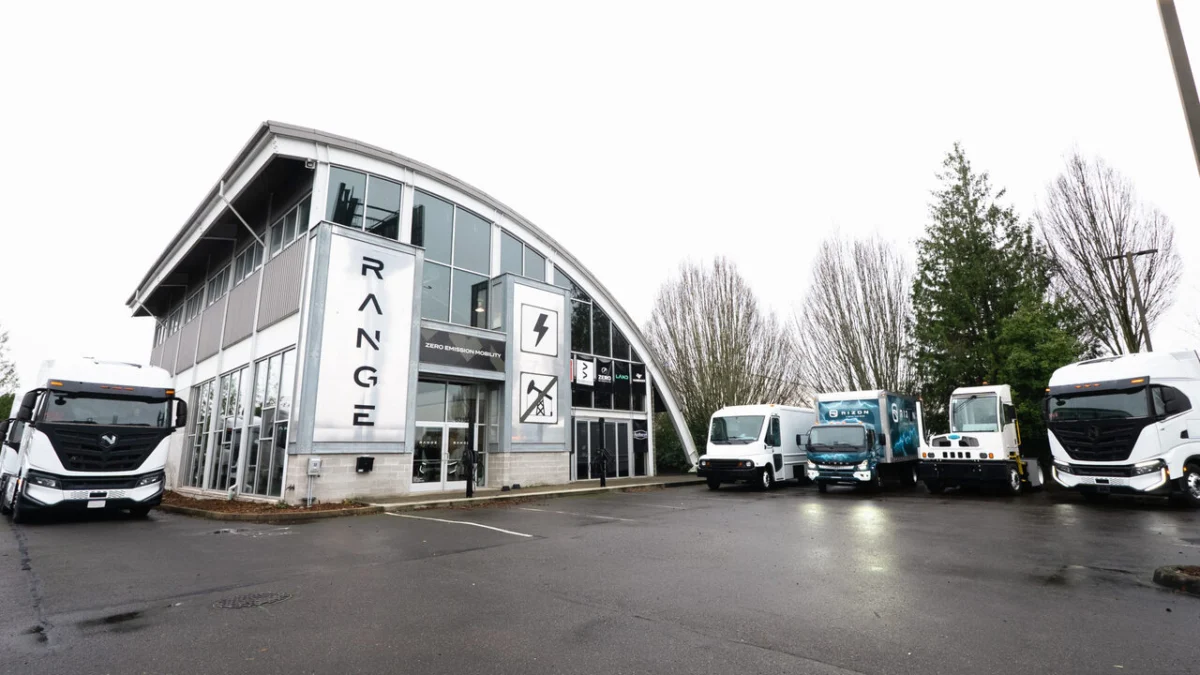
The race to decarbonize the American supply chain is currently dominated by the high-profile roar of Class 8 hydrogen fuel-cell tractors and the high-voltage promise of battery-electric long-haul rigs. Yet, according to Johannes Ariens, CEO of Range Zero Emissions, the industry’s focus is inverted. While billions of dollars and countless headlines are funneled toward the heavy-duty segment, the most viable, immediate, and economically rational path to electrification lies in the overlooked "middle": Class 4, 5, and 6 medium-duty trucks.
Ariens, whose firm has rapidly positioned itself as a leading zero-emission vehicle dealer group in North America, argues that the industry is trying to sprint before it can walk. By prioritizing the most difficult-to-decarbonize segment of the market, policymakers and manufacturers are creating unnecessary friction in what should be a natural, step-by-step technological evolution.
The Case for the Medium-Duty "Sweet Spot"
The fundamental argument for prioritizing medium-duty electrification is one of operational simplicity. Unlike the massive, bespoke charging infrastructure required for Class 8 semis—which often necessitates high-voltage Megawatt Charging Systems (MCS) that are still in their infancy—medium-duty trucks operate within a range and power profile compatible with existing infrastructure.
"Charging two vehicles on Level 2 is like, do you have a washing machine and an air compressor at your house?" Ariens noted in a recent interview. "If you do, you can install two Level 2 chargers and charge them overnight and go to work every day for your shift. You’re good to go if you’re driving less than 150 miles a day."
For the vast majority of commercial truck users—small businesses and local delivery fleets—this capability is a game-changer. It removes the "charging anxiety" that plagues long-haul operators and allows businesses to integrate electric vehicles (EVs) without a total overhaul of their electrical grid or facility footprint.
A Strategic Evolution: Building the Foundation
Ariens views the electrification of trucking as a logical progression, mirroring the development of the passenger vehicle market. Just as the industry moved from small-scale electric experimentation to the widespread adoption of consumer-facing electric SUVs and trucks like the Rivian or Hummer EV, commercial vehicles must follow a tiered adoption curve.
"We are so focused on Class 7 and 8 that we’re trying to jump a very natural progression of electrification," Ariens said. "You cannot charge a Class 8 semi on a Level 2. It literally won’t do it."
The reality of Class 8 charging remains a nascent field. While Tesla marked the beginning of high-volume semi production at its Nevada facility in late 2024, the proliferation of the necessary infrastructure remains years away. Legacy OEMs, utility providers, and fleet operators are currently navigating a "chicken-and-egg" scenario regarding grid capacity and hardware standardization.
By contrast, the medium-duty sector already has major corporate buy-in. With massive fleets from companies like FedEx, Amazon, and Rivian transitioning to electric, the technology is already battle-tested. In September, FedEx made headlines with an order of 2,000 all-electric trucks from Harbinger, a brand within the Range Zero Emissions roster, signaling a clear shift in corporate procurement strategies.
Chronology of a Strategic Transformation
Range Zero Emissions has spent the last year aggressively expanding its footprint to capitalize on this shift, evolving from a Pacific Northwest dealer into a national powerhouse.
- August 2026: Range Zero Emissions officially became an authorized dealer for Hyundai’s XCIENT Fuel Cell, a heavy-duty hydrogen-powered Class 8 truck, specifically targeting the Washington state market.
- Late 2026: The company executed a major strategic pivot by folding Ziegler Truck Group’s zero-emissions business into the Range brand.
- Expansion Phase: Simultaneously, Range acquired the West Coast operations of Ethero Truck & Energy. These combined deals provided the company with a physical footprint stretching from the Pacific Northwest down through California and into the Midwest.
- Market Positioning: With these acquisitions, Range now offers a portfolio spanning from Zero Motorcycles to Class 8 hydrogen tractors, creating a "one-stop-shop" for fleets looking to transition to zero-emission technology.
The Long Tail: Why Small Carriers Matter
A critical, often ignored statistic in the trucking industry is the sheer dominance of small operators. According to American Trucking Associations (ATA) data as of June 2025, there are nearly 580,000 active U.S. motor carriers, and 91.5% of them operate 10 or fewer trucks.
Ariens argues that if the goal is to reduce carbon emissions at scale, incentive programs must be redirected toward this "long tail" of the industry. "We should increase the voucher amounts for Class 4, 5 and 6," he stated. "Just get all these small businesses with five trucks or less into their EVs."
When federal support for zero-emission programs has faced uncertainty, state-level initiatives have stepped in to fill the gap. California and Washington, in particular, are running the most significant commercial incentive programs in history.
California’s Clean Truck and Bus Voucher Incentive Project (HVIP) has been a cornerstone of this effort, delivering over $1 billion in incentives since 2009. The state’s recent introduction of the California Clean Fuel Reward—funded by the Low Carbon Fuel Standard—provides an additional $250 million annually, with over $1 billion in total funding projected through 2030. Washington’s Zero-Emission Incentive Program, launched in April 2026, further bolstered this regional push with $112 million in vouchers.
"These are continuous, recycled funding streams, usually coming from carbon tax credits, designed to refill," Ariens explained. "They’re not one-shot programs." This is vital for the trucking industry, where fleet replacement cycles typically span five to seven years. "I’m not going to buy a new truck and get rid of it next month because I want an EV," he added. "I’m going to life-cycle that truck, get my full depreciation out of it, and then cycle it."
The Hydrogen Perspective: A Binary Fallacy
While Ariens is a vocal proponent of medium-duty battery-electric trucks, he rejects the idea that the future is "battery-only." Instead, he views the debate between hydrogen and batteries as a binary distraction.
"I think the future of Class 8 is absolutely both," he said. Battery-electric models are ideally suited for drayage—the short-haul movement of containers from ports to railheads or warehouses. In these applications, the trucks have predictable routes, lower range requirements, and consistent access to centralized fueling points.
However, the "weight penalty" remains a significant hurdle for battery-electric heavy trucks. While federal law provides a 2,000-pound allowance for electric trucks (raising the gross vehicle weight to 82,000 pounds), every pound dedicated to a battery is a pound of lost cargo capacity.
Hydrogen, conversely, is carving out a niche in high-utilization environments. Ports in Long Beach, Oakland, and the Vancouver area are already seeing the deployment of heavy-duty hydrogen refueling infrastructure. Projects like the NorCAL ZERO initiative, which utilizes Hyundai XCIENT trucks in Oakland, demonstrate that hydrogen can meet the rigorous demands of 300-to-400-mile daily routes.
Implications for the Future of Logistics
The path forward for the North American trucking industry will likely be bifurcated. We will see an rapid, widespread adoption of electric medium-duty vehicles driven by small businesses and urban logistics, fueled by state-level incentive "stacking." Simultaneously, a specialized, hydrogen-heavy infrastructure will evolve around major ports and industrial hubs to service the long-haul, heavy-payload market.
For Ariens, the success of the transition depends on whether the industry can resist the urge to over-engineer the initial stages. By simplifying the transition for the medium-duty sector—the backbone of the American freight economy—the industry can build the momentum, the supply chain, and the maintenance networks necessary to tackle the more complex challenges of the long-haul sector.
"That’s my party line, and the thing I stomp my feet about every day," Ariens concluded. "Why are we not making it as easy as possible to go to Class 4, 5 and 6, and then Class 7 and 8 will solve its own problem?"
As the industry moves toward 2030, the "Range Zero" approach suggests that the most effective way to reach the finish line is to stop staring at the horizon and start focusing on the trucks already idling in our cities today.