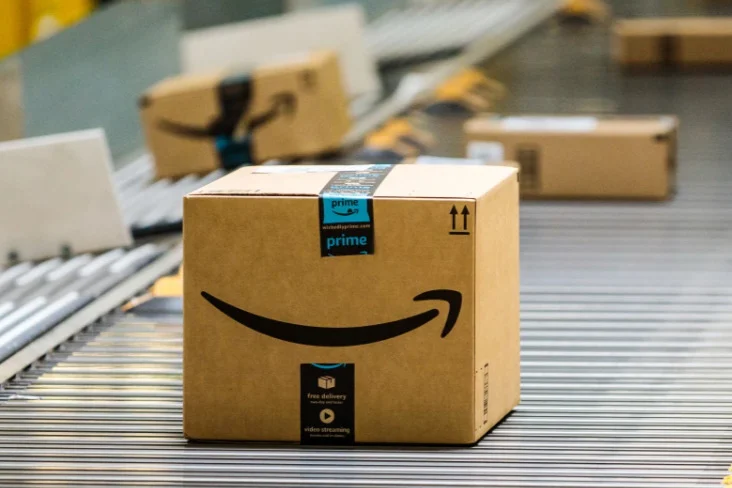
In a move designed to redefine the mechanics of international supply chains, e-commerce titan Amazon has announced a major expansion of its Global Warehousing and Distribution (GWD) service. By the end of this year, the logistics solution, which currently serves the United States, will be extended to seven key international markets: Germany, France, Italy, Spain, the United Kingdom, Canada, and Japan.
This expansion represents more than just a geographic increase; it is a fundamental shift in how Amazon handles the flow of goods from manufacturing hubs to end consumers. By allowing sellers to consolidate their inventory into a single pool and utilize Amazon-operated facilities near their production points, the company is effectively stripping away layers of complexity from cross-border e-commerce.
Main Facts: Simplifying the Global Supply Chain
The core value proposition of Amazon’s GWD service lies in its ability to centralize inventory management. Historically, international sellers—particularly those manufacturing in Asia—have faced the cumbersome task of splitting their stock into disparate batches, shipping them to various international warehouses, and managing multiple fragmented inventory pools.
Under the GWD model, the process is streamlined:
- Centralized Storage: Sellers can ship a single manufacturing run to an Amazon-operated GWD facility located near their factory.
- Inventory Pooling: Products are stored in a single, unified pool rather than being pre-distributed across multiple countries.
- Demand-Driven Replenishment: Inventory is moved to local Fulfillment by Amazon (FBA) centers only when specific regional demand arises.
- Efficiency Gains: The service claims to offer storage costs lower than standard bulk warehousing and provides a replenishment speed to FBA centers that is up to five days faster than traditional, seller-managed logistics.
For a merchant producing goods in Shenzhen, China, this means the days of guessing demand in Germany versus the UK months in advance are largely over. The inventory remains in a "ready" state at the GWD hub, waiting for the algorithmic signal to move to the final destination.
Chronology: The Evolution of Amazon’s Logistics Ambitions
The launch of GWD is not an isolated event; it is the latest milestone in a decade-long transformation of Amazon from an online storefront into a global logistics powerhouse.
The Foundation: FBA and Beyond
Since the inception of Fulfillment by Amazon (FBA), the company has sought to control the "last mile." However, the "first mile"—the journey from the factory floor to the first port of entry—remained a chaotic patchwork of third-party freight forwarders and independent storage providers.
The U.S. Pilot Phase
Amazon first introduced GWD to address the "first mile" gap in the United States. By providing sellers with an integrated pipeline from the point of manufacture to the Amazon marketplace, the company achieved two goals: it deepened seller loyalty by making Amazon indispensable, and it gained unprecedented visibility into supply chain data.
The 2024 Global Pivot
The announcement to expand into seven additional countries signals that the U.S. pilot has proven successful enough to scale globally. The inclusion of the "Big Four" European economies—Germany, France, Italy, and Spain—along with the UK, Canada, and Japan, suggests that Amazon is targeting the most high-volume, high-complexity cross-border trade lanes. The rollout is scheduled for completion by the end of this year, positioning the company to capture increased holiday season volume.
Supporting Data: Why Centralization Matters
The economic logic behind GWD is backed by the inefficiencies inherent in traditional cross-border shipping. Industry data suggests that retailers who rely on traditional freight forwarders often experience "bullwhip effects," where small fluctuations in demand lead to massive overstocking or stockouts across various regions.
- Lead Time Reduction: By eliminating the need for international transit to multiple countries simultaneously, sellers can reduce replenishment lead times by up to five days. In the fast-paced world of e-commerce, where a week-long stockout can permanently damage a product’s search ranking, this is a significant competitive advantage.
- Cost Optimization: Storing products in bulk at a GWD facility near the manufacturing source is significantly cheaper than paying for prime retail-facing warehouse space in high-cost European markets.
- Inventory Health: A single pool of inventory reduces the risk of "dead stock." If a product doesn’t sell well in Italy but is trending in the UK, the inventory can be directed to the UK rather than sitting idle in a warehouse in Rome.
"Products are stored in one pool, and sellers have one view of where it all sits," notes an Amazon spokesperson regarding the GWD dashboard. This transparency is the cornerstone of the system, replacing disparate logistics reports with a single, unified digital interface.
Official Responses and Strategic Rationale
Amazon’s leadership has framed this expansion as part of its broader "innovation at Amazon" initiative. The company’s focus is on lowering the barriers to entry for small and medium-sized businesses (SMBs) that lack the capital or the infrastructure to navigate complex international customs and logistics.
The Seller Perspective
For many sellers, particularly those in the SMB category, managing an international supply chain is the primary deterrent to scaling. Amazon’s official documentation emphasizes that GWD acts as a bridge. By handling the storage and the movement of goods into local FBA centers, Amazon is effectively outsourcing the logistics department of these businesses.
The Competitive Stance
While the company does not explicitly mention competitors in its press releases, the move is a direct challenge to global freight forwarders and third-party logistics (3PL) providers. By capturing the inventory before it ever reaches the destination country, Amazon ensures that it maintains control over the shipping speed, the quality of service, and the data generated from the sale.
Implications: The Future of Global Commerce
The rollout of GWD in Europe and beyond will have profound implications for the global e-commerce ecosystem.
1. The Death of Fragmented Logistics
As Amazon integrates these markets, the reliance on third-party 3PL providers that specialize in international freight may decline for sellers who are heavily invested in the Amazon ecosystem. This creates a "walled garden" effect where the most efficient logistics path is exclusive to the Amazon platform.
2. A Shift in Retailer Strategy
Retailers will no longer need to plan their international distribution strategies months in advance. The ability to shift inventory dynamically means that sellers can test new products in smaller markets with minimal risk. If a product finds traction in Spain, the GWD system can automatically replenish local fulfillment centers to meet that demand.
3. Impact on Local Fulfillment Centers
By feeding local FBA centers from a centralized GWD hub, Amazon is optimizing its own distribution network. This ensures that local FBA centers remain stocked with the products that are actually selling, reducing the need for massive, long-term storage of slow-moving goods in high-rent urban areas. This is a win for Amazon’s operational overhead and a win for consumers in terms of delivery speed.
4. Regulatory and Macroeconomic Considerations
Expanding into Europe and Japan brings Amazon face-to-face with varying regulatory landscapes. The EU, in particular, has strict regulations regarding VAT and customs documentation. By managing the flow of goods through its own GWD facilities, Amazon may be looking to standardize the compliance process for its sellers, potentially acting as a regulatory shield. However, this also centralizes power in the hands of one entity, which may invite further scrutiny from antitrust regulators who are already wary of Amazon’s market dominance.
5. Sustainability and Efficiency
While the primary driver is profit and market share, the consolidation of shipping and the reduction of unnecessary inventory movement could have positive sustainability implications. Fewer shipments, better-optimized inventory levels, and reduced waste are all byproducts of a more efficient supply chain. As ESG (Environmental, Social, and Governance) reporting becomes mandatory for large corporations, Amazon will likely highlight the carbon-saving potential of the GWD model.
Conclusion: A New Era of Logistics
The expansion of Global Warehousing and Distribution marks a pivotal moment for international e-commerce. By transforming the complex, multi-layered process of global shipping into a streamlined, centralized service, Amazon is making it easier for sellers to reach a global customer base.
As the service rolls out across Europe, Canada, and Japan by the end of the year, it will be essential to watch how the market reacts. Will this lead to a more level playing field for global sellers, or will it further entrench Amazon’s position as the primary architect of modern commerce? One thing is certain: the "first mile" of global trade is becoming significantly faster, smarter, and more integrated under Amazon’s watch. For the end consumer, this means one thing: the products they want will be closer, faster, and more reliably in stock than ever before.