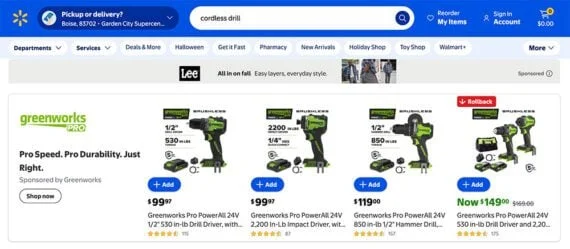
A simple search for a “cordless drill” on Walmart’s website reveals more than just a list of power tools; it exposes the structural tension defining the modern digital marketplace. At the top of the results page, a Greenworks-sponsored brand module commands immediate attention, followed by four individual sponsored product listings. In this specific search, a shopper has to scroll past six paid placements before encountering the first organic result.
While this may seem like a standard user experience in the era of retail media, it highlights a quiet, high-stakes power struggle occurring across enterprise ecommerce. As retailers pivot to become advertising powerhouses, they are forced to confront an increasingly blurred line: where does organic merchandising end, and where does paid media begin?
The Dual Objective Dilemma
For the modern retailer, the search results page and category headers are no longer just tools for navigation; they are prime real estate. This transition has birthed two competing objectives that often occupy the same digital footprint.
On one side, the Merchandising Team operates with a mandate to maximize the shopping experience. Their success is measured by conversion rates, sell-through velocity, and overall profit margins. They aim to place products that are most likely to satisfy the customer—best sellers, seasonal essentials, or high-margin items—at the top of the funnel to ensure a smooth, efficient path to purchase.
On the other side, the Retail Media Team is tasked with turning site traffic into a high-margin revenue stream. They operate under a different set of KPIs: ad revenue, impressions, and advertiser retention. Their mandate is to sell the most valuable "slots" on the page to the highest bidder.
When these two teams converge on the same search result, the friction is palpable. A retail algorithm might prioritize a drill based on historical performance and high customer satisfaction scores, while the advertising auction might push a different, sponsored drill to the top because the brand paid for that visibility.
Governance: The Hidden Structural Conflict
The challenge of retail media is not merely a technical layout issue—it is a governance crisis. In most large retail organizations, merchandising and media operate as distinct silos with divergent incentives.
The media side of the business often holds a structural advantage in corporate reporting. Ad revenue is immediate, highly attributable, and presents a clean growth narrative to investors. It is easy to point to a quarterly dashboard and show a 20% year-over-year increase in advertising income.
Conversely, the cost of displacing an organic product is "diffuse and delayed." If a sponsored ad takes the place of an organic best-seller, the negative impact on the customer experience may manifest as a slightly lower conversion rate or a long-term dip in brand loyalty. These are metrics that are difficult to quantify and even harder to attribute to a specific ad placement. Consequently, a sponsored slot that generates immediate revenue is often viewed as a "win" on the media dashboard, while the underlying erosion of the site’s organic integrity remains invisible to management.
The Role of Relevance as a Boundary
Can these two worlds coexist without cannibalizing one another? Sherry Smith, President of Retail Media at Criteo, suggests that the solution lies in the strict enforcement of relevance.
"Retailers need to be thoughtful about where and how they introduce advertising," Smith notes. "More inventory doesn’t necessarily mean more value. The focus should be on placements that perform for advertisers, remain useful to shoppers, and create incremental value for the retailer once the costs of running the program are taken into account."
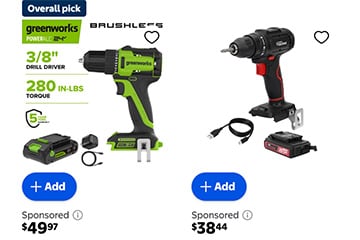
The key to resolving the conflict is to view "relevance" as the ultimate gatekeeper. When a sponsored product is highly relevant to the search query—as was the case with the Greenworks drill example—the tension evaporates. If the ad is useful to the shopper, the distinction between a "sponsored" placement and an "organic" placement becomes irrelevant. The advertisement is no longer an interruption; it is a discovery tool.
Tension only arises when the auction-based model promotes a product that the shopper would not have chosen based on organic signals. In these instances, the retail media program effectively "taxes" the user experience to generate short-term revenue.
Establishing Rules for Sharing
To prevent the dilution of their primary ecommerce business, leading retailers are beginning to codify the relationship between merchandising and media. These rules generally focus on three pillars:
- The "Relevance Floor": Retailers are implementing stricter algorithmic guardrails that prevent ads from appearing unless they meet a minimum threshold of relevance to the search term. If the ad is not deemed "highly relevant" by the search engine, it is barred from the top-tier placements, regardless of the bid amount.
- Hybrid KPI Reporting: Progressive companies are beginning to merge the incentives of the two teams. By holding the media team accountable for overall site conversion rates—rather than just ad revenue—retailers ensure that media managers are discouraged from pushing ads that frustrate the user experience.
- Visual Transparency: As seen with the clear labeling of sponsored modules, retailers are standardizing the look of ads to ensure shoppers can distinguish between a recommendation based on popularity and one based on a marketing budget.
Implications for the Future of Ecommerce
The growth of retail media is not a temporary trend; it is a fundamental shift in the retail business model. For many retailers, the margins on advertising services are significantly higher than the margins on the goods they sell. This creates an enormous temptation to expand the "ad-to-organic" ratio.
However, the long-term risk of over-monetizing the search experience is the loss of "retailer trust." If a shopper visits a site and feels that the results are dictated entirely by who paid the most, rather than what is actually the best product, they will eventually migrate to platforms that provide a more curated, trustworthy experience.
The future of retail media depends on a delicate balancing act. Retailers must move away from a mindset where media is "extra" space and toward a model where media is integrated into the merchandising strategy.
As Smith emphasizes, "The opportunity is greatest when advertising adds to the commerce business rather than simply occupying the space that business created."
Conclusion: The Path Forward
The "cordless drill" search on Walmart is a microcosm of the broader ecommerce industry. As retailers continue to build out their retail media networks, they must decide whether they are, first and foremost, a merchant or an advertising platform.
The most successful retailers will be those that treat their search results pages as a premium asset that must be protected. They will recognize that while ad revenue provides a powerful boost to the bottom line, it cannot come at the expense of the core mission: helping the shopper find the right product quickly and efficiently.
Governance, therefore, is not just an internal organizational chart; it is the strategic blueprint for the future of retail. Those who master the synthesis of merchandising and media—by ensuring that every ad is a service to the customer—will thrive. Those who prioritize the auction above the user will eventually find their competitive advantage eroded, one "sponsored" result at a time.