In an era increasingly dominated by big data and algorithmic precision, there remains an essential, unquantifiable dimension to human behavior: the "why." While quantitative metrics provide the "what" and the "how many," qualitative research stands as the bridge to understanding the underlying meanings, lived experiences, and cultural contexts that drive decision-making.
Qualitative research is the systematic study of social phenomena through non-numerical data—such as interviews, ethnographic observations, and archival documents. By shifting the focus from statistical frequency to depth of insight, researchers can uncover the complex tapestry of motivations that numbers often obscure.
The Core Philosophy: Moving Beyond the "What"
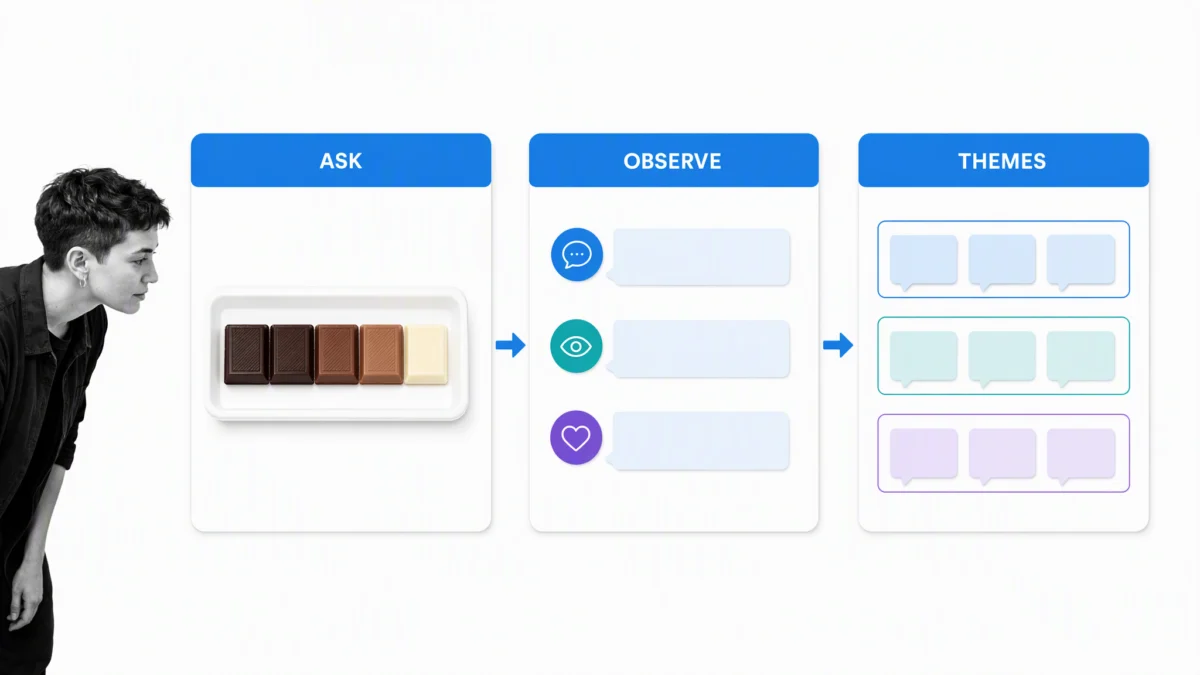
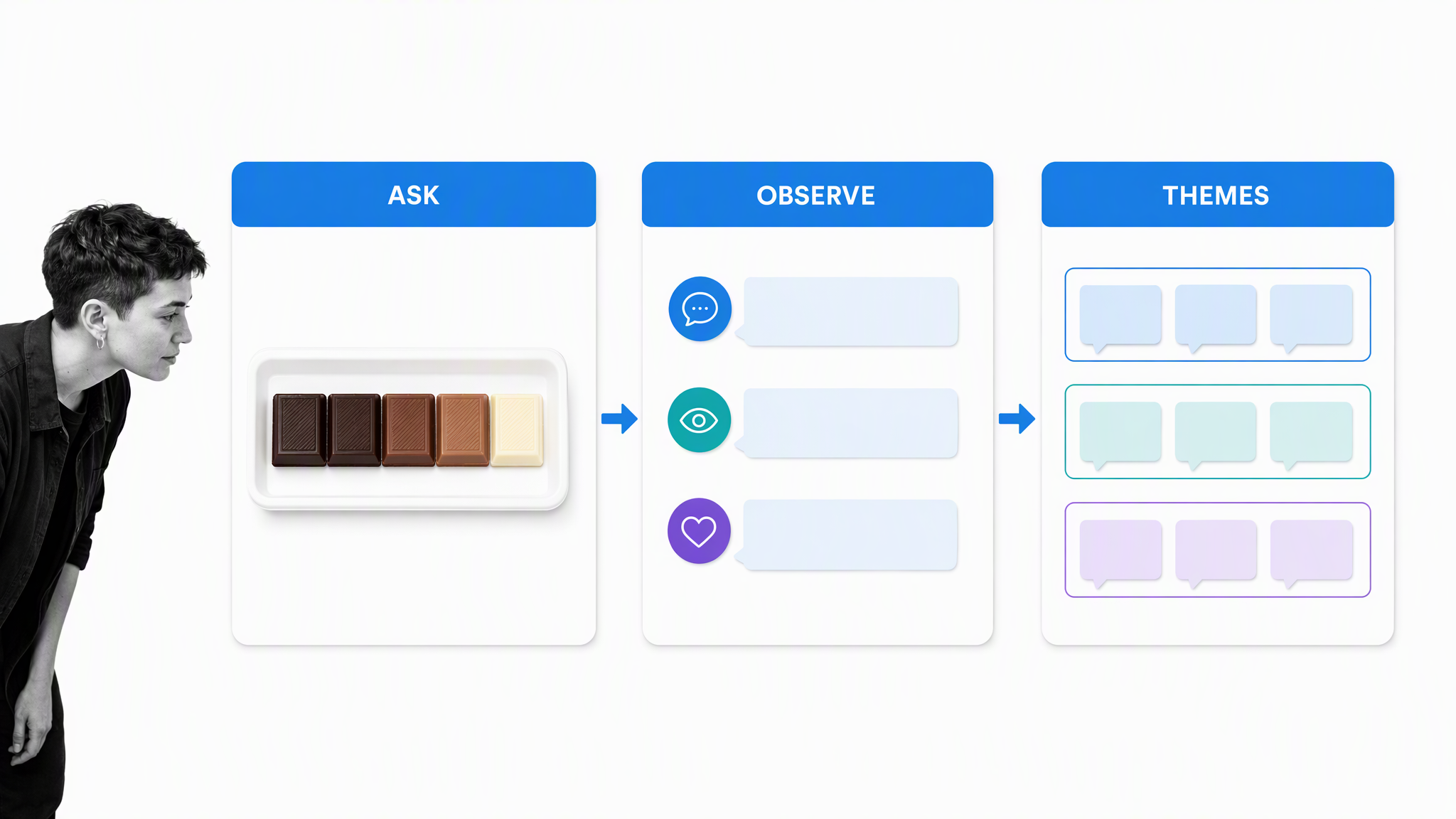
At its heart, qualitative research seeks to answer the questions that lie behind the surface. Consider a simple market observation: a survey might determine that 50% of consumers dislike a specific brand of chocolate. While this is a valuable data point, it is functionally incomplete. It tells us the scale of the dissatisfaction, but it fails to explain the root cause. Is it a matter of flavor profile, textural inconsistency, an ethical concern regarding supply chains, or perhaps a deeply personal memory?
Qualitative research uses open-ended inquiry to navigate these variables. It transforms anecdotes into structured, rigorous evidence through documented research protocols, systematic recruitment plans, and transparent analytical frameworks.
Chronology of Inquiry: From Design to Discovery
A sound qualitative study follows a disciplined, iterative timeline:

- Formulation: Defining the research question and identifying the "insider" viewpoint required to answer it.
- Design Selection: Choosing the appropriate framework—such as ethnography for cultural observation or phenomenology for lived experience.
- Data Collection: Gathering rich, descriptive material via interviews, field notes, or visual artifacts.
- Iterative Analysis: Coding data as it is collected, allowing early findings to shape subsequent questions.
- Synthesis: Establishing themes and patterns that are directly traceable to the source material.
Supporting Data: Qualitative vs. Quantitative Rigor
There is a common, outdated misconception that quantitative research is inherently more "rigorous" because it deals in numbers. In modern academic and scientific practice, rigor is defined by the alignment of the research question, the methodology, and the analysis.
The Mixed-Methods Advantage
The most powerful insights often emerge when quantitative and qualitative data are integrated. In a mixed-methods design, a survey provides the "map" (identifying the scope and reach of a trend), while qualitative interviews provide the "terrain" (explaining why the trend exists and where the aggregate data may hide important outliers).
When a team plans this integration from the outset—rather than merely inserting "flavor text" quotes after the fact—the results offer a panoramic view of the phenomenon under study.
The Power of Coding
Analysis in qualitative research is not a mechanical word-counting exercise; it is an interpretive, iterative practice. Through coding, researchers label segments of data to identify categories and themes.
- Inductive Coding: Developing themes directly from the data itself.
- Deductive Coding: Testing findings against an existing theoretical framework.
A hallmark of high-quality analysis is the treatment of "disconfirming cases." If the majority of participants describe a product as "comforting," but one participant finds it "socially isolating," that outlier is not noise to be discarded—it is a vital clue that may reveal an overlooked context or a flawed assumption in the original research design.
Five Pillars of Qualitative Design
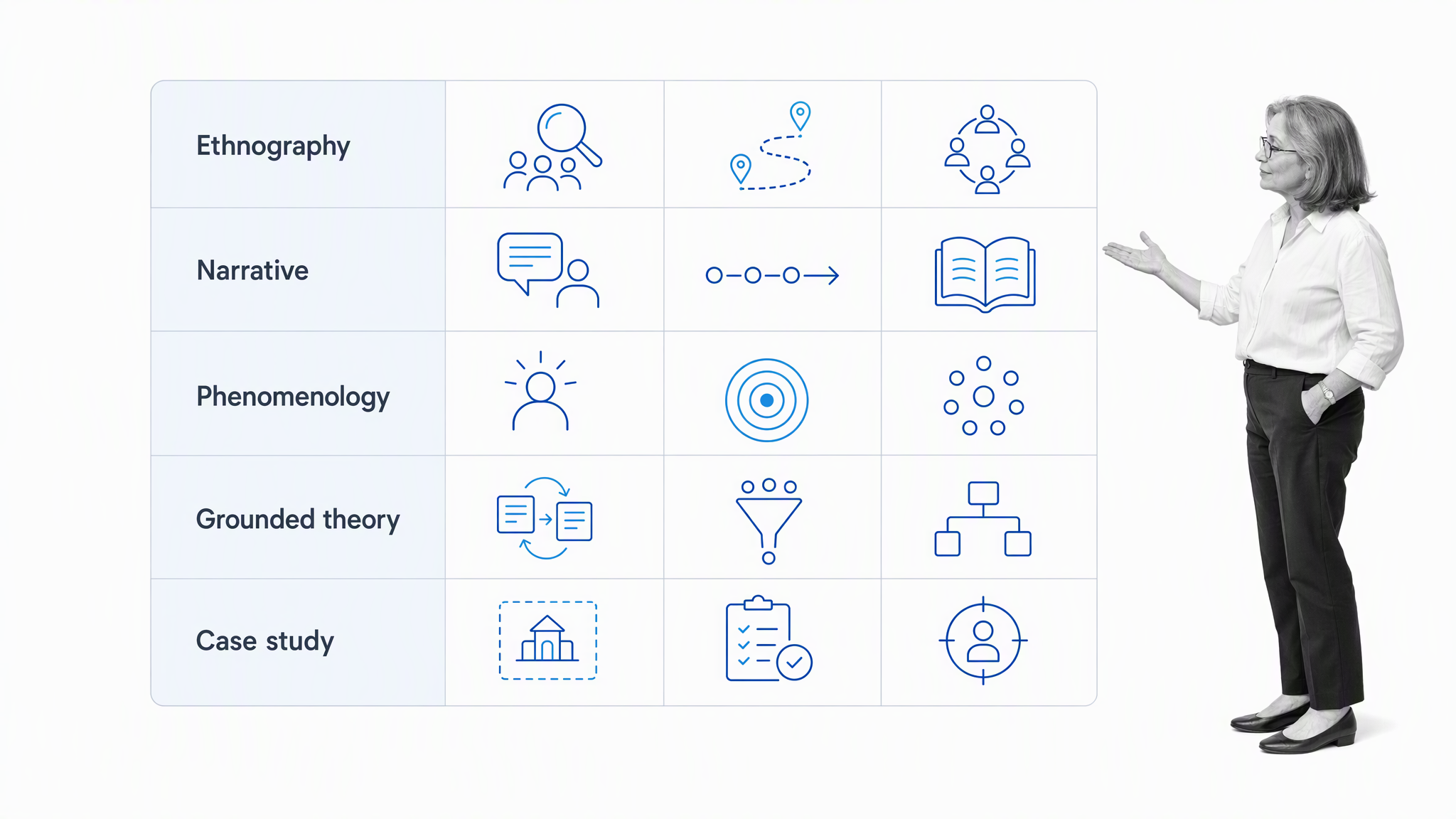
To ensure scientific credibility, researchers rely on established traditions of inquiry, each serving a distinct purpose:
- Ethnographic Research: Rooted in anthropology, this involves sustained engagement within a specific environment. By observing routines and informal rules, researchers capture behavior in its natural context.
- Narrative Inquiry: This focuses on the story of the individual. By examining journals, photographs, and personal accounts, researchers understand how participants construct their own life stories.
- Phenomenology: This design explores the "essence" of an experience, such as the psychological impact of a career shift or the navigation of a health crisis.
- Grounded Theory: A highly systematic approach where theory is generated from the data itself through constant cycles of collection, comparison, and refinement.
- Case Study Design: The most versatile approach, focusing on a single, "bounded" system—be it an organization, a team, or a specific event—by synthesizing multiple types of evidence.
Official Guidelines: Ethics, Privacy, and AI
As qualitative research expands into digital and corporate spaces, the ethical bar must be raised.
Informed Consent and Privacy
Consent is not a one-time signature; it is an ongoing dialogue. Participants must be fully informed about how their data—including recordings and verbatim quotes—will be used and stored. Regulatory bodies, such as the UK Government’s Service Manual, emphasize the necessity of strict data minimization: collecting only what is essential and ensuring that personal identifiers are scrubbed or anonymized whenever possible.
The Role of Artificial Intelligence
AI offers unprecedented speed in transcription and organizational tasks. However, it cannot replace the human researcher’s role in interpretation. The industry consensus is clear: AI should never be used to invent quotations or synthesize findings without human verification. The researcher must retain "human-in-the-loop" oversight to ensure that patterns identified by AI reflect the actual, nuanced meaning of the participants.
Implications for Future Practice
The shift toward qualitative rigor has significant implications for how we solve complex problems in business, healthcare, and public policy.
The "Chocolate Method" in Practice
Using the "chocolate" exercise as a microcosm of research, we see that the method chosen dictates the value of the outcome:
- Convenience Sampling is excellent for rapid, exploratory demonstrations but carries a high risk of bias.
- Quota Sampling ensures that specific, predetermined voices (e.g., "those who love chocolate" vs. "those who hate it") are represented, allowing for easier comparative analysis.
- Snowball Sampling is the gold standard for reaching marginalized or hard-to-access populations, leveraging existing social networks to grow the sample size organically.
Achieving Saturation
A common point of contention is sample size. In qualitative work, the metric of success is not the number of participants, but saturation: the point at which new data collection no longer provides fresh insights or adds new categories to the analysis. Researchers must be transparent about when and how they determined they had reached this point.
The Future of Operations
For organizations, the future of effective research lies in Operational Discipline. Platforms like Process Street are redefining this by allowing teams to codify their research protocols, manage participant consent, and store evidence in a single, governed space. This transforms research from a chaotic, ad-hoc process into a scalable, repeatable, and audit-ready capability.
Conclusion: The Human Element
Qualitative research is the essential discipline of listening. Whether you are a product designer trying to understand why users abandon a checkout flow, or a clinician studying the patient experience, the goal remains the same: to humanize the data. By combining rigorous, transparent methodologies with the nuance of human interpretation, we can decode the complexities of our world—not just by counting the world, but by understanding it.