In the modern startup ecosystem, the traditional organizational chart—a rigid, top-down pyramid—is increasingly viewed as a relic of the industrial age. As companies strive to maintain the agility of a three-person team while scaling to hundreds of employees, they are re-evaluating how decisions, responsibilities, and information flow through their ranks.
The central challenge for today’s founders is not simply choosing between "flat" or "hierarchical" structures. It is designing a system that balances the need for coordination with the desire for individual autonomy. When structured correctly, an organization becomes a high-velocity engine of innovation; when mismanaged, it descends into either the chaos of ambiguity or the stagnation of bureaucracy.
The Evolution of Structural Design: A Chronology of Experimentation
The quest for the "perfect" organizational model has seen several high-profile tech companies act as testing grounds for radical new management theories. Their journeys reveal that the evolution of an organizational structure is rarely a linear path to success, but rather a series of iterative corrections.
2013–2016: The Holacracy Era (Zappos)
In 2013, online retailer Zappos embarked on one of the most ambitious organizational experiments in recent memory: the adoption of Holacracy. This system sought to replace traditional management hierarchies with a decentralized web of "circles" and defined roles. Authority was distributed, and governance was codified into a precise set of rules. However, the experiment hit a wall of human reality. By 2016, CEO Tony Hsieh acknowledged the friction: while the system provided theoretical freedom, it lacked the practical support and clear expectations employees needed to thrive. Zappos eventually pivoted to a hybrid model that maintained the benefits of distributed authority while re-introducing essential leadership functions.
2015–2018: The "Flat" Experiment (Buffer)
Buffer, a social media management platform, famously removed all managers, abandoned one-on-one meetings, and encouraged employees to choose their own tasks. The goal was total transparency and radical autonomy. The result, however, was "overwhelming" for staff. Without guidance or mentorship, the team struggled to find focus. By 2018, Buffer had reintroduced a supportive hierarchy, realizing that true self-management requires a robust support system—not the total absence of leadership.
2018–Present: The Era of Process and Remote Autonomy (Zapier & Basecamp)
Learning from these early experiments, companies like Zapier and Basecamp have championed "structured autonomy." Zapier, under CEO Wade Foster, implemented management structures early to build a foundation for remote scaling. Their approach relies on small, autonomous "mission teams" that operate with clear processes and transparent, cross-company progress updates. Similarly, Basecamp pioneered the "Shape Up" method, which confines work to six-week cycles. By limiting the scope and duration of projects, they maintain a "calm" culture where accountability is built into the rhythm of the work itself, rather than through constant oversight.
Supporting Data: Why Structure Matters
The data behind these organizational pivots points to a consistent problem: Operational Friction. When an organization scales without a clear framework, several metrics begin to suffer:
- Decision Velocity: As organizations grow, the "approval tax" increases. If every decision requires a consensus, innovation stalls.
- Knowledge Redundancy: Without a "single source of truth," teams end up duplicating efforts, wasting valuable engineering and creative hours.
- Role Ambiguity: High-performance teams thrive on clear ownership. Research consistently shows that employee burnout is often a symptom of "role creep," where individuals lack clear boundaries for their responsibilities.
The most successful startups are those that treat their organizational structure as a dynamic "operating system" that must be patched and upgraded as the company grows.
The Core Problem: The Myth of "Flat"
The rise of the "flat" structure was a reaction to the bloat of middle management, but it failed to account for the essential functions that managers perform: coaching, conflict resolution, and the alignment of resources.

The lesson for modern leaders is that autonomy works best within constraints. When boundaries are visible—when everyone knows who owns the final result, how to escalate a bottleneck, and where to find the company’s documented knowledge—autonomy flourishes. When those boundaries are removed, employees spend more time navigating internal politics and guessing priorities than they do delivering value.
Implications for the Modern Enterprise: Integrating Ops and Knowledge
If the traditional org chart is insufficient, what replaces it? The answer lies in connecting governed knowledge directly to operational execution. This is where modern platforms like Process Street are redefining organizational design.
Moving Beyond the Paper Chart
An organizational chart is a static image of who reports to whom. It tells you nothing about how work actually happens. To build a truly scalable organization, leadership must move toward "Operational Compliance." This involves three key layers:
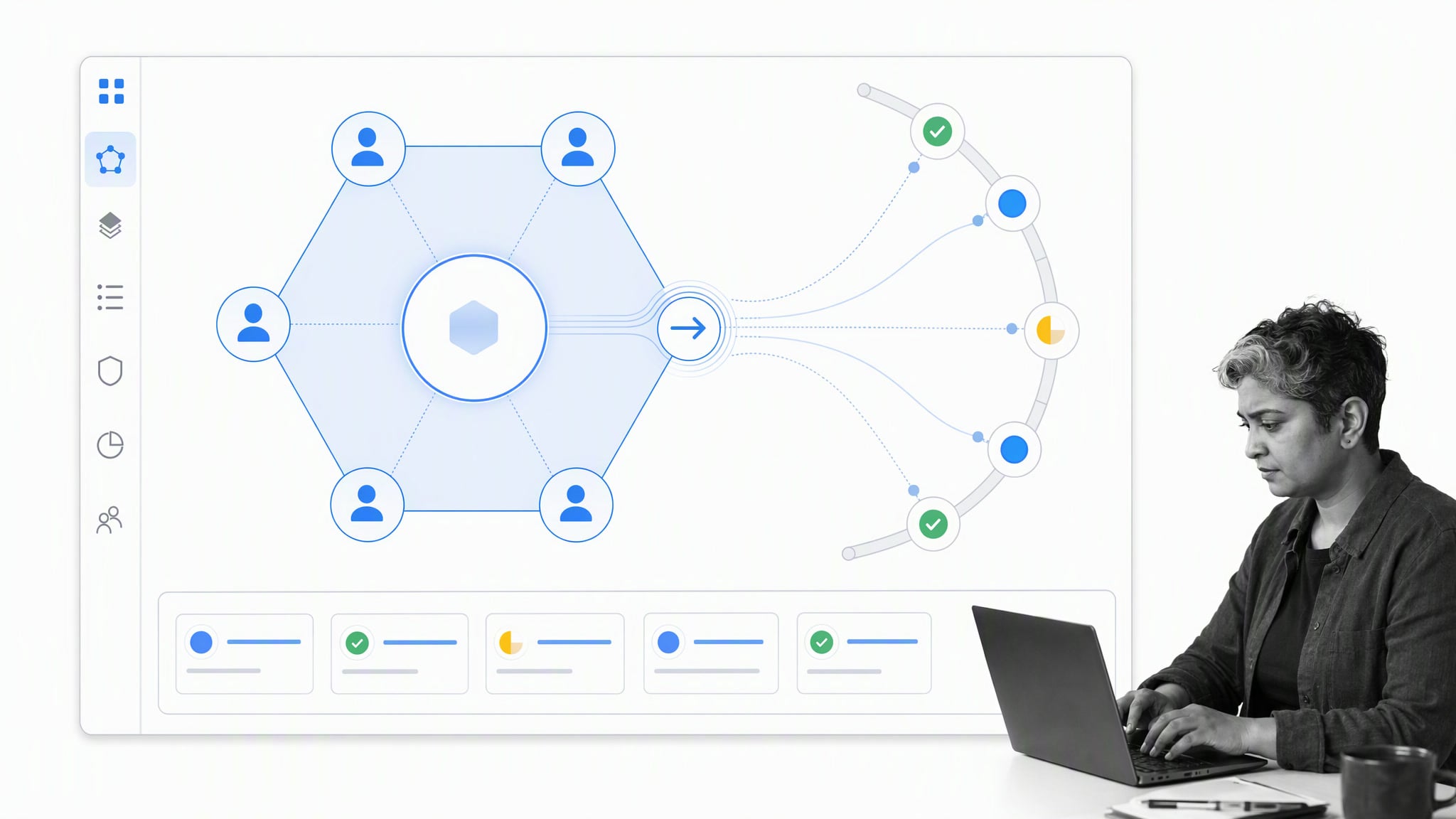
- Governed Knowledge (Docs): A centralized repository where policies and procedures are treated as living documents.
- Workflow Execution (Ops): The translation of those documents into actionable workflows with automated triggers, approvals, and accountability markers.
- AI-Enhanced Review: Using artificial intelligence to monitor workflows, flagging bottlenecks and identifying where processes need to be refined.
The Power of "Workflow-Centric" Design
When a company organizes itself around workflows rather than just departments, the org chart becomes a background feature. In a workflow-centric company, an "onboarding" process isn’t just an HR duty; it is a cross-functional workflow where IT, HR, and Management each have specific, time-bound roles. The accountability is baked into the platform. This creates an environment where employees can act with speed and confidence, knowing exactly what is expected of them without having to wait for a manager to approve every micro-step.
Building the Right Structure: A Strategic Framework
If your startup is feeling the growing pains of a structure that no longer fits, consider these three steps to reorganize effectively:
1. Diagnose the Friction Point
Before you redraw the boxes on your org chart, identify the reason for the change. Is it slow decision-making? Duplicated work? Overloaded founders? Reorganization is a solution, not an end in itself.
2. Introduce the Minimum Viable Structure
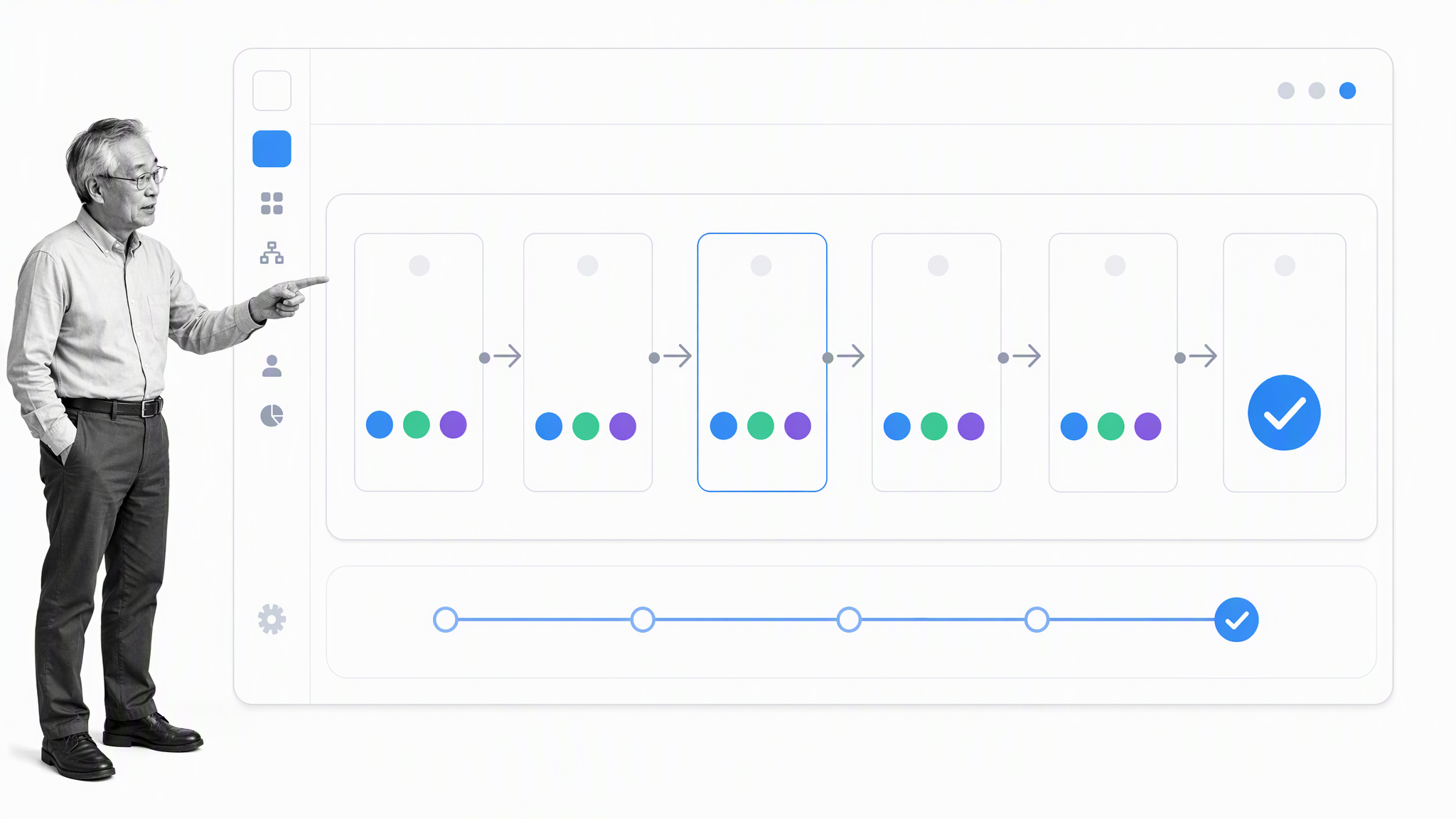
Do not over-engineer. Introduce only the hierarchy required to resolve the specific problem identified. If the issue is a lack of accountability, introduce clear ownership roles for recurring workflows. If the issue is a lack of alignment, introduce a periodic update mechanism, like the "Shape Up" cycles.
3. Codify the "How"
Structure is only as good as its documentation. Ensure that your operational knowledge is accessible. When a new hire joins, they shouldn’t have to rely on "tribal knowledge" to understand how to move a project forward. They should be able to access a workflow that guides them through the standard procedure, complete with built-in approvals and clear definitions of success.
Conclusion: Horizontal, Not Just Flat
Perhaps the most accurate term for the future of organization is "Horizontal." A horizontal structure is not static or stagnant. It is designed to be fluid, allowing teams to move and shift around obstacles while maintaining a clear, unwavering sense of purpose and ownership.

The companies that have successfully scaled—from Zapier to Basecamp—have proven that the goal is not to remove managers, but to remove the need for constant management by creating a transparent, process-driven, and accountable environment. By shifting the focus from "who is in charge" to "how do we deliver value," founders can build organizations that are as adaptable as they are resilient.
Ultimately, the best organizational structure is the one that gives your people the clarity to act, the autonomy to innovate, and the support to succeed. Don’t build a monument to your hierarchy; build a system that facilitates your work.