By Kenny Fisher
October 9, 2026
In a significant milestone for the global energy transition, San Francisco-based distributed energy resource (DER) technology company Voltus has successfully closed a $225 million Series D financing round. This substantial capital injection underscores the growing investor confidence in Virtual Power Plant (VPP) technology as a critical solution to the mounting challenges of grid capacity, decarbonization, and the surging electricity demands of the artificial intelligence (AI) era.
The funding, led by Generation Investment Management with participation from co-leads Activate Capital and Vitol, positions Voltus to accelerate its ambitious expansion roadmap. With eyes set on reaching a 20-gigawatt (GW) platform capacity by 2030, the company aims to solidify its role as a linchpin in the modern, decentralized electricity grid.
The Core Mission: Flexibility as a Foundation
Founded in 2016, Voltus has spent the better part of a decade perfecting the art of aggregating "latent capacity." The company operates a sophisticated DER platform that functions as a virtual power plant, bridging the gap between distributed energy resources—such as industrial batteries, sophisticated HVAC cooling systems, and commercial energy-intensive processes—and wholesale electricity markets.
In practical terms, Voltus enables grid operators to access power reserves that already exist behind the meter at thousands of businesses and homes. When the grid is strained, these assets can be dispatched to reduce, shift, or supply power, effectively mitigating the need for "peaker plants"—fossil-fuel-heavy facilities that are often inefficient and carbon-intensive.
By enabling participants to monetize their energy flexibility, Voltus transforms the grid from a rigid, one-way system into a dynamic, two-way ecosystem that is more affordable, reliable, and sustainable.
A Strategic Chronology of Growth
The trajectory of Voltus reflects the rapid evolution of the energy sector over the last decade. Since its inception, the company has navigated a complex regulatory and technological landscape to become a market leader.
- 2016: Foundation. Voltus is established in San Francisco with the vision of unlocking the massive, underutilized potential of distributed energy resources.
- 2020–2025: Market Maturation. As renewable energy penetration grew, the intermittency of wind and solar forced grid operators to seek more reliable balancing mechanisms. Voltus expanded its footprint across various regional transmission organizations (RTOs) in North America.
- June 2026: The Google Partnership. A landmark moment occurred when Voltus signed a high-profile agreement with Google. As the company’s first "Bring Your Own Capacity" (BYOC) client, Google committed to aggregating up to 100 MW of distributed energy resources annually within the PJM electricity market. This deal served as a proof-of-concept for the scalability of the BYOC model.
- October 2026: The Series D Milestone. The $225 million raise provides the financial runway for the next phase of growth, specifically targeting the acceleration of battery deployments and the scaling of the BYOC program to reach the 20 GW milestone by 2030.
Supporting Data: Why VPPs are the Future
The urgency behind this investment is fueled by hard data regarding global energy demand. The "electrification of everything"—from electric vehicles and heat pumps to the massive energy appetite of data centers powering large language models—has put unprecedented strain on aging power grids.
The Math of Capacity
- Existing Infrastructure: Research suggests that building new, large-scale power plants takes years of permitting and capital-intensive construction. Conversely, VPPs leverage existing assets.
- Cost Efficiency: By utilizing demand response and behind-the-meter batteries, Voltus reduces the "peak load," which is the most expensive and dirtiest time to generate electricity.
- The AI Energy Crisis: As AI infrastructure demands grow, traditional grid providers are struggling to keep up. Generation Investment Management has identified that the fastest and lowest-carbon path to meeting these needs is to maximize the utility of the assets already connected to the grid.
Voltus’s strategy focuses on "Bring Your Own Capacity" (BYOC) programs. This approach allows corporations and homeowners to retain ownership of their energy assets while Voltus manages the software-driven dispatch, ensuring that these assets earn revenue when the grid is most in need.
Official Perspectives: Leadership and Vision
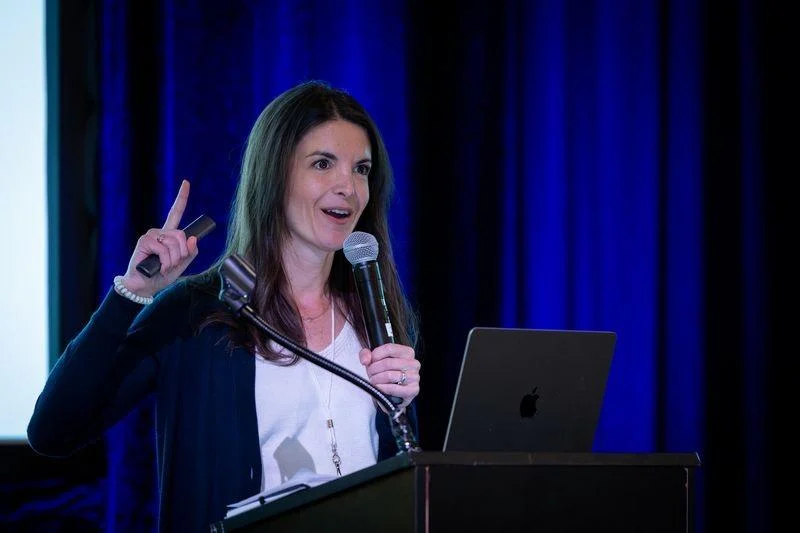
The leadership team at Voltus, headed by CEO Dana Guernsey, views the current grid constraints not as an insurmountable barrier, but as a design challenge that necessitates a technological pivot.
"Electricity is now the constraint behind almost every major ambition we have, but it doesn’t have to be," Guernsey stated following the funding announcement. "The question is no longer whether the grid needs flexibility, it’s how quickly we can make it foundational."
Investors share this sentiment, viewing Voltus as a critical infrastructure layer in the digital economy. Dave Easton, Partner of Growth Equity at Generation Investment Management, emphasized the environmental and economic synthesis of the company’s business model:

"As electricity demand rises, the fastest, most cost-effective, and lowest-carbon source of new capacity is often the one already connected to the grid. Voltus turns the flexibility of businesses, homes, and batteries into reliable power, helping the AI buildout meet its growing energy needs while reducing pressure to build new fossil-fuel infrastructure and making it easier to integrate renewables."
Implications for the Energy Transition
The success of the Voltus Series D round carries several profound implications for the future of the energy market:
1. Decoupling Growth from Carbon
Historically, economic growth has been tightly correlated with increased fossil fuel consumption. Voltus’s model challenges this by decoupling grid expansion from the construction of coal or gas-fired peaker plants. By optimizing existing usage, the grid can accommodate higher levels of intermittent renewables like wind and solar without sacrificing reliability.
2. The Democratization of Energy
The shift toward distributed resources empowers the "prosumer"—the entity that both consumes and produces energy. By allowing commercial entities to play an active role in grid stability, the traditional utility model, which relies on a few massive, centralized power plants, is being augmented by a granular, software-managed network of thousands of smaller, agile nodes.
3. Policy and Regulatory Tailwinds
This funding round signals to policymakers that the market is ready for more aggressive deregulation regarding demand-side management. As Voltus scales toward 20 GW, it will likely lobby for standardized rules across different electricity markets, making it easier for distributed assets to participate in wholesale energy auctions.
4. A Template for Global AI Infrastructure
With the explosive growth of AI data centers, the "energy-for-compute" trade-off is becoming a primary focus for big tech. Voltus provides a ready-made template for how these companies can secure the power they need without relying solely on the local utility’s ability to build new, carbon-heavy infrastructure.
Conclusion: The Path to 20 GW
The road to 2030 will not be without its challenges. Scaling to 20 GW requires not only technological prowess but also robust software security, seamless integration with disparate hardware manufacturers, and continuous navigation of regional regulatory hurdles.
However, with the backing of heavyweight investors like Vitol and Generation Investment Management, and a proven model that has already captured the attention of giants like Google, Voltus is uniquely positioned to lead the charge. The company’s success will likely serve as a bellwether for the broader energy-tech sector. As the grid continues to face the dual pressures of electrification and decarbonization, the "virtual" power plant is rapidly becoming a very real, and very necessary, component of our global infrastructure.
By turning passive consumers into active grid participants, Voltus is not just expanding its business—it is redefining the fundamental relationship between society and the electron. As we look toward the next five years, the ability to balance the grid through digital intelligence rather than physical burning of fuels will prove to be one of the most important technological shifts of the century.