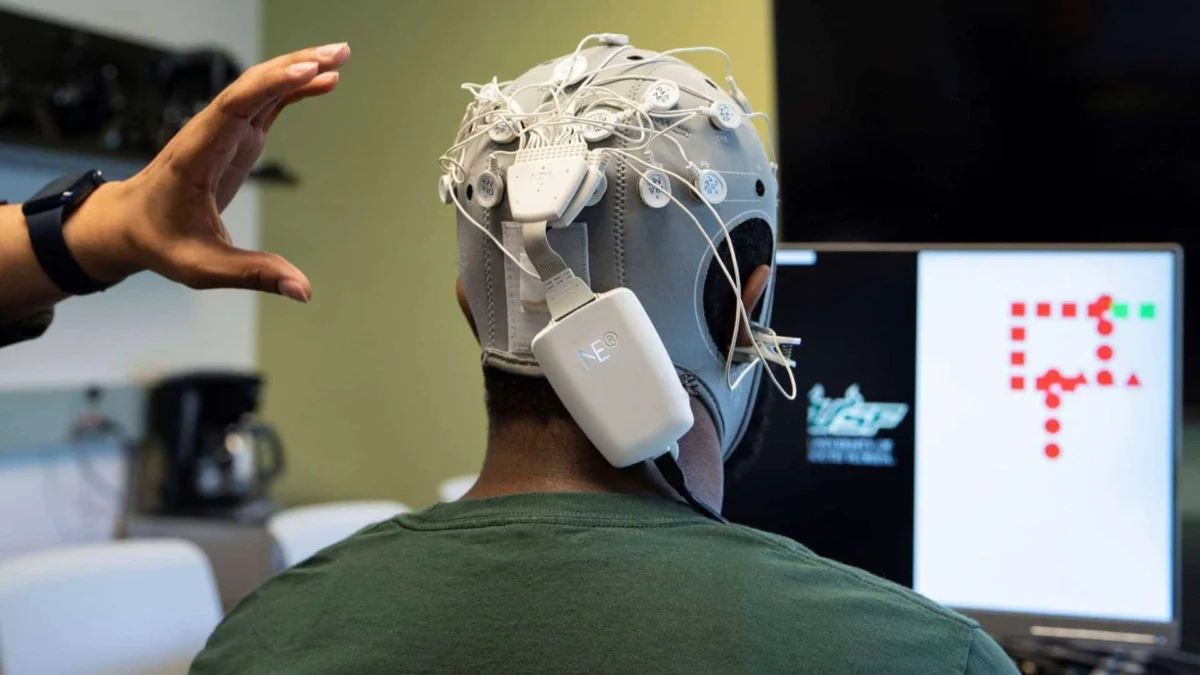
As the boundary between the human brain and digital interfaces continues to dissolve, the United Nations has issued a landmark warning that could redefine the future of legal systems, personal privacy, and human autonomy. In a comprehensive report released this Thursday, the international body highlighted the rapid, largely unregulated advancement of neurotechnology—tools capable of monitoring, recording, and even modulating neural activity.
Secretary-General António Guterres, addressing the United Nations General Assembly, underscored the gravity of the situation, noting that as these technologies migrate from specialized medical settings into the commercial and public spheres, they pose "profound human rights challenges," particularly when integrated into the administration of justice. The report serves as a clarion call for the international community to establish a robust legal framework before the "sanctuary of the mind" becomes a theater for surveillance and state coercion.
The Core Conflict: Neuro-Rights and the Justice System
The primary concern voiced by the U.N. is the potential for governments to gain unprecedented access to a person’s internal cognitive state. Traditionally, the law has treated the mind as an impenetrable black box—a private sphere protected by the right against self-incrimination. However, the advent of sophisticated neuroimaging, brain-computer interfaces (BCIs), and AI-driven neural decoding threatens to strip away this final layer of privacy.
The U.N. report posits that if neural data can be harvested to determine a suspect’s "truthfulness" or "intent" in criminal proceedings, the very foundation of justice could be compromised. If a prosecutor can mandate a "brain scan" to verify a witness’s testimony or detect hidden biases in a defendant, the concepts of due process and cognitive liberty face an existential threat.
Chronology: The Evolution of a Digital Frontier
To understand the urgency of the U.N.’s intervention, one must look at the rapid maturation of the field over the last decade:
- 2015–2018: The Rise of Consumer Neurotech: Startups began marketing "wellness" headbands and neural-tracking wearables designed to measure focus, meditation, and stress levels. These devices, often operating in a regulatory gray zone, began aggregating vast amounts of sensitive biometric data.
- 2020: The Neuralink Milestone: Elon Musk’s Neuralink and similar ventures transitioned from theoretical research to human clinical trials, proving that high-bandwidth communication between the brain and digital devices was no longer science fiction.
- 2023: Academic Alarms: Leading ethicists and scientists began warning that the "data exhaust" produced by these devices—which includes involuntary cognitive responses—was being sold to third parties, including advertising firms.
- 2024: The Global Policy Gap: As highlighted by scholars like Roland Benedikter, the global community realized that no binding international treaties existed to govern the ethics of neural research. The lack of "neuro-specific" protections left a vacuum in human rights law.
- 2026: The U.N. Intervention: Following a series of consultations with legal experts and neurologists, the U.N. officially placed neurotechnology at the center of its human rights agenda, demanding immediate legislative action.
Supporting Data: The Magnitude of the Threat
The risks identified by the U.N. are not merely hypothetical. Current neurotechnology capabilities, while still developing, are already capable of mapping neural correlates of emotion, attention, and memory.
The Vulnerability of Neural Data
Neural data is inherently different from standard digital data. Unlike a credit card number or a browser history, neural data represents the raw biological signatures of human thought.
- Predictive Analytics: Researchers have demonstrated that algorithms can now predict a subject’s choice or political leaning before the subject is consciously aware of their decision.
- Market Proliferation: According to industry reports, the global neurotechnology market is projected to reach $20 billion by 2030. This growth is driven by both the medical sector and the booming "neuro-gaming" and "neuro-fitness" markets.
- Consent Erosion: A study cited in the U.N. report suggests that over 80% of users of commercial neuro-devices do not fully understand what neural data is being stored or how it might be used by the manufacturers for behavioral profiling.
Official Responses and Proposed Safeguards
The U.N.’s report is not merely a statement of concern; it is a blueprint for reform. The Secretary-General has urged member states to adopt a multi-tiered approach to regulating the mind-tech sector.
Reclassifying Thought as "Highly Sensitive Data"
The most significant recommendation is the legal reclassification of neural information. The U.N. proposes that brain data be treated as "highly sensitive personal data," subject to the highest levels of protection—similar to the protections afforded to genetic data or religious convictions.
Explicit Consent Requirements
The report emphasizes that consent for the use of neurotechnology cannot be buried in "Terms of Service" agreements. In the context of criminal justice, the U.N. argues that the "right to cognitive liberty"—the right to control one’s own mental processes—must be explicitly protected, requiring informed, revocable, and specific consent for any data extraction.
Government and Tech Industry Reaction
- The Technology Sector: Major players in the BCI space have expressed support for "ethical guidelines," though many lobby against strict regulations that might stifle innovation.
- Human Rights Watchdogs: Organizations like the Electronic Frontier Foundation (EFF) have lauded the U.N.’s initiative, arguing that "if we do not protect the mind, we cannot protect anything else."
- State Actors: Some nations, particularly those investing heavily in domestic neuro-defense programs, have been more reticent, fearing that overly stringent regulations could disadvantage them in a competitive global race for technological supremacy.
Implications: The Future of Cognitive Liberty
The implications of this report extend far beyond the courtroom. If neurotechnology is allowed to develop without the constraints proposed by the United Nations, society faces a fundamental shift in the definition of "self."
The Erosion of Privacy
If our thoughts can be tracked, the concept of "private reflection" may cease to exist. This has chilling implications for political dissent. In authoritarian regimes, the ability to monitor neural responses to propaganda or government policies could lead to a new, terrifying level of thought control.
The Justice System Paradox
The use of neuro-evidence in court creates a "paradox of truth." If a machine is deemed more "accurate" than a human brain, the subjective experience of the individual—the basis of the jury system—may be sidelined. The U.N. warns that we risk creating a legal system that relies on "algorithmic justice," where human agency is replaced by neural metrics that are themselves prone to error, bias, and manipulation.
The Need for a New Social Contract
The U.N. report essentially calls for a new social contract for the 21st century—a "Neuro-Rights Charter." Just as the world came together to ban chemical weapons and establish privacy laws for the internet age, the international community must now recognize that the brain is a protected space.
As Secretary-General Guterres remarked during the press briefing: "We are at a crossroads. We can either allow these technologies to become tools of oppression, or we can weave them into a future that respects the sanctity of the human spirit."
Conclusion: A Race Against Time
The U.N.’s warning comes at a pivotal moment. With commercial applications of brain-reading technology already entering the consumer market, the window for effective regulation is rapidly closing.
For governments, the challenge is to strike a delicate balance. They must foster the medical breakthroughs—such as prosthetics that allow paralyzed individuals to walk or treatments for neurological disorders—while simultaneously preventing the weaponization of the brain.
The path forward requires an unprecedented level of global cooperation. Legal systems must be updated to account for "cognitive liberty," and the tech industry must be held accountable for the ethical implications of their products. If the U.N. can successfully foster an international consensus on these issues, it may provide the necessary safeguards to ensure that, in the age of the machine, the human mind remains the one thing that is truly, and legally, our own.
As we stand on the precipice of this new era, one thing is certain: the conversation about the future of the mind has only just begun. The international community must move swiftly, for once the seal on the sanctity of the mind is broken, there may be no way to close it again.