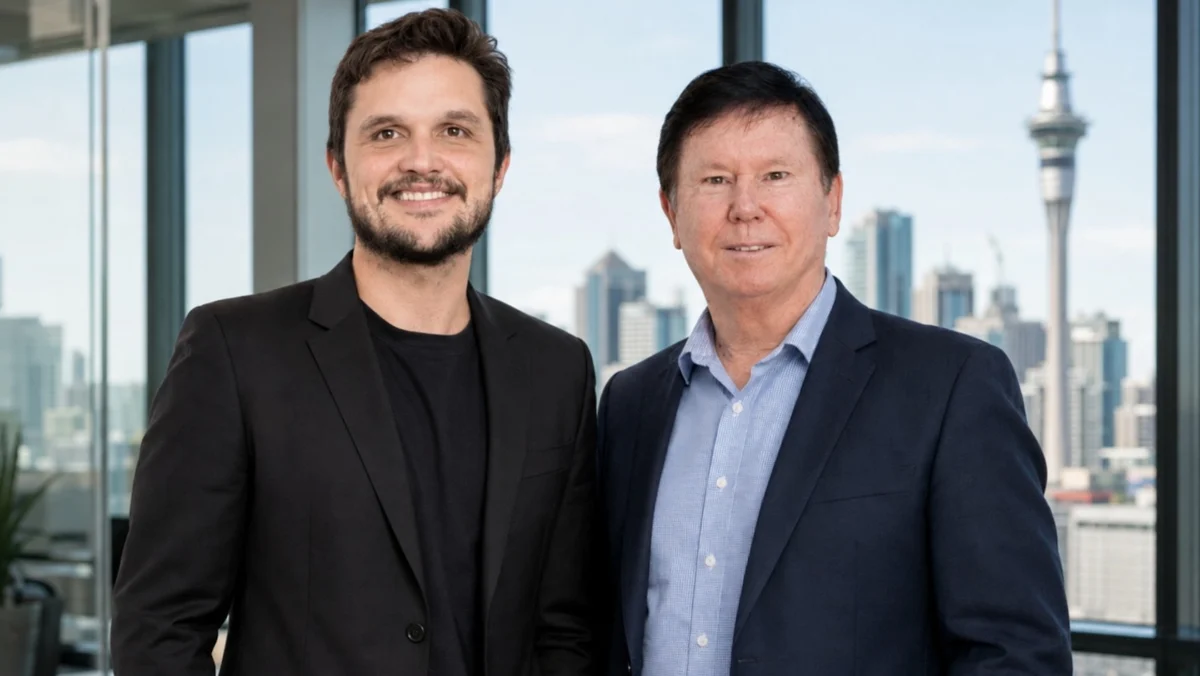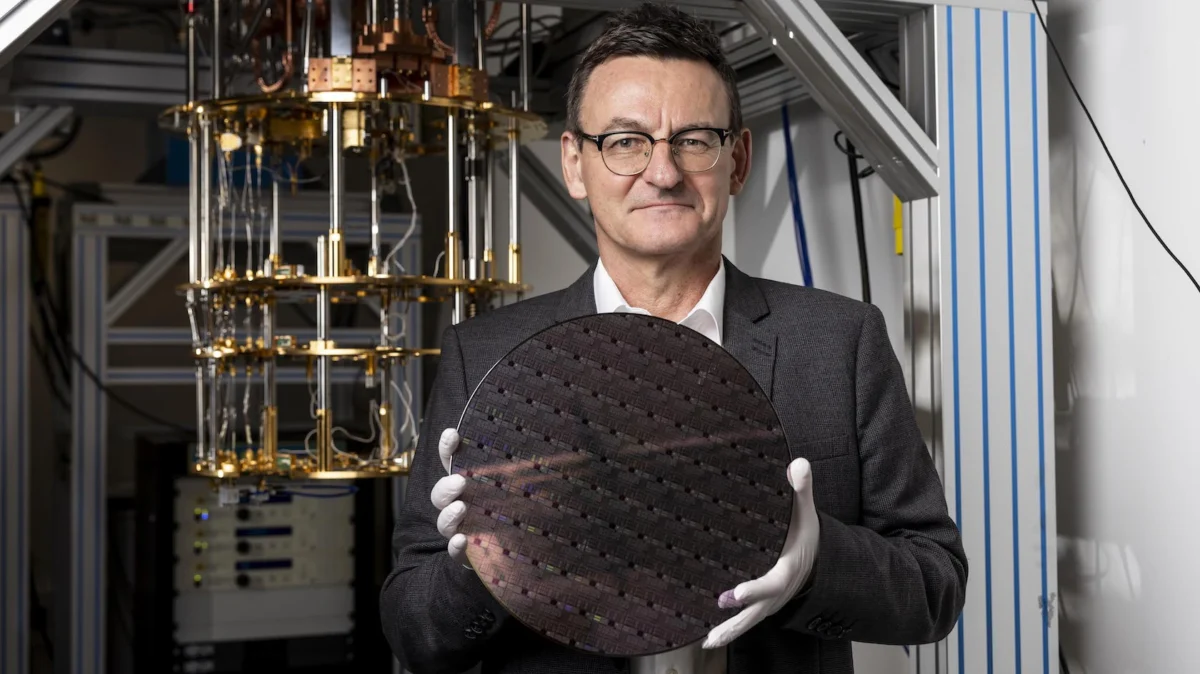
In a landmark development for the global quantum computing sector, Sydney-based Diraq has secured an initial US$51 million (approximately A$73 million) in funding from the United States Defense Advanced Research Projects Agency (DARPA). This capital injection is not merely a milestone for the Australian startup; it represents a pivotal validation of silicon-based quantum architecture on the international stage.
The agreement, which includes a total potential valuation of up to US$300 million (A$430 million), positions Diraq at the forefront of the Quantum Benchmarking Initiative (QBI). This ambitious program is designed to move the industry beyond theoretical promise and toward the cold reality of economic and operational utility.
The Core Mandate: Proving Scalability
For decades, the promise of quantum computing—the ability to process information at speeds orders of magnitude faster than classical supercomputers—has been tempered by the "noise" and instability of qubits. Diraq, founded by Professor Andrew Dzurak, has long advocated for a silicon-based approach, leveraging the same CMOS (complementary metal-oxide-semiconductor) manufacturing processes that currently underpin the global semiconductor industry.
The DARPA funding is specifically earmarked for Stage C, the final and most critical phase of the Quantum Benchmarking Initiative. The goal is singular and pragmatic: to determine by 2033 whether quantum computers can deliver a net economic benefit that justifies the immense costs of their construction, maintenance, and operation. Unlike previous research phases that focused on proof-of-concept, Stage C is about creating a fault-tolerant system that can solve real-world problems.
Chronology: From Academic Research to Defense-Grade Innovation
Diraq’s journey from a research laboratory at the University of New South Wales (UNSW) to a major defense-contracted entity is a testament to the maturation of the Australian deep-tech ecosystem.
- The Foundational Years (2010–2020): Professor Andrew Dzurak and his team at UNSW pioneered the development of quantum logic gates in silicon. By demonstrating that quantum information could be controlled using standard silicon fabrication techniques, they bypassed the need for exotic materials that have plagued other quantum startups.
- The Spin-out (2022): Diraq was officially spun out of UNSW with a mission to commercialize the silicon quantum dot technology. Early rounds of venture funding solidified the company’s ability to transition from laboratory experiments to industrial-grade prototypes.
- The QBI Entry (2024–2025): DARPA launched the Quantum Benchmarking Initiative to standardize how the industry measures progress. Diraq’s inclusion in the early stages allowed them to demonstrate their "CMOS-compatibility," a critical factor for long-term scalability.
- The Landmark Funding (2026): Securing the US$51 million initial tranche in 2026 marks the beginning of the "deployment phase." This funding ensures that Diraq has the resources to move beyond theoretical models and into the fabrication of large-scale, fault-tolerant chips.
Supporting Data: Why Silicon?
The skepticism surrounding quantum computing has often centered on the "scaling wall." To be useful, a quantum computer requires millions of physical qubits to create a single, error-corrected "logical" qubit. Diraq’s technical thesis is that silicon is the only material capable of meeting this demand.
The CMOS Advantage
Current chip manufacturing—the kind used for Intel or NVIDIA processors—is arguably the most sophisticated manufacturing process in human history. By building qubits within silicon, Diraq can leverage:
- Existing Infrastructure: There is no need to invent a new factory; the billions of dollars already invested in global foundries can be adapted for quantum chips.
- Integration: Silicon allows for the co-location of quantum processors and the classical control electronics required to manage them, drastically reducing the latency and heat associated with external wiring.
- Yield and Reliability: Silicon fabrication has been refined over 50 years to produce billions of reliable transistors per chip. Diraq’s approach attempts to translate this reliability to the quantum level.
The DARPA mandate forces Diraq to prove these advantages. If successful, Diraq will demonstrate that a fault-tolerant quantum computer can be housed in a footprint significantly smaller than the massive, refrigerator-sized systems currently being tested by competitors using superconducting circuits or trapped ions.
Official Perspectives: The Path to Utility
In the high-stakes world of defense-funded research, the rhetoric is focused on performance metrics. DARPA’s QBI is not interested in "hype cycles." The agency is looking for a "quantum advantage"—a point where the computer performs a task that is impossible for even the most powerful classical supercomputer.
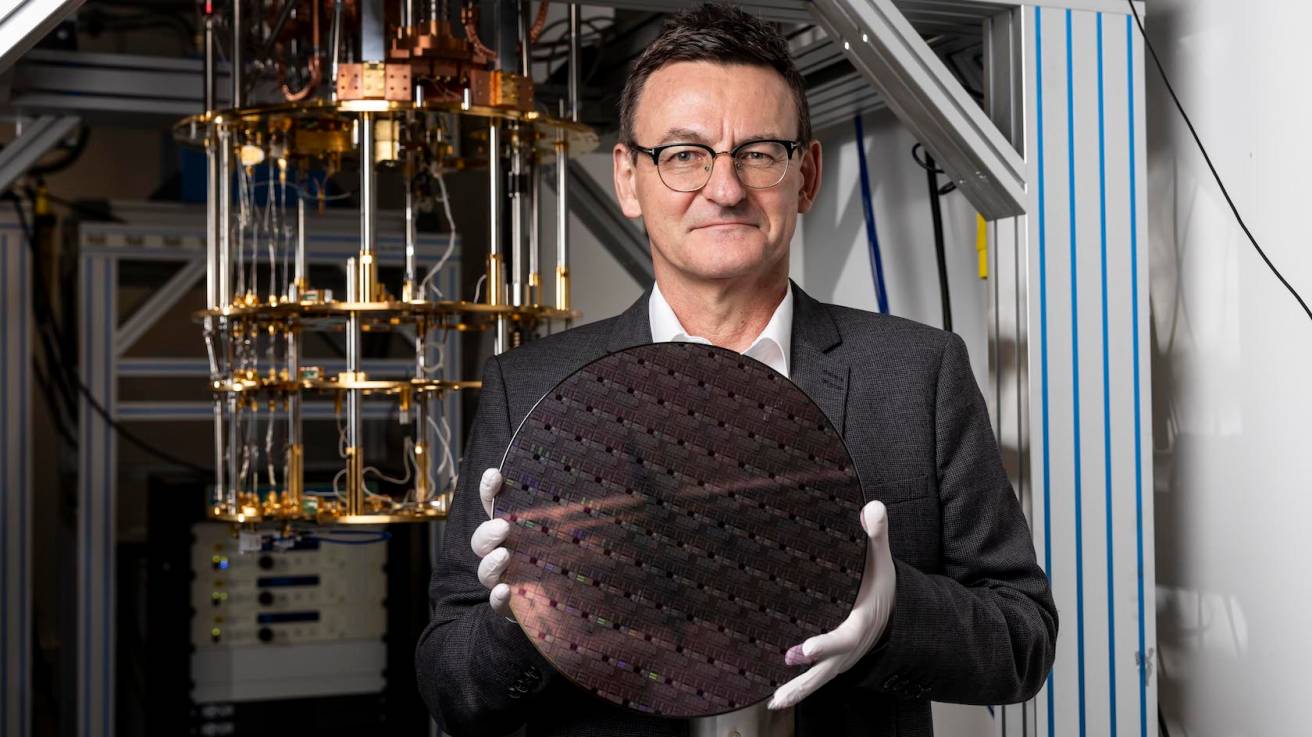
While official press releases from the agency are characteristically measured, the size of the investment speaks volumes. By committing up to US$300 million, the U.S. government is effectively signaling that silicon quantum dot technology is a strategic asset.
For Professor Dzurak, this funding provides the "runway" necessary to solve the engineering bottlenecks that prevent current chips from reaching the thousands-of-qubits threshold. In previous statements, the Diraq leadership team has emphasized that the transition from a laboratory bench to a commercial foundry is the "Valley of Death" for most startups. This DARPA funding acts as a bridge across that gap.
Global Implications: A New Era of Computing
The implications of this funding round extend far beyond Sydney. If Diraq succeeds, the geopolitical implications for sovereign technological capability are profound.
1. The End of the "Quantum Winter"?
For the past two years, the venture capital market has been wary of "quantum hype." Many investors have pulled back, demanding to see a clear path to revenue. By securing defense-backed, mission-critical funding, Diraq has provided a template for how other deep-tech companies might survive the current cooling of the investment climate.
2. Supply Chain Sovereignty
Because Diraq uses standard CMOS processes, their technology is inherently compatible with the existing global semiconductor supply chain. This makes the prospect of "quantum-as-a-service" much more viable. Instead of building a proprietary, closed-loop ecosystem, Diraq is building a component that can be manufactured by the likes of TSMC or Intel, should the technology reach sufficient maturity.
3. Solving the "Fault Tolerance" Problem
The ultimate goal of the 2033 benchmark is to reach a state of fault tolerance. Currently, quantum computers are "noisy" (NISQ—Noisy Intermediate-Scale Quantum). This means they make frequent errors. Fault tolerance is the "holy grail" where the system corrects its own errors, allowing it to run long, complex calculations for industries such as:
- Pharmaceutical Discovery: Simulating molecular interactions that are currently impossible to model.
- Materials Science: Designing new batteries and catalysts.
- Cryptography: Modern encryption remains the primary target for quantum-based decryption, making this technology a national security priority for every major world power.
Conclusion: The Road to 2033
The journey from a laboratory at UNSW to a US$300 million partnership with the U.S. Department of Defense is not just a win for a Sydney startup; it is a signal to the world that silicon quantum computing has graduated from a scientific curiosity to an industrial necessity.
As Diraq moves into the final stages of the DARPA initiative, the eyes of the global tech community will be fixed on their progress. The 2033 deadline for "economic value" is looming, and for the first time, a clear, well-funded, and technically grounded path has been laid out to reach it. Whether Diraq succeeds or fails, the data gathered over the next several years will undoubtedly shape the architecture of the computers that will define the middle of the 21st century.
For Australia, this investment cements its reputation as a global leader in quantum research, transforming academic excellence into a tangible, strategic industrial force that commands the attention of the world’s most powerful research agency.