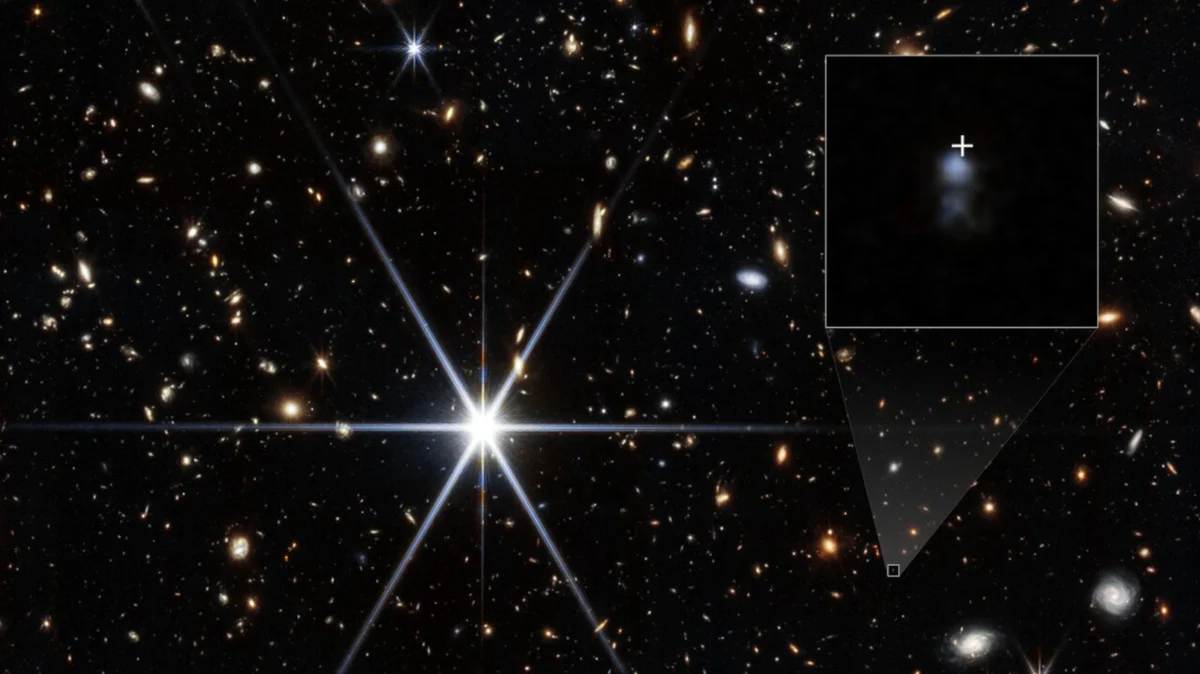
In the vast, silent theater of the cosmos, few phenomena are as enigmatic or as fleeting as Fast Radio Bursts (FRBs). These millisecond-long pulses of radio waves, which pack the energy equivalent to what our Sun emits over three days, have puzzled astronomers since their first detection in 2007. Now, a breakthrough study utilizing the unparalleled sensitivity of the James Webb Space Telescope (JWST) has peeled back the curtain on the most distant FRB ever recorded, fundamentally altering our understanding of how these cosmic sirens are born.
The discovery, detailed in the journal Science, identifies the galactic origin of a burst that traveled across billions of years of space-time. By tracing this signal back to its source, researchers have provided the strongest evidence yet that some of the universe’s most violent radio emissions are not the result of ancient stellar mergers, but rather the dramatic, fiery death throes of massive stars.
The Enigma of the Millisecond Flash
Fast Radio Bursts are, by definition, elusive. They arrive from deep space without warning, flashing for a mere fraction of a second before vanishing into the cosmic background noise. Because they last for such a brief duration, pinpointing their exact point of origin—the specific galaxy they call home—has historically been an exercise in extreme precision and technological luck.
For years, the scientific community has been divided over the progenitor of these events. The leading theories have generally fallen into two camps: the merger of compact, dense objects like neutron stars, or the cataclysmic collapse of massive, short-lived stars into magnetars. The latter are exotic, highly magnetized neutron stars that possess magnetic fields trillions of times stronger than those found on Earth.
A Chronology of Discovery
The journey to this discovery began in 2024, when the MeerKAT ground telescope array—a powerful radio interferometer located in South Africa—captured a signal of unprecedented distance. While MeerKAT provided the "where" in terms of coordinates, it lacked the optical resolution to identify the host galaxy across such a staggering span of space.
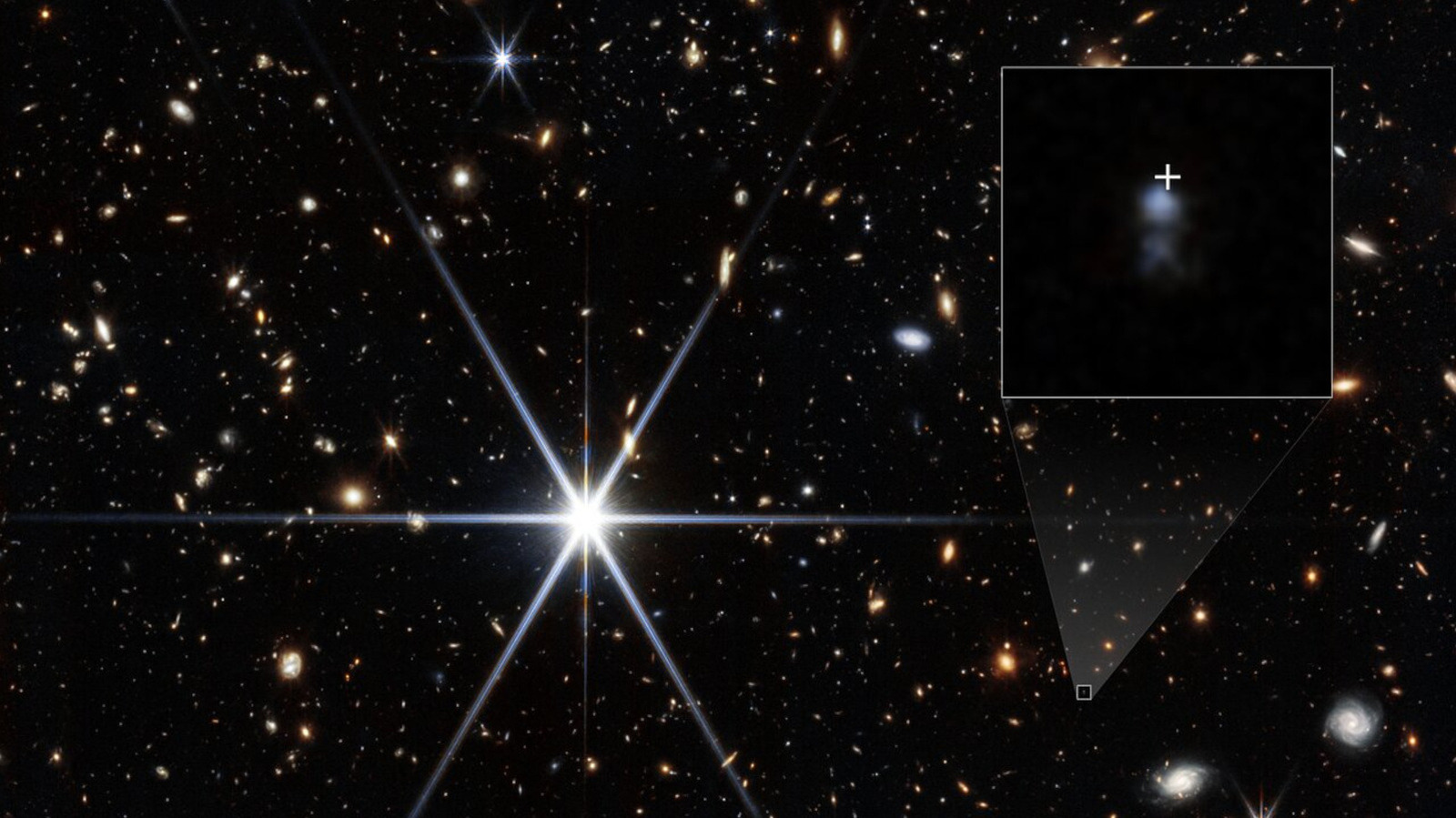
Following the initial detection, the international team of astronomers led by Dr. Manisha Caleb of the University of Sydney turned to the James Webb Space Telescope. The JWST’s near-infrared instruments are designed to peer through cosmic dust and look back into the deepest reaches of the universe. By focusing on the coordinates provided by MeerKAT, Webb identified a faint, distant galaxy.
Spectral analysis of the light from this host galaxy revealed a critical piece of information: redshift. By measuring how the galaxy’s light had been stretched by the expansion of the universe, astronomers determined that the FRB occurred approximately 3 billion years after the Big Bang. This places the event in a cosmic epoch where star formation was reaching a fever pitch across the young universe.
Supporting Data: Shattering Conventional Wisdom
The data returned by Webb presented a paradox that immediately challenged existing models. Previous FRBs detected by astronomers were consistently found in massive, mature galaxies that had been evolving for billions of years. These galaxies were stable, slow-moving environments, fitting the theory that FRBs were the byproduct of neutron star mergers—events that require a long "gestation" period of binary evolution to occur.
However, the host galaxy for this record-breaking burst was fundamentally different. It was 1,000 times smaller than the galaxies typically associated with FRBs. Furthermore, it existed in a state of chaotic, rapid star formation.
"The environment of this burst is entirely unexpected," says Dr. Caleb. "We are looking at a tiny, bustling galaxy during a period of the universe’s history where the environment was vastly different from our local cosmic neighborhood. This tells us that the mechanism generating these bursts isn’t exclusive to old, settled galaxies."
The key findings from the study include:
- Distance: The burst originated roughly 3 billion years after the Big Bang, making it the farthest-ever detected.
- Host Galaxy Size: The galaxy is significantly smaller (by three orders of magnitude) than those associated with previously known FRBs.
- Temporal Context: The burst occurred during the "Cosmic Noon," a period of intense star formation, rather than in the relatively quiet late-stage evolution of the universe.
Weighing the Theories: Mergers vs. Supernovae
The central debate in FRB research has long centered on the "Merger Hypothesis" versus the "Supernova Hypothesis."
The Merger Hypothesis suggests that FRBs are the result of two neutron stars spiraling into one another. Because neutron stars are the dead cores of supergiant stars, they take billions of years to evolve, drift toward each other, and eventually collide. Therefore, under this model, FRBs should only be found in older galaxies that have had enough time to produce such long-lived binary systems.
The Supernova Hypothesis, however, suggests that FRBs are caused by the death of massive, short-lived stars. When these stars explode, they leave behind a magnetar. Given that massive stars live fast and die young, their deaths occur in the very environments where they are born—intense, star-forming regions.
"Our work suggests that it is very unlikely that this specific FRB was produced by a merger," Dr. Caleb explains. "The age and the nature of the host galaxy simply don’t align with the timeline required for a binary neutron star system to coalesce. Instead, this points directly to the explosive, short-lived nature of massive stars."
Implications for Future Astronomy
The identification of this FRB’s origin is not merely a "check-mark" achievement; it provides a new roadmap for how we interpret radio signals from the deep universe. By confirming that at least some FRBs originate from young, small, star-forming galaxies, astronomers can now calibrate their search parameters to look for similar signals in other distant, active environments.
Furthermore, this discovery underscores the vital role of multi-messenger astronomy. By combining the radio-frequency data from MeerKAT with the near-infrared imagery from Webb, the team was able to build a cohesive narrative of an event that occurred billions of years ago.
This study also raises profound questions about the distribution of magnetars throughout the universe. If FRBs are indeed caused by young, exploding stars, then the universe may be far more populated with magnetars than previously estimated. This could have implications for our understanding of gravitational waves, elemental synthesis, and the chemical enrichment of the early universe.
Official Perspectives and The Road Ahead
The scientific community has reacted to the findings with significant enthusiasm. Experts noted that while the "supernova" theory is not new, the data provided by the Webb telescope offers the first robust, observation-based evidence that separates it from the "merger" theory for this specific event.
"This is a game-changer," said one researcher not involved in the study. "For years, we were trying to fit all FRBs into one box. It now appears increasingly likely that FRBs represent a class of phenomena with multiple potential progenitors. The ‘merger’ theory may still hold for some bursts, but this discovery proves that the ‘supernova’ path is a primary contributor to the radio pulse landscape."
As for the team behind the study, the work is only beginning. The researchers intend to use Webb to conduct a wider survey of the host galaxies of other known FRBs to determine if there is a distinct dichotomy between those originating in "old" galaxies versus "young" ones.
The mystery of the fast radio burst is far from fully solved. We still do not know exactly what occurs in the nanoseconds before a magnetar emits such a pulse, nor do we fully understand the precise conditions required for such a burst to travel across the intergalactic medium without being absorbed. However, with the James Webb Space Telescope acting as our eyes in the dark, the veil is slowly lifting.
We are finally beginning to understand that these brief, violent flashes are not just random noise. They are the echoes of the universe’s most massive stars, telling us their final stories from billions of years in the past. Each burst is a time capsule, and with every discovery, we move one step closer to mapping the history of the cosmos, one millisecond at a time.