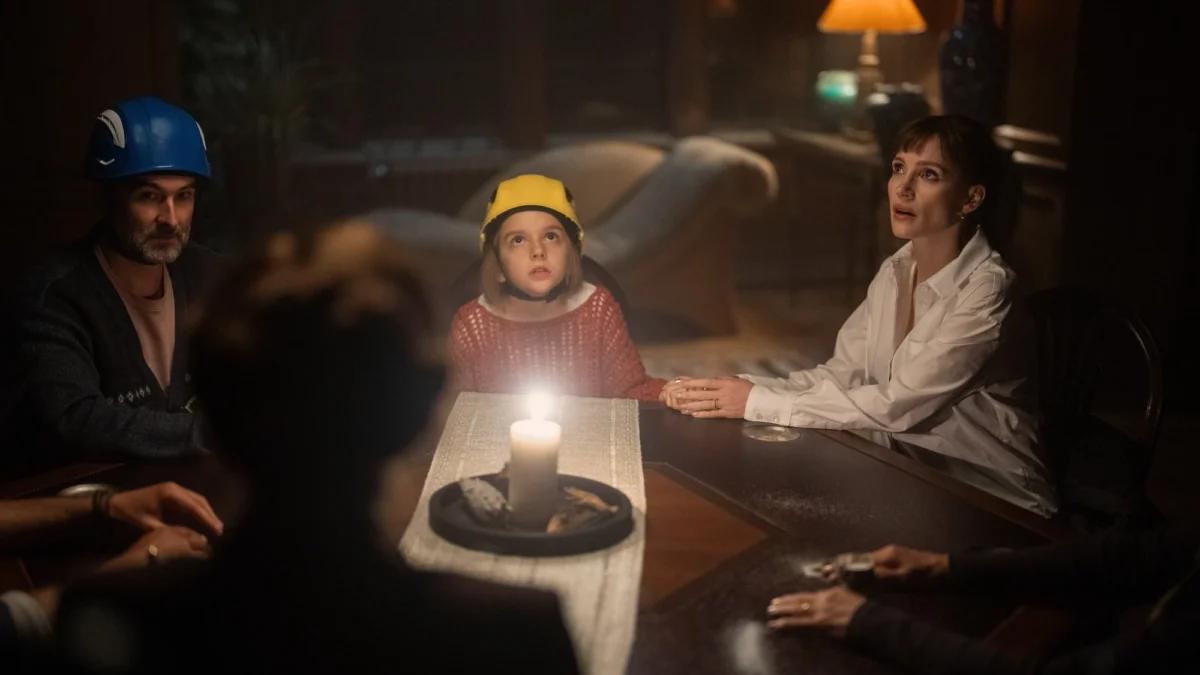
The summer box office was haunted by an entity that arrived with little more than a whisper in a terrifying teaser trailer attached to Christopher Nolan’s The Odyssey. With a title as deceptively simple as Other Mommy, the film quickly burrowed into the public consciousness, sparking debates about the nature of childhood fear, parental anxieties, and the thin, permeable veil between the domestic sanctuary and the supernatural.
For many, the initial marketing evoked immediate comparisons to the stop-motion classic Coraline. Much like the Henry Selick masterpiece, Other Mommy centers on a young girl confronted by a distorted, malicious doppelgänger of her mother. However, as the film makes its way into theaters nationwide, it is becoming increasingly clear that this is no mere animated fairy tale. It is a visceral, R-rated exploration of fractured families and the terrors that lurk within the architecture of the home. Before you decide if this is the right pick for a “spooky season” outing with your horror-loving pre-teen, it is essential to peel back the layers of what director Rob Savage has crafted.
The Premise: When the Familiar Becomes Fatal
Based on Josh Malerman’s New York Times best-selling novel, Incidents Around the House, the film follows seven-year-old Bela, portrayed with haunting vulnerability by Arabella Olivia Clark. Bela is a child caught in the quiet, suffocating tension of a household where the emotional distance between her parents is widening.
Bela begins communicating with an entity she calls "Other Mommy." The horror, at its most fundamental level, is rooted in recognition. Other Mommy—played by the chameleon-like Jessica Chastain—is a perfect, uncanny reflection of Bela’s real mother, Ursula. The film leverages this visual identity to create a series of harrowing sequences where the audience, like Bela, is forced to question the authenticity of the person standing in the room.

The stakes escalate rapidly when Bela’s parents, Ursula and her stay-at-home father, Russ (Jay Duplass), realize that the entity is not merely a figment of their daughter’s overactive imagination. Other Mommy possesses the terrifying, magical ability to abduct Bela, transporting her to distant, nightmarish locations in the blink of an eye. As the parents engage in a desperate, frantic struggle to reclaim their child, the film descends into a frantic, blood-soaked battle for survival that refuses to pull its punches.
Chronology of a Nightmare: The Making of a Modern Horror
The development of Other Mommy represents a significant shift for director Rob Savage. After gaining massive acclaim for his pandemic-era breakthrough Host—a film that utilized the constraints of Zoom to create claustrophobic, immediate terror—and his subsequent work on The Boogeyman, Savage has solidified his status as a master of the jump scare.
The production cycle for the film was characterized by a focus on "tactile horror." In interviews, Savage has emphasized that while the entity is supernatural, the emotional trauma of the characters must feel grounded in reality. The film’s opening sequence, which reportedly left early test audiences in The Odyssey screenings visibly shaken, was a deliberate choice by the production team to set the tone: this is a film where the safety of the opening credits is a lie.
Throughout the production, the cast—particularly Chastain, who took on the grueling task of playing both the protagonist mother and the antagonistic entity—worked closely with the stunt teams to ensure that the physical transitions between the two versions of the mother felt jarring and unnatural. The transition from the script to the screen involved a rigorous commitment to practical effects, eschewing the over-reliance on CGI that has diluted the impact of many modern supernatural thrillers.

The Psychological Underpinnings: Divorce and Domestic Decay
While the supernatural elements draw the audience in, the film’s true staying power lies in its unflinching look at the dissolution of a family unit. Other Mommy serves as a dark allegory for the anxieties of children experiencing the separation of their parents.
Bela’s vulnerability is inextricably linked to her perception of her parents’ relationship. She views her father, whom she calls "Daddo," as her primary source of comfort, while harboring a deep-seated suspicion that her mother is emotionally absent—a woman who would rather be anywhere else than within the walls of their home. Other Mommy exploits this friction with surgical precision. She is the "perfect" parent: she never tires, she never scolds, and she is always ready to play.
This, of course, is the classic trap of the siren song. The entity provides everything Bela asks for, but the "hefty price" mentioned in the marketing materials is far more gruesome than a simple loss of soul. It is a commentary on how quickly children can be lured away from the "messy" reality of human imperfection toward an idealized, albeit deadly, fantasy.
Supporting Data: By the Numbers of Fear
In the landscape of modern horror, the "jump scare" has often been derided as a cheap trick. However, Rob Savage treats it as a precise rhythmic instrument. In a recent interview with Entertainment Weekly, Savage estimated that the film contains "around 50" jump scares within its 93-minute runtime.

While some critics have suggested this number is a slight exaggeration of the actual count, the experience of the film suggests otherwise. The pacing is relentless. Because the movie is relatively short, it lacks the "filler" sequences that often bog down supernatural horror.
Key metrics regarding the film’s intensity:
- Runtime: 93 Minutes (allowing for a high-density "scare per minute" ratio).
- MPAA Rating: Rated R for pervasive language, intense violence, and gore.
- Primary Conflict: The "Duality of Motherhood," contrasting the human, flawed mother with the predatory, shape-shifting entity.
- Viewer Feedback: Early reports from theater chains indicate that audiences are reacting more strongly to the film’s "blood and glitter" gore than its purely atmospheric sequences.
Official Perspectives: The Director’s Intent
Director Rob Savage has been vocal about his desire to move away from the "prestige horror" trend and return to the roots of the genre: pure, unadulterated fear. "I don’t want people to come to this movie and think about their taxes or their political views," Savage noted in a recent press junket. "I want them to leave the theater needing to turn on every light in their house."
Jessica Chastain, for her part, has spoken about the challenge of balancing the two roles. "Playing Ursula required a kind of internal, simmering sadness," she explained. "Playing the Other Mommy required a total abandonment of human restraint. It was about finding the movement and the cadence that made the audience feel like they were looking at something wrong—something that shouldn’t exist."

The studio, Universal Pictures, has been strategic in its release, positioning the film not as a family-friendly supernatural romp, but as a hard-hitting adult horror experience that happens to feature a child protagonist. This distinction is crucial for managing parental expectations.
Implications for Families and the Future of Horror
The most significant implication of Other Mommy is its potential to trigger deep-seated anxieties in younger viewers. While the film is a masterclass in tension, it is explicitly not designed for children.
The comparison to Coraline is inevitable, but where Coraline used a stylized, animated lens to explore similar themes, Other Mommy forces the audience to witness the physical unraveling of real, recognizable adults. The violence is not cartoonish; it is visceral and cruel.
Why the Age Warning Matters
Many parents may be tempted to let their children watch the film because of the "child protagonist" trope. However, the film explicitly explores the fear that an entity can look and act exactly like a parent. For a child, the home is supposed to be the safest place on earth. By turning the mother into a source of potential horror, the film creates a "lingering anxiety" that could persist long after the credits roll.

When Henry Selick, the director of Coraline, was asked about age-appropriateness, he suggested a minimum age of 12. Following this logic, Other Mommy likely warrants a higher threshold. Given the R-rating, the graphic gore, and the psychological weight of the parental abandonment themes, most child psychologists and media critics would argue that 15 or 16 is a more appropriate starting point for an audience capable of separating the fiction of the "Other" from the reality of the parent.
Conclusion: A Masterpiece of Modern Unease
Other Mommy is a triumph of pacing and performance, a film that manages to be both a technical marvel of jump-scare construction and a poignant, if terrifying, look at the fragility of the domestic bond. It is, by all accounts, one of the most effective horror films of the year.
However, it is a film that demands respect for its rating. For those who love the genre, it offers a exhilarating, terrifying ride that will likely become a staple of future horror marathons. But for parents and guardians, it serves as a stern reminder: sometimes, the most frightening things are those that wear the faces of the people we love the most. If you are planning to head to the theater, leave the little ones at home—and perhaps, upon returning, check the locks on your doors one extra time.